Jericho holds a genuinely extraordinary set of claims: it is widely regarded as the world’s oldest continuously inhabited city, one of the lowest points on Earth (around 258 m below sea level), and home to sites that span 10,000 years of human history in a 10-minute drive. As a day trip from Jerusalem — just 35–40 minutes east on Route 1, with the road dropping from 800 m above sea level to 260 m below — it makes a logical and compelling addition to any itinerary.
One important logistics note before you plan: Jericho is in Palestinian Authority Area A, which means Israeli citizens cannot enter. Foreign tourists (including visitors on Israeli visas or ETA-IL) may enter freely with a passport. Most Israeli car rental agreements also prohibit driving in Area A, making a guided tour or shared taxi the practical choice for most visitors. Details in the logistics section below.
What to see in Jericho
Tell es-Sultan — ancient Jericho
Tell es-Sultan is the archaeological mound of ancient Jericho, managed as a national park by the Palestinian Authority. Here, excavations have revealed continuous habitation stretching back to approximately 10,000 BCE, with the remains of stone fortification towers from around 8,000 BCE — structures built six thousand years before the biblical walls-of-Jericho story. The Neolithic tower (Tower of Jericho) is one of the oldest free-standing stone structures ever found.
The site interpretation is honest about what you are seeing: it requires imagination, since most structures are low stone foundations and exposed stratigraphic layers. An information board walks you through the archaeological periods. What gives Tell es-Sultan its weight is the sheer depth of time — layers of Bronze Age, Neolithic, and even earlier occupation stacked beneath your feet, visible in section.
Practical: small entry fee payable on site; check visitpalestine.ps for current hours. A guide with archaeological expertise adds considerably — the site is harder to read without context. Allow 45–60 minutes.
Mount of Temptation — Jebel Quruntul
Mount of Temptation (Jebel Quruntul) is the limestone cliff face to the northwest of Jericho city centre where, according to the Gospels, Jesus was tempted by the devil for 40 days after his baptism. A Greek Orthodox monastery — the Monastery of the Temptation (Deir al-Quruntel) — clings to the cliff at around 350 m altitude, with views across the Jordan Valley to the Dead Sea and Jordan.
The cable car runs from the foot of the cliff to a station near the monastery. The ride takes about 8 minutes each way and offers panoramic views of Jericho’s oasis setting and the surrounding Judean Desert. The monastery itself may be visited when not closed for religious observances — confirm at the cable car station.
Practical: cable cars run daily from roughly 08:00–17:00 (hours vary seasonally; confirm before visiting). Tickets purchased at the cable car base station. Modest dress required at the monastery (shoulders and knees covered). This is typically the most visually dramatic stop in Jericho and appeals to visitors of all backgrounds, not only those on a Christian pilgrimage.
Hisham’s Palace — the Tree of Life mosaic
Three kilometres north of Jericho city centre, Hisham’s Palace (Khirbat al-Mafjar) is an 8th-century Umayyad winter palace complex built for the caliph Hisham ibn Abd al-Malik and completed by his successor al-Walid II. An earthquake destroyed it before it was ever fully used; excavations since the 1930s have revealed extensive ruins and — most significantly — a floor mosaic in the main reception hall that is one of the most accomplished examples of Early Islamic art anywhere.
The Tree of Life mosaic shows a large, elaborately rendered tree flanked by deer grazing peacefully on one side and a lion pursuing a gazelle on the other — a composition rich in symbolic reading. The mosaic is considered comparable to the finest Byzantine floor mosaics of the same era. The site is Palestinian Authority-administered (note: your INPA national parks pass is very unlikely to be valid here; check at the site). Allow 30–45 minutes.
Qasr el-Yahud baptism site
About 15 minutes from Jericho by car, Qasr el-Yahud on the Jordan River is the site identified by multiple Christian traditions — Catholic, Greek Orthodox, Ethiopian, Armenian — as the location of Jesus’s baptism and John the Baptist’s preaching. The site is managed by the Israel Nature and Parks Authority from the Israeli side, with churches of several denominations built right on the riverbank.
This is the historically significant baptism site for most denominational traditions; Yardenit, in the Galilee, has more developed facilities but a different theological and geographical claim. If visiting as part of a Christian pilgrimage and the baptism site matters spiritually, Qasr el-Yahud is the more compelling choice. Qasr el-Yahud pairs naturally with a Jericho day: enter the baptism site from the Israeli side after returning from Jericho.
Jericho dates market
Jericho is the heart of Israel and the Palestinian Territories’ Medjool date growing region. The Jordan Valley’s combination of extreme heat, low humidity and mineral-rich soil produces dates of exceptional quality — plump, caramel-sweet, with almost no fibrous texture.
Numerous roadside stalls operate on the approach road into Jericho from Jerusalem, selling fresh and dried Medjool dates, date syrup, date wine and date-based sweets. Prices are negotiable and significantly lower than Jerusalem or Tel Aviv markets. Even if you visit nothing else in Jericho, stopping at a date stall on the way through is worthwhile — and the stalls are accessible without entering Area A.
Getting there {#getting-there}
Area A logistics — the key facts
Israeli citizens cannot legally enter Jericho. Jericho is designated Palestinian Authority Area A. The prohibition applies only to Israeli nationals. Foreign tourists — including those visiting Israel on an ETA-IL or any Israeli visa — may enter freely with a passport. No special permit is required.
Rental cars: most Israeli car rental companies explicitly prohibit driving rented vehicles into Area A. This clause is typically buried in the rental agreement’s insurance conditions; breaching it voids coverage. Check your rental contract before visiting. If your agreement prohibits Area A, leave the car at a parking area near the Almog Junction (the last point before Jericho where Israeli car insurance is unambiguous) or park at Qasr el-Yahud (Israeli-administered INPA site) and taxi into Jericho from there.
Shared service taxi from Damascus Gate
The most practical independent option for foreign visitors: sherut shared-taxi services depart from the Damascus Gate bus hub in East Jerusalem. Services run roughly hourly throughout the day. Cost: approximately ₪25–30 per person each way. For a return journey, taxis queue in Jericho’s central square. Travel time: 35–45 minutes each way depending on traffic.
Private taxi
Negotiate a round trip with waiting time from Damascus Gate. Budget approximately ₪80–120 for the round trip including 3–4 hours waiting. Agree on the price before departure and confirm it includes waiting time.
Guided day tour (recommended)
A guided tour from Jerusalem handles the transport, removes the rental-car restriction issue, provides archaeological context at Tell es-Sultan and Hisham’s Palace, and typically combines Jericho with the Qasr el-Yahud baptism site and/or the Dead Sea — making a more complete Jordan Valley day. The tours above use PA-registered vehicles or operate via licensed guides with appropriate authorisation.
Combining Jericho with other sites
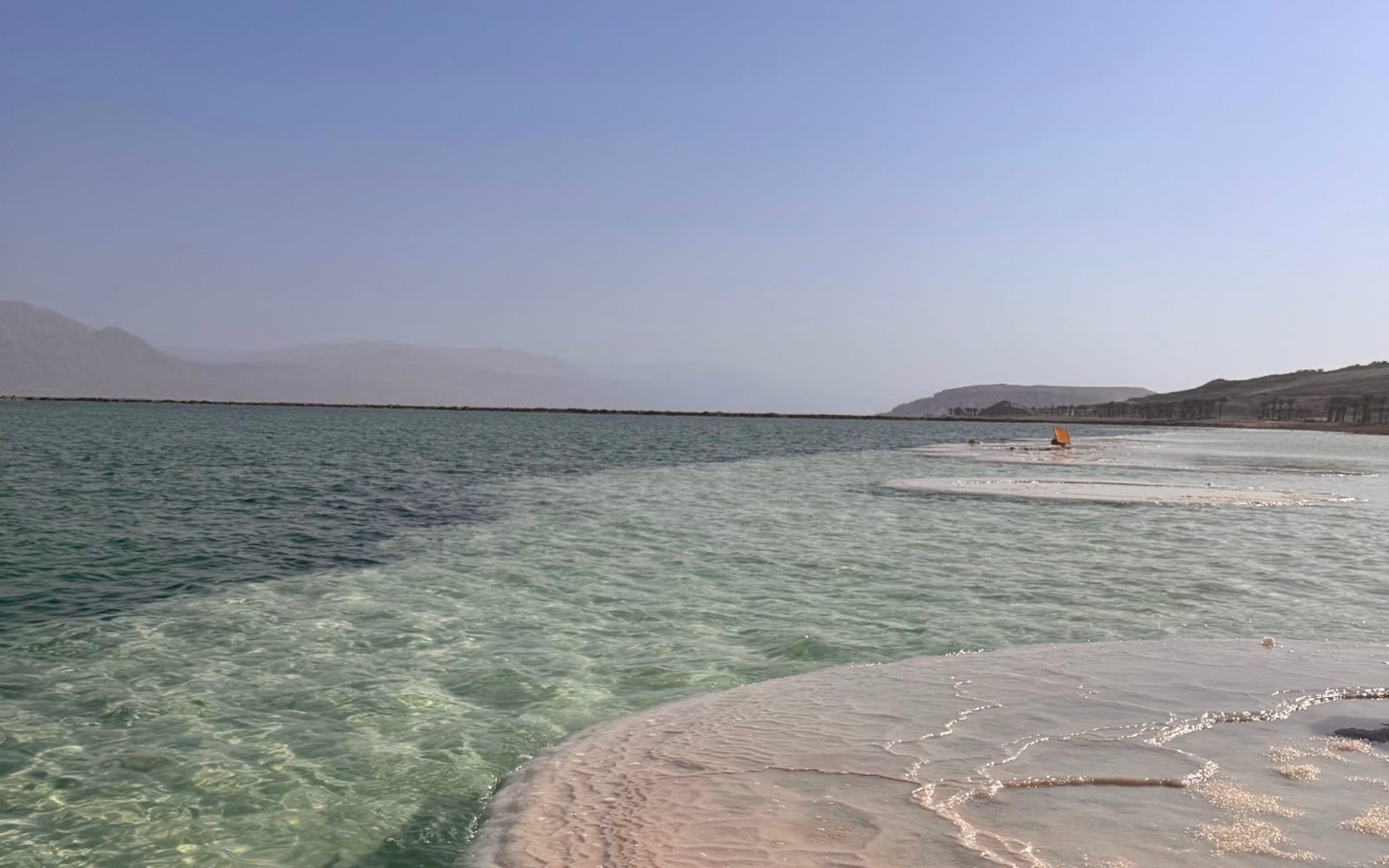
Jericho + Dead Sea is the natural full-day combination. The distance from Jericho to the northern Dead Sea shore is about 40 km south on Route 90 — a 30–40 minute drive. From the Dead Sea you can return to Jerusalem via the Ein Gedi nature reserve or continue south to Masada. Total loop: Jerusalem → Jericho → Dead Sea → Jerusalem ≈ 175 km.
Jericho + Qasr el-Yahud adds 20–25 minutes to the Jericho day. Qasr el-Yahud is accessed from the Israeli side (no Area A issue) and is an INPA national park. The Jordan River here flows about 5 minutes’ walk from a small car park.
Jericho + Bethlehem is possible as a full day with a car or tour, visiting Bethlehem in the morning and Jericho in the afternoon (or vice versa). Both are Area A — the same rental-car restriction applies. Tours that combine both exist and represent good value.
Practical tips
Documents: carry your passport (not just a photocopy). A passport is required to enter Area A and useful if anything unexpected arises. Your ETA-IL or Israeli entry visa does not restrict your ability to visit as a foreign tourist.
Safety and current conditions: Jericho’s tourist sites have a long record of safe visitation by foreign tourists. The security situation in the West Bank can change; always verify current conditions through your government’s travel advisory before setting out. UK: gov.uk/foreign-travel-advice/the-occupied-palestinian-territories. US: travel.state.gov West Bank advisory.
Heat: Jericho’s Jordan Valley location means temperatures regularly reach 40–45°C in July and August — significantly hotter than Jerusalem or the coast. Spring (March–May) and autumn (October–November) are far more comfortable for archaeological exploration. If visiting in summer, plan arrival before 09:00 and avoid outdoor sites between 11:00 and 15:00.
Hours: site hours (Tell es-Sultan, Hisham’s Palace, cable car) can change seasonally and for maintenance. Verify before setting out.
Currency: Palestinian Authority areas use both Israeli New Shekel (₪) and Jordanian Dinar (JD); USD is widely accepted at tourist sites. Israeli credit cards accepted at many tourist facilities.
Cross-links: Day trips from Jerusalem · Dead Sea guide · Jordan River baptism sites · Qumran Dead Sea Scrolls · Christian pilgrimage guide · Israel National Parks Pass · Car rental in Israel