Latrun is one of Israel’s most undervisited highway stops — a compact cluster of three entirely different attractions that together make a convincing half-day or full-day excursion off Route 1. Located about 40 minutes from Tel Aviv and 35 minutes from Jerusalem, it fits naturally into a journey between the two cities or stands alone as a day trip from either base.
Yad La-Shiryon: the armored corps museum
The Yad La-Shiryon Armored Corps Memorial Site and Museum is Israel’s most significant military museum and one of the largest armored vehicle collections in the Middle East — a fact that surprises most visitors who arrive expecting a modest war memorial.
The outdoor tank park
The hillside grounds display over 200 armored vehicles in the open air: tanks, half-tracks, armored personnel carriers, self-propelled artillery and infantry fighting vehicles spanning from the Cromwell tanks of Israel’s 1948 War of Independence through Sherman and Centurion variants from the 1950s and 1960s, to M48 Pattons and M60s from the Yom Kippur War, to modern Merkava I through IV hulls. Most vehicles carry their unit markings and combat histories on plaques, and the sheer scale of the collection rewards an hour of unhurried walking even for non-enthusiasts.
The site sits on and around the historic Latrun Police Fort — a British Mandate-era fortified compound whose commanding position over the Route 1 corridor made it the flashpoint of one of the most consequential battles of Israel’s founding war.
The 1948 Battle of Latrun
The fort and surrounding heights controlled the only paved road between the coast and Jerusalem. During the 1948 War of Independence, a besieged Jerusalem was running critically short of food and water. The IDF launched four separate assaults on Latrun between May and July 1948, all repulsed by the Jordanian Arab Legion. The failures cost hundreds of Israeli lives and many of the newly arrived Holocaust survivors who had been rushed into uniform.
The breakthrough came not through a fifth assault but through engineering: a mountain path was widened under artillery fire into a passable track, later called the Burma Road, circumventing Latrun entirely. Convoys began reaching Jerusalem within days. The fort itself was not captured until 1967 — it changed hands at the opening of the Six-Day War without resistance.
The indoor memorial museum tells this story with original vehicles, personal testimonies and archival footage. It is sobering and historically essential for understanding why the tank collection outside exists where it does.
Latrun Trappist Monastery
The Monastery of the Silent Brothers — officially the Trappist (Cistercian) Monastery of Latrun — was founded in 1890 by French monks who travelled from the abbey of Sept-Fons to establish a community in the Holy Land. The community has lived and worked on this site continuously through two world wars and Israeli independence.
Wine and olive oil
The monks support themselves through agriculture. The monastery winery produces kosher-certified wine from estate-grown grapes; the olive groves yield extra-virgin olive oil pressed on site in autumn. Both are sold in the monastery shop, which is open Monday through Saturday during daylight hours — hours flex around the monastic prayer schedule, so arrive before mid-afternoon. The wines range from table varieties to a limited Reserve. Prices are modest by Israeli winery standards.
The monastery grounds — stone buildings, cypress-lined paths and vineyards — are open to visitors and are photogenic in a quiet, unpretentious way. The monks observe a partial rule of silence; respectful quiet is appreciated. There is no admission charge; a purchase from the shop supports the community.
The monastery is approximately 2 km from the Latrun junction, signposted from Route 3.
Mini Israel
Mini Israel, located at Kibbutz Latrun roughly 3 km from Yad La-Shiryon, is a 1:25 scale park containing over 350 detailed models of Israeli landmarks — the largest miniature park in the Middle East.
What to see
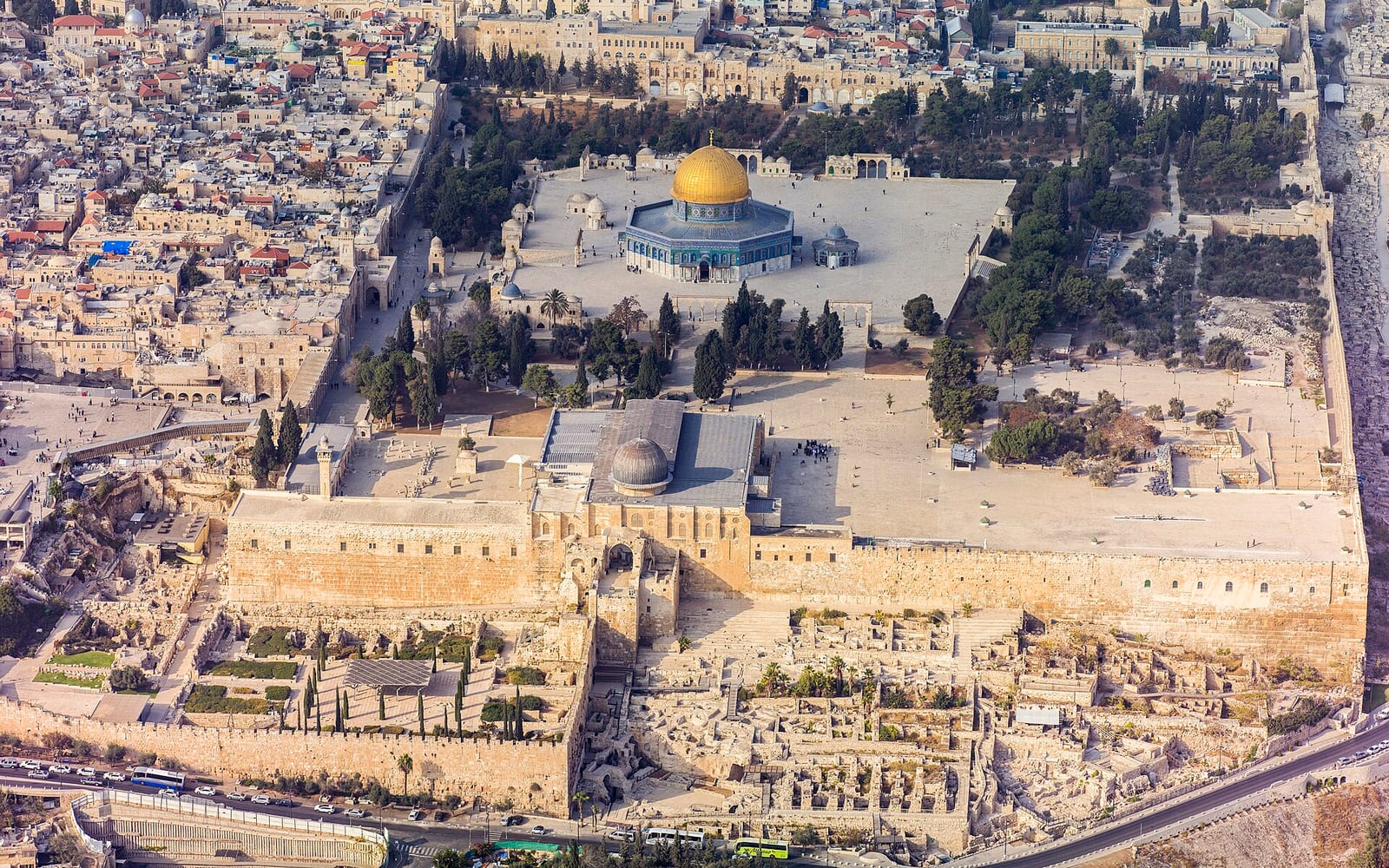
Models cover every part of Israel: the Dome of the Rock and Temple Mount compound, the Western Wall plaza, the Church of the Holy Sepulchre, Masada in its desert context, Caesarea’s Roman theatre and harbour, the Old City of Acre, Ben Gurion Airport complete with aircraft, the Haifa Bahai Gardens terraces, and dozens of less-famous sites from Safed, the Galilee and the Negev. Figures and vehicles animate the scenes at 1:25 scale; model trains and aircraft run through the park on a circuit.
The scale of detail rewards slow walking rather than a quick circuit. Families with children tend to spend the most time here — the landmarks are at ground level, immediately accessible and recognisable.
Mini Israel opens daily; check current times and admission prices at the official site before visiting (rates differ for adults, children and seniors; family tickets are usually available). Evening visits in summer (typically July and August) offer the park lit with thousands of lights — a different experience from the daytime visit and popular with locals. The park has a café and gift shop.
Planning your Latrun visit
Combining all three sites
All three attractions are within 3 km of each other around the Latrun junction on Route 3, just off Route 1. A logical sequence for a day visit:
- Start at Yad La-Shiryon when it opens (the outdoor park is most comfortable before midday heat in summer).
- Drive to the monastery for the shop and grounds — this works well as a midday break, with purchases as a slow lunch substitute.
- Finish at Mini Israel in the afternoon or evening.
The whole loop from the Latrun junction and back takes under 10 minutes of driving.
Driving from Tel Aviv
Take Route 1 east from the Ayalon highway. The Latrun junction is signed at the Route 3 interchange, approximately 40 km from Tel Aviv. Journey time: 35–45 minutes depending on traffic. There is free parking at Yad La-Shiryon and Mini Israel. The drive back west to Tel Aviv on Route 1 is direct — or continue east through the Sha’ar HaGai (Bab el-Wad) forest gorge into Jerusalem, a historically significant approach road marked by the rusted wrecks of 1948 convoy vehicles, left in place as roadside war memorials.
Driving from Jerusalem
Take Route 1 west from Jerusalem. The descent through the Sha’ar HaGai forest takes about 20 minutes; Latrun junction is another 10 minutes. Total from central Jerusalem: 30–35 minutes.
Public transport
Direct public transport to Latrun is limited — there is no bus with a walkable stop at the attractions. Most visitors without a car use:
- A guided day tour that includes driver transport (see tour options above).
- A rental car for the day, easily arranged from Tel Aviv or Jerusalem.
- Shared taxi (sherut) from Jerusalem or Tel Aviv to the junction, then a local taxi for the last leg — feasible but requires coordination.
For anyone already renting a car to drive between Tel Aviv and Jerusalem, Latrun is the obvious stop: the detour off Route 1 is under 10 minutes each way.
When to visit
Spring (March–May) and autumn (October–November) are the most comfortable seasons — mild temperatures, the monastery olive harvest in autumn, and the forested Route 1 gorge at its most atmospheric. Summer (June–August) at Latrun can reach 28–34°C, which is manageable at Yad La-Shiryon (much of the visit is outdoors, so start early) and comfortable at Mini Israel (partial shade). Winter visits are possible; the monastery and Mini Israel operate year-round.
Internal links
Latrun fits naturally into several wider itineraries: see day trips from Tel Aviv for the full Tel Aviv excursion menu, day trips from Jerusalem for Jerusalem-based options, and the car rental guide if you are planning a self-drive Route 1 journey. For more Israeli wine experiences, the Israel wine and wineries guide covers the full national wine scene including the Carmel, Galilee and Judean Hills regions. See transportation in Israel for getting around the country. Plan your wider trip with our Israel itineraries or explore all guided tours and day trips.