Teenagers are harder to impress than toddlers, which is exactly why Israel tends to work so well for them. The country delivers a combination that is almost uniquely suited to the 13–18 age group: physical challenges that feel genuinely demanding (not “managed adventures”), landscapes that look nothing like anywhere else, food they will actually eat, and enough contemporary urban culture to hold attention between historical sites. This guide focuses on what teenagers respond to — not a gentled version of the adult itinerary, but the specific hooks that make the trip their story as much as the family’s.
The sibling guide at /israel-with-kids covers ages 2–12. This one is for the harder audience.
The Masada challenge
The Snake Path sunrise hike is the most reliably teenage-appropriate experience in Israel — and one that converts cynical, reluctant participants faster than anything else on the itinerary. The mechanics: a pre-dawn car journey to the Masada East Visitors Centre, arriving at the trailhead by 3:30–4:00 am, a 1–1.5 hour ascent in the dark up a rocky switchback path, and then the Dead Sea basin illuminating below as the sun rises over Jordan.
The views are genuinely spectacular — the Dead Sea 400 metres below, the Moab mountains in Jordan turning pink and orange, the silence before the tourist buses arrive — and teenagers almost universally want the summit photo. The descent is harder on the knees than the ascent; allow the same time down and bring trekking poles for anyone who needs them.
Practical notes:
- The Snake Path is fully exposed: if you go in May–September, the sunrise start is not optional — the heat becomes dangerous within an hour of sunrise
- Cable car operates from mid-morning and offers a perfectly valid alternative for anyone who doesn’t want to hike; teenagers who do the Snake Path tend to be quietly pleased with themselves
- Masada itself — the UNESCO ruins of Herod’s palace — takes another 2 hours to explore properly; combine in the same morning before the heat peaks
- The Masada and Dead Sea day trip guide covers the full logistics, including how to combine with a Dead Sea float on the same day
The Dead Sea float
Every teenager who visits the Dead Sea shares the same photo: horizontal in the water, newspaper raised, reading in a sea they cannot sink in. The Dead Sea float is one of Israel’s guaranteed crowd-pleasers across all ages, but for teenagers the salt mud ritual and the photographic moment are the specific pull.
Key points:
- Safety brief first. The 34.2% salt brine causes severe burning on contact with eyes — brief clearly before entering, keep heads tilted back, have fresh water to rinse immediately at hand
- Kalia Beach (northernmost, public, ₪60–90 entry including showers and changing rooms) is the easiest base; it’s 45 minutes south of Jerusalem
- The black Dead Sea mineral mud — slathered on, left 10–15 minutes, rinsed off — is the other photo opportunity and genuinely pleasant for skin
- Don’t bring a good swimsuit: the salt will bleach and degrade it
See the full Dead Sea visitor guide for floating technique, beach comparisons and what to bring.
Tel Aviv beach & surf culture
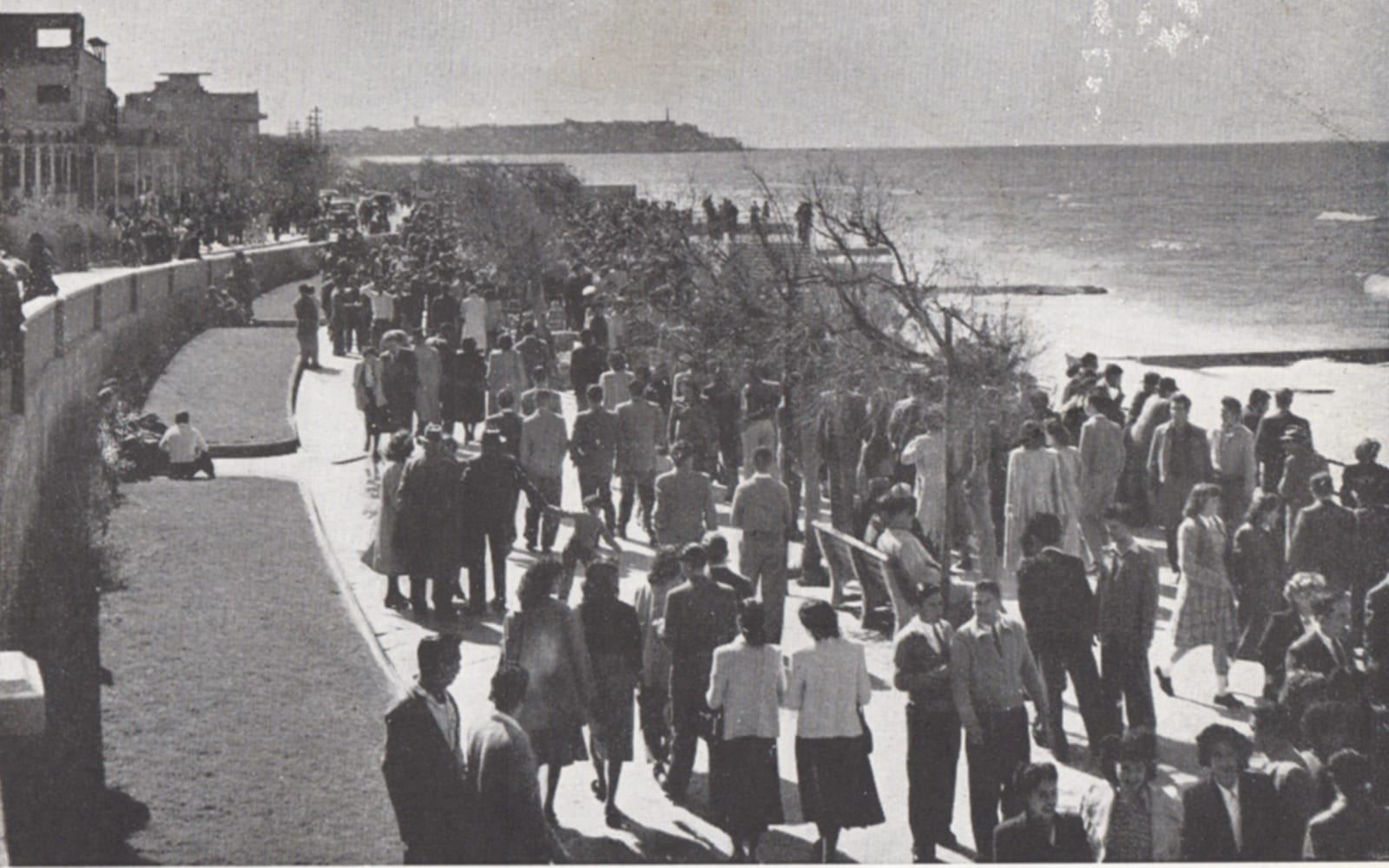
Tel Aviv’s 14-kilometre beach promenade is one of the best city beach environments in the Mediterranean. For teenagers, the specific attractions:
Surfing lessons at Gordon Beach are a legitimate highlight — instructors, boards and wetsuits available for hire, conditions suitable for beginners, and the lesson format (stand-up paddling, then whitewash surfing) works for most teenagers with no experience. The beach culture here feels like a real thing, not a tourist performance.
HaPisgah Gardens skate park (adjacent to Old Jaffa, above the port): a functioning skate park used by local riders, overlooking the sea. Not a tourist attraction — an actual spot. Teenagers who skate, scooter or just want to watch will find it more authentic than most “teen-friendly” activity boxes.
The beach promenade itself — from Gordon Beach south through Bograshov to the Old Tel Aviv Port (Namal) and north to the separate Tel Aviv Port complex — is walkable, bikeable (Tel-O-Fun hire stations everywhere) and full of food, sport courts and beach volleyball nets. Evenings on the promenade feel genuinely vibrant, not manufactured.
Florentin and street art
Florentin (the neighbourhood in south Tel Aviv, roughly bounded by Eilat Street, Kibbutz Galuyot and Menachem Begin) is the city’s creative hub: murals, independent music venues, coffee shops with mismatched furniture and graffiti that is actually interesting rather than tags. An evening wander through the main streets — Frishman, Florentin, Wolfson — gives teenagers a version of Tel Aviv that feels unscripted.
The street art here is not a designated “street art district” — it’s an evolving, artist-driven landscape that changes from visit to visit. That’s what makes it worth seeing rather than a pre-planned activity.
For a slightly different angle: Old Jaffa flea market (Shuk HaPishpishim) on weekends is chaotic, photogenic and full of vintage finds — the kind of experience that teenagers who like markets or street photography will engage with voluntarily.
Water hiking in the canyons
For physically active teenagers, Israel’s water hiking in desert canyons is the most distinctive outdoor experience the country offers — and one that most visitors, including Israelis, don’t know about.
The format: wadi (canyon stream) hikes where you walk or swim through the water, with waterfalls, pools and narrow gorge sections. The combination of desert heat above and cool spring-fed water below makes these the most memorable hiking days on most family trips.
Best teen-accessible water hikes:
- Nahal David at Ein Gedi — the entry-level option; a signed trail to David’s Waterfall with swimming pools; 1–2 hours, accessible year-round. The Ein Gedi visitor guide covers the details
- Nahal Arugot at Ein Gedi — the longer, wilder option; 6.6 km return, sustained wading sections; advance booking required at peak periods; suitable for teenagers with good fitness
- Nahal Kziv (Upper Galilee) — forested canyon with pools; flows October–May; best in spring
See the water hiking Israel guide for safety rules (flash flood risk is real and serious), gear lists and the full site comparison.
Rappelling and adventure parks
For teenagers who want something more physically challenging than hiking:
Rappelling in the Judean Desert — guided abseil experiences (known as “rappelling” in Israel, from the Hebrew slikat matzuk) are available from Jerusalem-based operators. The typical experience: a 20–40 metre cliff face in the desert near Wadi Qelt or the Judean Wilderness, full safety gear, a guide ratio that allows close supervision. Ages from 12–14 minimum depending on operator — check when booking.
Neot Kedumim (the Biblical landscape reserve, between Jerusalem and Tel Aviv) runs seasonal adventure programmes including rope courses, rappelling and desert activities suitable for families with teenagers. Less known than the canyon operators but high quality.
Extreme Park Haifa — rope courses, zip-lines and climbing walls on the Carmel mountain overlooking Haifa. Convenient if the itinerary passes through Haifa (easy day trip from Tel Aviv by train).
For the full picture of adventure options in Israel, see /israel-adventure-sports.
Sea of Galilee and the Golan
For families spending time in the north, the Sea of Galilee has some of the best teen activities in the country:
- Kayaking and paddleboarding from Gofra Beach (north shore) or Kinneret Beach (west shore) — the lake is large enough to feel like open water, calm enough for beginners
- Achziv National Park (Mediterranean coast near Nahariya) — tidal rock pools, a beach, snorkelling in the protected lagoon; the best free-entry beach in the north
- Kayaking the Jordan River — a gentle downstream float through the Jordan Valley from the Sde Nehemia launch point to Beit Zera; around 2 hours, suitable for all fitness levels, popular with Israeli families
Nimrod Fortress in the Golan Heights — a Crusader/Mamluk castle set high above a volcanic valley — has the specific quality teenagers occasionally respond to: enormous, partially ruined, with towers you can climb and views across Syria and Lebanon. Not crowded, not over-managed, genuinely impressive in scale. The hike through the fortress takes 1–2 hours.
Yad Vashem — the Holocaust memorial
This requires advance thought for families with teenagers.
Yad Vashem in Jerusalem is one of the most significant Holocaust memorials in the world and, for many teenagers with Jewish heritage, one of the most formative experiences of the trip. The Holocaust History Museum is well-designed for self-navigation — narrative, chronological, deeply researched — and holds the attention of most teenagers who engage with it seriously.
Practical guidance:
- Suitable from age 14+ for the main museum; the Holocaust Art Museum is accessible for younger teens
- Allow 3–4 hours minimum for the main museum; do not rush
- Yad Vashem is emotionally very heavy — brief teenagers beforehand on what the museum covers, and leave time and space for quiet conversation afterward
- Children under 10 are not recommended for the main museum
- Pre-book your entry slot at the Yad Vashem website — the museum is free but registration is required and time slots fill on busy days
- See the full visitor guide at /yad-vashem-visitor-guide
Planning tips for families with teenagers
Let them lead some decisions
The difference between a teenager who is “brought to Israel” and one who has ownership over the experience is largely about involvement. If they choose the rappelling operator, book the surf lesson or pick the restaurant in the market, they are invested. Israel is compact enough that a family can split for half-days — parents at a church or museum while the teenager and a sibling do the beach — without logistical complexity.
Balance sightseeing with unstructured time
A dense itinerary of historical sites will exhaust even interested teenagers. The most successful family trips tend to alternate: one morning of concentrated history (Old City, Yad Vashem, Masada), one afternoon of completely unstructured beach or market time. Tel Aviv is particularly good for this — the city rewards wandering.
Kashrut and food
Israeli food is generally teenager-friendly: shawarma, hummus, falafel, grilled meats, fresh bread, excellent pizza in Tel Aviv, and street food everywhere. The Machane Yehuda market in Jerusalem and Carmel Market in Tel Aviv both offer the kind of chaotic, affordable, choose-your-own-adventure eating that teenagers navigate well independently. Vegetarian and vegan options are unusually good for the Middle East. See the Israeli food guide for context.
Getting around
- Tel Aviv: walkable, bikeable; the Light Rail now covers the main corridors. Teenagers can operate independently with a Rav-Kav card
- Jerusalem: Old City is best on foot; the light rail reaches the main tourist areas
- Between cities: trains are fast, cheap and safe — Jerusalem to Tel Aviv is 35 minutes; Jerusalem to Haifa is 2 hours with a change
- Dead Sea, Galilee, Negev: rental car is the practical option; buses exist but are slow and infrequent for tourist circuits. See /car-rental-israel
Sample 7-day teen-focused itinerary
| Day | Focus |
|---|
| 1 | Tel Aviv: arrive, beach afternoon, promenade evening |
| 2 | Tel Aviv: surf lesson morning, Florentin/street art afternoon |
| 3 | Jerusalem: Old City walk (ramparts + Western Wall + markets) |
| 4 | Yad Vashem morning, free afternoon in TLV or Mahane Yehuda evening |
| 5 | Masada Snake Path (pre-dawn start), Dead Sea float afternoon |
| 6 | Ein Gedi water hike morning, return via Dead Sea or drive north |
| 7 | Galilee: Sea of Galilee kayak or Golan Nimrod Fortress |
This sequence is vehicle-friendly (rent a car from day 3 or 4 when the south and north begin). The Tel Aviv days are intentionally beach-forward — arrival legs go better when teens decompress before the heavy history days.