Tel Aviv is the counterpoint to Jerusalem: young, flat, Mediterranean, and unapologetically present-tense. Two days here means the beach, the shuk, ancient Jaffa perched above the port, and enough neighbourhood wandering in Neve Tzedek and Florentin to understand why half the country seems to be moving here. This itinerary covers the non-negotiables of a first visit, routes them efficiently from a central base, and links to the tours and transport you will actually need.
The logistics start with one honest note: Ben Gurion Airport is 20 kilometres southeast. Trains run to the city in about 15 minutes; they shut from Friday afternoon to Saturday night for Shabbat, so a ride-app is your fallback if your arrival lands in that window.
Before You Go: Practical Frame for Two Days in Tel Aviv
Where to stay. The most useful base for a short visit sits on or near the waterfront along Ha’Yarkon Street or one block inland on Ben Yehuda Street — walking distance to the beach, the Carmel Market and Old Jaffa. Mid-range hotels here run ₪600–1,000 ($170–280) a night; boutique options in Neve Tzedek cluster around ₪700–1,100. The Abraham Hostel on Levinski Street is the city’s premier traveller hub (dorms, private rooms, bar, and a communal day-trip desk) at ₪150–220 for a dorm bed. Avoid the areas around Tel Aviv Central Bus Station unless budget is the overriding concern — the surrounding neighbourhood (Neve Sha’anan, Shapira) is rough after dark.
Getting around. Walk wherever the distance is under 30 minutes — Tel Aviv is flat, the promenade is pleasant, and the city is designed for it. Tel-O-Fun bike-share puts a docking station every 300 metres; a single day pass costs about ₪23 on the app, and rides under 30 minutes are included. For longer hops, Gett or Yango ride-apps give a fare estimate before you confirm. Bus 51 and 18 run along the seafront; Dan Bus covers the inland routes. A Rav-Kav card (₪5 to buy at any train station machine, then load credit) cuts the per-ride bus fare slightly versus cash.
Cash and cards. ATMs are everywhere. Nearly all restaurants, supermarkets and shops accept Visa and Mastercard. Street-food stalls and market vendors at the Carmel shuk may be cash-only; carry ₪200–300 in small notes. Tipping is common: 12–15% in sit-down restaurants, rounding up in cafés.
Dress code. None for the city, beaches or markets — Tel Aviv is famously relaxed. If you are day-tripping to Jerusalem or visiting the old synagogues in Jaffa, bring a scarf or light layer.
Day 1 — Beach, the Carmel Market and Old Jaffa
Day one follows the spine of the city from north to south: morning in the market, afternoon on the beach, evening in ancient Jaffa.
Morning — Carmel Market (Shuk HaCarmel)
Start at the Carmel Market — the city’s oldest and loudest market, open Sunday to Friday from around 07:00 until mid-afternoon (it closes early on Fridays). Walk the length of the market (about 500 metres) slowly: fresh-squeezed pomegranate juice from the first vendor you see, fried cauliflower or sabich (fried aubergine + egg in pita) for breakfast, spice stalls stacked with za’atar and sumac, Levantine dried fruit, and cheap Israeli street fashion at the south end. The parallel Nahalat Binyamin street runs alongside — artisan market stalls operate here on Tuesday and Friday mornings, worth a detour if your timing aligns. Budget an hour to ninety minutes; eat as you go.
From the market, the beachfront is a ten-minute walk west.
Afternoon — The Tel Aviv Beachfront
The Tel Aviv beach strip runs thirteen kilometres from the Herzliya border in the north to Old Jaffa in the south — all of it free, all of it open. For a first-time visitor, the stretch between Gordon Beach and Hilton Beach captures the city at its most Tel Avivian: beach-volleyball courts, seafront cafes, the Yarkon mouth with its boating park, and an unbroken view west to the Mediterranean horizon.
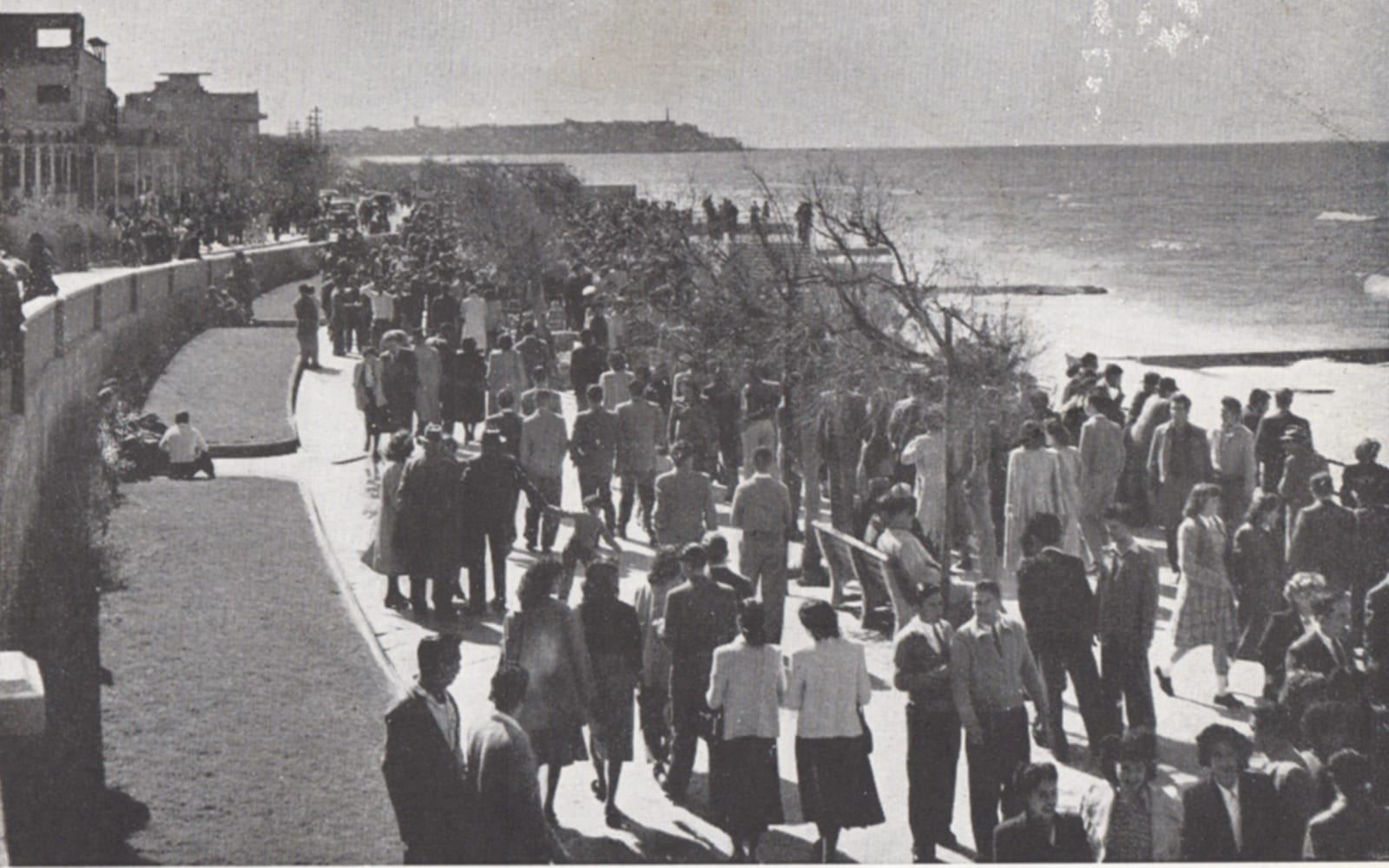
Rent a sunlounger if you want (₪20–40 from beach concessions), swim (the Mediterranean here is warm from May to November), or walk the promenade (tayelet) south towards Jaffa. The walk from Gordon Beach to Old Jaffa along the seafront takes about 40 minutes — flat, shaded in spots, and one of the genuinely good urban walks in the Middle East.
Evening — Old Jaffa
Old Jaffa (Yafo) sits at the south end of the beach walk, perched on a low hill above the working port. It is one of the oldest continuously occupied port cities in the world; the Tel Aviv municipality absorbed it in 1950 but the old city retains its own distinct character — Arab, Jewish and mixed, with a thriving art gallery cluster and the best flea market in Israel.
Three things are worth your evening here:
The Jaffa Flea Market (Shuk HaPishpeshim) area on Olei Tzion Street and the surrounding lanes: Yemenite jewellery, Soviet-era cameras, Israeli ceramics, and antiques of indeterminate origin. Open Sunday to Thursday and Friday mornings; the galleries and restaurants here stay open into the evening year-round.
The Old Jaffa Lookout above the port: a free public viewpoint from the hilltop park, with a panoramic sweep north along the entire Tel Aviv coastline. Best at sunset.
Dinner in Old Jaffa or back in the adjacent Florentin neighbourhood once you have walked back north. The Old Jaffa port has several seafood restaurants (expensive but with harbour views); for better value, Florentin’s Vital Street has a concentrated run of casual restaurants, natural wine bars and late-night falafel counters.
Day 2 — Neve Tzedek, the White City and Tel Aviv’s Inner Neighbourhoods
Day two goes inland — into the Bauhaus streets, boutique cafes and neighbourhood galleries that Tel Aviv ranks itself by.
Morning — Neve Tzedek
Neve Tzedek — literally “oasis of justice” — was the first Jewish neighbourhood built outside Jaffa in 1887, predating Tel Aviv itself. The streets are narrow, cobbled and shaded by mulberry trees; the architecture is Ottoman-era mixed with late-19th-century European; the cafés and boutiques that moved in from the 1980s onward have made it the most visited neighbourhood in the city.
Start at Shabazi Street, the commercial heart of Neve Tzedek: coffee at Vicky Cristina or Benedict on the terrace, then a wander through the craft galleries and local-designer clothing shops. The Suzanne Dellal Centre for dance and performance occupies a beautifully restored building on a courtyard plaza at the east end of the neighbourhood — even if there is no performance, the courtyard is worth the walk.
From Neve Tzedek, it is a 15-minute walk north along Rothschild Boulevard.
Midday — Rothschild Boulevard and the White City
Rothschild Boulevard is the city’s symbolic main street — a wide, tree-lined promenade with benches and a bike path running the whole length. More to the point, Rothschild and the streets radiating from it concentrate the largest collection of International Style (Bauhaus) buildings outside Europe. Tel Aviv’s White City was designated a UNESCO World Heritage Site in 2003.
You do not need to be an architecture enthusiast to enjoy the walk: the white-plastered cubic buildings with horizontal ribbon windows and pilotis (stilted ground floors) are simply good-looking, and the street cafes, startups and law offices occupying them give the boulevard a prosperous, easy energy. The Florentin neighbourhood begins a few blocks south — a grittier, more creative zone of street art, independent music venues and cheap schnitzel.
For lunch, the Sarona Market (indoor gourmet food hall, about ten minutes north of Rothschild) is the upgrade option: artisan cheesemakers, fresh pasta counters, Israeli wine bars and a dozen restaurant concessions around a central hall. Alternatively, the Levinsky Market area on Levinski Street near the bus station is the city’s spice and immigrant-food hub — Persian Jewish cooking, Ethiopian coffee, Georgian khachapuri — cheaper and more chaotic than Sarona.
Afternoon — Tel Aviv Museum of Art (Optional)
If museums are your anchor, the Tel Aviv Museum of Art on Shaul Hamelech Boulevard (open Sunday–Wednesday and Saturday 10:00–18:00, Thursday 10:00–21:00, closed Friday) is Israel’s strongest contemporary art collection — Impressionism, 20th-century Israeli art, and a Helen and Asher Edelman wing for international modern work. Allow 90 minutes to two hours. Entry is ₪52 for adults (check the official site for current prices — the museum periodically revises admission). It is a 20-minute walk or short bus ride north from Rothschild.
If museums are not your priority, spend the afternoon doing a Tel-O-Fun bike loop through the Yarkon Park (20 minutes north of the city centre, 2,700 dunams of green space along the river) or simply order a second coffee on Rothschild and watch Tel Aviv go by.
Evening — Dinner and the Final Night
Tel Aviv’s restaurant and bar scene is deep enough that the hard choice is not where to eat but how to narrow it down. A few honest anchors:
Dizengoff Street (mid-city, between Dizengoff Square and Ben Gurion Boulevard) is the city’s most concentrated casual dining strip — reliable falafel, wine bars, pizza, seafood. HaKarmel Street near the Carmel Market has a row of hummus-and-mezze places that are busy at lunch and early evening. Port Ha’Yaffo on Ha’Aliya Ha’Shniya Street in Jaffa’s port is the city’s most-photographed dining venue — fish market meets restaurant row — but you have been to Jaffa already; it suits a second-night repeat or is better if you have more time.
Beer Bazaar (branches in Jerusalem and Tel Aviv) and Dancing Camel carry the widest Israeli craft-beer selections if that matters to you.
What to Skip if You Only Have Two Days
Honest editorial: with two days, skip the Museum of the Jewish Diaspora (ANU Museum) on the Tel Aviv University campus — it is a substantial half-day commitment that works better when you are not trading it against beach time; add it if you have a third day. Skip the Reading Power Station unless you are specifically interested in industrial-chic nightlife. Skip the Palmach Museum (telephones required, Hebrew-guided) on a first visit. And skip the Tel Aviv-to-Jerusalem day trip — two hours of transport round-trip eats a third of your day; that junction works better when you have Jerusalem nights or when you have already done it.
Cross-trips and Extensions
Finishing Tel Aviv and wondering what to bolt on? The fast train to Jerusalem (45 minutes, ₪18) makes a third-day side trip to the Old City and Yad Vashem straightforward. The 3 days in Jerusalem itinerary covers that in full — it works as a self-contained trip or as the obvious complement to two days in Tel Aviv. The combined five-day version is in the 5 days in Israel itinerary.
Caesarea is an easy 45-minute drive north along the coast (rental car or guided tour) — a Roman amphitheatre, Crusader port and aqueduct on the Mediterranean; worth it if archaeology is on your list. Haifa and Akko are a 60-minute train ride north — see the Haifa–Akko transport guide for logistics.
Frequently Asked Questions
The FAQ entries above cover the most practical questions a first-time visitor to Tel Aviv asks: whether two days is enough, where to stay, how to get from the airport, what Shabbat means for a short visit, and the best time of year. The FAQPage schema surfaced from this page means those questions appear directly in search results.