Netanya sits on a limestone cliff above a 14-kilometre stretch of Mediterranean coastline, midway between Tel Aviv and Haifa — close enough to both to be reached in 45 minutes by train, yet distinct enough to reward its own half-day or full-day visit. Israel’s fourth-largest city has a character unlike anywhere else in the country: a genuine Franco-Israeli café culture born of decades of French aliyah, a world-class diamond industry hidden in industrial estates east of the cliff, and one of the longest unbroken Mediterranean beach frontages in the country.
Nicknamed the “French Riviera of Israel” for its cliff-top promenade and Francophone character rather than any claim to luxury, Netanya is a working city that happens to have excellent beaches and a good lunch.
The cliff-top promenade and Independence Square
The heart of Netanya is Kikar HaAtzmaut — Independence Square — which sits at the cliff edge with views south down the coast toward Tel Aviv. The square is surrounded by cafés, restaurants and a small pedestrian zone that fills up on weekend mornings with a combination of French-speaking retirees, young Israeli families and the occasional group of diamond merchants discussing business over black coffee.
From Independence Square, a broad promenade runs north and south along the cliff edge. It is particularly pleasant in the evening when the Mediterranean light flattens and the sea breeze relieves the summer heat. The cliff drops sharply to the beach below — not a gradual slope as in Tel Aviv, but a proper limestone escarpment.
The beach elevator: At several points along the cliff, free public elevators descend from the promenade level down to the beach. These are functional rather than scenic but make the beach accessible without a long descent on foot — useful with young children, heavy beach bags or limited mobility.
HaPeled Street and the French connection
HaPeled Street runs east from Independence Square and is the informal centre of Netanya’s French-speaking community. Expect French-language signage on café boards, kosher boulangeries selling pain aux raisins alongside challah, and the sound of French at most of the outdoor tables. A few restaurants post menus in French alongside Hebrew with no English at all — a reminder that this neighbourhood exists for its residents, not primarily for tourists.
The French presence in Netanya is not superficial. Approximately 60,000 francophone Israelis live in the city — one of the largest concentrations in the world outside France, Belgium and Canada. Many arrived after 2014, when a wave of French Jewish emigration followed a series of antisemitic attacks in France. The Jewish Agency estimates that Israel received more French olim (immigrants) in 2014–2016 than in any period since the 1970s, and Netanya absorbed a significant share.
For French-speaking travellers, Netanya is one of the easiest cities in Israel to navigate. The language barrier that sometimes complicates day-to-day interactions elsewhere largely dissolves here.
The diamond district
Israel is the world’s largest polished diamond exporter by value, a position it has held since the mid-20th century. Netanya is the historic centre of that industry — the first diamond polishing factory in mandatory Palestine opened here in 1937, and the city still houses major diamond trading companies.
Stern Diamond Factory tour
The Stern Diamond Factory offers free guided factory tours on weekdays (advance reservation required — check their website for current availability as schedules change seasonally). The tour covers the cutting and polishing floor, where you can watch skilled workers shaping rough stones under magnification, followed by a showroom visit.
A few honest notes about the tour:
- The factory section is genuinely interesting. Watching a rough industrial diamond become a polished gem through a series of increasingly precise cuts takes about 30–40 minutes and answers questions most visitors didn’t know they had.
- The showroom is a commercial environment. Staff are professional, not high-pressure, but the purpose of the free tour is to expose visitors to the merchandise. There is no obligation to purchase.
- Reserve in advance. Walk-in visits are sometimes accommodated but the tour schedule is not predictable without a reservation.
Netanya also has several independent diamond dealers in the commercial districts east of the centre, but the Stern factory is the only one set up for tourist visits.
Beaches
Netanya’s 14-kilometre coastline is the city’s biggest draw for domestic Israeli tourists. The beaches are sandy, the Mediterranean is warm from May through October, and — outside July and August weekends — they are markedly less crowded than Tel Aviv’s beaches.
Poleg Beach (southern end of the Netanya shoreline) is the most popular and best-maintained, consistently holding Blue Flag status. Facilities include lifeguards from June to September, showers, toilets and sun-lounger rental. Accessible by car from the Poleg interchange on Highway 2.
Sironit Beach is the central beach closest to Independence Square and the elevator access points. Busier on weekends; better served by the cliff-top restaurants for pre or post-swim food.
Northern beaches (Maayan Zvi, Beit Yanai area) tend to be quieter, particularly on weekdays. Fewer facilities but also fewer crowds — preferable for those who find Israeli summer beach culture overwhelming at scale.
Practical note: Check merhavim.org.il for weekly water quality updates at individual beach points before swimming. Israeli beach water quality is generally good, but localized events (storm runoff, jellyfish) are flagged on this site.
Day trips from Netanya
Caesarea (30 km south)
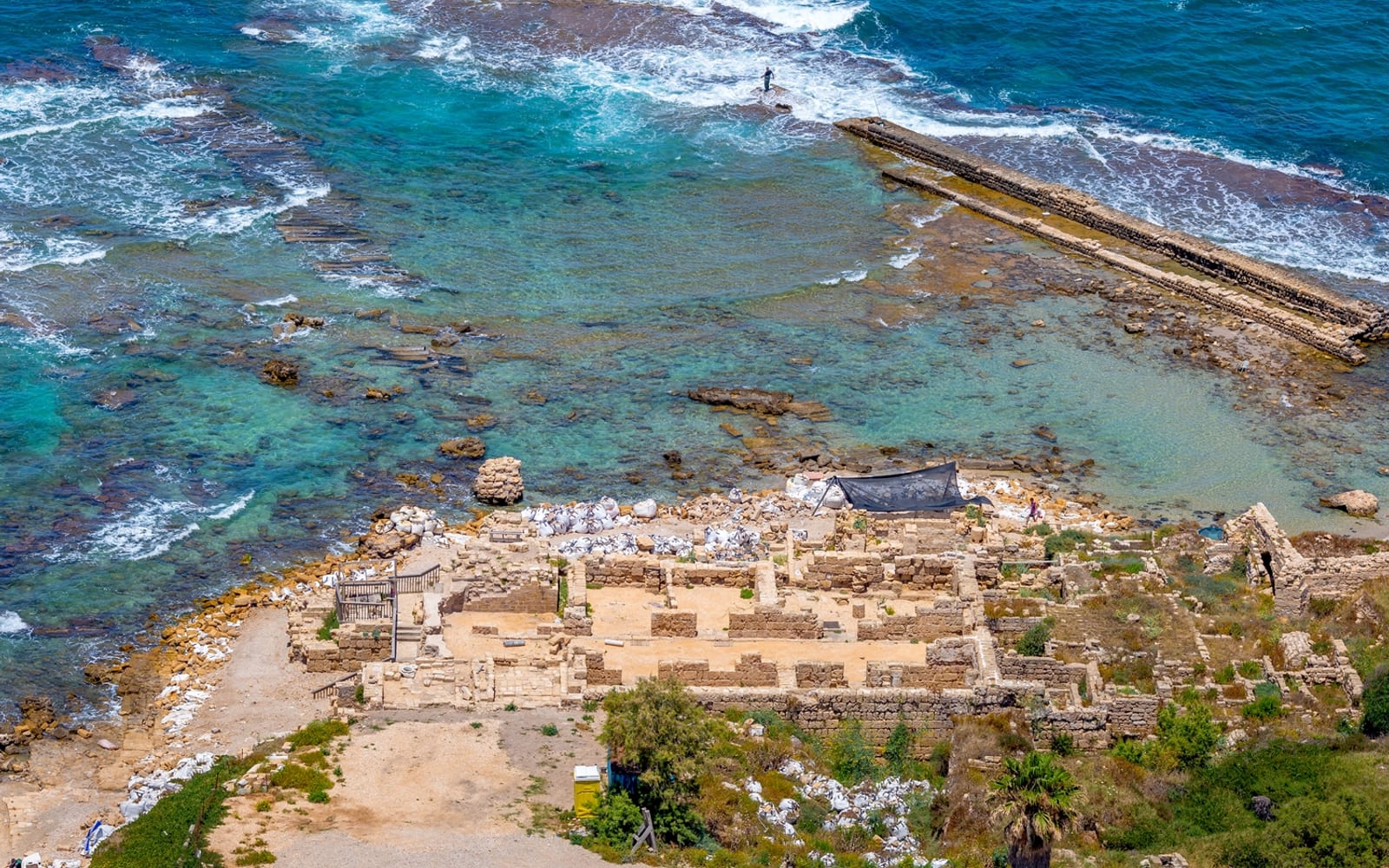
The Roman National Park at Caesarea Maritima is 30 kilometres south — a 25-minute drive or 20-minute train journey to Caesarea–Pardes Hanna station (then a 10-minute taxi). The combination of Caesarea in the morning and Netanya in the afternoon works well: archaeology and Roman harbour before lunch, cliff-top café and beach in the afternoon. See the Caesarea guide for the full visitor breakdown.
Sharon wine route
The Sharon Plain east of Netanya has a cluster of small wineries that make up part of the emerging Sharon wine route. Unlike the established wine regions of the Golan Heights or Judean Hills, this is boutique viticulture — smaller operations, often with tasting rooms open by appointment. Worth exploring if you have a car and enjoy off-the-beaten-path wine tourism; call ahead as hours vary considerably.
Haifa (45 km north)
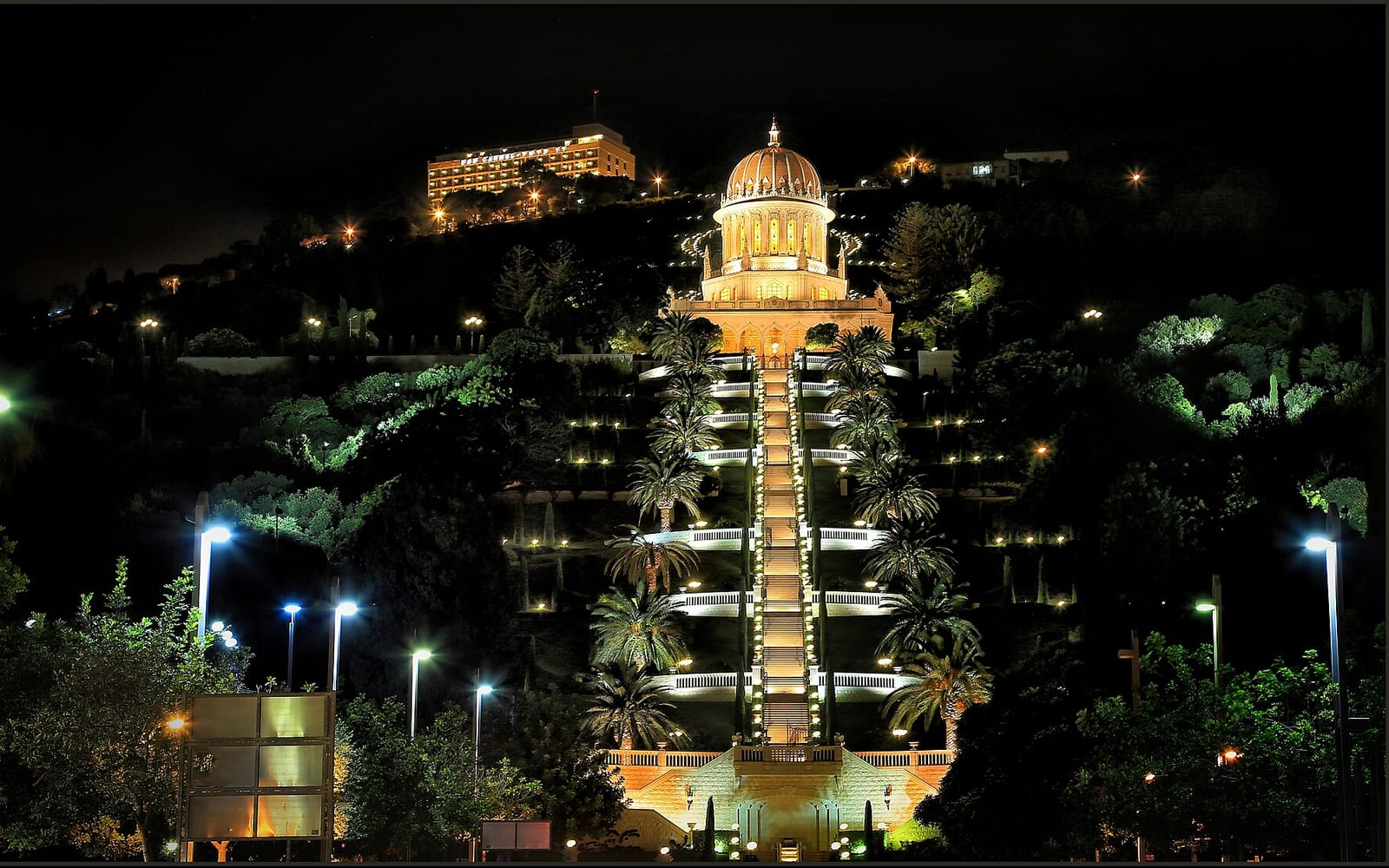
Haifa is 45 kilometres north of Netanya — a 30-minute drive on Highway 2, or one train change at Haifa HaKrayot. The Bahá’í Gardens terraces, German Colony and Carmel market make a full afternoon on their own. Combining Netanya (morning) and Haifa (afternoon) is a reasonable one-day itinerary if you have your own transport.
Getting there and around
From Tel Aviv
By train: Israel Railways coastal line from Tel Aviv HaShalom, Savidor Center or Hagana station to Netanya — approximately 45 minutes. Trains run every 20–30 minutes throughout the day. Check rail.co.il for current timetables. Note: no trains on Shabbat (Friday evening to Saturday night).
Important: Netanya train station is approximately 2 kilometres east of Independence Square and the cliff-top promenade. From the station: bus 1 (direction city centre / Kikar HaAtzmaut) takes about 10 minutes; taxis are available outside the station (approximately ₪15–20 to the square).
By car: Highway 2 north from Tel Aviv — 50 kilometres, approximately 45–55 minutes outside peak hours. Exit at Netanya/Poleg interchange for the southern beaches; continue to the Netanya North exit for the city centre and promenade. Paid parking is available along the cliff-top streets.
By bus: Egged 872 from Tel Aviv Central Bus Station runs direct to Netanya city centre — slower than the train in traffic but drops closer to Independence Square.
From Haifa
By train: 30–40 minutes on the coastal line southbound from Haifa Hof HaCarmel or Haifa Merkaz HaShmona. Trains run frequently on weekdays.
By car: Highway 2 south — 45 kilometres, approximately 35–45 minutes outside rush hour.
Practical tips
Best time to visit: Spring (March–May) and autumn (September–November) offer comfortable temperatures and smaller crowds. July and August are beach-season peak — the promenade is lively but beaches get crowded on weekends. Netanya’s cliff-top position means evenings are breezy even in summer.
Shabbat: The city quiets significantly from Friday afternoon to Saturday evening. Beach-going is one of the few activities that continues on Shabbat (beaches are not operated by the city and remain open). Most restaurants and cafés reopen Saturday evening. The diamond factory and most shops close Friday afternoon and all day Saturday.
Language: Netanya is one of the few Israeli cities where French is functionally useful alongside Hebrew. English works fine in tourist-facing businesses; on HaPeled Street and in older residential neighbourhoods, French may be more useful than English with older residents.
Getting Rav-Kav: If you plan to use buses within Netanya after arriving by train, an existing Rav-Kav card (loaded with stored value) covers local buses. A single-ride ticket can also be purchased on bus.
Where to stay: For hotel recommendations by area and price tier, see the best hotels in Netanya guide — it covers cliff-top sea-view properties, the Leonardo Club all-inclusive, and budget options near the city centre.
Cross-links: Caesarea guide · Day trips from Tel Aviv · Haifa day trips · Rav-Kav Israel guide · Transportation in Israel · Tel Aviv complete guide · Israel National Parks Pass