Caesarea is the most compact and accessible major archaeological site in Israel — a 45-minute drive north of Tel Aviv, where a Roman theatre, Herodian harbour, Crusader gatehouse and a free-swimming Mediterranean beach all occupy the same coastal headland. It makes an ideal half-day or full-day excursion and the starting point for the classic northern coast loop.
Caesarea National Park: the archaeology
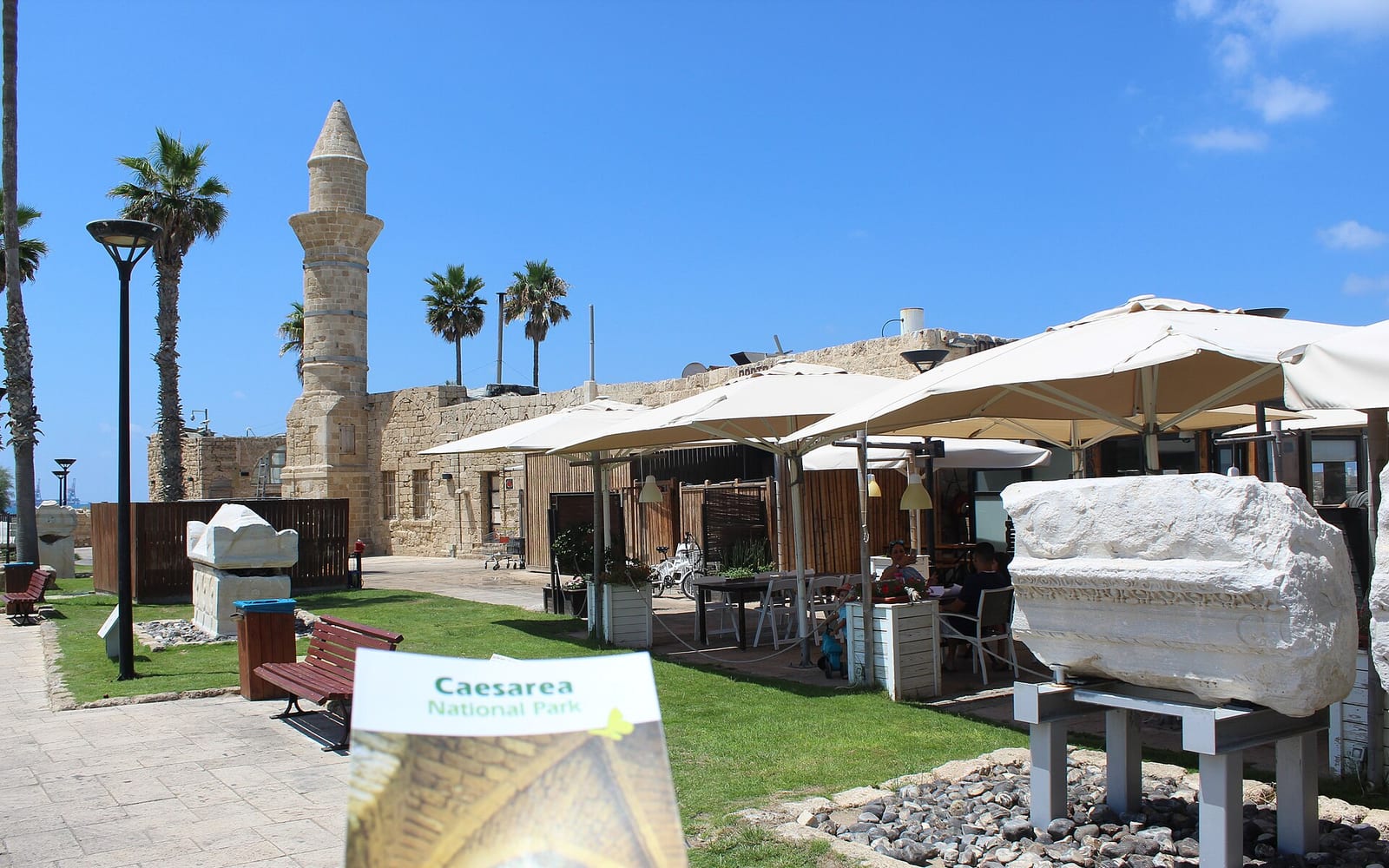
The Caesarea National Park covers the complete archaeological zone of Caesarea Maritima — the port founded by Herod the Great around 25 BCE as the Roman provincial capital of Iudaea. A single combined ticket (INPA pass valid; check current prices at parks.org.il) covers the key sites, and the park’s signed chronological trail walks you through six distinct historical layers.
Roman Theatre and Hippodrome
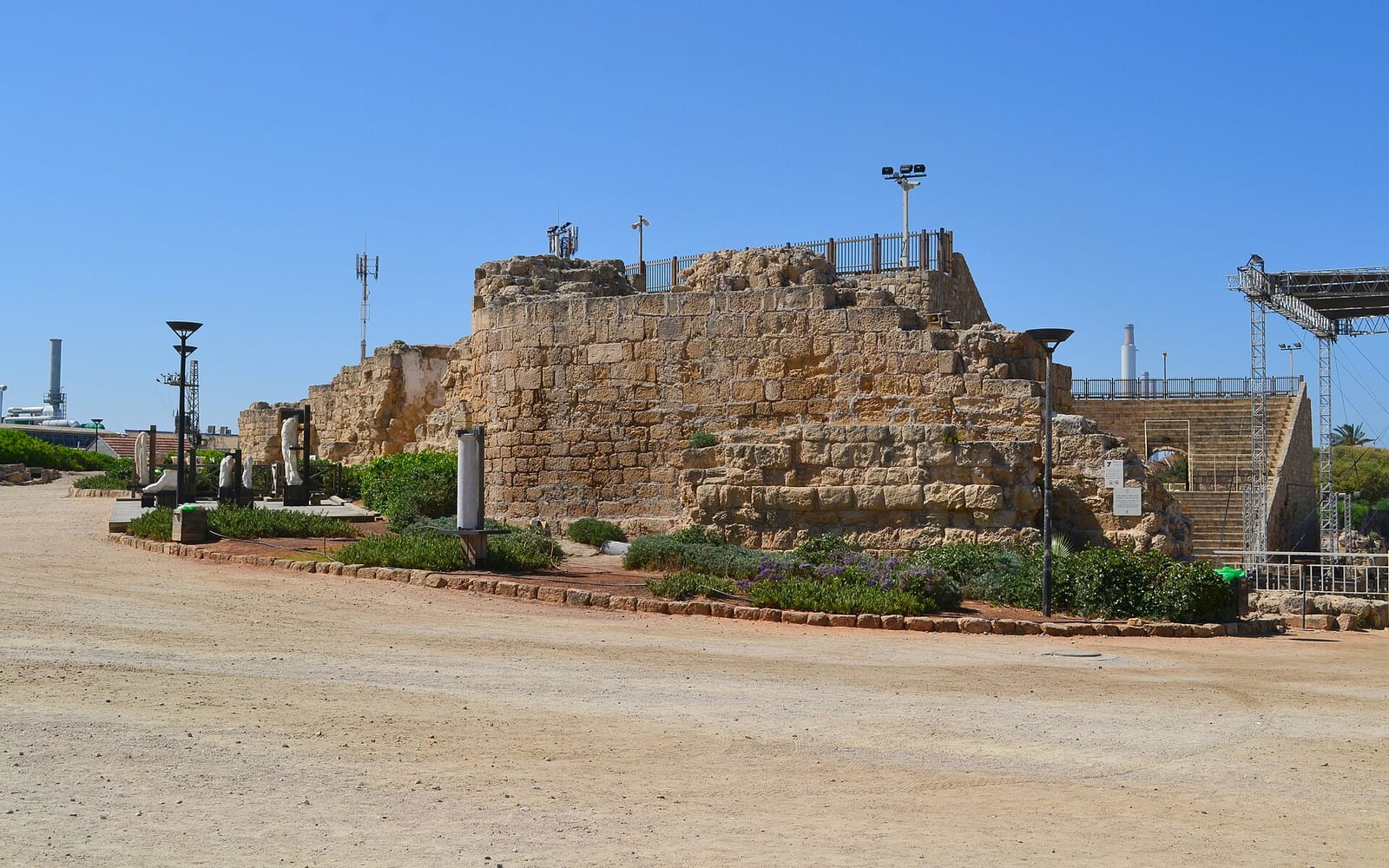
The Roman Theatre is the oldest and most complete in Israel — built around 22 BCE, restored in the 1960s, and still hosting the Caesarea summer concert series. The original semi-circular seating is intact; the acoustics are excellent; and the rear stage has sea views. Allow 20–30 minutes here, more if you arrive early and can sit undisturbed.
The Hippodrome of Herod (also called the Roman Amphitheater on some signage) is a 250-metre partial reconstruction of a chariot-racing stadium. Original starting gates and stone seating tiers are visible. This site is where Herodian-era gladiatorial games and chariot races were held; the scale is easier to grasp than the harbour ruins.
Herodian Sebastos Harbour
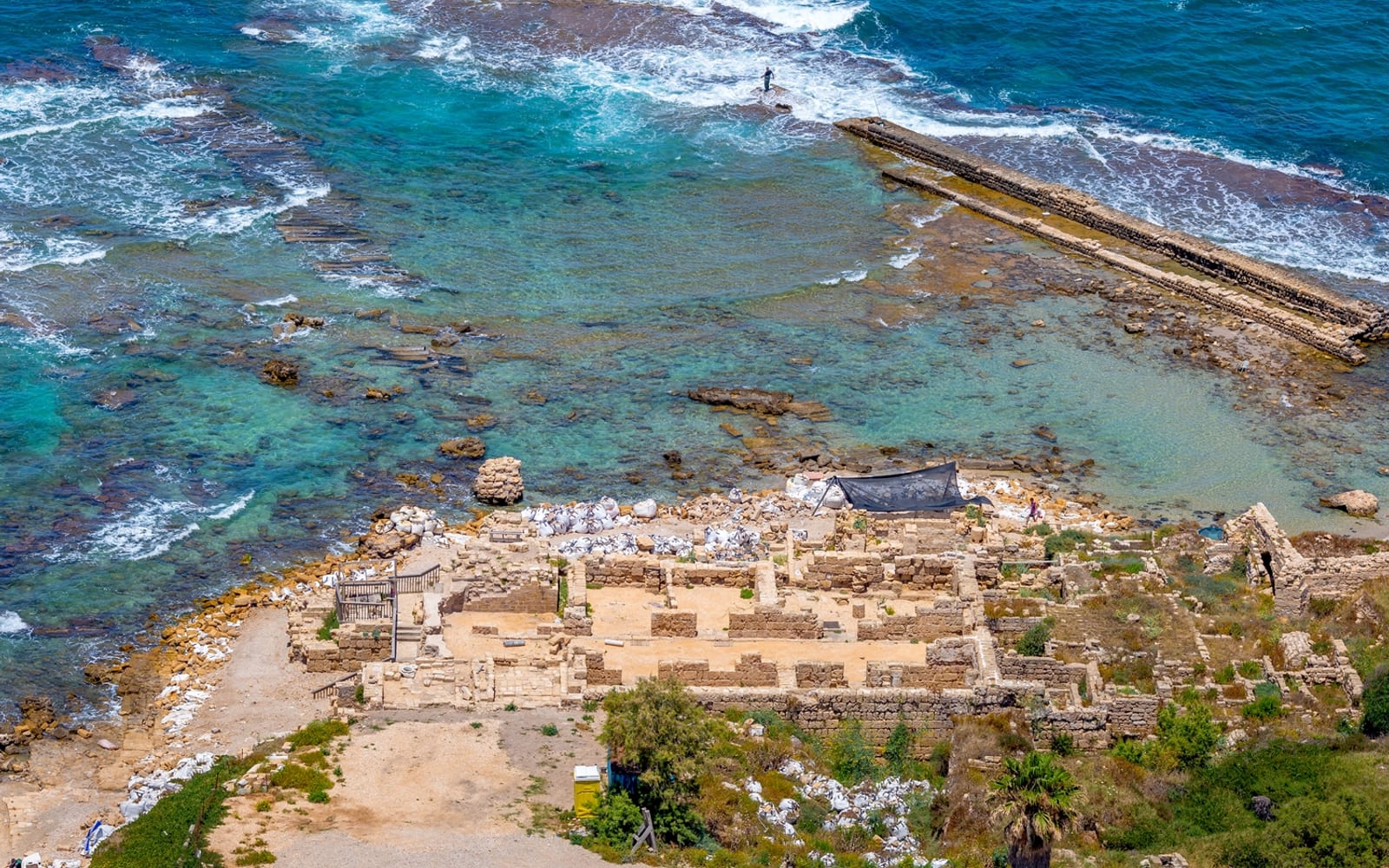
The Sebastos harbour was the largest artificial deep-water port in the eastern Mediterranean for several centuries — built with hydraulic concrete containing volcanic ash imported from the Bay of Naples, poured underwater using wooden caissons. Most of the breakwaters subsided by several metres around the 6th century CE and are now underwater; an underwater snorkel archaeology park (summer only) lets you see them. In November 2024, INPA formally designated these offshore waters as Yam Caesarea Marine National Park — Israel’s first marine national park — recognising both the ecological communities growing on the ruins and the archaeological significance of the submerged harbour. The Time Trek multimedia experience inside the Crusader walls uses projection mapping to show the harbour’s Herodian-era appearance — worth the small extra ticket cost.
Crusader walls and the Pilate Inscription
The 12th-century Crusader gatehouse is one of the best-preserved in Israel — complete archway, guard chambers and the moat outline visible. The small archaeology museum at the visitor centre displays the Pilate Inscription, a replica of the only stone inscription archaeologically attesting Pontius Pilate’s title of prefect in Iudaea. (The original is in the Israel Museum, Jerusalem.)
Aqueduct Beach
Ten minutes north of the National Park entrance (follow the coast road), the Aqueduct Beach is the most photogenic spot in Caesarea. The intact Roman aqueduct — which supplied fresh water to the city from springs 15 kilometres north on Mount Carmel — runs along the coast for almost two kilometres, the arches marching into the Mediterranean surf. There is free swimming on the sandy beach below. No park entry fee for the beach itself.
The aqueduct is best photographed in morning light when the low sun casts long shadows through the arches. The beach itself is usable year-round — winters are mild, summers are warm. Bring your own towels and sun cover; the beach has no shade or facilities beyond a small seasonal kiosk. See the Israel photography guide for timing and framing tips alongside Israel’s other top photo locations.
Ralli Museum
The Ralli Museum is one of the most underrated free stops in Israel. Admission is free; the collection spans Latin American modern art and Israeli contemporary art in two galleries with a large outdoor sculpture park. The grounds are meticulously maintained and provide good contrast to the archaeology — quieter, shaded, and usually uncrowded.
Opening hours vary seasonally — verify at the museum’s official website before visiting. The museum is one kilometre north of the National Park in modern Caesarea’s hotel district.
The modern harbour and where to eat
The modern Caesarea harbour — a converted boutique port complex two minutes on foot from the National Park entrance — has restaurants, galleries and a few shops along the waterfront. The restaurants are broadly oriented toward Mediterranean seafood and Israeli grill food; quality is consistent and prices are mid-range to higher.
Practical timing: restaurants at the harbour open for lunch from around noon; the best tables and freshest fish go quickly in high season. If you plan to eat lunch here, arrive before 12:30 or book ahead for weekend visits.
For a lighter lunch, the National Park visitor centre has a small café and there are takeaway options near the park entrance — these work if you want to maximise time at the ruins.
What to combine with Caesarea
Caesarea + Haifa + Bahá’í Gardens (the classic pairing)
Caesarea is 30 minutes south of Haifa. The natural combination: archaeology at Caesarea in the morning (08:30–12:00 at the park, 12:00–12:30 at the harbour for lunch), drive north to Haifa, and spend the afternoon at the Bahá’í Gardens terraces with optional dinner in the German Colony. This is the most frequently booked northern coast guided-tour format and it works well independently by car.
Caesarea + Haifa + Akko (full northern coast day)
Adding Akko (the UNESCO Crusader Old City, 25 minutes north of Haifa) makes a long but full northern coast day. This is ambitious if you want depth at all three — the standard guided-tour schedule is Caesarea 09:00–11:30, Haifa 12:00–13:30, Akko 14:00–17:30. If you prefer depth over breadth, do Caesarea + Haifa only, or Haifa + Akko only, and save the third for a separate day.
See the Akko travel guide for the full visitor guide to the Hospitaller Knights Halls, Templar Tunnel and Old City souq.
Caesarea + Zichron Yaakov (archaeology + wine)
Zichron Yaakov is a Rothschild-era winery village 20 minutes north of Caesarea — the cobbled Hameyasdim Street, Carmel Winery tasting cellar (Israel’s oldest winery, founded by Baron Edmond de Rothschild in 1882) and the free Ramat Hanadiv memorial gardens make a calm contrast to the archaeology. The Binyamina and Zichron Yaakov area has several boutique wineries open for tasting — including Binyamina Winery and Tishbi Estate in Binyamina itself; call ahead or book online as opening hours vary.
Getting there
From Tel Aviv
By car: 45 minutes north on Highway 2 (Tel Aviv–Haifa coastal highway). Take the Caesarea junction exit — signed from the highway. Paid parking at the National Park visitor centre. A car gives you flexibility between the National Park, Aqueduct Beach and the Ralli Museum without taxi gaps.
By train: Take any northbound Israel Railways coastal service from Tel Aviv HaShalom, Tel Aviv Savidor Center or Tel Aviv Hagana to Caesarea–Pardes Hanna station. Journey time: 40–50 minutes. From the station, a 10-minute taxi (roughly ₪30–40) reaches the National Park entrance. Taxis are generally available at the station; book return in advance on busy days.
By guided tour: Guided day tours from Tel Aviv typically pick up at central hotels around 08:00–08:30 and return by 17:00–18:00. The combined Caesarea–Haifa–Akko format is the most common — see the tour options above.
From Haifa
By car: 30–35 minutes south on Highway 2. Straightforward drive; the Caesarea junction is signed.
By train: Southbound coastal service from Haifa Hof HaCarmel or Haifa Merkaz HaShmona to Caesarea–Pardes Hanna — around 25–30 minutes — then a taxi to the park.
Practical tips
Opening hours: the National Park is typically open daily 08:00–17:00 in winter and 08:00–18:00 in summer (last entry one hour before closing). Open on Shabbat. Always confirm at parks.org.il before visiting as hours change seasonally.
Admission: check current prices at parks.org.il — do not rely on third-party sites. The Israel National Parks annual pass (INPA pass) is honoured. The combined ticket including the Time Trek multimedia experience is recommended.
Audio guide: rent one at the park entrance or use the official Israel Nature and Parks app. The difference between “old stones on a beach” and understanding the layered history is significant — particularly for the harbour, which requires imagination to read as a Roman port.
Sun and heat: most of the archaeology is open-air with limited shade. Hat, sun shirt and water are essential in summer (May–September). The Aqueduct Beach has no shade. Spring (March–May) and autumn (September–November) are the most comfortable visiting months.
Roman Theatre concerts: the summer concert series (typically April–October) brings Israeli pop, international artists and classical concerts to the restored theatre. Tickets sell out fast for popular shows — see the full Caesarea concerts & events guide for booking advice, seat tips and how to plan a concert day.
Cross-links: Caesarea National Park · Aqueduct Beach · Caesarea Harbour · Ralli Museum · Yam Caesarea Marine National Park · Caesarea concerts & events guide · Israel National Parks Pass · Day trips from Tel Aviv · Tel Afek / Antipatris guide · Netanya guide · Akko travel guide · Car rental in Israel