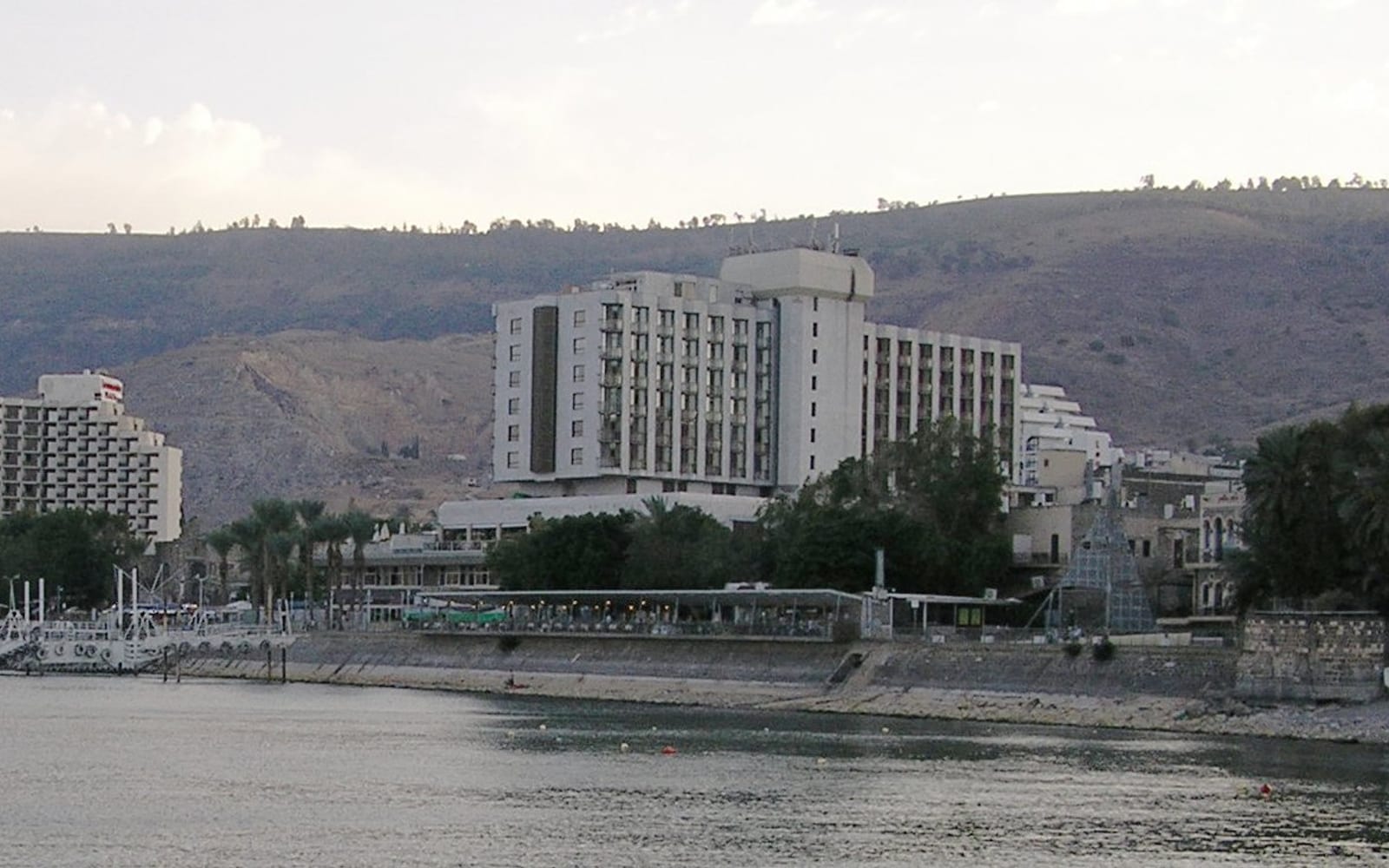
The Sea of Galilee — known in Hebrew as HaKinneret and by centuries of European pilgrims as Lake Tiberias — is the geographical and spiritual heart of northern Israel. At approximately 209 metres below sea level, it is the lowest freshwater lake on Earth and Israel’s primary drinking-water reservoir. The lake is roughly 21 kilometres long and 13 kilometres wide, formed in the Jordan Rift Valley, and ringed by four distinct shores, each with its own character and draw.
For Christian pilgrims, the northern shore holds the densest concentration of New Testament sites anywhere in the world outside Jerusalem. For swimmers and families, the lake’s main beaches run along the western and eastern shores. For independent travellers, a one- or two-day circuit of the lake by car — or, in spring and autumn, by bicycle — is one of Israel’s most rewarding itineraries. This guide covers all four shores in turn, then the practicalities.
For the dedicated Sea of Galilee boat tours guide — lake crossings, the Jesus Boat experience at Ginosar, and the Kinneret Sailing Company — see the separate page. For Tiberias city specifically (markets, promenade, Hamat Tiberias mosaics, Rabbi Meir Shrine), see the Tiberias travel guide.
West shore: Tiberias, Magdala, and Ginosar
The western shore is the most visited stretch of the lake. Tiberias — Israel’s main lakeside city, founded by Herod Antipas in the 1st century CE and named for Emperor Tiberius — sits at the midpoint of the western shore and is the natural overnight base for the full circuit. The city itself is covered in the Tiberias guide; this section covers the sites along the western lakeshore road (Route 90) north of the city.
Magdala
Magdala (Migdal in Hebrew) sits on the western shore 5 kilometres north of Tiberias and is the most significant recent archaeological discovery on the lake. Excavations begun in 2009 uncovered a complete 1st-century synagogue — one of only seven in the world known from the Second Temple period — along with a remarkable stone block carved with a seven-branched menorah, now displayed at the site museum. The town is identified as the birthplace of Mary Magdalene.
The site includes a Catholic chapel built around the excavations, a pilgrimage centre, and a museum displaying finds from the dig. It is one of the few places in Galilee where visitors can stand inside a building that was in use during the time of Jesus. The site is open daily; entrance fee applies — check the official Magdala website for current hours and prices.
Ginosar Kibbutz and the Jesus Boat
Five kilometres further north, Kibbutz Ginosar operates the Yigal Alon Museum, home to the so-called “Jesus Boat” — a 1st-century CE fishing vessel discovered in 1986 when a drought dropped the lake level. The boat is 8.2 metres long and is one of the best-preserved ancient wooden boats from the ancient world, displayed in a purpose-built humidity-controlled hall.
The museum also has a private beach — calm, sheltered, and one of the most pleasant swimming spots on the western shore. Ginosar is the departure point for the Kinneret Sailing Company’s lake-crossing service to Ein Gev on the east shore. See the Sea of Galilee boat tours guide for booking details.
North shore: the Christian pilgrimage cluster
The northern shore holds the highest concentration of New Testament-associated sites outside Jerusalem. The three main sites (Capernaum, Tabgha, Mount of Beatitudes) are clustered within 5 kilometres of each other and are most efficiently visited in sequence.
Capernaum
Capernaum (Kfar Nachum in Hebrew) was described in the Gospels as the base of Jesus’s ministry after leaving Nazareth. Archaeological excavations have uncovered the remains of a 4th/5th-century CE synagogue built in white limestone over an earlier 1st-century basalt synagogue — the one Jesus would have known — as well as a house identified by early Christian tradition as that of Simon Peter, now covered by an octagonal Byzantine-era church.
The site is jointly managed by the Franciscan Custody of the Holy Land and the Israel Nature and Parks Authority. Entrance fee applies; check parks.org.il for current pricing. Modest dress (covered shoulders and knees) is required. The lakeside setting — black basalt ruins above the Galilean shoreline — is historically and visually compelling regardless of religious orientation.
Tabgha (Ein Sheva)
Tabgha is the site of the traditional miracle of the loaves and fishes (Mark 6:30–44). The Church of the Multiplication of Loaves and Fishes is a 5th-century Byzantine church built around a remarkable intact mosaic floor: the central panel shows a basket of bread flanked by two fish, surrounded by detailed botanical and Nilotic scenes — water birds, ducks, and marsh plants. It is among the finest Byzantine mosaic floors in Israel.
Immediately adjacent is the Church of the Primacy of St. Peter, built over a flat rock by the lake shore (the “Mensa Christi”) associated with the resurrection appearance in John 21. Both are Franciscan-managed. Both churches are free to enter; donations are appreciated. Modest dress required. See the dedicated Tabgha churches guide for the full details on both sites.
Mount of Beatitudes
The Mount of Beatitudes is the traditional site of the Sermon on the Mount (Matthew 5–7). The Franciscan church that marks the site was built in 1938 over the ruins of a 4th-century Byzantine church. The building’s octagonal shape references the Eight Beatitudes; the interior is simply decorated and quietly contemplative.
The garden terraces around the church give panoramic views across the northern lake — one of the most photographed views in northern Israel. The setting is peaceful in early morning before tour groups arrive (aim for before 09:00 if coming by car). Modest dress required; small entrance fee for the garden. Managed by the Franciscan Custody of the Holy Land — check current opening hours before visiting.
East shore: Ein Gev and Kursi
The eastern shore (the Golan side) is quieter than the west, reached by driving around the south end of the lake on Route 92. The landscape is more dramatic — the basalt cliffs of the Golan rise sharply to the east — and the shore is less developed.
Ein Gev Kibbutz
Ein Gev is the most accessible east-shore destination and is the anchor of the Kinneret Sailing Company’s lake-crossing route from Ginosar or Tiberias (see the boat tours guide). The kibbutz runs a well-regarded fish restaurant known for St. Peter’s Fish — amnun (tilapia) in Hebrew, a species native to the Kinneret and a Galilee culinary landmark. The east-shore lakefront is notably quieter than Tiberias; arriving by boat and eating at the waterside restaurant is one of the most pleasant half-day itineraries on the lake.
The Ein Gev Music Festival runs each year during Passover week (Chol HaMoed). It is one of Israel’s longest-running classical music festivals, held in an outdoor amphitheatre facing the lake.
Ein Gev also has a supervised public beach in season with basic facilities.
Kursi National Park
Kursi National Park protects the remains of the largest Byzantine monastery complex in Israel — a 5th-century CE church, chapels, mosaic floors, and a bathhouse, all enclosed within the original monastery wall. The site is associated in Byzantine Christian tradition with the miracle of the Gadarene swine (Mark 5:1–20). Kursi receives far fewer visitors than the north-shore sites and rewards those who seek it out. Entrance fee (INPA); check parks.org.il for current hours.
South shore: Yardenit and Hamat Gader
The southern shore is where the Jordan River exits the lake and is home to the two most distinctive south-shore destinations.
Yardenit Baptism Site
Yardenit (operated by Kibbutz Kinneret) is Israel’s most-visited Christian baptism site, with dedicated steps into the Jordan River, white baptismal robes available for rental, a large multi-language welcome facility, and changing rooms. It is designed and operated specifically for Christian pilgrim baptisms and is the site used by most organised tour operators.
Honesty note: Yardenit is a purpose-built baptism facility, not the historically identified location of Jesus’s baptism — which most scholars and the Israeli government’s second baptism site, Qasr el-Yahud (near Jericho, managed separately), associate with the Bethabara / Bethany-beyond-the-Jordan area further south. The Jordan River baptism guide covers both sites and helps pilgrims decide which to visit. Yardenit is more accessible and fully serviced; Qasr el-Yahud has stronger historical grounding.
Hamat Gader
Hamat Gader (literally “Hot Springs of the Golan Fence”) is one of Israel’s most unusual destinations — a working mineral hot-spring complex built over a Roman bath-house site, on a spur of land 3 kilometres from the Jordanian border. The Roman bath complex (3rd–4th century CE) is among the best-preserved in Israel; the ruins of the main hall, plunge pools, and thermal channels are clearly legible and are explored alongside the modern hot-spring pools.
The modern facility includes outdoor pools of varying temperatures (typically 37–42°C), changing rooms, and restaurant facilities. A wildlife park section has historically included crocodiles — a reminder of the Nile crocodile’s ancient presence in the Jordan Valley, extinct in the wild in Israel since the 20th century. Verify current wildlife park status before visiting.
Hamat Gader requires a car — there is no practical public transport. It is approximately 10 kilometres south of Ein Gev via Route 98/92. Check current opening hours and entrance fees at the official Hamat Gader site before visiting, as hours are seasonal and have changed in recent years.
Swimming and beaches
The Sea of Galilee is freshwater and entirely safe for swimming. The main supervised beach options:
| Beach | Shore | Type | Season |
|---|
| Gei Beach (Tiberias) | West | Public, paid (₪50–70 adult approx.) | Year-round |
| Luna Gal Water Park | West (north of Tiberias) | Water park + beach, paid | Jun–Sep |
| Ginosar Kibbutz Beach | West | Kibbutz guests + day visitors | May–Oct |
| Ein Gev Beach | East | Public, basic facilities | May–Sep |
All entrance fees are approximate and change seasonally — verify at the gate. Water quality reports for all Kinneret beaches are published at kinneret.co.il. Lifeguards operate at main beaches from approximately June to September; outside that period, swim at your own judgement.
For beach-by-beach detail — facilities, free vs paid options, the southern shore spots, and the 55 km Kinneret circuit trail — see the dedicated Sea of Galilee beaches guide.
Cycling the Kinneret
A Kinneret Cycling Trail (Israel Trail system) circles much of the lake. The full circuit is approximately 65 kilometres; most cyclists complete it over one day (fast rider) or two relaxed days. The terrain is predominantly flat, particularly on the western shore. The eastern shore involves some road cycling alongside Route 92.
Best seasons: March to May and October to November. Summer cycling around the lake (mid-June to mid-September) is demanding in the heat — aim for early morning departures (before 07:00) and carry significant water.
Bike rental is available from shops in Tiberias near the lakefront; enquire at your hotel for current operators and daily rates. For the broader Israel cycling context, including the National Bike Trail, see the cycling in Israel guide.
Getting to the Sea of Galilee
By car from Tel Aviv: ~130 km, approximately 1 hour 45 minutes via Route 6 north then Route 65 east to Route 77. Car is strongly recommended for the full circuit.
By car from Jerusalem: ~180 km, approximately 2 hours via Route 1 east then Route 90 north through the Jordan Valley. This route passes the northern Dead Sea and the Qasr el-Yahud baptism site junction.
By car from Haifa: ~50 km, approximately 50–60 minutes via Route 75 east or Route 77 east to Tiberias.
By bus: Egged operates direct services from Tel Aviv Central Bus Station to Tiberias (approximately 2.5 hours). From Jerusalem, connections via Afula or Beit She’an add to the journey. Bus service to Capernaum, Mount of Beatitudes, Hamat Gader, and most east-shore sites is limited or non-existent — a car or organised tour is effectively required to visit them. Check schedules at egged.co.il.
Organised day tours from Tel Aviv and Jerusalem handle all logistics for the north-shore Christian circuit and are the most efficient option for visitors without a car. See the Galilee tours compared page for an assessed list of operators, or use the tour CTAs above to search current departures.
For the full transport picture, see the transportation guide. For driving-specific logistics (Route 90, Route 6 tolls, Shabbat restrictions on rental cars), see driving in Israel. For car rental, see car rental Israel.
Day trip vs overnight
Day trip (from Jerusalem or Tel Aviv): Feasible, but requires a 06:30–07:00 departure by car. A realistic day covers Tiberias briefly + Magdala + Capernaum + Mount of Beatitudes + Tabgha + a lakeside lunch. Hamat Gader and the east shore require a second day.
Overnight (recommended): One night in Tiberias gives you the full north-shore circuit unhurried, a lakeside sunset dinner, and time for the east shore or Hamat Gader the following morning before driving home. The best hotels in Tiberias guide covers city-specific options — Scots Hotel, U Boutique Kinneret, and resort properties on the southern waterfront. For the whole-lake picture — kibbutz guesthouses at Nof Ginosar and Ein Gev, pilgrim centres at Magdala and Capernaum, and the east-shore Golan panorama zone — see the best hotels at the Sea of Galilee guide.
Two nights: Adds the east-shore circuit (Ein Gev + Kursi + Hamat Gader) and either a half-day at Safed/Tzfat (45 min north) or Mount Arbel hiking. The Galilee region guide covers the broader northern Israel itinerary context.