Tel Aviv’s White City is the largest collection of Bauhaus and International Style architecture in the world — over 4,000 buildings constructed primarily in the 1930s and 1940s by European-trained architects who emigrated to British Mandate Palestine. In 2003, UNESCO designated it a World Heritage Site, recognising the exceptional quality and coherence of this urban ensemble. For visitors, it is both a serious architectural destination and one of the most enjoyable neighbourhoods in which to simply walk, sit in a café, and watch the city.
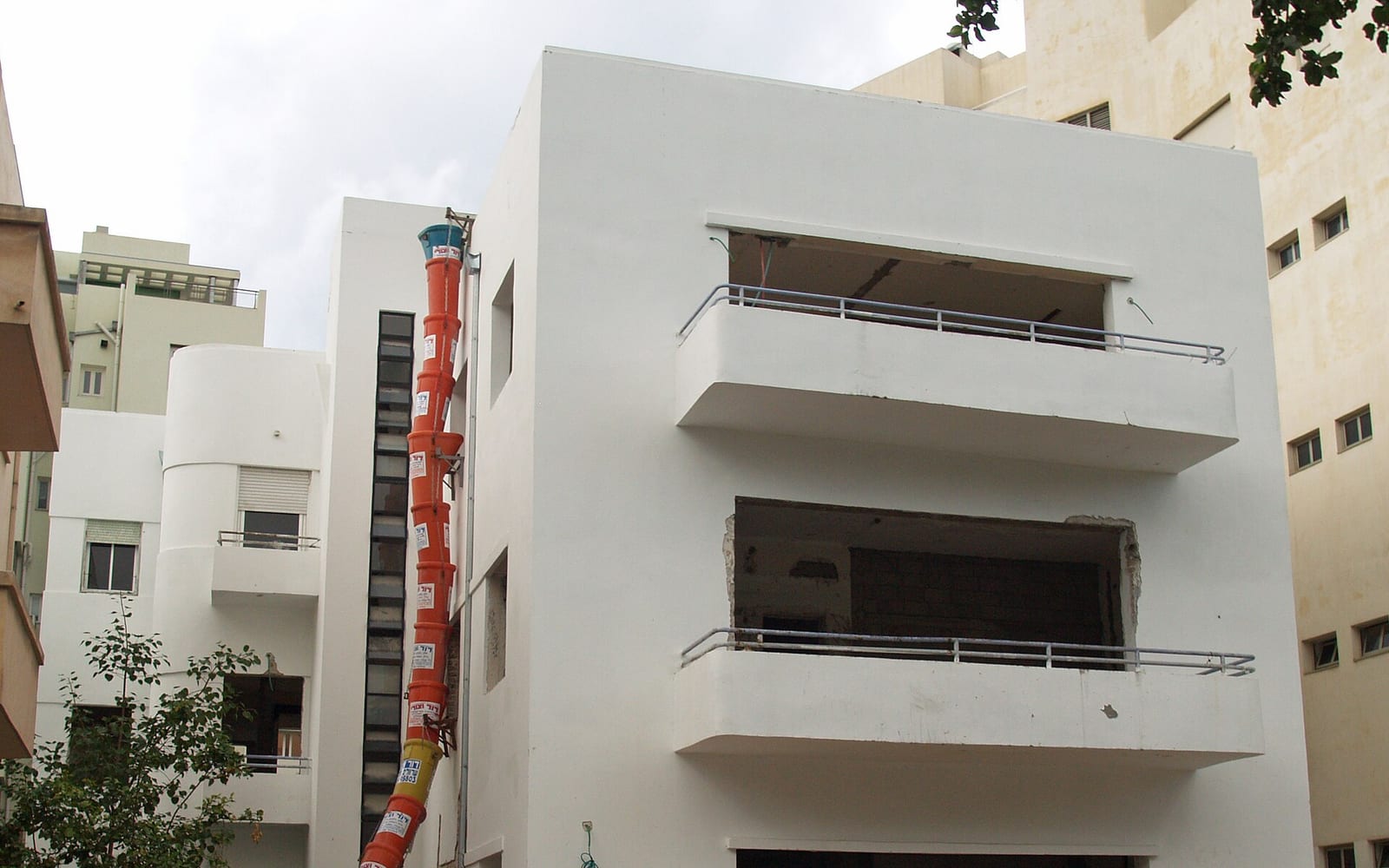
The name ‘White City’ can be slightly misleading. Many of the buildings today are pale yellow, grey, or peeling — their white render faded or replaced. The designation refers less to a current colour and more to the architectural movement: the plaster facades, the flat roofs, the ribbon windows, and the spare modernist logic that united thousands of individual buildings into a coherent urban landscape.
Why Bauhaus ended up in Tel Aviv
The answer is the rise of the Nazis. The Bauhaus school — founded by Walter Gropius in Weimar in 1919 and closed under National Socialist pressure in 1933 — trained a generation of architects who believed buildings should be functional, beautiful, and socially progressive. When Jewish architects trained in the Bauhaus tradition fled Germany in the 1930s, many came to British Mandate Palestine, which was experiencing a population boom and a corresponding construction surge.
Architects including Arieh Sharon, Shmuel Mestechkin, Dov Karmi, and Ze’ev Rechter brought their training and their idealism to a city being built on sand dunes with speed and genuine urgency. They adapted the European International Style to the Mediterranean climate: deeper window recesses to reduce sun penetration, narrower east–west building profiles to channel sea breezes, louvred shutters, and pilotis (open ground-floor columns) that allowed air to circulate beneath the building mass.
The result was not pure Bauhaus — purists call it International Style with local adaptations — but it was coherent, principled, and built fast. By the time the State of Israel was declared in 1948, Tel Aviv already had its distinctive character.
The Bauhaus Center: start here
77 Dizengoff Street is the right starting point for any serious White City visit. The Bauhaus Center runs a permanent gallery explaining the history, the key architects, the construction techniques, and the principles of the movement — giving you the conceptual framework before the street walk begins.
The centre sells the best White City walking maps and self-guided tour booklets, including building-by-building descriptions that go beyond what you can find on a free map. Guided tours in English run typically on Fridays and Sundays at 10:00, but schedules change seasonally — confirm current times and prices at bauhaus-center.com before planning around a specific tour slot.
Allow 30–45 minutes inside the gallery before setting out on the walking route.
Self-guided walking route
The White City is not a single neighbourhood but a zone of overlapping districts. The most concentrated and visitor-friendly route covers three main areas in approximately 2–3 hours.
Start: Bialik Square (Kikar Bialik)
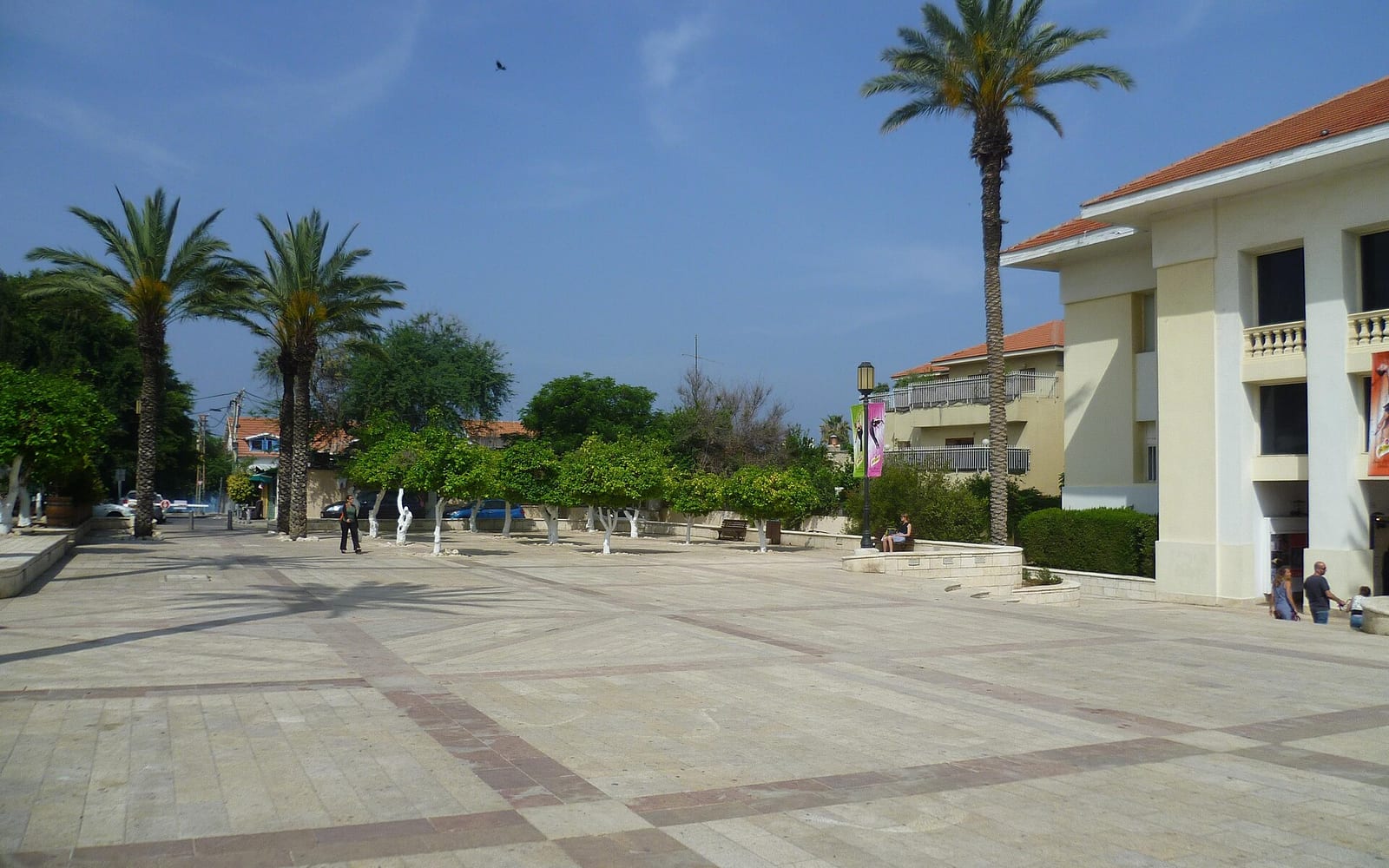
Bialik Square, a five-minute walk north of Neve Tzedek, clusters several architecturally significant buildings around a small plaza. The square is named for the national Hebrew poet Chaim Nahman Bialik, whose house (Beit Bialik, at 22 Bialik Street) is preserved as a museum and open to the public — the house itself is a fine example of the eclectic Orientalist style that preceded the White City wave, making it a useful architectural contrast.
At the square itself, look at the rounded balconies and the horizontal banding on the building facades — elements drawn directly from the Bauhaus vocabulary of functional ornamentation.
Rothschild Boulevard
Walk north from Bialik Square onto Rothschild Boulevard — the social spine of the White City. The ficus trees create a dense canopy that reduces the Mediterranean heat to something manageable; the central promenade (for walking and cycling) runs between two traffic lanes with pavement cafés on either side.
Rothschild is 1.3 kilometres from Allenby Street (south) to Habima Square (north). The architecture varies considerably: early settler homes at the southern end give way to increasingly confident White City buildings as you walk north. Look for:
- Engel House (Rothschild 84): Often cited as the first building in Israel to use pilotis — the open ground-floor columns that lift the structure off the ground. Built by Ze’ev Rechter in 1933. The logic was practical (air circulation, parking, shade) and ideological (Corbusier-influenced belief in liberating the ground plane). The building is in private residential use but visible from the street.
- Rubinsky House (Rothschild 142): A refined example of the ribbon-window style — horizontal windows wrapping the corners, allowing cross-ventilation across the apartment depth.
- Habima Square (northern end): The boulevard terminates at the Habima National Theatre (built 1945; not White City in style but architecturally significant) and Mann Auditorium. The square hosts regular outdoor events and is a good rest point before turning toward Dizengoff.
Dizengoff Square (Kikar Dizengoff)
Walk northwest from Habima to Dizengoff Square — the symbolic heart of 1930s Tel Aviv. The square was redesigned in the 1930s around a circular raised promenade with ramps (the elevated ring platform is still in place, a distinctive urban form). The Genia Averbuch Water Tower Fountain at the centre was added in 1934 and restored; the coloured-light and water shows that once defined it have been revived in recent years.
The buildings ringing Dizengoff Square represent some of the most intact examples of original White City architecture. The curved corners, the balcony grilles, the shade overhangs — these are the elements that earned Tel Aviv its UNESCO listing.
From Dizengoff Square, the Bauhaus Center on Dizengoff Street is a short walk south, completing a natural loop.
Six buildings worth looking for
If you are limited on time and want the most architecturally significant examples:
- Engel House, Rothschild 84 — first use of pilotis in Israel (1933, Ze’ev Rechter)
- Beit Bialik, 22 Bialik Street — the national poet’s preserved house; eclectic style preceding the White City wave; open as a museum
- Sheinkin House corner buildings — the Sheinkin Street corridor shows several excellent corner-window examples, where the architects used the curved corner window to dissolve the building edge
- Bauhaus Center building itself, 77 Dizengoff — the centre occupies a typical mid-period White City apartment building; the facade illustrates the movement’s domestic vocabulary
- Dizengoff Square ring buildings — the ensemble around the square is the best concentration of intact original facades; spend time walking the outer ring
- Levant Fair Pavilion site (off Ben Gurion Boulevard) — the original 1930s Levant Fair grounds have been partly built over, but surviving fragments near Ganei Yehoshua Park show the fair’s architectural ambition
Photography tips
The best light falls on the white and pale-yellow facades in the two hours after sunrise and the hour before sunset. The pilotis and balcony bands create strong horizontal shadow lines in low-angle light that disappear into flatness at midday.
For Rothschild Boulevard: face south from the Habima end in the morning — the ficus canopy filters the light into diffuse pools across the walking lane. For Dizengoff Square: the circular elevated promenade photographs well from below, looking up at the buildings through the curved frame of the ramp.
In summer (June–August): avoid 10:30–15:00. The heat haze above the asphalt softens distant facades and midday light removes the building shadows that give the architecture its geometric character.
Getting there
- By light rail: Tel Aviv Red Line to Arlozorov/Savidor or Carlebach stations; 10–15 minute walk south to Rothschild Boulevard
- On foot from central hotels: Most city-centre hotels are within 15–20 minutes’ walk of the boulevard
- By bike: Tel-O-Fun bike-share stations are positioned on and near Rothschild Boulevard — a natural cycling route in either direction; see the transportation guide for Rav-Kav and Tel-O-Fun details
When to visit
The White City is a living neighbourhood — people live in these buildings and work in the ground-floor cafés and shops. It is accessible at all hours, though the Bauhaus Center has set opening times. Friday mornings on Rothschild combine the building walk with the weekend atmosphere of the boulevard’s pavement cafés before Shabbat. Friday afternoon the street quietens considerably from around 14:00.
Combine with
- Carmel Market (10 minutes south of Rothschild) — the city’s main market and the natural continuation of a White City morning; see the Tel Aviv food guide for market logistics
- Neve Tzedek (5 minutes south of Allenby) — the pre-White-City neighbourhood of early settlers, with boutique shops and restaurants; a contrasting architectural layer
- Tel Aviv nightlife (Rothschild bar scene) — the boulevard’s café culture extends into the evening; see the Tel Aviv nightlife guide
- Red Line light rail — the Tel Aviv Light Rail guide covers how to combine the rail with a White City walk for visitors staying further from the centre
- Florentin street art (20 minutes south) — for Tel Aviv’s contemporary mural scene in contrast to the White City’s 1930s architecture; see the Tel Aviv street art & Florentin guide
- Dizengoff Square & Street — the Agam fire-and-water fountain, the Friday market and the café strip that runs through the White City’s heart; see the Dizengoff Tel Aviv guide