Yam Caesarea Marine National Park — literally “Caesarea Sea” — is Israel’s first marine national park, formally designated on 25 November 2024 by the Israel Nature and Parks Authority (INPA). It covers 267 acres of Mediterranean coastal waters directly west of Caesarea Antiquities National Park, protecting a dual heritage: the submerged ruins of Herod the Great’s Sebastos harbour, one of the ancient world’s greatest engineering achievements, and the coral and seagrass communities that have grown over those ruins across two thousand years.
For visitors, this translates into one of the most distinctive snorkel experiences in the Middle East — floating above 2,000-year-old Roman breakwaters, sunken columns and anchors, with reef fish threading between ancient stones. No diving qualification is required.
What is Yam Caesarea and why does it matter?
Israel’s first marine national park
Before November 2024, Israel had no dedicated marine national park. Yam Caesarea fills that gap, placing the waters of Caesarea under the same INPA protection that safeguards the country’s terrestrial nature reserves. The designation establishes controlled access to the underwater zone, limits anchoring by private boats, and funds monitoring of the reef and seagrass communities.
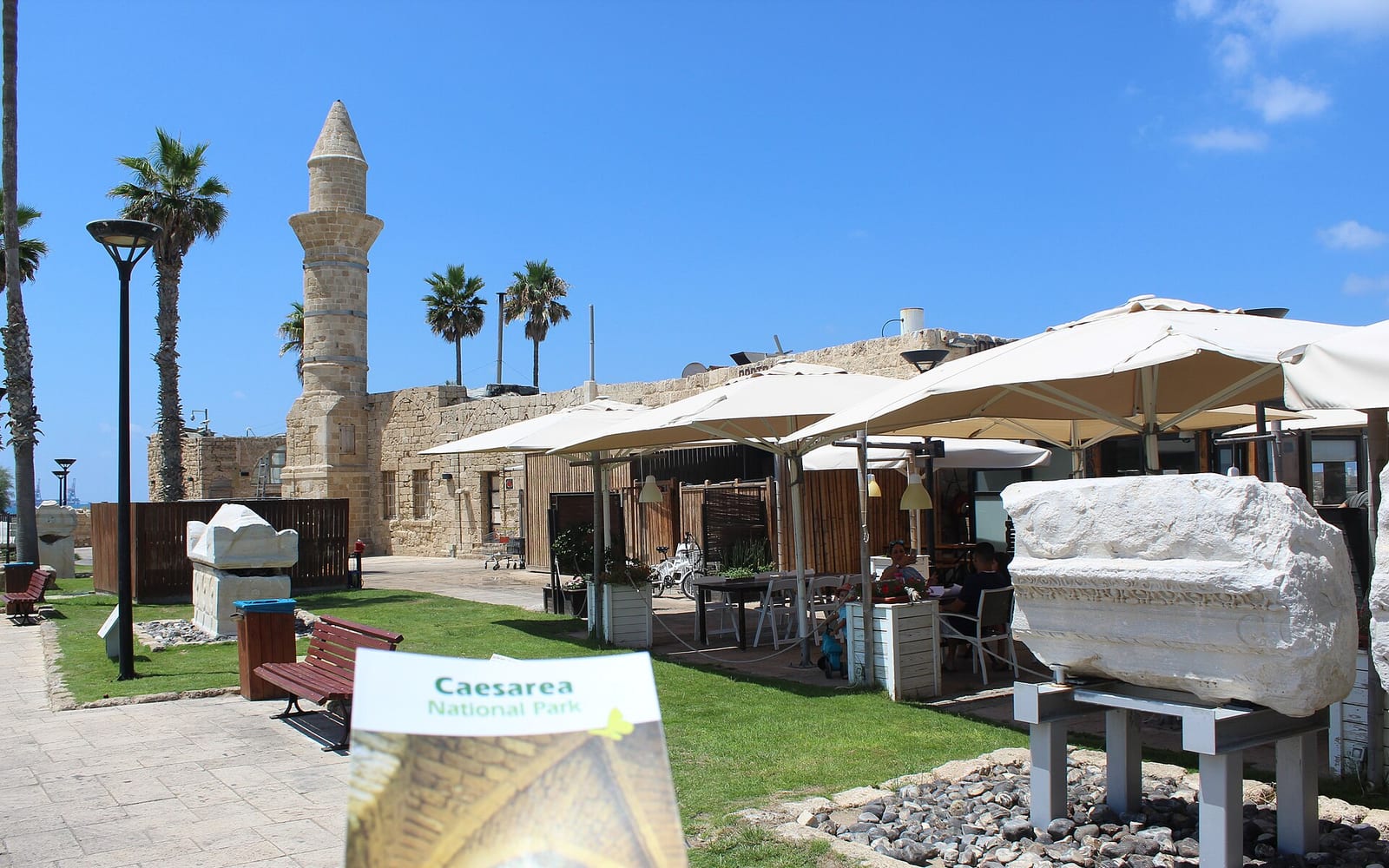
The marine park is geographically distinct from the adjacent Caesarea Antiquities National Park — the well-known on-land Roman Theatre, Hippodrome, and Crusader walls complex. Yam Caesarea covers the coastal waters; the antiquities park covers the archaeological remains above the waterline. The two form a single combined destination, but they carry separate designations and access routes.
The submerged Sebastos harbour
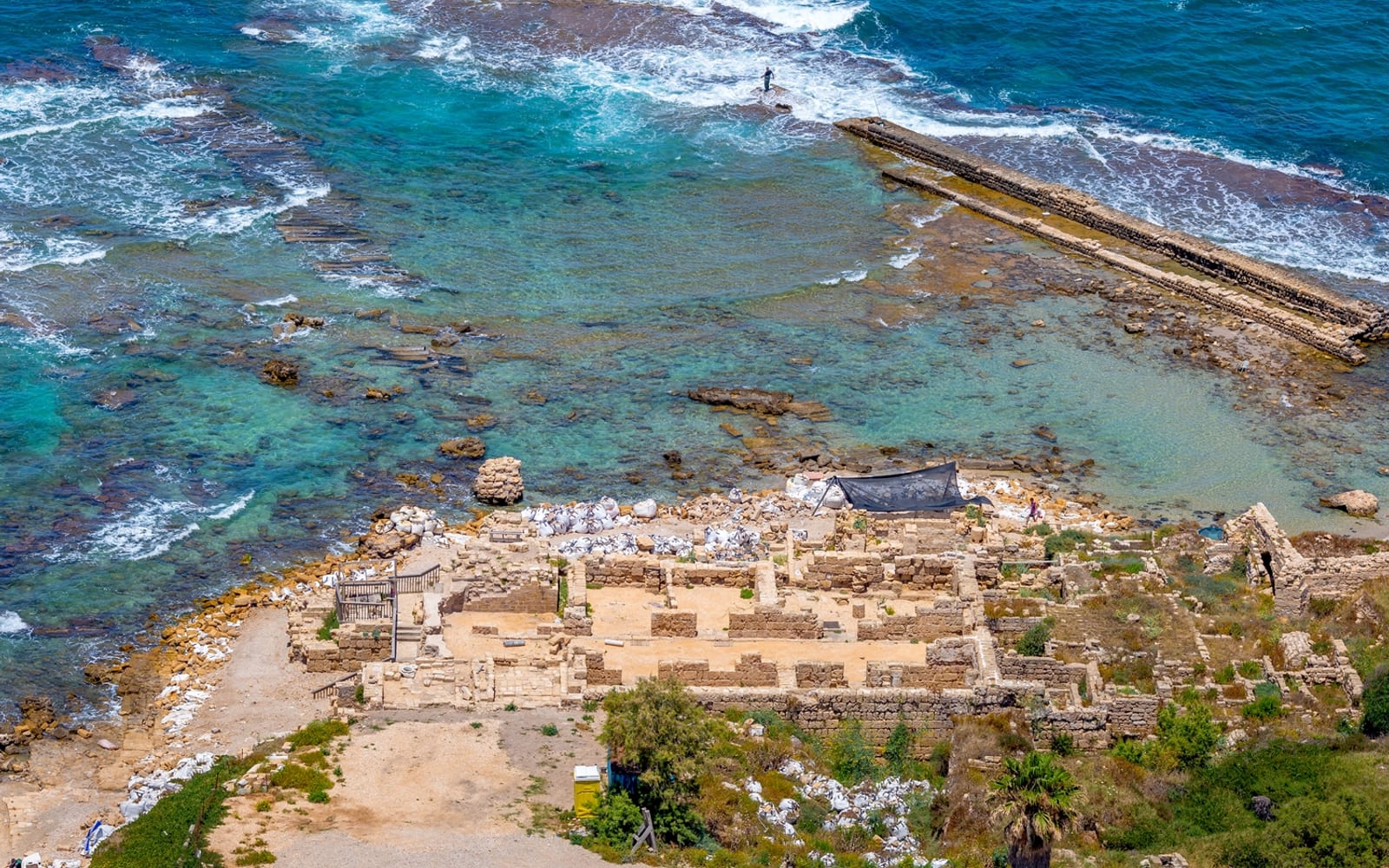
The anchor attraction beneath the surface is the Sebastos harbour, built by Herod the Great around 20 BCE as the main port of Caesarea Maritima, then capital of the Roman province of Iudaea. Herod’s engineers created the harbour using a construction technique unprecedented in the ancient world: hydraulic concrete (pozzolana volcanic ash imported from the Bay of Naples, mixed with lime and aggregate) poured underwater into large wooden caissons. The breakwaters — two massive arms enclosing a protected anchorage — made Sebastos the largest artificial deep-water port on the eastern Mediterranean at the time of its completion.
Around the 6th century CE, the western breakwater subsided dramatically, likely due to a combination of the volcanic ash weakening over time and possible seismic activity. The harbour’s outer structures sank by several metres. Over the next 1,500 years, the sunken stonework became colonised by marine life. Today the submerged breakwaters, column drums, anchor stones and ceramic fragments form an underwater archaeological landscape that is also a living reef ecosystem — the basis for Yam Caesarea’s dual ecological and heritage mandate.
Snorkeling the underwater trails
Old Caesarea Diving Center
The Old Caesarea Diving Center (caesarea-diving.com) operates as the sole INPA-permitted underwater access provider for Yam Caesarea Marine National Park. The centre runs four colour-coded rope trails through different sections of the submerged harbour:
- Blue trail: the main introductory snorkel route traversing the inner harbour breakwater; shallowest section (2–4 m depth); accessible to confident swimmers with no dive experience
- Yellow trail: extends into the outer breakwater field, with larger column and anchor stone concentrations; moderate surface snorkel depth
- Green trail and Red trail: longer dive routes (open-water certified divers) reaching the deeper harbour outer walls and base of the ancient breakwater arms
For most visitors, the blue and yellow trails are the entry point — guided snorkel sessions of approximately 60–90 minutes led by INPA-licensed dive guides. The centre provides masks, fins, wetsuits, and flotation aids. No prior snorkel experience beyond swimming comfort is required.
Booking: sessions require advance reservation, particularly in July–August. Walk-in availability is limited on weekends and Israeli public holidays. Check caesarea-diving.com for current session times and pricing.
What you will see underwater
The surface snorkel trails pass over:
Submerged breakwater stones: massive cut limestone and concrete blocks from the Herodian harbour construction — some retaining visible Roman quarry marks. The sheer size of the blocks (some weighing several tonnes) communicates the scale of the original engineering.
Column drums and architectural fragments: fallen columns and capitals from Caesarea’s Roman-era buildings, reused or relocated to the harbour zone over centuries, now resting at 2–5 m depth and colonised by marine organisms.
Anchor stones: large perforated stone blocks used to moor ancient vessels — identifiable by the rope-channel grooves cut through the stone. Several are visible along the blue trail.
Marine life on the artificial reef: sea bream (dorada), damselfish, wrasse and occasional grouper shelter around the submerged masonry. Encrusting organisms coat the shaded undersides of stones. Seagrass meadows (Posidonia oceanica and Cymodocea sp.) extend across the sandy patches between the ruins, providing habitat for juvenile fish and sea urchins.
Planning your visit
Combining Yam Caesarea with the land archaeology
Yam Caesarea and the Caesarea Antiquities National Park are natural complements for a full-day visit:
Morning (09:00–12:30): the Caesarea National Park on land — Roman Theatre, Hippodrome, Herodian harbour museum displays, Crusader gatehouse, and the Time Trek multimedia experience. The on-land harbour museum provides excellent context for what you will see underwater.
Midday: lunch at the modern Caesarea harbour restaurants (5 minutes from the National Park entrance).
Afternoon (13:30–16:00): snorkel session at the Old Caesarea Diving Center. Book in advance to secure your preferred session time.
Late afternoon option: Aqueduct Beach — 10 minutes north along the coast road — for free swimming beneath the Roman aqueduct arches. No additional fee; the aqueduct views are best in afternoon light.
Getting to Caesarea
By train from Tel Aviv: Israel Railways coastal services from Tel Aviv Savidor Center or Tel Aviv HaShalom to Caesarea–Pardes Hanna station take approximately 40–50 minutes. From the station, a 10-minute taxi (roughly ₪30–40) reaches the Caesarea visitor area. The diving centre is at the modern marina, a further 5–10 minutes on foot or by taxi from the national park entrance.
By train from Haifa: Southbound coastal train from Haifa Hof HaCarmel or Haifa Merkaz HaShmona to Caesarea–Pardes Hanna — approximately 25–30 minutes — then taxi to the site.
By car: 45 minutes north of Tel Aviv on Highway 2; 30 minutes south of Haifa. Paid parking at the National Park visitor centre. A car gives flexibility to also reach the Aqueduct Beach and the Ralli Museum.
By guided tour: tours combining the Caesarea land archaeology and marine snorkeling are available via GetYourGuide — see the CTA above. This is the easiest option if you do not want to coordinate train and taxi logistics.
| Detail | Information |
|---|
| Marine NP designation | 25 November 2024, INPA |
| Area | 267 acres (108 ha) of coastal waters |
| Snorkel access | Old Caesarea Diving Center (sole INPA operator) |
| Trails | 4 colour-coded routes; blue + yellow = snorkel; green + red = dive |
| Season | April–October (snorkel); year-round (limited, dive-only in winter) |
| Water temperature | 22–28°C (summer); 17–20°C (winter) |
| No. of certifications needed | None for snorkel; open-water certification for deeper dive trails |
| INPA pass | Valid for land-side entry only; snorkel/dive fee separate |
| Booking | Advance booking recommended; caesarea-diving.com |
| Nearest station | Caesarea–Pardes Hanna (Israel Railways); then taxi ~10 min |
Important: visitor access infrastructure at Yam Caesarea was still being developed following the November 2024 designation. Access arrangements, trail markings and operating seasons may change. Always check parks.org.il and caesarea-diving.com for current conditions before visiting.
Environmental protection and the marine park rules
Yam Caesarea’s INPA designation establishes specific rules to protect both the archaeological remains and the living reef community:
- No anchoring by private boats within the marine park boundary
- No collection of marine organisms, shells, coral fragments, or archaeological material
- No physical contact with coral-encrusted surfaces (touching damages the organisms)
- Snorkel access is guided only via the permitted operator — unguided independent snorkeling in the marine park zone is not permitted
- Underwater photography is permitted and encouraged; no flash required (natural light is sufficient at snorkel depth in good conditions)
The INPA designation brings the submerged Herodian harbour under the same protection framework as Masada, Caesarea’s land archaeology, and the country’s other major national parks — a recognition that the underwater landscape is as irreplaceable as what is visible above the waterline.
Cross-links
Caesarea complete visitor guide · Israel National Parks Pass · Eilat diving & snorkeling guide · Water hiking in Israel · Day trips from Tel Aviv · Day trips from Haifa · Car rental in Israel