Yom Kippur is the most extraordinary single day in the Israeli calendar — and for a tourist, it is one of the most memorable experiences the country offers. For 25 hours, a nation of nine million people collectively observes a complete fast and near-total national silence. No cars drive. No planes land. Streets that are normally gridlocked with traffic become cycling promenades. The Western Wall fills with tens of thousands in white clothing. Cities quiet to a hush that no other day produces.
This guide covers what to expect, what to plan, and how to experience Yom Kippur respectfully and practically as a visitor.
What is Yom Kippur?
Yom Kippur (יוֹם כִּפּוּר — the Day of Atonement) is the holiest day of the Jewish year: 25 hours of fasting, prayer, and collective reflection. It falls on 10 Tishrei in the Hebrew calendar — ten days after Rosh Hashanah, at the close of the Ten Days of Awe.
In Jewish tradition, Yom Kippur is the day on which the year’s accounting is sealed — a solemn and deeply personal day of repentance and renewal. The day is observed by the vast majority of Israeli Jews, secular and religious alike, as a mark of national-cultural identity as much as religious observance.
The fast runs from sunset on Erev Yom Kippur (the evening before) until nightfall the following day — approximately 25 hours. No food, no water, no leather shoes, no cosmetics, no bathing. The synagogue service runs almost continuously from the opening Kol Nidre prayer at dusk through five prayer services to the Ne’ilah closing service and the final shofar blast.
2026 dates: Kol Nidre begins at sunset on Sunday, 20 September 2026; Yom Kippur ends at nightfall on Monday, 21 September 2026.
2027 dates: Kol Nidre begins at sunset on Friday, 9 October 2027; Yom Kippur ends at nightfall on Saturday, 10 October 2027.
For precise candle-lighting and end-of-fast times in your city, use the Shabbat & Jewish Holiday Calendar Tool.
Ben Gurion Airport: the one non-negotiable planning point
Ben Gurion Airport closes to commercial air traffic for the full 25 hours of Yom Kippur. This is not a reduced schedule — it is a complete suspension of scheduled passenger flights. Emergency flights and private aircraft operate under special arrangement, but all regular commercial departures and arrivals stop.
Plan your flights accordingly:
- Do not book a flight on Yom Kippur itself. Your flight will not exist. Any booking that falls on Yom Kippur will be cancelled and rebooked — sometimes at significant cost.
- The evening of Erev Yom Kippur (sunset on September 20, 2026) sees the airport’s most congested check-in period of the year, as every traveller leaving around the holiday tries to depart before the closure. Leave at least four hours before your flight on Erev Yom Kippur.
- The evening after Yom Kippur ends (nightfall, September 21, 2026) similarly sees the airport restart with a backlog. If you are flying out the morning after, operations are usually normal by then.
What happens in Israel on Yom Kippur
The road silence
The single most visually striking thing about Yom Kippur in Israel is the roads. From around the time Yom Kippur begins — sunset on Erev Yom Kippur — the streets empty entirely.
This is not legally mandated. It is a social convention observed almost universally by the Jewish population. The effect is absolute. The Tel Aviv Ayalon Freeway — ordinarily a gridlocked urban motorway — becomes a cycling promenade. Children ride bicycles down the centre of Rothschild Boulevard. Families push prams along Highway 1. Teenagers play football in the middle of empty intersections.
The cycling promenade on Yom Kippur is so iconic that it has become one of Israel’s defining cultural images — a country-wide phenomenon with no equivalent anywhere in the world. Bike rental companies see their highest annual demand on this one day.
Advice for tourists in Tel Aviv: rent a bicycle for Yom Kippur day. The experience of cycling freely on empty Tel Aviv motorways is one of the most unusual urban experiences in the world. Most bike hire shops rent out the day before; confirm in advance as stock sells quickly.
Ben Gurion Airport — and the full transport shutdown
It is not only the roads. All public transport — buses, trains, light rail, the Tel Aviv metro (Line M1) — stops for Yom Kippur, in the same pattern as an extended Shabbat. The difference from Shabbat is that this applies even in Arab cities and mixed areas — not because of social or religious pressure, but because the national transport operators shut the system down entirely.
Planning your movement: if you need to travel between cities on Yom Kippur, you must either plan for it (drive before Yom Kippur begins) or wait until nightfall. Sherut (shared taxi) services from Arab-owned companies sometimes operate, but do not rely on this. Private taxis do exist but must be booked well in advance.
Television, radio, and digital silence
Israeli television channels and most radio stations go dark for Yom Kippur. This tradition is observed by all major broadcasters, including commercial and public channels. The silence extends to the national digital sphere — a collective media fast that still holds in the internet era.
Where to experience Yom Kippur: Jerusalem vs Tel Aviv
Jerusalem: the most intense High Holiday atmosphere
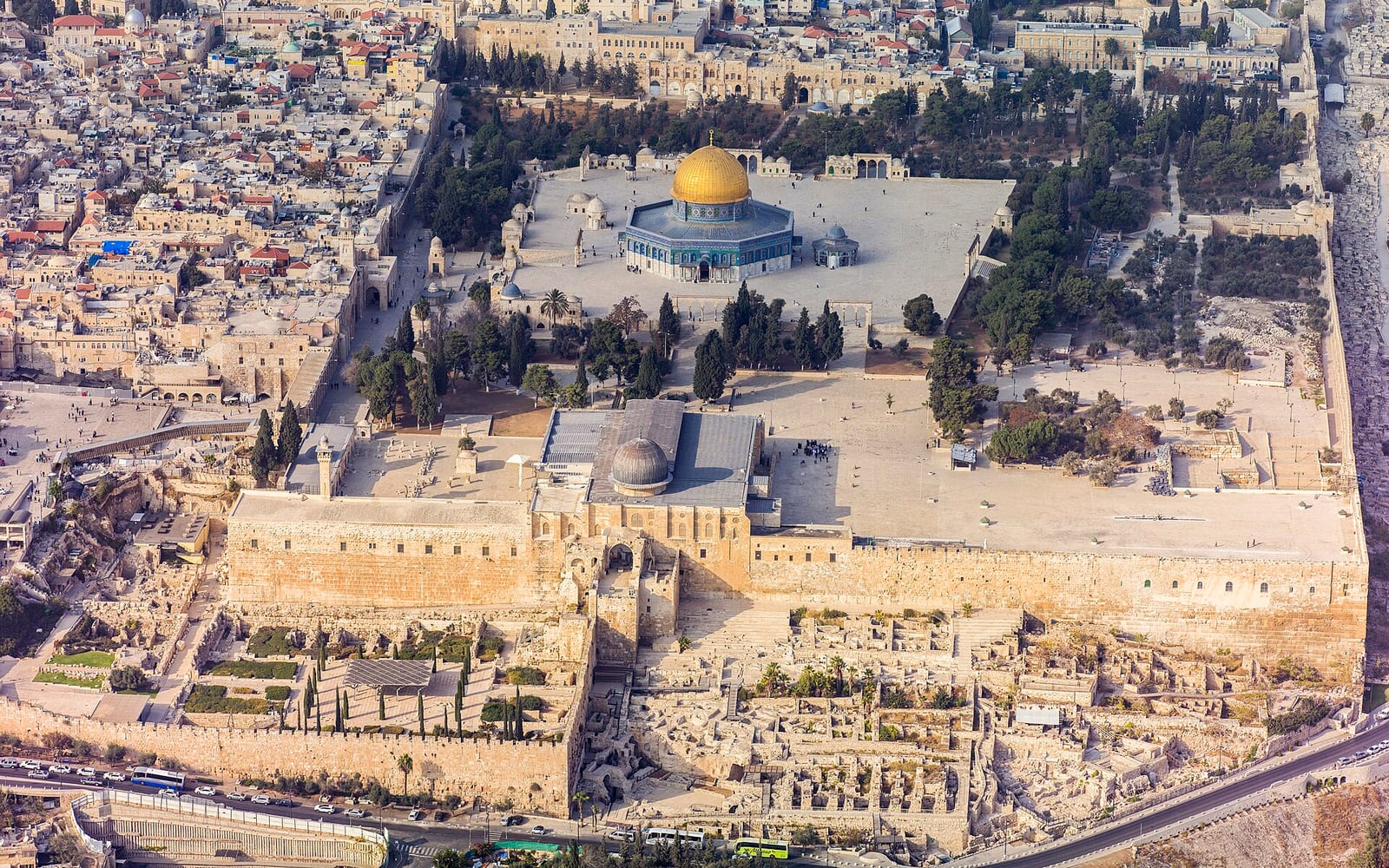
Jerusalem is the heart of Yom Kippur in Israel. The Old City’s Jewish Quarter and the Western Wall plaza fill from the Kol Nidre service onward and remain full throughout the following day. The Kotel (Western Wall) plaza — normally divided by a barrier between men’s and women’s sections — runs continuous prayer services through the night and day.
Kol Nidre (the opening prayer, chanted at sunset): the Kol Nidre melody is one of the most recognised pieces of Jewish liturgical music — a haunting, ancient melody chanted three times to open the day. At the Western Wall, the Kol Nidre moment is witnessed by tens of thousands. Non-Jewish visitors are welcome in the plaza as respectful observers. Dress modestly (covered shoulders and knees) and wear a kippah (skullcap) if you enter the prayer area; these are available free at the Kotel entrance.
Yom Kippur day in Jerusalem: the streets of Rehavia, Nachlaot, German Colony, and the city centre are silent. Virtually everything is closed. The atmosphere is contemplative and unusually peaceful for a city that is normally hectic.
Ne’ilah (the closing service): as the sun approaches the horizon on Yom Kippur evening, the Ne’ilah prayer — the “sealing of the gates” — reaches its climax. The Western Wall plaza is at its most densely packed. As darkness falls, the congregational recitation of the Shema (Israel’s central declaration of faith) is followed by a sustained blast of the shofar — and the atmosphere breaks into applause, song, and the relief of 25 hours’ end. This shofar moment, heard across the Old City, is among the most powerful scenes in the Israeli year.
Tel Aviv: secular Yom Kippur
Tel Aviv observes Yom Kippur with a completely different energy. The city is predominantly secular, and while synagogues are full and the streets are empty of cars, the Yom Kippur atmosphere here is less solemn — more of a collective pause than a day of prayer.
Cycling on the Ayalon: Tel Aviv’s Yom Kippur is defined by the cycling promenade. The Ayalon Freeway, normally one of Israel’s most congested urban roads, becomes a three-kilometre cycling and walking route. The tradition has grown into an unofficial festival: families come with bikes, inline skates, and scooters. The atmosphere is relaxed, sociable, and genuinely joyful.
The beach: Tel Aviv’s beaches are open and populated on Yom Kippur day by secular Israelis who do not observe the fast. Some food kiosks near the beach stay open (particularly non-Jewish-owned ones). Eating or drinking on the beach is socially acceptable in Tel Aviv in a way it would not be in a religious neighbourhood.
What’s closed in Tel Aviv on Yom Kippur: all restaurants, cafes, supermarkets, and shops in Jewish areas. Public transport. Most tourist sites. The notable exception is Arab-owned businesses, which often remain open. In Jaffa’s Arab neighbourhood and the Shuk HaPishpeshim (flea market) area, you can find open cafes.
Practical planning for Yom Kippur visitors
Eating and drinking
If you are not fasting, your planning window is the day before Yom Kippur. On Erev Yom Kippur (the afternoon of September 20, 2026):
- Supermarkets close by early afternoon (typically around 14:00–15:00). Stock up with everything you need: food, water, snacks for the full 25 hours.
- Restaurants are open until a few hours before sunset on Erev Yom Kippur — many close at 15:00–16:00. The pre-fast meal (the Seudah HaMafseket, the final meal before the fast) is served in Jewish-owned restaurants until they close.
- Hotel dining rooms remain open throughout Yom Kippur for hotel guests. Most hotels prepare cold food or light meals available to guests who are not fasting.
- Non-Jewish restaurants in mixed areas — particularly Arab-owned establishments in East Jerusalem, Jaffa, and Haifa — remain open throughout Yom Kippur.
Do not eat or drink visibly in public in religious neighbourhoods such as Mea Shearim, Bnei Brak, Ramat Beit Shemesh, or the Jewish Quarter of the Old City. This is not illegal, but it is deeply disrespectful and may provoke a hostile reaction from residents.
Dress and behaviour
- Dress modestly in all areas during Yom Kippur, and particularly near synagogues and the Western Wall.
- Avoid playing loud music from speakers or car stereos. The silence is a collective and deeply felt social agreement, not a legal restriction.
- Avoid driving if at all possible in Jewish cities and residential areas. The cycling promenade only works because drivers respect the convention. If you must drive for an emergency, drive slowly, use hazard lights, and be aware that cyclists — including children — will be in the road.
- Photography: photographing the Yom Kippur scene is acceptable in public areas, including the Western Wall plaza. Do not photograph individuals praying without their consent. Keep your camera low and unobtrusive near places of worship.
What to wear: the colour white
On Yom Kippur, many Jewish worshippers wear white — the colour associated with purity, and the shroud that traditionally accompanies burial. The Western Wall plaza fills with white-clad worshippers from Kol Nidre onward. You are not required to wear white, but it is a striking visual element of the day.
After the fast: the break-fast
At nightfall on Yom Kippur — when the shofar sounds — the country comes immediately back to life. Restaurants open simultaneously; supermarkets reopen; traffic reappears. The break-fast meal is light and dairy: coffee, cake, pastries, cheese. The tradition in Israeli homes is to eat quickly — the fast was long and many observant Jews have not eaten or drunk anything for 25 hours.
In Tel Aviv, the Carmel Market area, Rothschild Boulevard, and Florentin fill within an hour of nightfall with people breaking the fast together in the street. In Jerusalem, restaurants around Mahane Yehuda and the city centre reopen to packed houses. Booking a restaurant table for immediately after Yom Kippur is strongly recommended if you want a sit-down meal; otherwise expect queues.
Booking advice and travel timing
Accommodation: book 6–12 months ahead for Jerusalem and the Dead Sea resort area during the High Holiday period (Rosh Hashanah + the Ten Days of Awe + Yom Kippur). Jerusalem’s diaspora visitors — from the United States, France, the UK, Argentina, and elsewhere — book their High Holiday hotel as a fixed annual commitment, and the city fills to capacity. Tel Aviv is in high demand but slightly easier to secure than Jerusalem.
Combine with Sukkot: Yom Kippur is followed five days later by Sukkot — a seven-day harvest festival — making the High Holiday period (late September/early October) a busy travel window with back-to-back Israeli holiday atmosphere. See the High Holidays travel guide for the full Sukkot coverage.
Come for the experience: the honest case for being in Israel on Yom Kippur is that you will see the country be something no other country in the world is on any other day. The empty highways, the cyclists, the Kol Nidre crowds at the Western Wall, the shofar at nightfall — these are unrepeatable experiences. Planning around them takes a day’s logistical care; what you see in return is worth it.