Israel does street food better than most countries in the world — and takes it more seriously. A hummus debate here can run for an hour. Locals queue at the same falafel stand their grandparents used. The question is never what to eat: it is where the best version lives.
This guide is the practical answer. Not a cultural overview of Israeli cuisine (that is the cuisine guide) and not a restaurant directory (that is the Tel Aviv food guide). This is city-by-city stall intelligence: which neighbourhoods to target, which market sections to walk, and what time to arrive before the best stalls sell out.
The dishes to chase
Falafel is the icon. Deep-fried chickpea balls, crisp outside and herb-green inside, stuffed into fresh pita with salads, pickles, tahini and — if you know what you are doing — amba. The quality range is enormous: a bad falafel is oily and dense; a great one is light, fragrant with cumin and coriander, and served the moment it comes out of the oil.
Sabich is the underrated rival. An Iraqi-Jewish morning sandwich of fried aubergine, hard-boiled egg, chopped salad, tahini and amba in pita. The flavour combination — sweet caramelised aubergine, richly savoury egg, tart mango pickle — is unlike anything else. Tel Aviv is its home.
Hummus is the daily bread. Eaten warm, at a dedicated hummusiya, for breakfast or lunch, mopped up with fresh pita. The Levantine tradition: a shallow bowl, a lake of good olive oil, whole chickpeas and the freshest spices the kitchen has to offer. Israelis rarely eat hummus as a dip; they eat it as a meal.
Shawarma is the late-night option. Spiced lamb or turkey (pork is not kosher) shaved from a vertical rotisserie into pita with garlic sauce, Israeli salad and pickles. Quality is highly variable — the best is excellent; the worst is forgettable.
Burekas are the pastry snack. Flaky phyllo filled with spinach, potato-and-cheese, or a sharp white cheese blend, baked fresh each morning at bakeries across the country. A daily ritual for many Israelis: a burekas and a coffee on the way to work.
Knafeh is the great dessert street food. Shredded pastry over white cheese, soaked in sugar syrup and topped with crushed pistachios. The Arab-Israeli version — served warm, cut from a large tray — is among the best street desserts in the Middle East. Akko and Jaffa are the main destinations for it.
Jerusalem Mixed Grill is the offal dish. Chicken hearts, spleen and other organs, grilled with onions and spices in a pita, sold at specific stalls near Mahane Yehuda market in Jerusalem. An acquired taste and a genuine local institution — not for the squeamish, but considered a Jerusalem classic by those who love it.
Malawach and jachnun are the Yemenite Jewish slow-cooked breads: malawach is a pan-fried round pastry, crisp and layered; jachnun is an overnight-cooked parchment roll, dark and dense. Both are served on Saturday mornings with fresh grated tomato, hard-boiled egg and zhug (green hot chilli sauce) at Yemenite vendors inside the major markets.
Tel Aviv
Tel Aviv is the street food capital of Israel — dense with options, with a culture of standing at stalls that most visitors quickly adopt.
Carmel Market (Shuk HaCarmel) runs south from King George Street to Allenby, two blocks from Rothschild Boulevard. The northern half is produce and street food; the southern half shades into clothing and housewares. Street food highlights: fresh-squeezed pomegranate juice at the entrance carts (₪15–20, among the best uses of a warm afternoon), burekas from the morning stalls, and falafel stalls throughout. The adjacent Nahalat Binyamin artisan market opens Tuesdays and Fridays. Arrive Friday morning for the peak atmosphere — stalls close around 14:00, after which the alley transforms into a bar strip by 17:00.
HaKosem (“The Magician”) on Shlomo HaMelech Street near the Carmel Market edge is among the most consistently praised falafel-and-shawarma counters in Tel Aviv — a small operation with loyal queues at peak hours. Known for their crispy falafel and the quality of the lamb shawarma.
Sabich Tchernikhovsky on Tchernichovsky Street (a short walk from Carmel Market near Magen David Square) is the most-cited dedicated sabich counter in Tel Aviv — a compact stall specialising in nothing but sabich, and doing it exceptionally.
Florentin neighbourhood (south-west of Carmel Market) is the cheaper and more local alternative for falafel hunting: a walkable cluster of mid-century stalls, no tourist mark-up, worth the 10-minute walk from the market.
Gordon Beach boardwalk in season (April–October): watermelon slices, corn on the cob, fresh juice carts and grilled corn vendors line the promenade. Not the city’s most serious street food, but part of the Tel Aviv beach experience.
Jerusalem
Jerusalem street food divides cleanly by geography. The Muslim Quarter of the Old City is for hummus and knafeh. Mahane Yehuda market is for everything else.
Muslim Quarter hummus corridor — Al-Wad Street running south from Damascus Gate through the Muslim Quarter holds several of the city’s most respected hummus operations. Abu Shukri (near the junction of Al-Wad and Via Dolorosa) is the most-cited by visitors and food writers: warm hummus, masabacha option (with whole chickpeas), and reliable hours. Arrive before noon; the best hummus houses sell out by 13:00–14:00. This is strictly a sit-down operation, but at street-food prices.
Mahane Yehuda market (the “Shuk”) runs between Mahane Yehuda and Agrippa streets in West Jerusalem. Thursday and Friday mornings are the high-energy peak: vendors competing for attention, samples offered freely, queues at the best burekas stalls. Look for: Yemenite vendors selling malawach and jachnun (Saturday mornings only at those stalls); the Jerusalem mixed grill operators near the market perimeter; and the excellent Israeli breakfasts at the market-edge cafés. The market converts to bars from around 18:00 most evenings.
Azura — a Mahane Yehuda-adjacent restaurant on Etz Hayyim Street — is not exactly a stall but occupies the street food price tier and is revered for its stovetop-cooked Levantine hummus and slow-braised meats. Lunch only; arrive early.
Jaffa
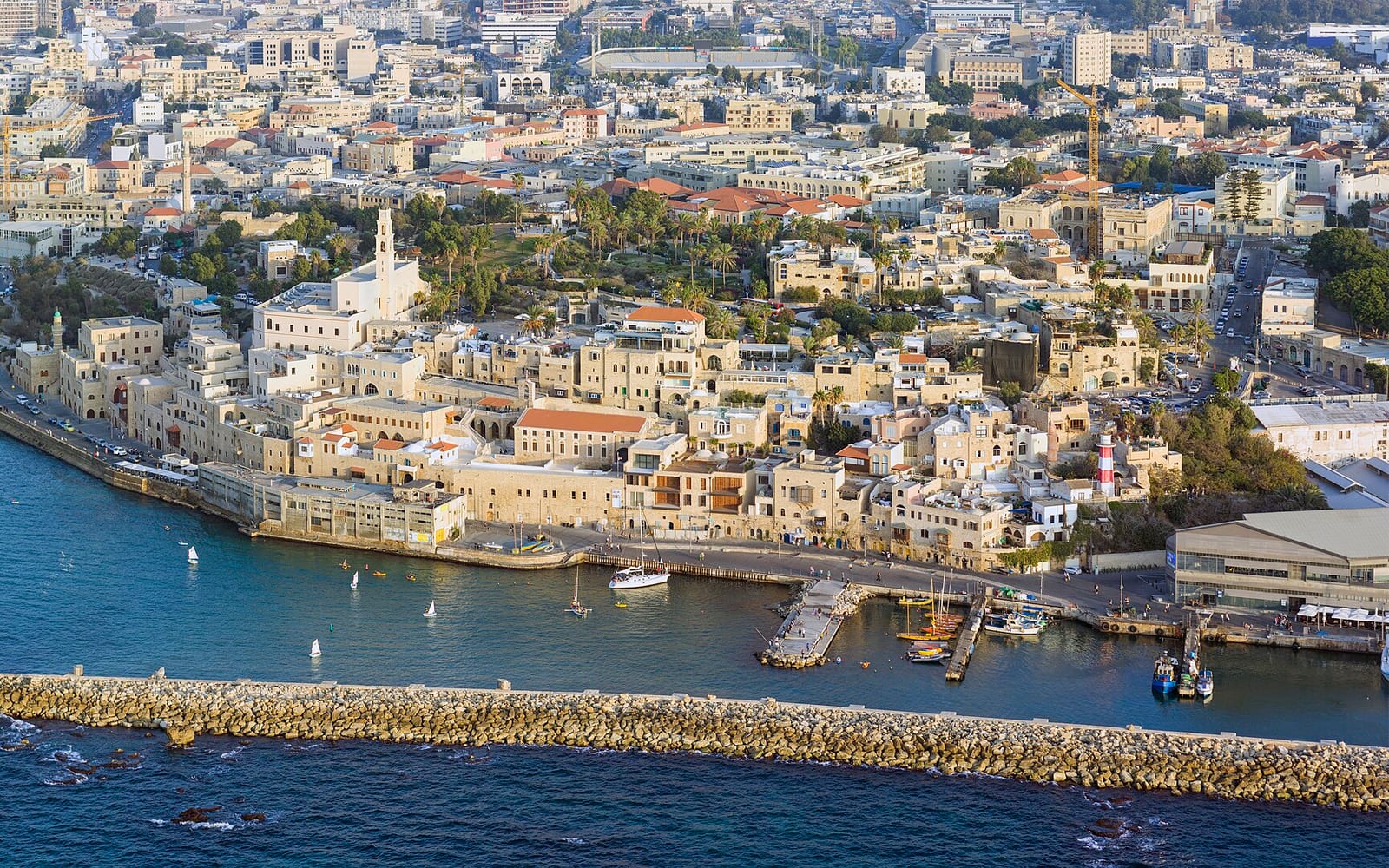
Jaffa is the best single neighbourhood for street food range — hummus, knafeh, 24-hour burekas, and fresh fish all within walking distance.
Abu Hassan on HaDolphin Street near the Jaffa port is among the most cited hummus experiences in Israel, period. A no-frills dining room, two or three dishes on the menu (hummus, ful, masabacha), and the conviction that doing three things perfectly is better than doing twelve things adequately. Cash only; opens morning and closes when the hummus runs out — usually by early afternoon. The queue moves fast.
Abouelafia on Yefet Street in the heart of Jaffa is the 24-hour Arab bakery that every late-night Tel Aviv story involves. Burekas, sesame bread rings (ka’ak), sweet pastries, and hot flatbread fresh from the oven at 03:00 on a Friday night as reliably as at 09:00 on a Tuesday morning. The building is striking — the ovens visible through the storefront glass — and the prices match the neighbourhood.
Haifa
Haifa’s street food scene is smaller but genuine, particularly in the Arab neighbourhoods.
Wadi Nisnas is Haifa’s Arab neighbourhood (10 minutes walk from the German Colony): a market street with hummus restaurants, sweet shops, falafel counters and the Haifa multiculturalism museum. The hummus spots here are less touristed than the Jerusalem or Jaffa equivalents and tend to be cheaper. The neighbourhood is excellent for an authentic lunch stop on a Haifa half-day.
Haifa’s Carmel market (Shuk HaCarmel Haifa — a separate entity from Tel Aviv’s Carmel Market despite the shared name) runs off Masada Street and is the city’s main produce and food market, predominantly serving local residents. Street food options are more limited than Jerusalem or TLV but prices are noticeably lower.
Nazareth and the North
Mahroum Sweets on Paulus VI Street near Mary’s Well is the most-cited knafeh destination in Nazareth and one of the best in the country — a multi-generation confectionery shop where the knafeh comes out of the oven hot and the pastry selection is extensive. Budget around ₪20–30 for a portion.
The Old City market around Mary’s Well in Nazareth has Arab bakeries selling fresh ka’ak, sesame bread, and spiced pastries — a shorter and quieter market experience than the Jerusalem or Tel Aviv equivalents, but worth a 20-minute walk for the atmosphere and the bread.
Practical tips
Timing is everything. The best hummus houses sell out by noon. Falafel is freshest from 11:00–14:00 when the oil is hot and the turnover is high. Markets peak Friday mornings. A late-morning start (09:30–10:00) hits both the fresh burekas window and the beginning of the hummus lunch hour.
Bring cash. Most stalls and market vendors prefer cash; many are cash-only. ₪100–200 in small notes covers a thorough market graze. ATMs are plentiful near the major markets.
Queue, don’t rush. A queue at an Israeli food stall is a quality signal. The operations worth queuing for — Abu Hassan, HaKosem, Sabich Tchernikhovsky — move quickly and the wait is rarely more than 10–15 minutes.
Ask for amba. The mango pickle that transforms a falafel or sabich from good to great. Not always offered automatically — ask for it if you want it.
Heat and hydration. Street food markets in June–September can be hot and crowded. Markets usually start at 08:00 and peak before noon. A bottle of water and a morning start solves most of the problem.
Where to next
The Israeli food and cuisine guide covers the full national picture — regional specialities, Shabbat food culture, and the dishes beyond the street-food hits. The kosher food guide explains how kashrut affects what you can order and where. The Tel Aviv food guide goes deeper on sit-down restaurants, neighbourhood by neighbourhood. The Jerusalem food guide covers the Machane Yehuda restaurant scene, Old City hummus, Marzipan rugelach and Shabbat eating in the holy city. For the morning meal specifically — shakshuka, labneh, bourekas and the full aruchat boker spread — the Israeli breakfast guide covers where to eat and what to expect. And Israel food tours and cooking classes covers the organised version — market tours, cooking workshops, and tasting experiences for travellers who want a guide to do the navigation.