Israel is a destination that surprises many solo female travellers — they expect the security overhead of the Middle East and find instead a Mediterranean country where solo travel is normal, hostels are excellent, and trains run on time. The same nuances apply as anywhere: urban vigilance matters, some areas warrant more care than others, and the regional situation requires keeping up with current advice. With those realities acknowledged, Israel is genuinely one of the easier solo-travel destinations in the region.
This guide covers the practical realities, city by city and situation by situation — not to alarm, and not to oversell.
The overall picture
Israel is broadly comparable to Southern Europe in day-to-day safety for solo women. The main tourist cities are heavily policed; violent crime against foreign travellers is rare; and the country hosts large numbers of solo female travellers year-round, particularly through Jerusalem and Tel Aviv.
The caveats are real. The regional security situation can change quickly; always check your own government’s current travel advisory (the UK FCDO, US State Department, or your country’s equivalent) before booking and again before you fly. Some border-adjacent areas carry specific warnings. And as in any country, urban vigilance matters at night.
Within those caveats, most solo women who visit Israel come away having had a smooth, memorable trip.
City by city
Tel Aviv
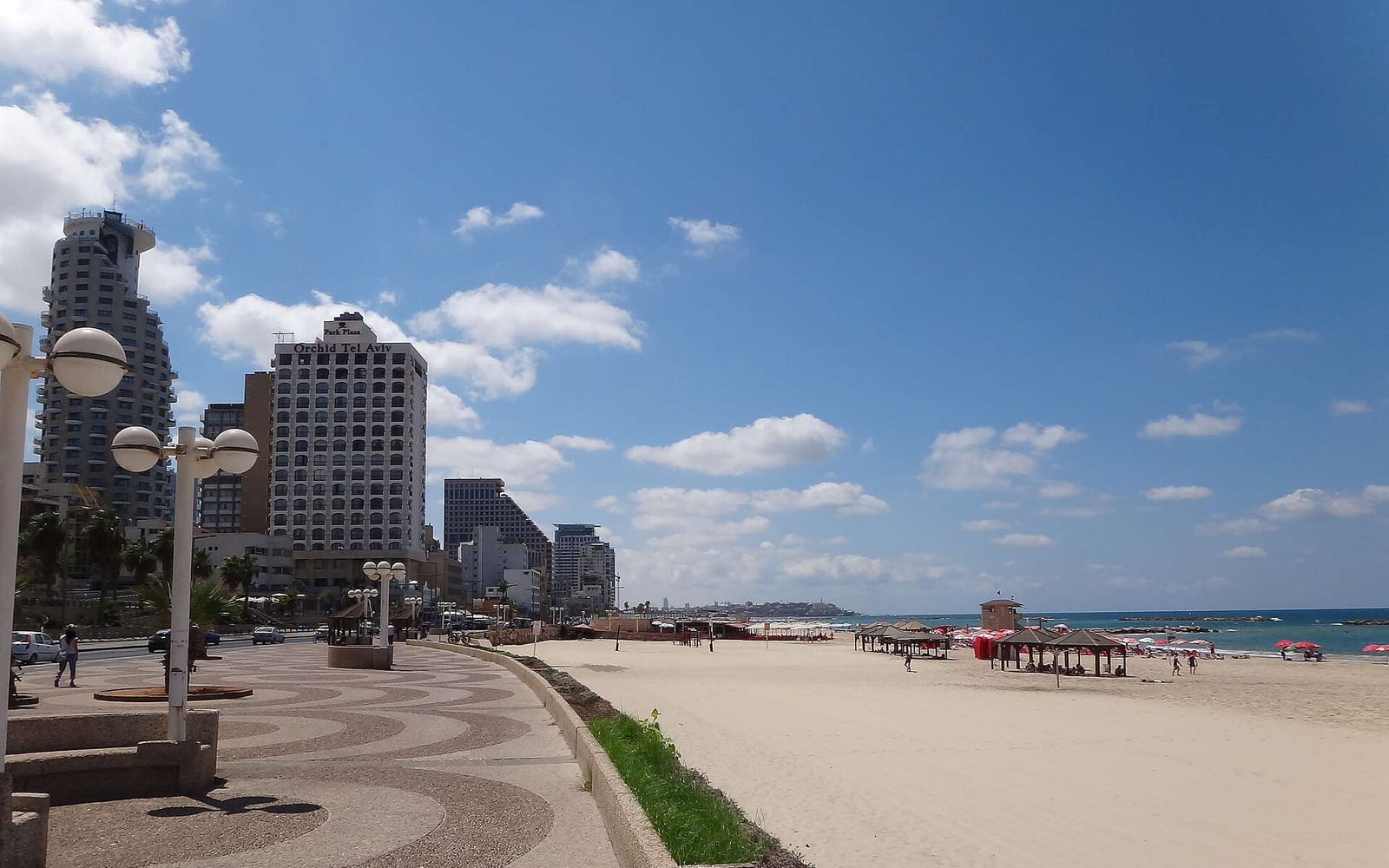
Tel Aviv is Israel’s most straightforward city for solo female travel. It is a progressive, openly cosmopolitan city with a 24-hour culture; the seafront promenade, Rothschild Boulevard and the Florentin neighbourhood are all well-lit, lively and full of other travellers well into the night.
Safer areas: Rothschild Boulevard, Neve Tzedek, Florentin, the Ben Yehuda / Dizengoff beach strip. These are also where most midrange accommodation clusters.
More care at night: The area around the Central Bus Station (Neve Shanan, Shapira, HaTikva neighbourhoods) is rougher than the rest of central Tel Aviv after dark. If you’re arriving by overnight bus, book a rideshare directly from the station to your accommodation rather than walking.
Tel Aviv’s beach is safe during the day and early evening with other people around. The Hilton Beach area in the north of the strip has a relaxed, international feel that many solo travellers gravitate toward.
Jerusalem
Jerusalem is safe in its modern districts — Rehavia, the German Colony, Emek Refaim, and the central Jaffa Road / Ben Yehuda area are all comfortable to walk at night.
The Old City is more layered. The Jewish Quarter and the main tourist routes through the Christian Quarter are fine throughout the day. The Muslim Quarter warrants more awareness, especially on quieter side streets, and many solo women prefer to visit in daylight and ideally with other travellers from their hostel group. The evening atmosphere at the Western Wall is calm and welcoming.
The Western Wall has a separate men’s and women’s prayer section; women can approach the wall directly from the right-hand side.
Haifa
Haifa has a mixed Jewish-Arab-Druze population and is one of Israel’s calmest cities. The German Colony, the Carmel mountain area and the port promenade are all safe and pleasant. Haifa also has a branch of Abraham Hostels, which is a useful base for day trips to Akko, the Carmel Druze villages and Rosh Hanikra.
Eilat
Eilat is a Red Sea resort town with a large tourist presence year-round. The North Beach promenade and hotel strip are safe at any hour. The city has a smaller hostel scene than Jerusalem or Tel Aviv; accommodation is mostly hotels and self-catering apartments.
Getting around
Trains connect Tel Aviv, Jerusalem, Haifa, Akko and Beer Sheva, and are safe and comfortable at any time of day. Carriages are well-lit and populated.
Intercity buses (Egged, Dan, Kavim) are similarly safe during the day. Overnight or very late buses are less frequent, and a sherut or rideshare may be a better option on some routes.
Rideshares and taxis: Use the Gett or Yango apps rather than hailing from the street. Both show registered, metered drivers with a record of the journey; both are used routinely by Israeli women. The apps work in Hebrew and English, and accept international cards.
Sheruts (shared minivan taxis) run fixed intercity routes and are safe for solo travel. They’re the main option when buses are limited, particularly on Shabbat and after midnight.
Night travel: If you’re out late, take a rideshare for the last leg rather than walking unfamiliar streets. The app journey record adds a practical layer of safety.
Accommodation
Abraham Hostels
Abraham Hostels is Israel’s leading hostel chain and consistently ranks among the best solo-travel hostels in the Middle East. Branches in Jerusalem, Tel Aviv, Haifa and Eilat all offer female-only dormitory rooms and a social atmosphere built around the hostel’s own group day tours.
The day-tour programme is one of the most practical features for solo travellers: tours to Masada, the Dead Sea, Galilee, Petra and elsewhere leave daily from the hostel desk. You pay for the tour and immediately have a group of other travellers to explore with, without any prior planning. This is how a significant proportion of solo women structure their first days in Israel.
Hotels in central neighbourhoods
If you prefer a private room, prioritise location over the property itself. Centrally located hotels in walkable neighbourhoods — Rothschild in Tel Aviv, the German Colony or Mamilla in Jerusalem — mean you can return on foot after dinner without navigating unfamiliar streets.
Booking.com’s “wonderful” and “superb” guest-score filters reliably identify well-reviewed properties; reading recent women’s reviews in particular can give a more specific picture.
Dress code overview
Israel has a wide range in what is appropriate depending on where you are. The short version:
- Tel Aviv / beaches: standard Western clothing. Tank tops, shorts and swimwear are all normal.
- Jerusalem modern city: ordinary city clothes.
- Old City and holy sites: covered shoulders and knees for men and women. A light scarf or cardigan that packs flat is the most practical solution — carry it and put it on at the entrance.
- Mea She’arim (ultra-Orthodox Jerusalem): this neighbourhood follows its own strict modesty code; long sleeves, long skirts (not trousers) are expected. Many solo travellers skip this neighbourhood on a short trip.
For full site-by-site guidance, see our holy sites dress code and etiquette guide.
Solo travel in Israel is common enough that finding other travellers is straightforward:
Abraham Hostel day tours — the easiest route. Book a tour from the hostel desk and you immediately have a small group of people making the same trip.
TripAdvisor forums — the Israel Travel Forum has a long thread history specifically covering solo female travel; searching it turns up recent, practical first-hand accounts.
Solo Female Travellers Israel on Facebook — an active community where you can ask destination-specific questions, find travel companions for day trips, and read current condition updates from travellers who are there now.
Walking tour groups — many free or low-cost group walking tours run from Jerusalem and Tel Aviv. Tel Aviv Greeters offers free English-language walks by local volunteers and is a good way to meet other travellers with a built-in social context.
Practical safety tips
- Share your itinerary with someone at home — even a rough outline of where you’re staying each night.
- Save emergency numbers before you arrive: Police 100, Ambulance/MADA 101, IMOD Home Front Command 1207 (for security situations).
- Waze and Google Maps both work well in Israel. Download offline maps for the areas you’ll visit in case of connectivity gaps.
- Carry a portable charger — long beach days or sightseeing days will drain a phone before you’re back at the hotel.
- Trust local knowledge — your hostel staff or hotel concierge will have up-to-date, hyperlocal knowledge about anything that’s changed since this was written. Ask them.