The Druze villages of Mount Carmel offer a different kind of Israel travel: not a museum, a ruin or a UNESCO site, but a living market community where the defining experience is a thick flatbread cooked on an outdoor iron griddle and eaten standing at a stall on the main street.
Daliyat el-Carmel and Isfiya sit on the Carmel mountain ridge 20–22 kilometres south of Haifa — a 40-minute drive that climbs from the coast into a forested highland. These villages are Israel’s most accessible Druze destination, far more reachable from Haifa than the Druze villages of the Golan Heights (Majdal Shams, Masade, Buqata), which require a much longer northward journey.
The Druze are a monotheistic minority community whose faith developed in the 11th century from Ismaili Islam. Religious doctrine is considered secret and known only to initiated community members (called ‘uqqal); the Druze do not proselytise or accept converts. In Israel, Druze citizens serve in the Israeli Defence Forces — a status that distinguishes them from most Arab minority communities — and have maintained a distinct cultural identity on the Carmel ridge for several centuries.
Religious elders are identifiable by their dress: men wear a white head-covering (‘imma) and black robes. Sacred meeting houses — called khalwat — are recognisable by their pointed green domes.
Photography rules: Do NOT photograph khalwat buildings or religious figures. Village streets, market stalls, the saj griddles and public spaces are entirely fine to photograph. Avoid probing religious doctrine with villagers — most will redirect the topic politely, and respecting that boundary is the right approach.
The Druze community’s relationship with tourism is pragmatic and welcoming. The Daliyat el-Carmel market has served Jewish Israelis and visitors for decades. Treat it as you would any local market: be curious, buy things, eat the food.
Daliyat el-Carmel
Daliyat el-Carmel (population roughly 20,000) is Israel’s largest Druze town and the focus of most day-trips. The main attraction is the central market street — a lively strip of stalls selling:
- Druze pita (the essential purchase)
- Za’atar and spice mixes, widely regarded among the best in Israel
- Wild sage, thyme and herbal bundles
- Embroidered textiles and tablecloths
- Local honey from Carmel forest hives
- Pottery, decorative brasswork and Druze-star jewellery
- Antiques and village crafts
Saturday is the best day to visit — the most stalls are open, the food is freshest, and the market has the most energy. Weekday visits are possible but stall coverage thins, particularly on weekday mornings.
Druze Pita
Druze pita is the defining culinary experience of a visit to the Carmel villages. The dough is thicker and stickier than standard Israeli pita; it is cooked fresh on a heavy, curved iron plate called a saj, producing a soft, slightly charred flatbread eaten straight from the griddle. The standard filling is white cheese (jibne), fresh herbs and olive oil; variations include za’atar paste, labneh and herb mixtures.
Watching the pita cook on the saj — then eating it immediately, still warm — is the point of coming here. Prices are low; no reservation is involved. Walk the market street, follow the smoke from the grills, and order what you see cooking.
Druze Heritage Museum: A small museum in the village covers Druze history and material culture. Opening hours are irregular — check on arrival whether it is open.
Isfiya
Isfiya sits 2 kilometres north of Daliyat el-Carmel on the same ridge. It is quieter and less market-oriented than its larger neighbour, but offers panoramic views west over Haifa Bay and the Mediterranean that are hard to match elsewhere on the Carmel. Several Isfiya restaurants serve maqlouba — a traditional Arab dish in which rice, vegetables and meat are cooked together in a pot, then inverted onto a serving platter at the table. The name means “upside-down” in Arabic. A meal at an Isfiya family restaurant is a slower, more relaxed experience than the market-street energy of Daliyat el-Carmel.
Carmel National Park
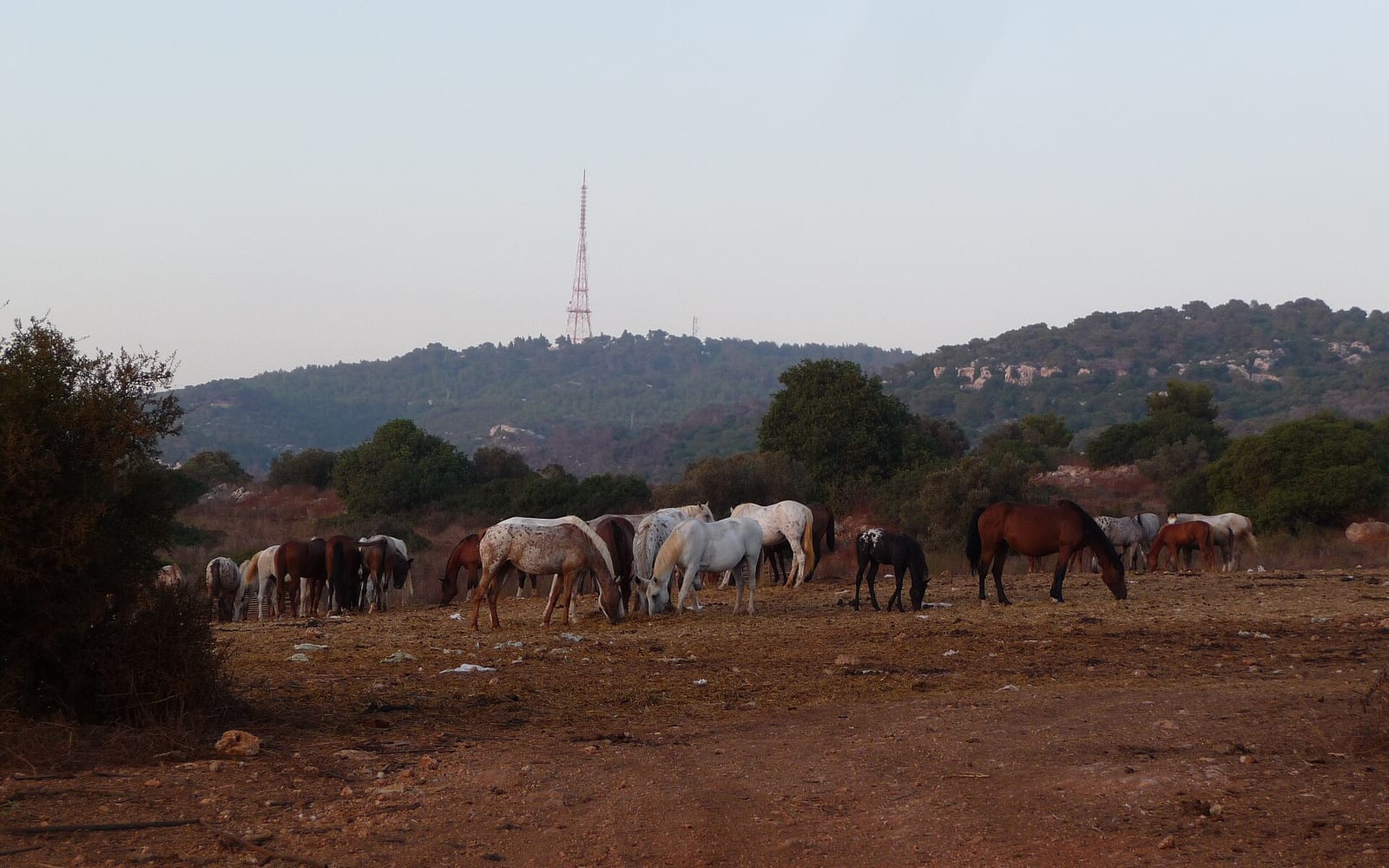
Carmel National Park — 8,000 hectares of mixed oak, pine and carob forest — borders Daliyat el-Carmel directly, with several trailheads leaving from the village edge. The park’s ridgeline trails offer views over the Mediterranean coast to the west and the Jezreel Valley to the east, sometimes both in the same panorama.
Trails from the Daliyat el-Carmel area range from 1-hour forest loops to longer ridge walks connecting to the broader Carmel trail network. The park is busiest on Saturday mornings when Israeli families make the same Haifa–Carmel trip. An Israel National Parks Pass covers entry if you intend to use park facilities. The hiking in Israel guide covers the broader Carmel Trail network for those planning a multi-hour or multi-day walk.
El-Muhraka Carmelite Monastery
Around 10–15 minutes by car south of Daliyat el-Carmel, El-Muhraka Carmelite Monastery stands on the southernmost spur of Mount Carmel above the Jezreel Valley. The name translates as “the burning place” in Arabic — a reference to the biblical contest between the prophet Elijah and 450 prophets of Ba’al described in 1 Kings 18, traditionally located on this ridge. A 19th-century Carmelite monastery, built in 1886, marks the site with a small chapel and a statue of Elijah in the courtyard.
The reason to come is the rooftop terrace: on a clear day the entire Jezreel Valley floor spreads below, with Mount Tabor visible some 25 kilometres to the east and the slopes of the Lower Galilee rising beyond it. The terrace is one of the most expansive panoramas in northern Israel, and El-Muhraka receives far fewer visitors than the Bahá’í Gardens or Masada — meaning the view is often enjoyed in near-silence.
Practical note: El-Muhraka operates restricted hours that vary seasonally and may not be reliably published online. The Elijah statue in the courtyard is generally accessible even when the monastery interior is closed. Always verify hours before making a special trip here.
Getting There
Daliyat el-Carmel is not conveniently reached by public bus from Haifa. Service exists but requires at least one connection and schedules are infrequent. The practical options:
- Car (recommended): About 40 minutes south of Haifa via Highway 672 (turn south at the Nesher interchange). Free parking is available on the village outskirts. A car also gives you flexibility to continue to El-Muhraka and loop back via a different Carmel route.
- Sherut (shared taxi): Shared taxis run from Haifa’s Neve Sha’anan area toward the Carmel ridge; availability varies by time of day and day of week — check at the pickup point.
- Organised day tour: Many operators based in Haifa, Tel Aviv and Jerusalem combine the Druze villages with a Haifa morning (Bahá’í Gardens + German Colony). This is the simplest option if you prefer not to drive.
Recommended Day Combination
The classic combination — built around the Haifa travel guide highlights — runs as follows:
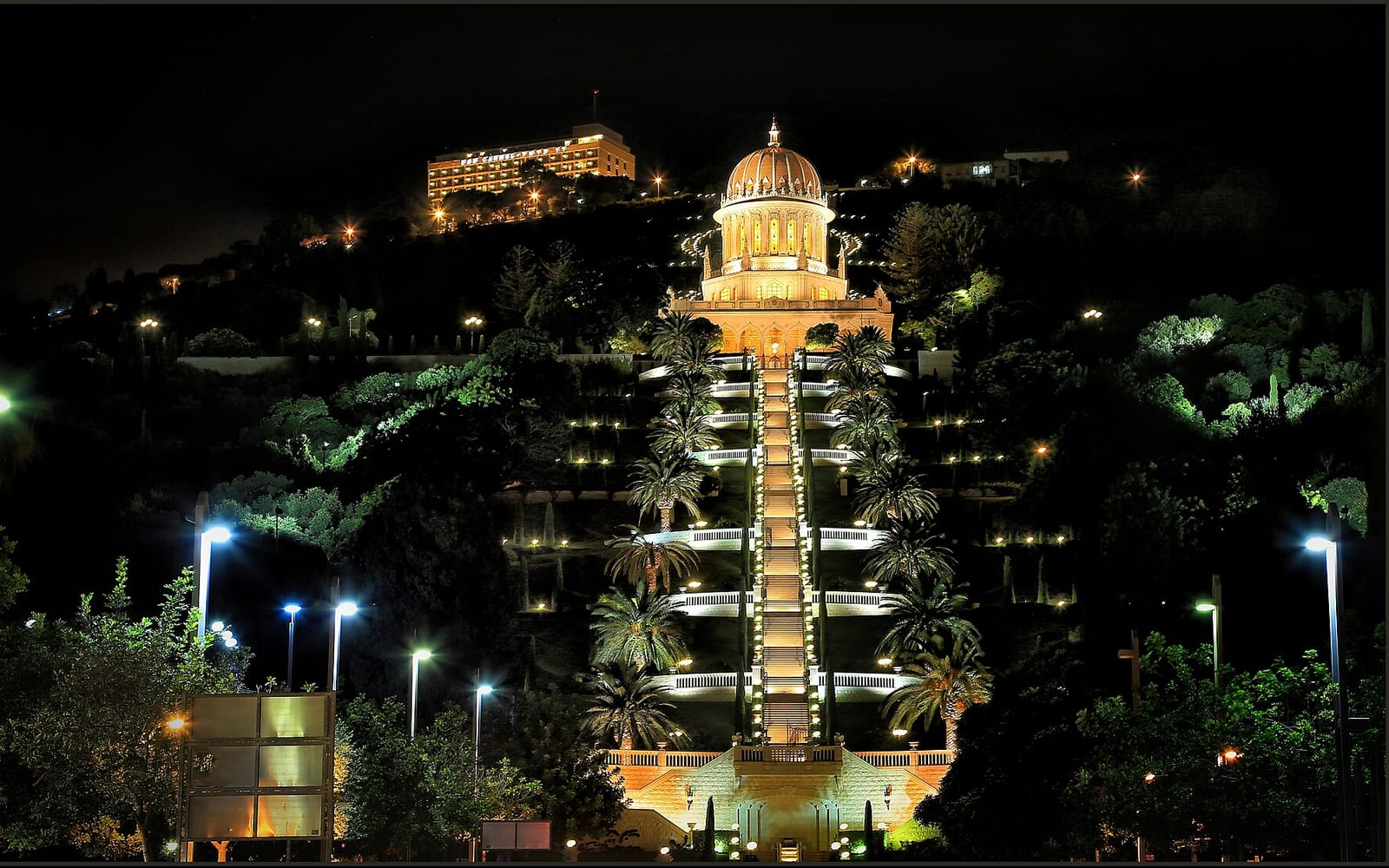
- 09:00 — Bahá’í Gardens guided tour (book ahead at bahai-haifa.org; 09:00 start is standard)
- 11:30 — Walk down to the German Colony; lunch at a Hameyasdim Street café
- 13:30 — Drive south 40 minutes to Daliyat el-Carmel
- 14:00–16:00 — Market street, Druze pita, spice browsing, Isfiya viewpoint
- 16:15 — Drive 15 minutes to El-Muhraka Monastery for the Jezreel Valley panorama
- 17:30 — Return north to Haifa or drive directly to Tel Aviv (1h 15min south)
This combination covers Haifa’s UNESCO Gardens, the German Colony’s Ottoman architecture, Druze culinary culture and one of the best viewpoints in the north — in a single day from either Tel Aviv or Jerusalem with an early start.
For multi-day northern itineraries, the Druze villages fit naturally into a Haifa base alongside day trips to Akko (25 min by train), Rosh Hanikra and Caesarea.
El-Muhraka hours and Saturday market stall coverage vary seasonally. Verify locally on arrival — neither is reliably published online in real time.