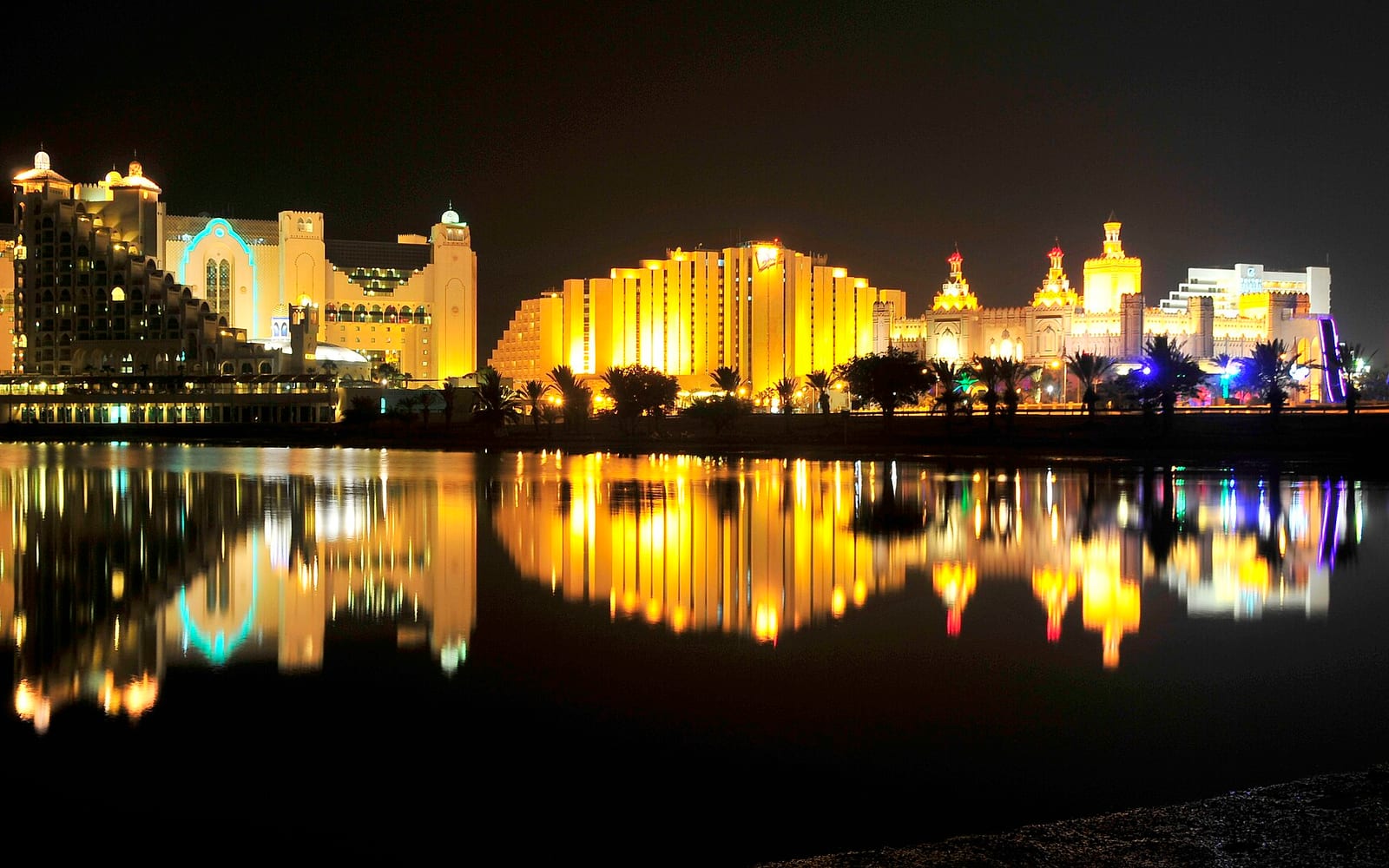
Eilat sits at the very bottom of Israel — a Red Sea resort city where the borders of Israel, Jordan, Egypt and Saudi Arabia converge across the water. The geography is the whole point: a warm reef-protected sea for snorkeling and diving, desert mountains rising immediately behind the strip, and a year-round desert climate that makes Eilat Israel’s winter beach capital. This guide is about the practical decisions: which beaches, which attractions, how long to stay, how to get there and how to plan around Eilat’s distinctly un-Israeli tax-free shopping.
The beaches
For a full comparison of all Eilat beaches — North Beach vs Coral Beach vs Almog Beach vs Dolphin Reef — see the dedicated Eilat beach guide.
North Beach promenade is the heart of Eilat’s tourist strip. A 2-kilometre arc of public beach runs alongside the main hotel zone from the lagoon at the port entrance south to the intersection near the Underwater Observatory turnoff. The water is calm (the Gulf of Aqaba has minimal wave action), the sand is fine and the beach is free. Chair and sun-lounger hire from vendors costs roughly ₪30–50/day. Watersports — jet skis, parasailing, wake-boarding — operate from the central beach section from morning until late afternoon. The promenade is a lively place in the evening: restaurants and bars run along the boardwalk from the port area south through the hotel zone. See our Eilat nightlife guide for the full evening scene.
Coral Beach Nature Reserve (3 km south of the city centre) is a completely different proposition. The reserve protects 1.2 km of original Red Sea coral reef that begins just off the shore at surface-snorkeling depth. It is the only place in Israel where you can walk in from a beach and be swimming above intact coral within minutes. Entry is managed by the Israel Nature and Parks Authority (roughly ₪30 per adult; Israel National Parks Pass valid). Reef-safe sunscreen is mandatory inside the reserve — normal sunscreen is banned and they check at the entrance; buy the right product at the entrance kiosk or in advance. Snorkel equipment can be hired on-site. This is the right choice for snorkelers — do not limit yourself to North Beach if the coral reef is what you came for.
Mosh Beach / Camping Beach (south of Coral Beach) is a rougher public beach popular with budget travellers. It has no facilities but is free, quiet and backed by the mountains. Good for a sunset walk rather than a swim.
Dolphin Reef
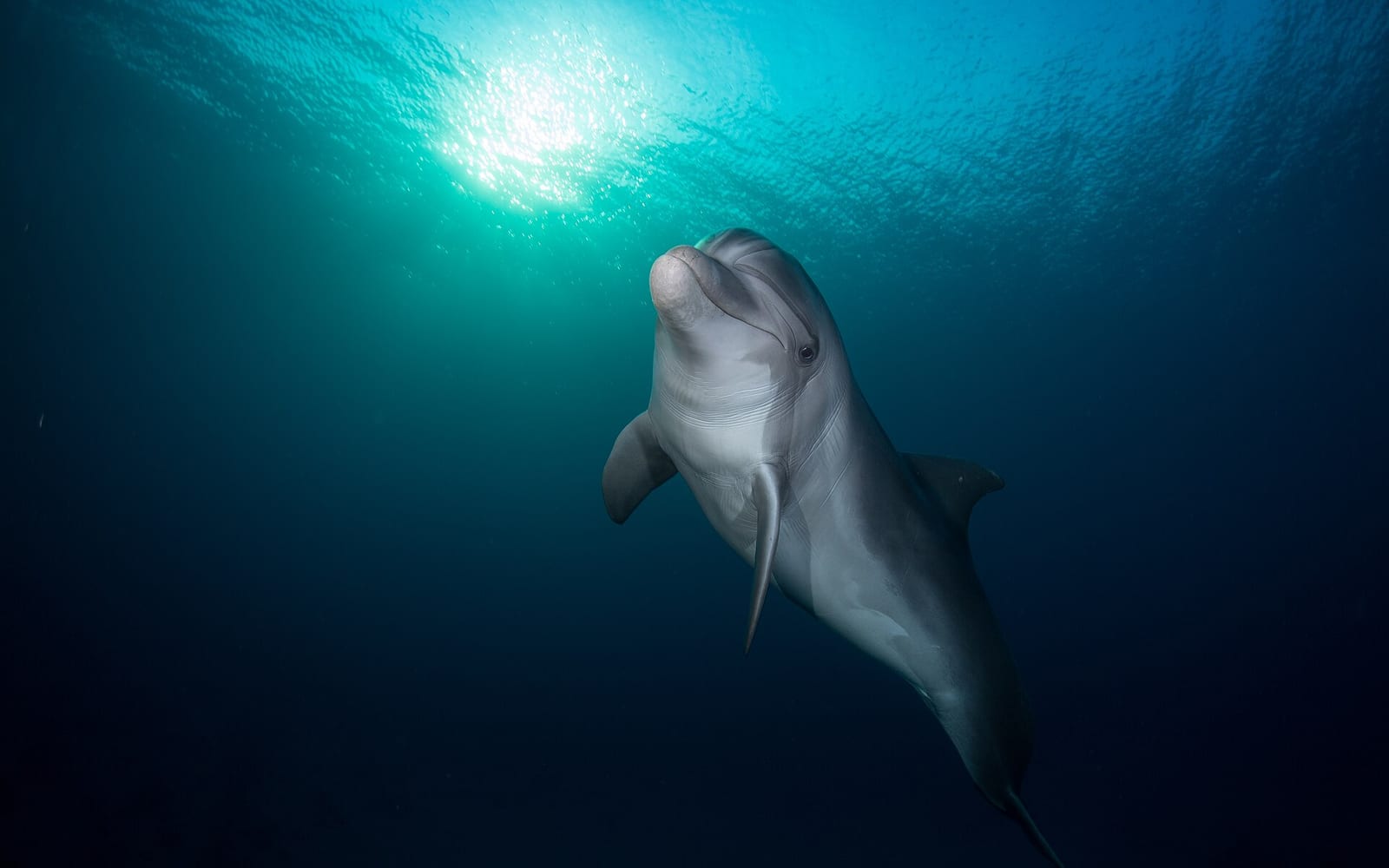
Dolphin Reef is a semi-wild dolphin facility on the southern edge of the North Beach promenade, near the Jordanian border crossing. A pod of bottlenose dolphins lives in a large enclosed lagoon that opens to the sea — they are not trained performance animals and can move freely. Visitors observe from wooden piers above the lagoon; supervised swim-with sessions take place in the lagoon with small groups.
What to expect:
- Observation entry (piers only): roughly ₪80–120 per adult — verify current rates at dolphin-reef.co.il before you go
- Supervised snorkel in the lagoon: additional ₪150–250 per person
- Morning sessions (09:00–10:30) are quieter than afternoons; book a swim session at least a few days ahead, especially in high season
- Encounters are not guaranteed — the dolphins choose whether to approach human swimmers
Honest assessment: if you are expecting performing dolphins, Dolphin Reef will disappoint. If you are interested in watching genuinely semi-wild dolphins in a large, naturalistic lagoon — including their socialising and hunting behaviour — it is a standout experience. Children respond particularly well. The ethical framing is appropriate for this experience; the facility has operated since 1990 and focuses on welfare and research.
Underwater Observatory Marine Park
The Underwater Observatory (3 km south on the coast road, adjacent to Coral Beach) is Eilat’s other main built attraction — a series of aquariums and an offshore observation tower that descend 6 metres below the surface so you see the Red Sea reef ecosystem without getting wet. It houses over 800 species across 35 aquariums, including an open shark tank, sea turtles and a touch pool.
Practical:
- Opening hours vary by season; check coralworld.com for current times (typically 08:30–17:00)
- Entry roughly ₪90–110 per adult; children discounted
- Allow 2–3 hours for a thorough visit; 1.5 hours if you have snorkeled before and want a comparison perspective
- Combines well with Coral Beach on the same half-day (the two attractions are adjacent)
Good for families, non-swimmers and anyone who wants to understand the ecosystem before or after a dive or snorkel.
Timna Park
Timna is 25 km north of Eilat on Route 90 — a 60 km² desert reserve with some of the most dramatic rock formations in the Negev. It is not a beach attraction but it justifies the detour if you have a second day.
What to see:
- King Solomon’s Pillars: a natural red sandstone column formation (not connected to Solomon historically — the name is a 19th-century designation). The most-photographed site in the park and a short walk from the car park
- The Mushroom: an isolated sandstone formation eroded into a classic mushroom shape — 100 metres from the Pillars car park
- Ancient copper mines: the oldest known copper mines in the southern Levant, worked during the Egyptian New Kingdom period (~1300–1150 BCE); some tunnels accessible with a guide
- Timna Lake and replica Tabernacle: in the park’s eastern section, a recreation of the desert Tabernacle (Mishkan) from Exodus; the lake is ringed by pedal boats and picnic areas
- Zodiac Amphitheatre: open-air amphitheatre used for evening stargazing events and concerts in cooler months
Practical:
- Opening hours vary seasonally — verify current times at timna-park.co.il before visiting
- Entry roughly ₪35–45 per adult; the Israel National Parks Pass does not cover Timna — it is independently managed, not an INPA site
- A car is required to access the park; alternatively join a guided jeep tour from Eilat — jeep tours add desert context from a guide and often include remote areas you cannot reach independently
- Allow 3–4 hours for a self-drive circuit covering the main sites; half a day if you walk the longer trails
- Best months: October–April. Summer (June–September) is genuinely extreme — 40°C+ midday desert heat makes Timna uncomfortable and potentially dangerous; some areas are restricted in summer for safety
For full visitor details — Solomon’s Pillars, Mushroom Rock, the Copper Mine Trail, stargazing evenings and combining with the Red Canyon — see the Timna Park visitor guide.
Eilat is officially a free-trade zone, exempt from Israel’s 17% VAT. In practice:
- Where the saving matters: alcohol (wine, spirits), cosmetics and perfumes, Dead Sea products (Ahava factory store has an Eilat outlet), electronics and sunglasses
- Where it doesn’t: clothing and food have less marked price differences; Eilat’s retail infrastructure is limited compared to Tel Aviv (two main malls — Malkat Hayam near the port and Kanyon Eilat)
- Practical tip: if you are buying Ahava or other Dead Sea skincare products, buy them in Eilat — the saving is significant on a ₪200+ purchase. Alcohol purchased in Eilat is cheaper than anywhere else in Israel; stock up here rather than at Ben Gurion duty-free if you are driving or taking the bus back
Note: if you fly back from Eilat’s Ramon Airport, you still clear Ben Gurion customs on the mainland — bring receipts for large purchases.
Getting to Eilat
By air (recommended): El Al, Arkia and Israir fly from Ben Gurion Airport to Ramon Airport (ETM) in about 50 minutes. Ramon is 18 km north of central Eilat; taxis to the city cost roughly ₪50–70. Budget roughly ₪200–500 for a return ticket depending on timing — prices spike significantly at Jewish holidays, Israeli school vacations and Christmas/New Year. Book as early as possible for those periods. For transport from the terminal, car hire desks, and what to expect on arrival, see the Ramon Airport guide.
By car: 4–5 hours from Tel Aviv. Two main routes:
- Route 90 via the Dead Sea: more scenic, passes Masada and Ein Gedi; allows a Dead Sea stop-off. 4.5–5 hours without stops
- Route 40 via the Negev highlands and Mitzpe Ramon: dramatic desert plateau and crater views; 4–4.5 hours without stops. Combines well with a Mitzpe Ramon stop
Driving gives you the flexibility to stop at Timna, Ein Bokek (Dead Sea) or any Negev site. It also gives you a car for Timna Park once you arrive.
By bus: Egged long-distance coaches run from Tel Aviv Central Bus Station to Eilat Central Bus Station in approximately 5 hours. Infrequent service (check Egged.co.il for timetables); comfortable coaches with air-conditioning. Best suited to budget travellers without schedule pressure. No direct service from Ben Gurion Airport.
Planning by trip length
| Duration | What fits |
|---|
| 1 day | North Beach morning + Coral Beach snorkel or Underwater Observatory afternoon. Evening: Terminal Park Ferris wheel and family rides. |
| 2 days | Add Dolphin Reef + Timna Park. One beach day and one inland/activities day. |
| 3 days | The Petra day trip is now viable (departs 06:30, returns ~21:00) without eating your beach time. Add a guided Red Sea boat tour or a half-day dive course. See our 3-day Eilat itinerary for a day-by-day plan. |
| Weekend (Fri–Sat) | Fly down Friday morning, beach + Coral Beach Friday, Dolphin Reef Saturday morning before the Shabbat-end flight home. Popular with Tel Aviv families. |
Where to stay in Eilat
2026 Eilat developments: Eilat is mid-way through its largest hotel investment in decades. The Airport City project — a ₪1 billion development on land adjacent to the decommissioned Eilat domestic airport — is adding approximately five new luxury properties (~1,100 upscale rooms) in phases through 2026–2027, repositioning Eilat as a premium Red Sea destination for international travellers. Separately, Almog Beach is being designated as Eilat’s first city-managed beach, with a new permanent lifeguard station and a 13 km coastal infrastructure upgrade covering the southern shoreline. Not all Airport City hotels are open simultaneously — check Booking.com for live availability. For the full new-openings picture, see the new luxury hotels in Israel 2026 guide.
The North Beach hotel strip puts you steps from the main beach, the promenade, restaurants and Dolphin Reef — it is the right area for first-time visitors. The strip runs from the port lagoon south; the northern part (nearest the lagoon and Royal Beach hotels) is the most animated; the southern part (toward Isrotel and Princess hotels) is quieter and closer to Coral Beach.
Budget and mid-range options cluster near the Eilat Central Bus Station and behind the main strip — further from the beach but walkable (10–15 minutes) and significantly cheaper than the beachfront hotels.
The overall hotel tier range in Eilat: budget guesthouses ₪350–600/night; mid-range hotels ₪600–1,200/night; resort hotels ₪1,200–3,000+/night in high season. Prices are heavily seasonal — January–March is cheaper than school-holiday periods and July–August. Always check live rates before booking; Eilat hotel prices fluctuate widely. For specific hotel picks at each tier and a zone-by-zone breakdown, see our Eilat hotels guide.
Day trips from Eilat
Petra, Jordan is the most popular day trip — feasibly done in a single long day via the Yitzhak Rabin / Wadi Araba border crossing 6 km north of central Eilat. Organised tours handle border formalities, provide a Jordanian guide and give you 4–5 hours at Petra. It is a demanding day (05:30–22:00) but very manageable. See our Petra from Eilat guide for the border logistics and comparison with flying into Amman.
Wadi Rum, Jordan: some tours combine Petra and Wadi Rum as a two-day excursion with an overnight in the desert camps. Single-day Wadi Rum-only trips from Eilat are possible but very long. An overnight in the desert is the recommended format if Wadi Rum is on your list.
Egypt via Taba: the Egypt border crossing at Taba is 9 km south of Eilat city centre — a short taxi ride. Most travellers use it for 2–4 nights on the South Sinai coast (Dahab, Sharm el-Sheikh) or, with more time, as a gateway to Cairo and the Pyramids. See our Israel and Egypt combined trip guide for crossing logistics, itinerary options and current safety context.
Red Canyon: the most accessible desert hike from Eilat — a free slot canyon 20 km northwest on Highway 12 with narrow passages, metal ladder descents and iron-oxide sandstone walls glowing red-orange. The 2 km circuit takes under 2 hours. Full Red Canyon visitor guide covering the trail, flash flood safety, and how to combine it with Timna Park.
Hai Bar Yotvata Nature Reserve: 35 km north of Eilat on Highway 90, this INPA biblical wildlife breeding centre houses white oryx, onager (Asiatic wild ass) and ostriches in a self-drive open-range section. A separate guided nocturnal tour covers caracal, sand cat and leopard-cat. In spring 2026, 33 white oryx calves and a rare scimitar oryx were born here — the largest breeding cohort in the reserve’s history. INPA pass valid; car required. Full Hai Bar Yotvata visitor guide.
Negev highlights: driving north from Eilat, you pass through the southern Arava desert (excellent stargazing at night), Timna Park (25 km), the Maktesh HaKatan small crater, and eventually reach Mitzpe Ramon and the Makhtesh Ramon — the world’s largest erosion crater — in 2 hours. The crater rim, 300 metres above the Negev plateau, is a sharp contrast to the coastal resort feel of Eilat. Combine as a self-drive if you have a car.
Arava mountain biking: the Yahel–Timna singletrack (opened 2026) is a 100+ km desert MTB route running from Kibbutz Yahel (55 km north of Eilat) south through volcanic basalt ridges and limestone wadis to Timna Park. Part of a broader 350+ km Eilot trail network — the largest desert mountain biking infrastructure in Israel. Season: October–March. A rental car is needed to reach the start point at Kibbutz Yahel. See the Arava mountain biking guide for trail details, logistics and bike hire.
Eilat events and festivals
Eilat’s late-autumn calendar is anchored by two annual music events that draw visitors specifically for the festivals rather than the beach:
Red Sea Jazz Festival: held over four nights each November on the North Beach waterfront, drawing around 70,000 attendees across multiple outdoor stages. One of Israel’s largest outdoor music events; a high-energy contrast to the city’s usual resort atmosphere.
Eilat Chamber Music Festival: companion classical festival held in late November or December, with chamber music, orchestral works, opera highlights, and world music across indoor concert halls and Red Sea waterfront stages. Smaller and more intimate than the jazz festival; the November/December timing coincides with Eilat’s most comfortable weather and quietest hotel period.
Red Sea Guitar Festival: held annually in February or March on the North Beach waterfront, featuring Israeli guitarists and international guest artists across rock, blues, acoustic, and world music genres. More intimate than the jazz festival; the February–March timing delivers warm shoulder-season weather (27–30°C) with uncrowded beaches and good hotel value.
Fattal Rock Festival: an annual 3-night Israeli rock festival held each June at Fattal Hotels’ beachfront properties (Royal Beach and Club Hotel Eilat). Organised by the Fattal Hotels Group, the festival features Israeli rock headliners — Chanan Ben Ari headlined the 2026 edition — on outdoor Gulf of Aqaba waterfront stages. Festival access is primarily via Fattal hotel packages; external tickets are sometimes available through IsraTicket. June Eilat delivers warm summer evenings of 26–28°C: ideal for outdoor rock concerts.
These four festivals — rock in June, jazz in November, chamber music in December, guitar in February or March — give Eilat one of Israel’s most diverse year-round music event calendars.
For a complete rundown of every Eilat excursion — Timna, Red Canyon, Petra, Aqaba, glass-bottom boat, Dolphin Reef and Coral Beach — with a comparison table and summer heat planning, see our Day trips from Eilat guide. For Aqaba in detail — border logistics, snorkeling sites, Al-Aqabah Castle and the duty-free souk — see the Aqaba from Eilat guide. For a detailed comparison of Eilat’s guided tour options — Red Sea snorkeling, glass-bottom boat, jeep safaris, diving courses and Petra day trips — with honest price ranges and what each delivers, see our Eilat tours compared guide. For the full Red Sea diving and snorkeling breakdown, see the Eilat diving and snorkeling guide.