Eilat does one thing extraordinarily well: it packs a full Red Sea holiday into a country you can reach by a two-hour drive or a one-hour domestic flight from Tel Aviv. Three days here follows a natural rhythm — water and reef on day one, Jordan and Petra on day two, desert and dolphins on day three — and leaves you with a clear sense of what makes this scrap of Israeli coastline on the Gulf of Aqaba worth the journey. This guide covers that rhythm, day by day, with the transport decisions, booking windows and heat warnings that determine whether the trip goes smoothly or doesn’t.
The pacing works best from October through April. Summer visits are possible — the Red Sea is the draw and it doesn’t move — but the Petra walk and the Timna Valley are punishing above 38°C. The relevant notes appear under each day. For a full summer planning guide, see Israel in summer.
Before You Go: Practical Prep for Three Days in Eilat
Getting to Eilat. Eilat Ramon Airport (ETM) handles domestic flights from Tel Aviv (about one hour) and a growing number of European charters. Ben Gurion Airport (TLV) also connects via a direct bus (Egged 444 from Jerusalem, ~4.5 hours) or a car drive (about 3.5 hours from Tel Aviv, 2.5 from Jerusalem via Route 90 or Route 40 through the Negev). The desert drive on Route 40 through Mitzpe Ramon is worth doing at least one way if you have a car. See the Eilat travel guide for full transport comparison.
Where to stay. North Beach is the hub: the hotel strip runs parallel to the main beach and everything on days one and three is walkable. Coral Beach South suits divers and serious snorkelers best. Budget travellers use city-centre guesthouses 15–20 minutes from the sand. Book hotel and Petra tour before travelling — both sell out fast in school holiday weeks and around Jewish holidays.
Shabbat. Eilat is a secular city. Hotels stay open, beaches operate normally, and most tourist attractions run on Shabbat. The main disruption is bus services — if you plan to reach Coral Beach or Dolphin Reef by public transport on Saturday, check schedules in advance or use a taxi.
Day 1 — Red Sea: Coral Reef and the Underwater World
Day one is about acclimatisation: the Red Sea, the temperature, and why the reef here sits in the same league as Sinai and the Maldives.
Morning — Coral Beach Nature Reserve
The Coral Beach Nature Reserve sits 3 km south of the city centre on the Gulf coast. Buy INPA entry at the gate — entry costs are modest and include snorkel gear rental at the kiosk. The reserve protects the northernmost coral reef in the world; the water is gin-clear, visibility typically reaches 20 metres or more, and the reef begins immediately from the shore. No boat needed. Bring reef-safe sunscreen — the reserve is an INPA nature reserve and chemical sunscreens damage the coral.
Plan two to three hours here. The reef is at its most photographable in the morning before direct sun flattens the contrast. If you want guided snorkeling or a sea kayak, the adjacent dive centres offer guided reef swims.
Afternoon — Underwater Observatory Marine Park
The Underwater Observatory Marine Park is 1 km north of Coral Beach. The observation chamber descends six metres below the sea surface, surrounded by 800+ species of Red Sea marine life — sharks, rays and reef fish in a naturalistic environment. There’s also a touch pool, an aquarium complex and shark tanks above water. Allow two hours.
Combined, Coral Beach in the morning and the Observatory in the afternoon make a complete Red Sea day without a boat, a dive certification, or a tour. Both are closed on Yom Kippur.
Evening — North Beach Promenade
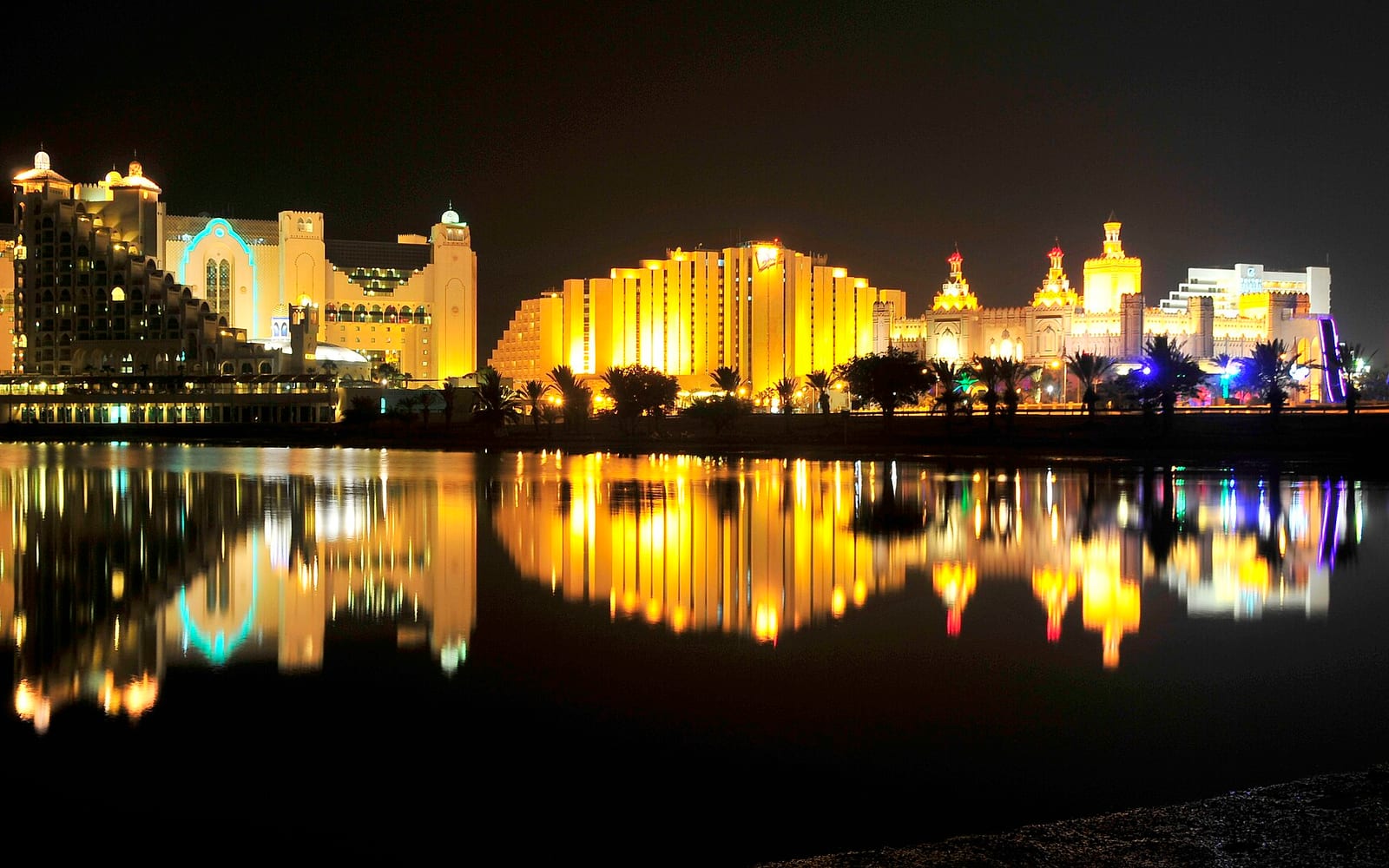
Return to the city for the North Beach evening. The two-kilometre promenade runs from the port entrance past the hotel zone and fills up from about 6pm. Restaurant quality is variable — avoid the obvious tourist traps at the northern end and walk south toward the marina for better options. The waterfront is pleasant from late afternoon when the heat drops; sunset over the Gulf of Aqaba and the Jordanian and Saudi mountains across the water is one of Eilat’s reliable pleasures.
Day 2 — Petra, Jordan: The #1 Eilat Day Trip
The Petra day trip is the reason many people choose Eilat over another Red Sea destination. Petra is 150 km from central Eilat — a 45-minute drive to the border crossing plus two hours into Jordan — and a guided day trip brings you back to Eilat the same evening.
Getting There: Border and Logistics
The Yitzhak Rabin / Wadi Araba border crossing is 6 km north of Eilat city centre. Tours depart at 05:30–06:00 (latest departure for a meaningful Petra visit) and return by 21:00–22:00. Your tour operator handles the border crossing paperwork, Jordanian guide, Petra entry fees and transport on both sides. If you have a Jordan Pass (buy online before travel — it covers the Petra entry fee plus the Jordan visa-on-arrival fee for most nationalities), show it at the Jordanian border desk.
For a detailed border crossing comparison and DIY vs guided tour breakdown, see the Petra from Eilat guide.
At Petra
Petra is enormous — the full site covers around 250 square kilometres — but most day trips cover the essential circuit: the Siq gorge approach (1.2 km of narrow canyon with carved niches and ancient water channels), the Treasury façade at its end, the Street of Facades, the Royal Tombs carved into the rose-red sandstone, and the Colonnaded Street. Guided tours walk 5–7 km round trip in around 4–5 hours on site.
Summer note. The Siq and the main street are exposed. In June–August, the heat at Petra (already hotter than Eilat at altitude) makes the afternoon section brutal. Start-of-day departure (06:00 from Eilat) is essential — you want to be at the Treasury before 9am and finishing your site visit by 12:30.
Day 3 — Desert and Dolphins: Dolphin Reef and Timna Park
Day three divides between the sea in the morning and the desert in the afternoon.
Morning — Dolphin Reef
Dolphin Reef is 3 km south of the city centre, a few minutes’ drive from the hotel zone. The reef hosts a semi-wild pod of bottlenose dolphins that interact with visitors in open water — not a trained performance but an open-sea encounter where the animals choose their own level of engagement. Morning sessions sell out faster than afternoon; book a swim session the day before.
Entry covers the beach and observation piers if you don’t want to swim; the swim session is a separate ticket. Honest note: the dolphins are free to leave and sometimes do — you are not guaranteed a close encounter, and a Dolphin Reef visit in a low-engagement session can feel quiet. Most visits are worth it.
Afternoon — Timna Valley and King Solomon’s Pillars
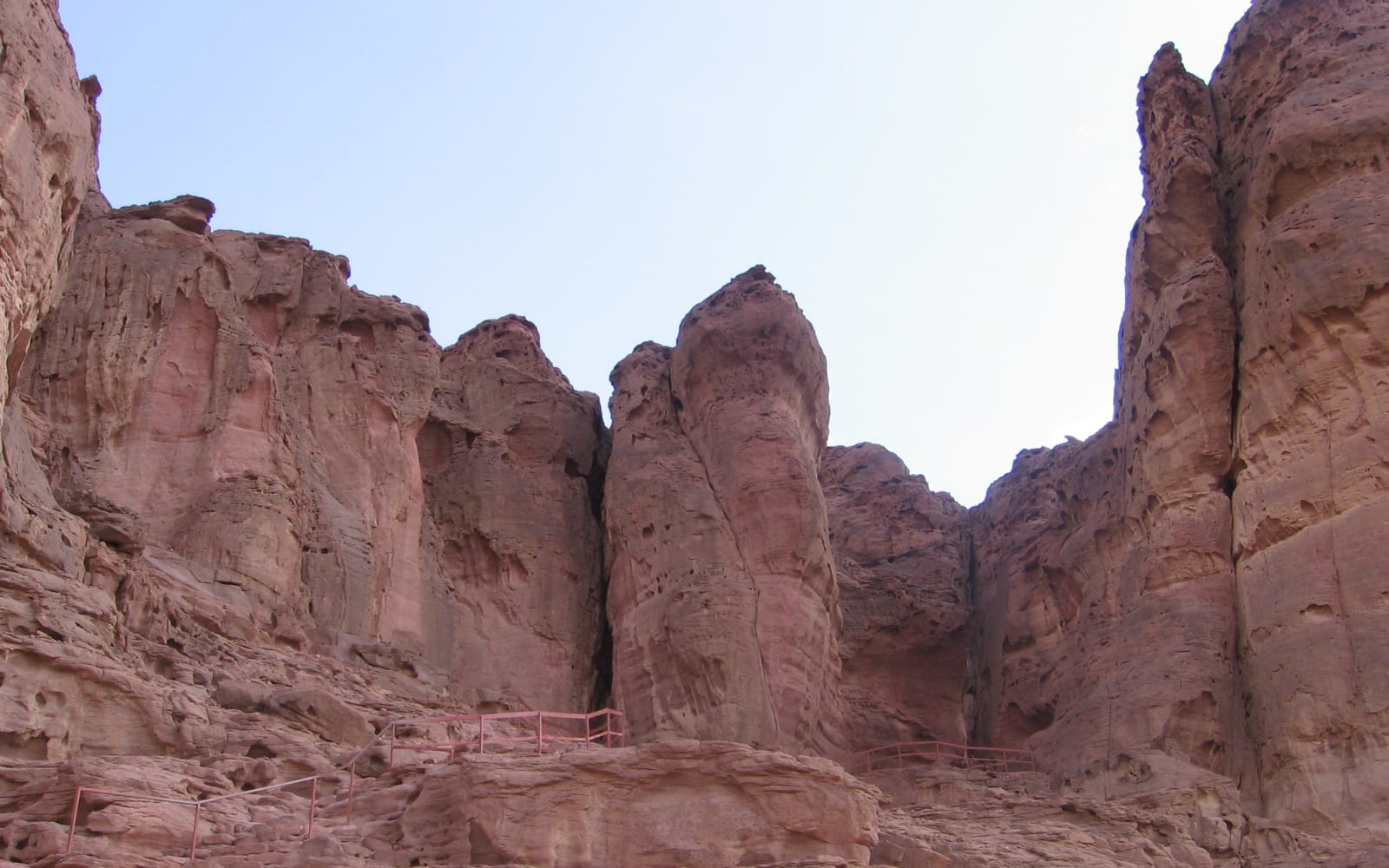
Timna Park is 25 km north of Eilat on Route 90. The park preserves one of the oldest copper mines in the world — 3,000 years of continuous extraction left shafts, ancient smelting sites and the famous mushroom-shaped sandstone formations including King Solomon’s Pillars. The park is large (60 square kilometres) and navigable by car; most visitors drive between the main sites.
Key stops: King Solomon’s Pillars (the most photographed formation — two massive columns of Nubian sandstone weathered into natural architecture), the Egyptian temple to Hathor (remarkably intact for its age), and the Timna Lake in the park centre. The sunset light on the red-orange sandstone is spectacular — time your King Solomon’s Pillars visit for an hour before sunset.
Combination option. Hai Bar Yotvata wildlife reserve is 10 km north of Eilat on Route 90 — a short detour before or after Timna. The reserve is an INPA project reintroducing biblical-era wildlife (white oryx, onager, ostrich, Dorcas gazelle) to the Arava desert. Self-drive safari with your own car or join a guided nocturnal predator tour.
Optional Add-Ons if Your Stay Stretches to Four Days
Red Canyon. A free, 2-km slot canyon hike on Highway 12, 20 km northwest of Eilat. Narrow passages, iron-oxide walls, and a short ladder descent — under two hours round trip. Straightforward with a car. See the Red Canyon complete visitor guide.
Eilat snorkeling & diving. If the Coral Beach visit on day one sparked an interest in going deeper, Eilat has some of the world’s most accessible certified dive sites. Full guide: Eilat diving and snorkeling.
Day trips from Eilat. Glass-bottom boat tours, Aqaba (Jordan) for the duty-free souk and northern reef snorkeling, and desert jeep safaris make up the rest of the Eilat day-trip menu. See the day trips from Eilat guide for the full comparison.
Frequently Asked Questions
The questions above cover the most practical decisions for a three-day Eilat visit — timing, transport, Petra logistics and summer heat. The FAQ section at the bottom of this page makes these answers discoverable directly from search.