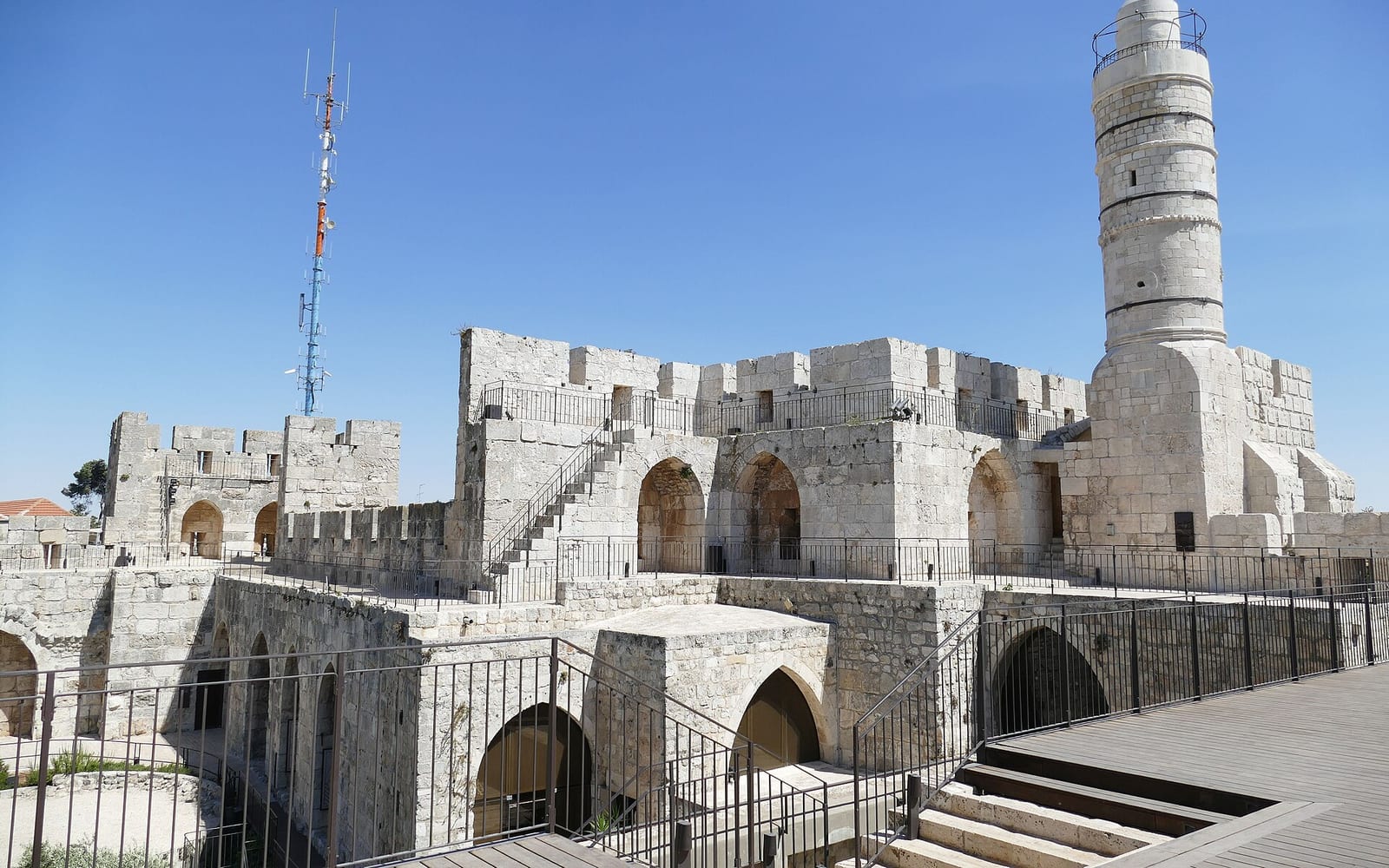
The Ottoman citadel beside Jaffa Gate is one of the first things visitors encounter in Jerusalem — and one of the most reliably under-estimated. Most people pass it on the way into the Old City. The ones who stop discover one of the city’s best museums, a rooftop view that puts the entire Old City in perspective, and an evening show that has been described by more than one visitor as the best hour they spent in Israel.
This guide covers the daytime museum, the Night Spectacular, and how to fit the Tower of David into a Jerusalem itinerary.
Coming April 2027 — “Eyes on the Wall” exhibition: The Tower of David Museum is launching a major new exhibition marking 60 years since the reunification of Jerusalem (June 1967). Eyes on the Wall — curated by art historian Shimon Lev — will be the first large-scale museum exhibition dedicated entirely to the history of the Western Wall, covering approximately 2,000 years through photographs, archival documents, films, and personal artefacts. It will run inside the citadel alongside the existing exhibits. Confirmed by the Tower of David Museum (tod.org.il); ticket details and exact opening date not yet published. Check tod.org.il for updates.
What the Tower of David actually is
The name is a misnomer — worth knowing before you go, because understanding it is part of understanding Jerusalem.
The citadel at Jaffa Gate was first built in the Hasmonean period (2nd century BCE), expanded by Herod the Great in the 1st century BCE as an entrance fortification and private palace complex, rebuilt by the Byzantines, destroyed and rebuilt by the Crusaders, substantially altered by the Mamluks, and given its current form — including the distinctive minaret — by the Ottomans in the 17th century. The layers of occupation visible in the stonework span more than 2,000 years.
King David, who reigned in Jerusalem around the 10th century BCE, had nothing to do with any of these structures. The name was applied by early Christians who identified anything ancient in Jerusalem with the biblical king, and the label stuck through the Crusader period and into popular usage.
The Herodian towers — three massive towers Herod named after his wife Mariamne, his brother Phasael, and his friend Hippicus — once marked the northwest corner of the Upper City. Only the base of the Phasael Tower survives, incorporated into the current citadel. It is the original Herodian masonry you see in the lower courses: enormous limestone blocks cut with the same precision as the Western Wall.
The museum
The Tower of David Museum opened in 1989 and underwent a major $40 million renovation — completed in 2023 — that transformed it from a well-regarded local institution into one of the leading history museums in the Middle East.
The 2023 renovation: what’s new
The renovation added the Angelica Della Rache Entrance Pavilion — a new gateway that integrates ticketing, orientation exhibits, and a dramatic ground-level view down into the Hasmonean-period archaeological layers beneath the citadel courtyard. The pavilion, designed in sympathy with the citadel’s stonework, is the first thing visitors encounter and sets the interpretive tone for the full visit.
The renovation also installed 10 new permanent galleries, each dedicated to a specific period of Jerusalem’s history, using a mix of projection mapping, interactive touchscreens, scale models, and — in the highlights rooms — VR time-travel that renders key periods of the city’s past as immersive environments. The galleries do not replace the archaeological site itself; they layer curated context over the physical space. In what were previously underused cisterns beneath the citadel, the museum now presents contemporary art installations commissioned to respond to the site’s layered history — a quietly powerful contrast between ancient stone and living artistic practice.
The overall effect is a museum that is legible to first-time visitors without being simplistic for those who know the material. Plan for the time estimates below; if you are thorough in the new galleries, the upper end of the range is realistic.
The route
The museum follows a chronological spiral: you enter at the Canaanite period (Bronze Age settlement) and work upward through Israelite, Hasmonean, Herodian, Roman, Byzantine, Early Islamic, Crusader, Mamluk, and Ottoman periods, each gallery building on the last. At key points, you can look down into open excavation pits where the actual archaeological layers are exposed — the exhibit is not describing the history; you are standing inside it.
Highlights to look for:
-
The Della Rache Pavilion entrance: the new courtyard-level orientation space, with views into the Hasmonean excavation pit, sets the scale of the site before you ascend.
-
The VR time-travel galleries: select periods are rendered as 3D environments — useful for visualising the 1st-century CE city (before the Temple’s destruction) and the Crusader-period citadel as it would have appeared in the 12th century.
-
Contemporary art in the cisterns: the underground cisterns now host rotating commissions from Israeli and international artists responding to the site’s palimpsest of occupation. Check tod.org.il for the current installation.
-
The scale model in the entrance courtyard: a 1:50 scale reconstruction of Jerusalem as it appeared in the 1st century CE. Created with archaeological precision and updated as new discoveries refine understanding of the city. Most visitors spend more time here than they planned.
-
Herodian masonry in situ: at the base of the Phasael Tower, you can touch stone laid by Herod’s builders in the 1st century BCE. The precision of the dressing — perfectly flat faces, minimal mortar, identical margins — makes it unmistakably Herodian and unmistakably distinctive from the rougher stonework of every later period above it.
-
The Crusader hall: the museum incorporates the remains of a 12th-century Crusader hall, with characteristic pointed arches and vaulted ceilings. The Crusader period in Jerusalem lasted less than 90 years (1099–1187) but left a physical mark on the citadel that outlasted the kingdom.
-
Ottoman cannon and garrison rooms: the upper floors of the existing citadel are Ottoman-period garrison structures, some still holding period artillery. The contrast between the scale of Herod’s ambition and the domestic pragmatism of the Ottoman military barracks is quietly striking.
The rooftop
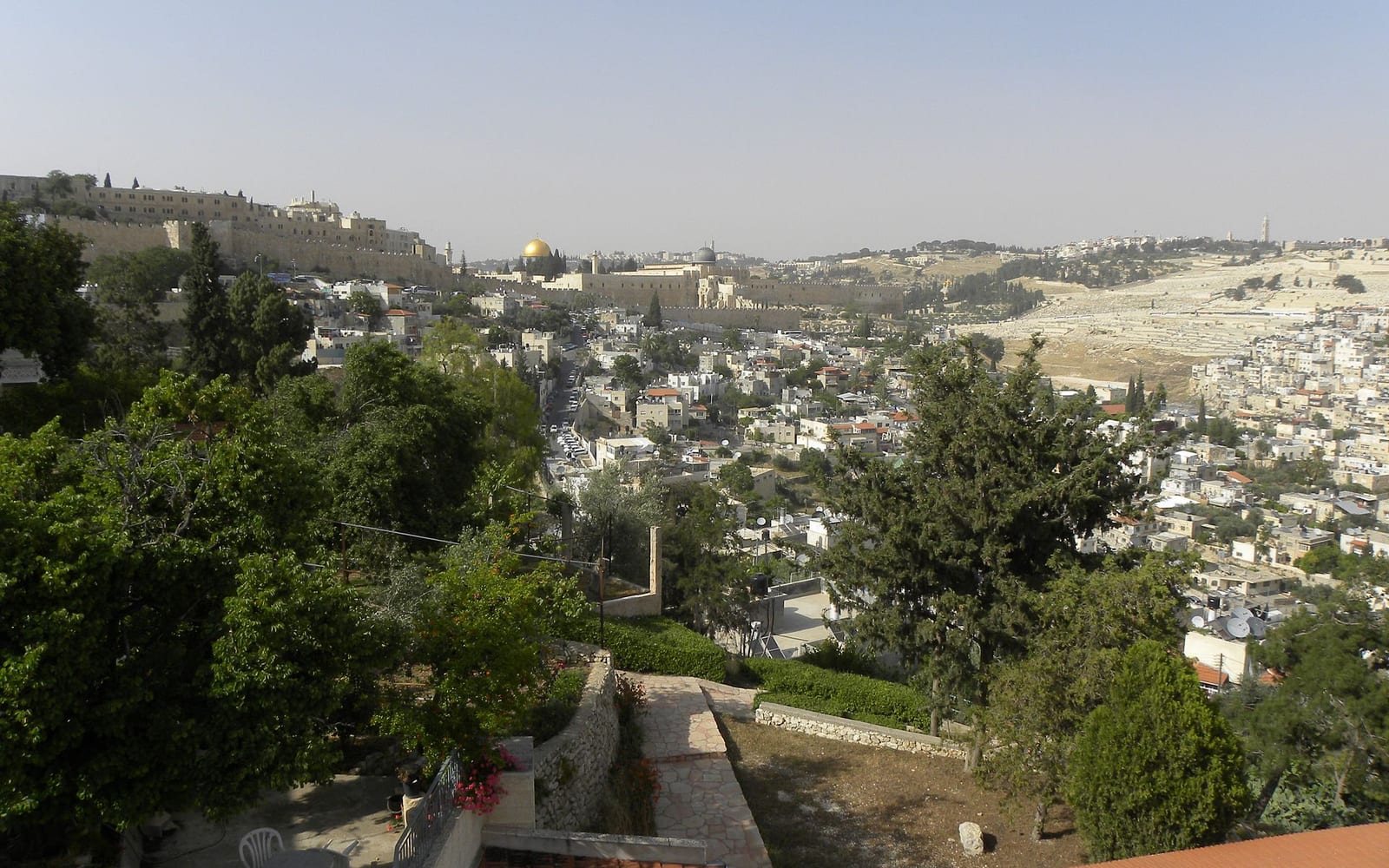
The museum route ends on the rooftop walkway of the citadel’s outer wall. From here, you look west over the modern city and east over the Old City — the Church of the Holy Sepulchre dome is visible, as are the minarets of the Muslim Quarter and the golden crown of the Dome of the Rock above the Temple Mount.
It is one of the best elevated views of Jerusalem available to the general public. The Mount of Olives panorama (taken from the Jewish cemetery across the Kidron Valley) is more iconic; this view from within the city is more intimate.
The audio guide
An audio guide is available in 14 languages for ₪25 extra. If you are not visiting with a guide who knows the material, the audio guide is worth the additional cost — the exhibits are well-labelled but the audio version adds significant depth on the Herodian period and the Crusader hall in particular.
Guided tours in English (group tours through GetYourGuide or Viator) typically cover the museum highlights in 45–60 minutes and then continue into the Old City for a combined experience.
The Night Spectacular
The Tower of David Night Spectacular is a separate experience from the daytime museum — a sound-and-light show projected across the entire surface of the citadel walls, running for approximately 45 minutes.
The show covers Jerusalem’s history from the Bronze Age to the present, using light mapping to animate the actual stone walls of the citadel — faces, armies, architectural forms, and calligraphy appear and dissolve across the texture of the 2,000-year-old structure. It is technically sophisticated and the physical setting — a real Herodian/Ottoman citadel, in the heart of the Old City, at night — is unlike any purpose-built sound-and-light venue.
Practical notes:
- Runs most evenings year-round (see FAQ for schedule details)
- Tickets at tod.org.il — advance booking essential in peak season
- The show is in multiple language versions; check which language track is running on your preferred evening
- The Night Spectacular courtyard is largely flat and more accessible than the daytime museum route
- Combine naturally with a pre-show dinner in the Jewish Quarter or the Mamilla Mall adjacent to Jaffa Gate
- For the full comparison of Jerusalem evening experiences — Night Spectacular vs Western Wall at night vs Mahane Yehuda bar scene — see our Israel Evening Activities guide
Planning your visit
How to reach the Tower of David
The citadel entrance is at Jaffa Gate, one of the main entry points into the Old City. From the New City (Ben Yehuda Street / Mamilla):
- On foot: 10–15 minutes downhill through the Mamilla open-air mall
- Taxi or bus: to Jaffa Gate (well-signed from both the centre and the German Colony)
- From Damascus Gate or Dung Gate: 10–15 minute walk through the Old City
There is no car access inside the Old City. Leave the car in the Mamilla parking garage or at the Old City municipal lot near Jaffa Gate.
Combining with the Old City
The Tower of David sits at the start of the natural Old City walking route. A full morning combining the museum with the Armenian Quarter, Jewish Quarter (Cardo, Burnt House), and Western Wall plaza is very manageable:
- 9:00 — Tower of David Museum (75 minutes with audio guide)
- 10:30 — Armenian Quarter (St. James Cathedral courtyard)
- 11:00 — Jewish Quarter: Cardo excavations + Broad Wall
- 12:00 — Western Wall plaza
- 12:30–13:00 — Dung Gate exit to lunch
For the complete Old City walking tour route, including the Muslim Quarter and the Church of the Holy Sepulchre, see our dedicated guide.
Entry fees
Adult tickets to the daytime museum are approximately ₪50–60 (check tod.org.il for current pricing; rates have increased in recent years). Children and seniors pay less. Concessions vary.
The INPA Annual Pass does not apply — the Tower of David Museum is independently managed. For sites where the INPA card does apply, see our Israel National Parks Pass calculator.
Who should visit
Visit the daytime museum if:
- You are spending more than one full day in Jerusalem and want depth, not just sights
- You have children who engage with hands-on history (the scale model is genuinely compelling for kids, and the VR galleries hold attention across age groups)
- This is a first visit and you want the chronological overview before diving into the Old City’s specific sites
- You are interested in medieval Jerusalem or Islamic-period architecture — the Ottoman citadel is a well-preserved example
- You visited before 2023 — the $40M renovation substantially transformed the experience; it is worth a second visit
Visit the Night Spectacular if:
- You want an evening activity in Jerusalem that is not bar-hopping or hotel dining
- You are visiting with family or a mixed group where a shared spectacle works better than individual museum pacing
- You are visiting in summer and the city’s best light is after 20:00
Consider skipping if:
- You have only a few hours in Jerusalem and need to prioritise the Western Wall, Old City quarters, and one or two specific sites
- You have already visited once and the museum’s content is familiar
Cross-links: Jerusalem · Jerusalem Old City Walking Tour · 1-Day Jerusalem Itinerary · Israel Evening Activities · Western Wall Tunnels Guide · Jewish Heritage in Israel · Christian Pilgrimage Holy Land · Israel Museum Jerusalem · Free Things to Do in Israel · Yad Vashem Visitor Guide