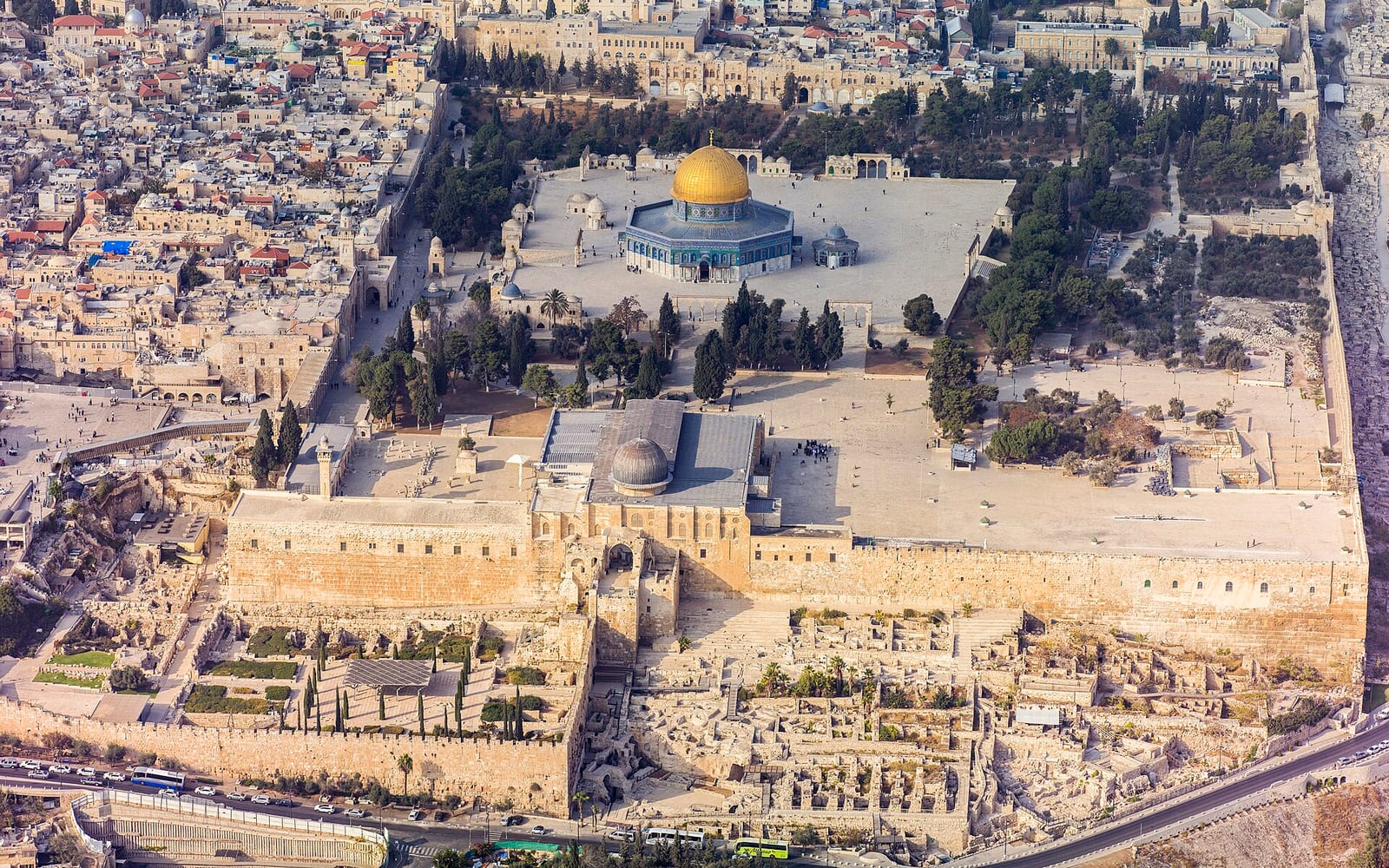
Jerusalem rewards preparation. In a single day you can walk every quarter of the Old City, reach the Western Wall at the right moment, stand above the city at the Mount of Olives as the light goes golden, and end the evening in Mahane Yehuda. What you cannot do in one day is Yad Vashem, the City of David, the Bethlehem crossing and the Old City at leisure. This guide gives you two routes: one for first-timers who want the religious and historical heart, and one for those who have seen the major sites before.
Before you start: what you need to know
Transport from Tel Aviv: the high-speed train from HaHagana or Savidor Centre reaches Jerusalem Navon in 32–35 minutes, every 30 minutes on weekdays. From Navon, you walk five minutes to the city centre or ride light rail Line 1 one stop to Jaffa Gate. Train, light rail and the Egged bus from Jerusalem Central bus station all use the Rav-Kav card — a contactless card you buy on arrival for ₪5 and top up at machines. See the transportation guide for full details.
Start early: most Old City sites open by 8am. The Church of the Holy Sepulchre opens at 4am, but 8–9am is the window before tour groups arrive. The Western Wall plaza is always open; the Western Wall Tunnels require advance booking.
Dress code: covered shoulders and knees are required for entry to the Church of the Holy Sepulchre, the Western Wall plaza and the Muslim Quarter gates. See the holy sites dress code guide — the easiest approach is a lightweight scarf or layer in your bag.
Security checks: bag X-rays at Old City gates take five to fifteen minutes at peak hours. Build this into your timing.
Route 1: Old City & holy sites (first-timer)
This is the classic day — four religious quarters, the Western Wall and the city at sunset from above. It is best done Sunday through Thursday; on Fridays the Muslim Quarter becomes very busy at midday prayers and parts of the Old City slow to a standstill.
8am — Western Wall Plaza
Take the Jewish Quarter entrance (Dung Gate from outside, or Jaffa Gate then down through the Jewish Quarter) and reach the Western Wall (Kotel) before the tour groups. The plaza is serene in the early morning. Men and women enter separate sections; non-Jewish visitors are welcome at both. Leave a note in the wall if you wish — it is a custom shared across traditions. The Western Wall Tunnels run beneath the Muslim Quarter alongside the full original 488-metre Herodian wall — a guided underground experience that reveals the Western Stone, Warren’s Gate, and 2,000-year-old street paving. Slots sell out weeks ahead; book via english.thekotel.org before you travel.
9am–12pm — Old City walk
Walk the Old City in rough sequence: start in the Jewish Quarter (the Cardo excavations, the broad stone street from Roman times; the four Sephardic synagogues if they are open — for a deeper dive on the quarter’s archaeology, see the Jewish Quarter Jerusalem guide), then cross into the Armenian Quarter (quieter; the Cathedral of Saint James) and into the Christian Quarter to reach the Church of the Holy Sepulchre. Arrive by 10am to avoid the heaviest crowds. Inside: the Stone of Unction at the entrance, the Calvary Chapels upstairs, the Edicule over the tomb. The building is shared by six Christian denominations and is physically complex — take time to navigate.
Continue up into the Muslim Quarter through the souq. The vendors push hard to get you into their shops — a firm “no thank you” works. The key street is the Via Dolorosa, the traditional route of Jesus’s procession. If you follow it, start at Station I near Lion’s Gate (the eastern Old City wall, at the site of the Antonia Fortress) and walk west toward the Holy Sepulchre. St Anne’s Church, just inside Lion’s Gate, is one of the finest Crusader buildings in the city and has extraordinary acoustics — worth ten minutes.
12pm — Lunch in the Muslim Quarter or Armenian Quarter
The Muslim Quarter hummus shops (Abu Shukri on Al-Wad Street is the most cited) do a bowl of hummus with warm pita for under ₪30 and close around 3pm. Alternatively, the Armenian Quarter bakeries (Armenie restaurant on Syrian Orthodox Patriarchate Road) offer freshly baked flatbreads and Armenian food at reasonable prices. There are no bad lunch options in the Old City once you step slightly off the main tourist path.
1pm–3pm — Via Dolorosa, Tower of David
If you did not walk the Via Dolorosa in the morning, do it now. From Jaffa Gate, the Tower of David Museum is a five-minute walk — one of the best historical museums in the city, with a scale model that makes the layers of Jerusalem’s history make sense. Book the skip-the-line ticket online; the queue for walk-ins on busy days is real.
3pm–5pm — Mahane Yehuda or Ben Yehuda
Step outside the Old City walls and take light rail or a ten-minute walk west to Mahane Yehuda, the market neighbourhood that anchors West Jerusalem. In the afternoon the market is winding down from its morning peak — which makes it a better time for coffee and pastry than for browsing produce stalls. The Machneyuda restaurant (on Beit Yaakov Street) and the dozen smaller restaurants around it run lunch service into the mid-afternoon. The alleyways of Nachlaot immediately west of the market are a quiet residential neighbourhood that rewards a short wander.
5pm–7pm — Mount of Olives sunset
This is the best view of Jerusalem and the time that matters. Take a taxi or a short Egged bus ride (route 78 from the Damascus Gate area) to the Mount of Olives ridge. The classic viewpoint is from the observation terrace near the Church of the Dominus Flevit (where Jesus wept over the city, in Christian tradition). At this hour, the gold of the Dome of the Rock catches the setting sun. Take your time. The Garden of Gethsemane at the base of the hill is a short walk down — the ancient olive trees are genuinely among the oldest in the world.
7pm–9pm — Dinner
Return to the city for dinner. The options cluster in two places:
- Mahane Yehuda in the evening: the restaurants around the market transform after dark. The neighbourhood is busy Thursday and Friday evenings; Sunday through Wednesday is calmer.
- Mamilla Mall outside Jaffa Gate: upscale Israeli restaurants and cafes with views toward the Old City. More commercial, but the setting is convenient after a long walk.
For a first Jerusalem day, this completes a very full circuit. From Navon station or Jerusalem Central Bus Station, trains and buses back to Tel Aviv run until late evening.
Route 2: Yad Vashem, Mahane Yehuda & City of David (deeper cut)
This route is for visitors who have already seen the Old City, or who want Jerusalem’s west side and archaeological layers rather than the religious sites.
Note: Yad Vashem requires advance booking — do this before you travel.
8am–11am — Yad Vashem Holocaust History Museum
Take light rail Line 1 from the Central Station or Navon to Mount Herzl, then walk ten minutes to the Yad Vashem campus. Budget three hours minimum. The new Holocaust History Museum is an architectural and historical experience unlike any other — a triangular prism cut through a hillside, ten galleries covering the systematic destruction of European Jewish life and the stories of its victims and survivors. The Children’s Memorial (a dark space with a single candle reflected in mirrors, one for each of the 1.5 million child victims) is short but quietly devastating. The Hall of Names contains the archival testimony of victims. The Righteous Among the Nations garden outside honours those who risked their lives to protect Jewish people during the Holocaust. See the Yad Vashem complete visitor guide for registration, timing, Edicule-equivalent queue strategy and what to expect in each section — and the Jewish heritage guide for wider context.
11:30am–1pm — Mahane Yehuda at peak
From Mount Herzl, light rail takes you directly to the Mahane Yehuda stop. Arrive before 1pm when the market is at its busiest. Walk the covered section of the market (the Shuk proper), then the open-air outer section for spices, olives, fresh-pressed pomegranate juice and the pastry vendors.
2pm–4:30pm — City of David and Hezekiah’s Tunnel
Return to the Old City area by light rail or taxi. The City of David is the archaeological site of original ancient Jerusalem, just outside the Dung Gate. Entrance costs around ₪30 (the Israel National Parks Pass covers it — see the national parks pass guide). The main draw is Hezekiah’s Tunnel: a 2,700-year-old water channel cut through the rock beneath the city, with knee-to-waist-deep water for a 45-minute wet walk in the dark, headlamp required. It is genuinely remarkable. The dry route (Warren’s Shaft) is shorter and does not involve water if that matters. Book the wet-walk slot on arrival — the capacity is limited and weekends sell out.
5pm–7pm — Ben Yehuda Street and the German Colony
Walk or take light rail to Ben Yehuda Street (the pedestrianised stretch in city centre) for coffee and late-afternoon people-watching. If time allows, extend to the German Colony neighbourhood — Emek Refaim Street has a concentration of independent cafes and restaurants, quieter than the market district and good for an early dinner before the train back.
Day-tripper vs. overnight: what to save for a second day
If you are based in Tel Aviv and doing Jerusalem as a single day trip, the routes above fit a 7am train and a 9pm return. To see everything in this guide — plus Bethlehem, the Western Wall Tunnels and the City of David properly — you need at least two days. See our 3 Days in Jerusalem itinerary for how to structure a longer visit, or our Jerusalem and Bethlehem day trip guide if the Bethlehem crossing is on your list.
Other day trips that work well after or instead of Jerusalem: the Dead Sea and Masada make a full day in their own right. For a full list of what to combine from Tel Aviv, see the day trips from Tel Aviv guide. If you are spending a dedicated day in Tel Aviv itself, see the 1-day Tel Aviv itinerary for a morning-to-evening plan covering Jaffa, the seafront and the White City.
For tour comparisons — Jerusalem group tours, private tours and themed tours — see the Jerusalem tours compared guide. For dressing appropriately at the religious sites (which matters at the Western Wall and the Church of the Holy Sepulchre), see the holy sites dress code guide. To walk the top of the Old City walls and see the quarter roofscapes from above, the Jerusalem Ramparts Walk guide covers both routes with pricing and photography tips.
Visiting Jerusalem during a flight connection? The Jerusalem layover guide maps out exactly what is feasible at 6, 8, 10 and 24 hours, with honest transport timing from Ben Gurion Airport.