Tel Aviv is the city that stays out all night and starts the morning at a beachside coffee bar. A single day here covers more than most first-timers expect: ancient Jaffa at sunrise, the seafront promenade, the bustle of Carmel Market, a UNESCO Bauhaus boulevard and a neighbourhood that looks like it fell out of Paris by way of the Mediterranean. The itinerary below has been tested on foot and keeps the walking tight enough to leave room for the things worth slowing down for.
Before you start: what you need to know
Start time matters. Jaffa port is best before 9am — the light off the Mediterranean is exceptional and the streets are still quiet. Aim for a 7–7:30am start if you can. Carmel Market peaks by 10am and winds down after 1pm on weekdays (Friday it closes early afternoon before Shabbat).
Shabbat timing. If your visit falls on a Friday, Carmel Market closes by 2–3pm and the city begins quieting from late afternoon. Saturday is the one day the market is entirely closed; museums and restaurants remain open but transport reduces. The beach, Jaffa and most cafés are open seven days a week.
Getting here. From Jerusalem, the high-speed train from Yitzhak Navon reaches Tel Aviv Savidor in about 40 minutes. From Ben Gurion Airport, it is 20–25 minutes to the city. See the transportation guide for Rav-Kav card details, which covers trains, light rail and buses on a single contactless card.
Footwear. The itinerary involves 6–8 km of walking on cobblestones (Jaffa), sandy promenade, and street paving. Comfortable shoes matter more than anything else you pack. See the Israel packing list for the full rundown.
7:30am — Old Jaffa port
Start at Jaffa before the city fully wakes. Take a taxi, an e-scooter or bus 10/18 from the city centre to the Namal Yafo (Jaffa port) entrance.
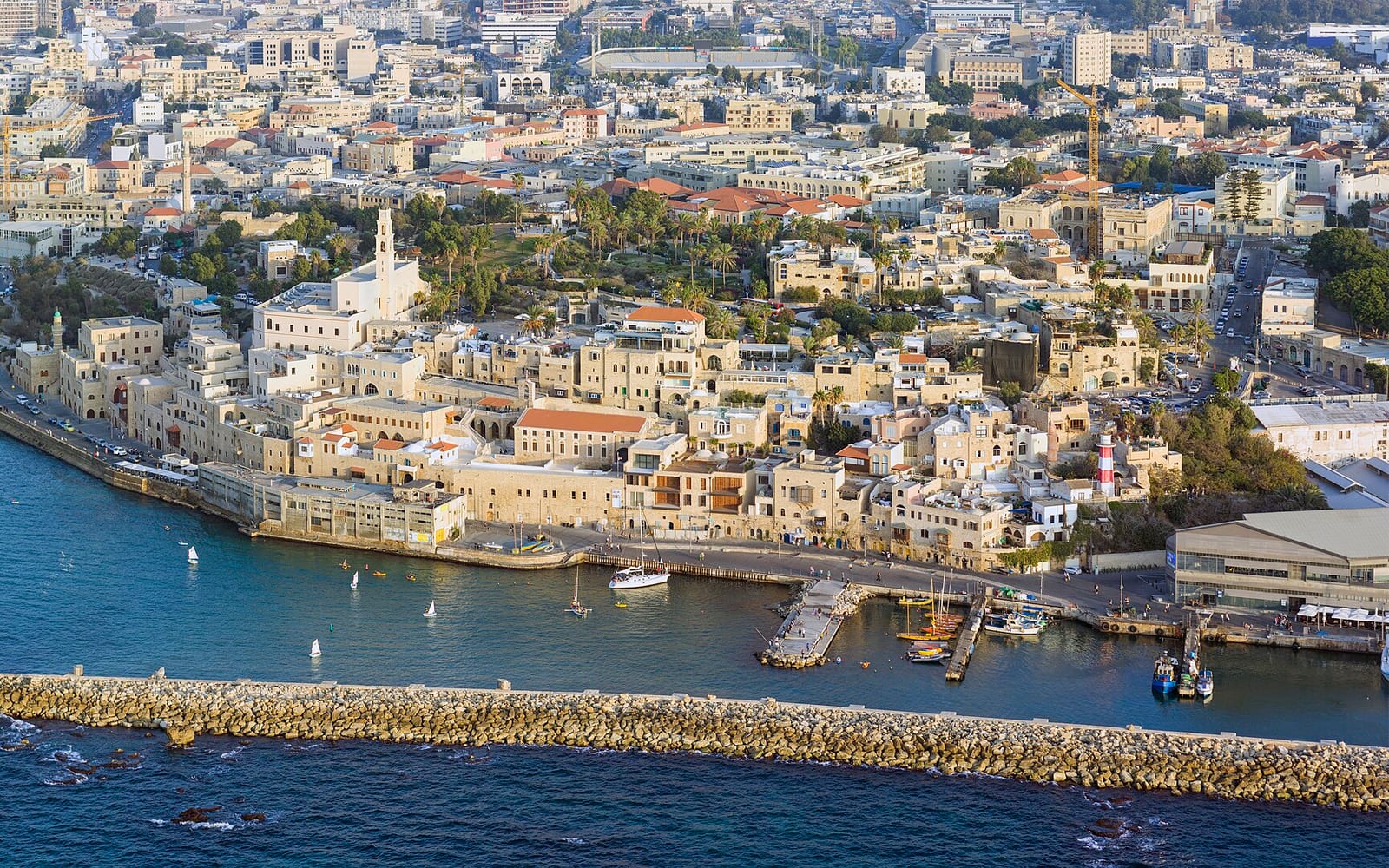
Walk the old port quay first. The working fishing boats are out early; the remaining vessels — and the low-slung stone warehouses converted to galleries and restaurants — frame a view of the Tel Aviv skyline across the bay that rewards a phone stop. The three round harbour basins are Crusader-era: the port has been in continuous use for over three thousand years, mentioned in both the Bible (the cedars for Solomon’s Temple arrived here) and Greek mythology (Andromeda was chained to a rock offshore).
Climb the hill to Old Jaffa’s pedestrian quarter: the winding alleys of the artist colony, the Ilana Goor Museum in a converted caravanserai, and the terrace overlook above Andromeda’s Rock (the largest of the rocks visible in the bay). The Clock Tower on Yefet Street — an Ottoman structure built in 1906 to mark the 25th anniversary of Sultan Abdul Hamid II’s reign — anchors the junction between old and new Jaffa.
HaPishpishim flea market begins a block east of the Clock Tower on Olei Zion Street. The market opens at 9am Sunday through Friday (closed Saturday). It is not a tourist-souvenir market: it sells genuine antiques, mid-century Israeli furniture, vintage textiles and an enormous variety of things the category “miscellaneous” does not quite cover. Even if you are not buying, walking the covered and open-air sections takes 20–30 minutes and passes through one of the most visually dense markets in the country.
If you would like a guide for this section, see the Old Jaffa walking tours — the two-hour walk covers the mythology, archaeology and living city in a way that self-guided maps approximate only loosely.
9:30am — Seafront promenade walk to Gordon Beach
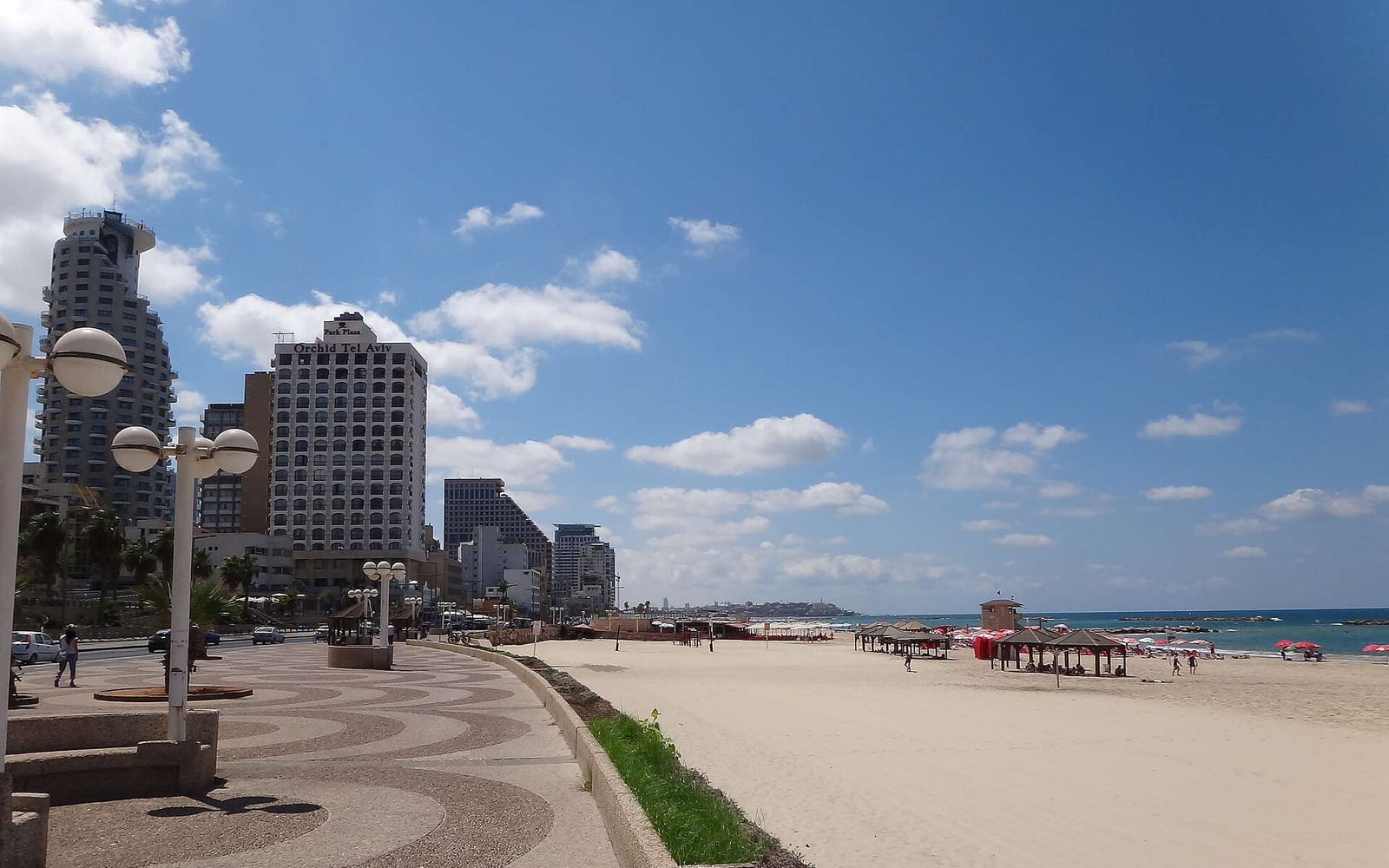
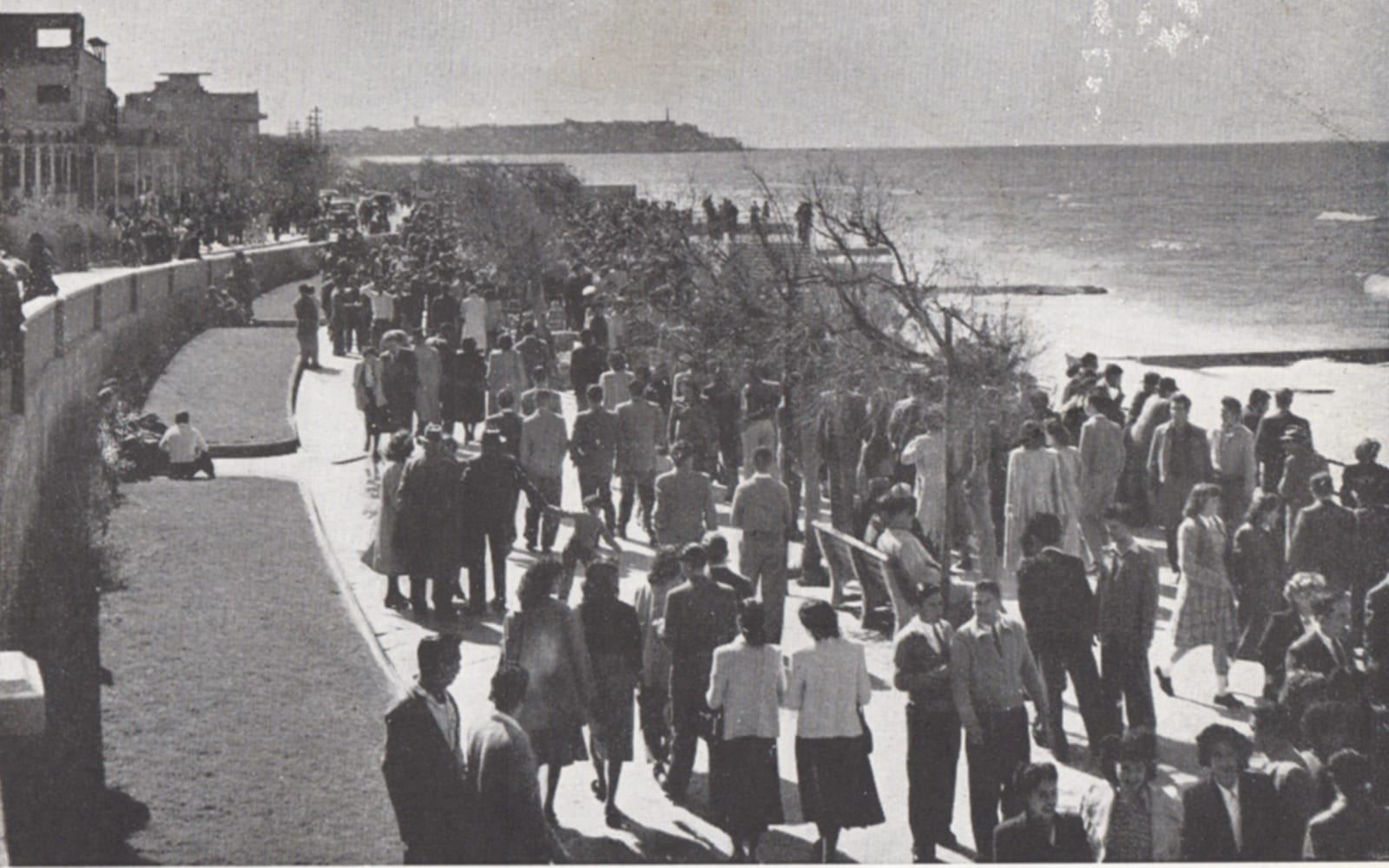
Leave Jaffa heading north along the tayelet (Tel Aviv–Jaffa promenade). This 4-km seafront path runs from Jaffa port to the Tel Aviv Port (Namal Tel Aviv) without a single traffic crossing — one of the best urban walking routes in the country.
The promenade passes a sequence of beaches (Alma, Charles Clore, Frishman, Gordon, Hilton) each with its own character. Gordon Beach (roughly 45 minutes from Jaffa at a comfortable walk, less on a scooter) is the most central and has beach amenities: sun-lounger rentals, cafés, lifeguards in season and freshwater showers. In summer (June–September) the water sits at 26–28°C; even in shoulder season (April–May, October–November) it is swimmable for most people.
Optional stop: Neve Tzedek. The neighbourhood immediately east of the promenade between Jaffa and the city centre is Tel Aviv’s oldest residential quarter, developed in 1887 by the first Zionist settlers before the city of Tel Aviv existed. The low limestone houses on narrow streets — boutique galleries, small cafés, Suzanne Dellal Centre for dance — are a notable contrast to the high-rises visible from the beach. A 20-minute wander off the tayelet adds texture to the morning.
11:30am — Carmel Market and lunch
Walk inland from the seafront to Carmel Market (HaCarmel), about 15 minutes on foot from Gordon Beach.
The market runs along HaCarmel Street in two parts: the covered section (spices, dried fruit, nuts, cheese, pickles, olives, fresh bread) and the open-air section (produce, flowers, clothing, housewares). The covered section is where to spend the most time — vendors call out prices in Hebrew, Russian and some English; the density of smell and colour is worth experiencing even if you buy nothing.
Lunch options near the market:
- Inside the shuk: shakshuka or a fresh-pressed pomegranate juice from a market stall (₪10–20), followed by a slice of malabi (rose-water pudding) from a dessert vendor.
- Levinsky Market (10 minutes east by foot on Levinsky Street): the spice and pickle market that feeds professional chefs and home cooks. A quieter, more specialist version of Carmel. See the Tel Aviv food guide for the full eating landscape.
- Sarona Market (15 minutes north by foot or short bus ride to HaShalom): a fully covered air-conditioned food hall in a preserved Templar colony — useful on very hot days or if Carmel is overwhelming.
Allow at least 45 minutes for the market and lunch combined.
1:30pm — White City Bauhaus walk
From the Carmel Market, walk north-west to Rothschild Boulevard — the centrepiece of Tel Aviv’s UNESCO-listed White City district.
The boulevard is 2 km long, tree-lined and bisected by a cycling-and-walking path. The buildings on both sides are Bauhaus and International Style architecture from the 1930s, built by German-Jewish architects who had studied at the Bauhaus school before emigrating. There are over 4,000 such buildings in Tel Aviv — more than anywhere else in the world — which is why UNESCO designated the area a World Heritage Site in 2003.
Key stops on the walk:
- Ben Gurion House (17 Ben Gurion Boulevard) — the former home of Israel’s first prime minister, preserved as a museum; free admission, open Sunday through Friday. The personal library and modest furniture contrast sharply with the mythology that surrounds the name.
- Dizengoff Square — the iconic circular raised plaza with the Agam Fountain (a kinetic colour-and-water sculpture that is striking even when not in operation) and the surrounding ring of White City apartments. The square was originally at street level; the raised design is a 1978 attempt to separate pedestrians from traffic that did not entirely succeed but created one of Tel Aviv’s most distinctive public spaces.
- Bialik Square — smaller, quieter, with the Bialik House (the home of Israel’s national poet Haim Nahman Bialik, 1934) and the Independence Hall on Rothschild 16, where David Ben-Gurion declared Israeli independence on 14 May 1948.
The White City guide has the full architectural walking map and context for the building styles, the migration history and the urban planning debates that shaped the neighbourhood.
4pm — Beach or museum
By mid-afternoon you have a choice depending on energy and weather.
Option A: Return to the beach. The late afternoon is the best time for Gordon Beach or Hilton Beach in summer — the peak midday heat has passed, the light is golden, and the promenade fills with the city’s daily joggers, cyclists and dog-walkers. The beach has showers; bring a towel or rent one.
Option B: Tel Aviv Museum of Art. Located on Shaul HaMelech Boulevard (15 minutes by bus or light rail from Rothschild), the museum holds one of the strongest collections of Impressionist, post-Impressionist and contemporary Israeli art in the Middle East. On Tuesdays and Thursdays the museum is open until 9pm. Admission is around ₪60; the Israeli-art wing on the upper floors — Reuven Rubin, Nachum Gutman, Moshe Castel — is worth the visit on its own. Booking online avoids the ticket queue.
Option C: Jaffa flea market (afternoon session). If you skipped HaPishpishim in the morning or want a longer browse, the market stays open until late afternoon on weekdays and is notably quieter after midday — dealers become more willing to negotiate on price as closing approaches.
7pm — Neve Tzedek or Florentin for dinner
Two dinner neighbourhoods work well for a one-day visit:
Neve Tzedek (if you want calm and atmosphere): the narrow streets around Shabazi Street have a concentration of Israeli restaurants ranging from sit-down hummus to creative Mediterranean. The inner courtyard of the Suzanne Dellal Centre hosts a small café and is a pleasant place to end the day at a pavement table. Quieter than the Carmel district in the evenings.
Florentin (if you want the Tel Aviv nightlife edge): the neighbourhood south of the Carmel Market — roughly bordered by Florentin Street, Abarbanel and Vital streets — is where the city’s working-class immigrant neighbourhood has become a hub of bars, street art, galleries and late-night eating. The Tel Aviv nightlife guide covers the bar scene in detail if you plan to extend the evening. Street art murals cover many building walls — Florentin is one of the best open-air art walks in the country.
From Florentin or Neve Tzedek, the return train to Jerusalem runs from Tel Aviv Central (Savidor) until around midnight on weekdays. The city is also easy to base from — see hotels in central Tel Aviv for options, with Rothschild and the seafront as the most walkable choices.
At a glance
| Time | Stop | Transit |
|---|
| 7:30am | Old Jaffa port + flea market | Bus/taxi/scooter to Namal Yafo |
| 9:30am | Promenade walk north | On foot (4 km) or e-scooter |
| 11:30am | Carmel Market + lunch | On foot from promenade |
| 1:30pm | White City — Rothschild + Dizengoff | 15 min walk from Carmel |
| 4pm | Beach / museum / Jaffa flea market | Walk or short bus |
| 7pm | Neve Tzedek or Florentin dinner | Walk or short taxi |
Extending to two or three days
If you have more time, the second day could cover: the city’s day trips from Tel Aviv (Jerusalem, Dead Sea, Caesarea and Haifa are all within 30–90 minutes), the Tel Aviv Port (Namal Tel Aviv) food market (Friday mornings are outstanding), the Eretz Israel Museum and Diaspora Museum (both in northern Tel Aviv), or a deeper dive into the Jaffa food scene.
For cruise passengers using Ashdod port, Tel Aviv is 30 minutes by road — a very feasible independent half-day. See the cruise shore excursions guide for port-to-city logistics from both Ashdod and Haifa.
For tour comparisons — walking tours, food tours and half-day city tours — see the Tel Aviv tours compared guide. For getting between Tel Aviv and the rest of the country, see the transportation guide and the Tel Aviv Light Rail guide.