Cyprus and Israel sit less than 300 kilometres apart across the eastern Mediterranean — a 45-minute flight from Tel Aviv to Larnaca that makes them among the closest international destination pairs in the world. For travellers planning a Mediterranean trip with history, beach time and good food, the question of Israel or Cyprus (or both) is one of the most natural comparisons to make, and one that rewards careful thinking about what you actually want from a holiday.
Side by side
| Criterion | Israel | Cyprus |
|---|
| Best known for | Jerusalem, the Dead Sea float, Tel Aviv, the Galilee | Crystal-clear beaches, Paphos archaeology, Nicosia old city, Ayia Napa nightlife |
| Historical focus | Jewish, Christian and Islamic — 3,000 years in a single walled city | Neolithic settlements, Mycenaean, Classical Greek, Roman, Byzantine, Venetian, Ottoman |
| Unique drawcard | Walking between the Western Wall, Church of the Holy Sepulchre and Dome of the Rock in 20 minutes | Blue Flag beaches with some of the Mediterranean’s clearest water |
| Coastline | 273 km (Mediterranean + Red Sea Eilat) | 780 km — over 200 beaches |
| Typical mid-range daily cost | ₪600–900 / person (approx €150–230) | Lower — particularly accommodation and restaurants outside Ayia Napa peak season |
| Visa | ETA-IL (~USD 7, online before travel) | Visa-free for most Western nationalities (EU member state) |
| Flight time from London | ~4.5 hrs (Ben Gurion, TLV) | ~4.5 hrs (Larnaca, LCA) |
| Flight time from New York | ~10–11 hrs (TLV) | ~11–12 hrs (LCA) |
| English coverage | Very high — widely spoken in tourist areas and beyond | Very high — English is widely spoken across the island |
| Best season | Spring (Mar–May) and autumn (Sep–Nov) | Spring (Apr–Jun) and autumn (Sep–Oct); peak summer very hot and crowded in resorts |
| Best for | Religious history, layered culture, urban energy, compact geography | Beach holidays, classical archaeology, hiking Troodos mountains, relaxed resort time |
History and culture
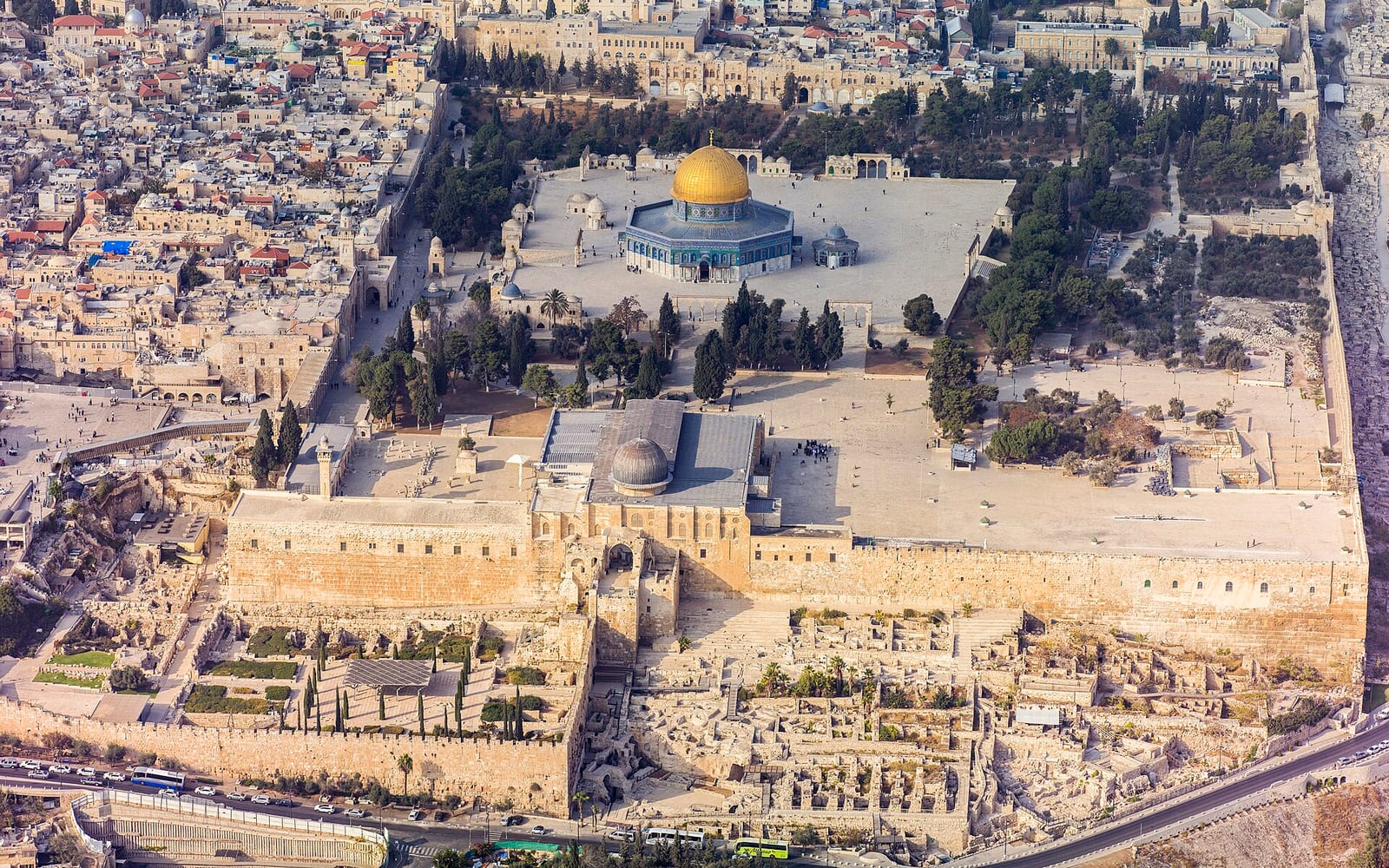
Israel holds one of the most concentrated collections of historically significant sites on earth. In Jerusalem, you can walk in 20 minutes from the Western Wall — the holiest site in Judaism — to the Church of the Holy Sepulchre — the site of the Crucifixion and Resurrection in Christian tradition — to the Al-Aqsa Mosque and Dome of the Rock on the Temple Mount. Three of the world’s major religions share the same hilltop. Beyond Jerusalem, Masada, Caesarea, Akko and Qumran add Roman, Crusader and ancient Jewish layers within a few hours of one another.
Cyprus has a genuinely rich archaeological heritage, though on a different scale. The Paphos Archaeological Park (UNESCO World Heritage) holds exceptional Roman-era floor mosaics — among the finest in the eastern Mediterranean — and the tombs of the Kings burial complex is striking. Kourion’s clifftop Roman amphitheatre with sea views is memorable, and Nicosia’s Venetian walls and divided old city (the last divided capital in the world) give the island a distinctive geopolitical character. Byzantine painted churches in the Troodos mountains are a serious draw for art history travellers. Cyprus’s history spans Neolithic to Neolithic through Mycenaean Greek, Roman, Byzantine, Venetian and Ottoman periods.
For multi-faith layered civilisation in a single walled city, Israel is in a category of its own. For Roman mosaics and a relaxed historical backdrop combined with beach proximity, Cyprus’s Paphos archaeological zone punches above its weight.
Beaches and coastline
Cyprus is, without qualification, the stronger beach destination. The island has over 200 beaches across its 780-kilometre coastline, with Blue Flag certification at dozens of sites and the turquoise clarity of the eastern Mediterranean at its finest. Nissi Beach near Ayia Napa, Fig Tree Bay at Protaras, Coral Bay near Paphos and Aphrodite Hills Beach are among the most photographed in the Mediterranean. Water temperatures are warm from May through November, and the sheltered bays of the south coast in particular offer conditions that rival the Aegean.
Israel’s beaches are enjoyable but genuinely different in character. Tel Aviv’s 14-kilometre seafront is a lively urban beach scene — popular, accessible from the city, with lifeguards and sun loungers — rather than a pristine Mediterranean setting. Eilat on the Red Sea offers warm water and excellent coral reef snorkelling year-round, which Cyprus cannot match. Israel also has the singular experience of floating in the Dead Sea — the world’s lowest point and saltiest major water body — which is available from neither Cyprus nor any other Mediterranean neighbour.
If beach scenery, water clarity and variety of coastal settings are your primary measure, Cyprus wins clearly. If you want the Dead Sea float or Red Sea coral as part of your beach itinerary, only Israel delivers those.
Food
Israeli cuisine has been shaped by waves of Jewish diaspora immigration from every continent — Yemenite malawach flatbreads, Persian-style rice and herbs, North African shakshuka, Eastern European slow-cooked brisket and a thriving modern restaurant scene particularly in Tel Aviv. Hummus in Israel is served warm, fresh from the pot, at breakfast — a completely different proposition from the supermarket staple familiar in Western countries. Israel has one of the highest per-capita vegan populations globally, and vegan and vegetarian options are abundant across the country. See the Israeli food and cuisine guide.
Cypriot cuisine shares Levantine and Mediterranean roots: grilled halloumi (made on the island since at least the Byzantine period), meze spreads of mezedes (dozens of small plates covering dips, seafood, grilled meats, olives and cheese), kleftiko (slow-cooked lamb in a sealed clay oven), souvlaki skewers and fresh-caught sea bream are staples. The village taverna experience — generous portions, shared tables, local wine — is a genuine pleasure. Cypriot wines, particularly those from the Commandaria region (one of the world’s oldest named wines), are worth seeking out.
Both cuisines are excellent and heavily overlap in Levantine traditions. Israel’s food scene is more cosmopolitan and urban; Cyprus’s taverna culture is more relaxed and communal.
Costs
Israel is priced at a Western European level. A mid-range hotel room in Tel Aviv or Jerusalem runs ₪700–1,200 per night; a sit-down restaurant meal ₪80–150 per person. Budget travel is achievable with hostel accommodation and street food, but Israel is not a budget destination by any measure. See the Israel cost and budget guide for full tier breakdowns.
Cyprus is noticeably less expensive in comparable accommodation outside the Ayia Napa peak summer season (July–August, when resort pricing rises sharply). Village tavernas and local restaurants offer generous meals at prices well below Western European norms; the abundance of self-catering apartments near beaches makes Cyprus particularly cost-effective for families or longer stays. Petrol and hire car costs are also lower than in Israel, where the road network is excellent but car hire rates are higher.
For pure value-per-day on a relaxed beach-and-food itinerary, Cyprus is the better deal. Israel’s higher costs reflect its developed urban infrastructure and the concentration of world-class attractions.
Nightlife
Tel Aviv is the undisputed nightlife capital of the region — a city whose clubs stay open until dawn (or beyond), whose bar scene on Florentin and Rothschild streets runs late, and which consistently appears on international club culture lists. The Tel Aviv nightlife guide covers the scene in detail: rooftop bars in the White City, underground clubs in converted buildings near the central bus station, and beach bars on the Tayelet. Tel Aviv is one of the most LGBTQ+-welcoming cities in the world.
Ayia Napa in Cyprus is a purpose-built nightlife resort with a summer club scene that draws international DJs and a young European crowd. It is significantly louder, more concentrated and more explicitly party-focused than Tel Aviv — less of a city-with-nightlife and more of a nightlife destination that happens to have beaches. Limassol and Paphos have active bar and restaurant scenes but in a lower key.
These are genuinely different nightlife propositions: Tel Aviv is a cosmopolitan urban scene available year-round; Ayia Napa is a seasonal European club resort. Your preference depends on what kind of night out you’re after.
Safety
Both countries are safe for tourists in their main visitor areas.
Israel operates a visible, pervasive security infrastructure: bag checks at major public buildings and attractions, armed security personnel, and a rapid national emergency response system. This creates a managed security environment in Jerusalem, Tel Aviv, the Galilee, the Dead Sea and Eilat. The is Israel safe guide covers the regional geopolitical context and which areas require additional care before visiting.
Cyprus is an EU member state with one of the lowest crime rates in Europe and a long-established, relaxed tourism environment. Resort areas, cities and rural villages are all straightforwardly safe for independent travellers. The only note of complexity is the island’s division: the northern third (Turkish Republic of Northern Cyprus) is not recognised by the EU and operates separately; most tourists visit only the south, which is the Republic of Cyprus and the internationally recognised state. Crossing between south and north is possible at designated checkpoints and is generally straightforward, but it is worth researching before visiting.
Visas and entry
Israel (ETA-IL): Citizens of the EU, USA, UK, Canada, Australia and many other countries apply for an Electronic Travel Authorisation online before travel. The fee is approximately USD 7 and authorisation is typically granted within minutes. See the Israel visa information guide for full details.
Cyprus: As an EU member state, Cyprus allows most Western nationalities to enter visa-free for stays of up to 90 days in any 180-day period — no prior registration or fee required. Cyprus uses the Euro (€), and as an EU state it offers the full consumer protections and ease of travel familiar to European visitors. Verify your specific nationality’s visa-free entitlement at the official Republic of Cyprus immigration portal before travel.
Getting there
Israel is well served from major European hubs. From London, El Al, British Airways and EasyJet fly to Ben Gurion Airport (TLV) in approximately 4.5 hours. Low-cost routes have expanded significantly. From New York (JFK), El Al flies direct to TLV in approximately 10–11 hours.
Cyprus is equally accessible from Europe. Larnaca (LCA) and Paphos (PFO) are both served from London in approximately 4.5 hours by British Airways, EasyJet, Ryanair and TUI Airways. The frequency of charter and low-cost routes to Cyprus from UK and northern European airports makes it particularly easy to reach on a budget flight. From North America, Cyprus is typically reached via a European connection hub.
The Tel Aviv–Larnaca route (under one hour) is served by multiple carriers and is one of the most useful short-haul connections in the eastern Mediterranean, making a dual-country itinerary very practical.
Who should visit Israel
- Travellers whose primary goal is experiencing multi-faith Jerusalem — three major world religions in a single walled city
- First-time Middle East visitors wanting Western-standard infrastructure, reliable English and dense historical sights in compact geography
- LGBTQ+ travellers (Tel Aviv is one of the most queer-friendly cities in the world)
- Those wanting the Dead Sea floating experience and Eilat’s Red Sea coral reefs as part of their Mediterranean trip
- Food travellers interested in one of the world’s most creative and diverse urban food scenes
- Winter sun seekers: the Dead Sea and Eilat remain warm through December–February
See first time in Israel for a practical planning overview.
Who should visit Cyprus
- Travellers whose primary goal is a beach holiday with excellent water clarity and variety of coastal settings
- Families looking for a relaxed, safe, EU-standard resort environment with child-friendly beaches
- Budget-conscious Mediterranean travellers who want good value on accommodation and food
- Party and nightlife-focused travellers heading to Ayia Napa’s summer club scene
- Travellers interested in Roman mosaics, Byzantine churches and a relaxed archaeological pace
- Hikers interested in the Troodos mountain trails and Akamas Peninsula coastal walks
Combining both
One of the most practical two-destination combinations in the Mediterranean: the Tel Aviv–Larnaca flight takes under an hour, and multiple low-cost carriers operate it daily. A two-week itinerary could very naturally split a week in Israel — Jerusalem, Tel Aviv, the Galilee and the Dead Sea — followed by a week in Cyprus for Paphos archaeology, Limassol tavernas and Ayia Napa beaches, or vice versa.
This is also one of the few dual-country Mediterranean itineraries where neither leg feels rushed: Israel’s core circuit (Jerusalem + Tel Aviv + one region) is satisfying in five to seven days, and Cyprus’s highlights (Paphos, Limassol, Larnaca base, east coast beaches) are similarly manageable in a week.
Most travellers with 10–14 days are well-placed to experience both countries properly. Those with only a week should choose one and see it well rather than splitting.
More: First time in Israel · Best time to visit Israel · Israel costs and budget guide · Is Israel safe? · Israel visa information · Israel vs Jordan · Israel vs Egypt · Israel vs Turkey · Israel vs Greece · Dead Sea visitor guide · Tel Aviv nightlife guide · Eilat snorkeling guide