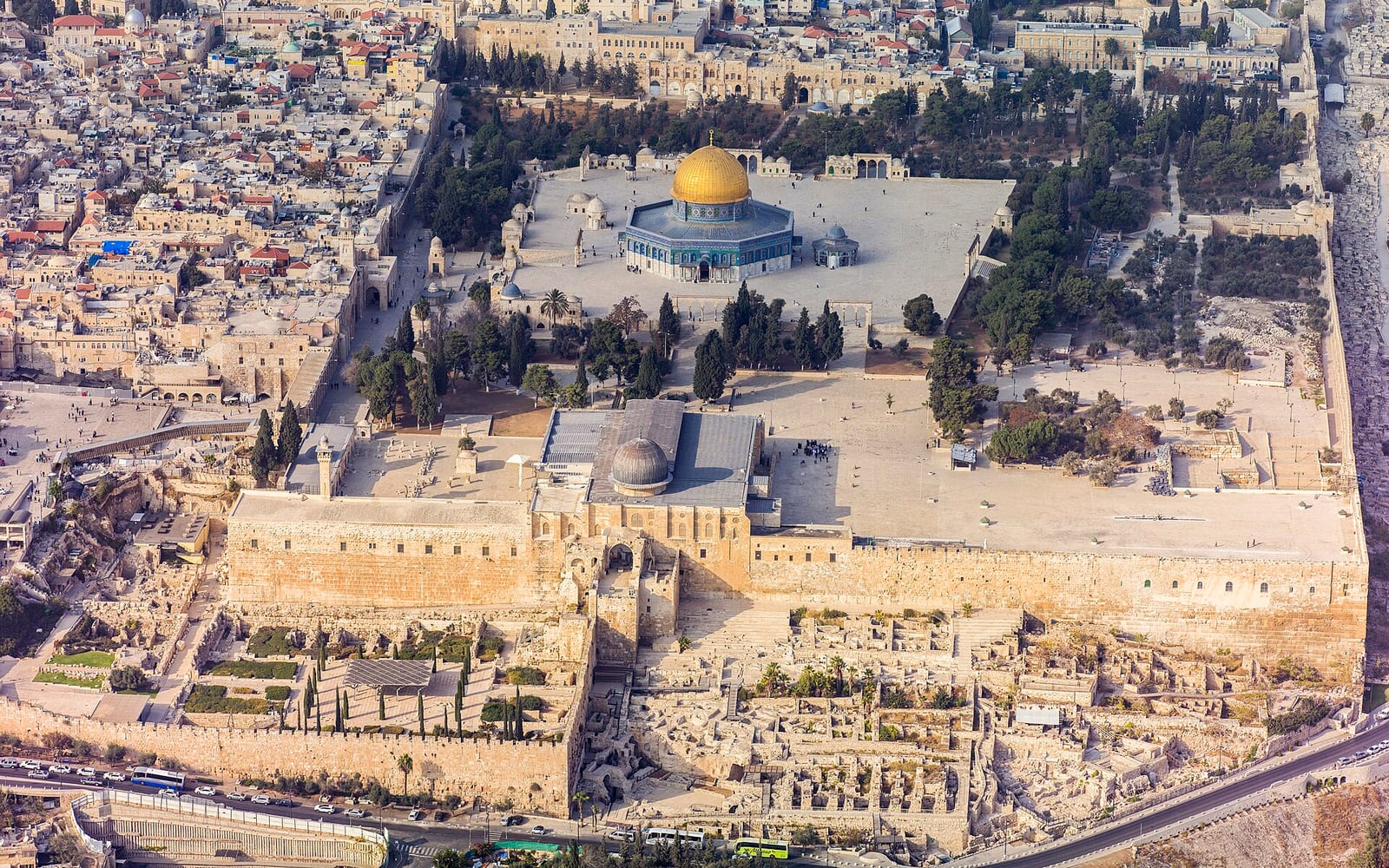
Greece and Israel both sit in the eastern Mediterranean, offer layered ancient history, warm weather, excellent food and sea access — yet they are genuinely different travel experiences. Greece is a sprawling archipelago of islands with 13,000 kilometres of coastline and one of the world’s richest classical legacies. Israel is a compact country where 3,000 years of Jewish, Christian and Islamic civilisation converge in a single walled city. Both deserve a place on any Mediterranean-minded traveller’s list. Whether to choose one, or combine both, is a decision worth unpacking carefully.
Side by side
| Criterion | Israel | Greece |
|---|
| Best known for | Jerusalem, the Dead Sea float, Tel Aviv, the Galilee | Island-hopping, the Acropolis, ancient ruins, beaches |
| Historical focus | Jewish, Christian and Islamic — three major world religions in one walled city | Classical Greek, Hellenistic, Roman, Byzantine, Ottoman |
| Unique drawcard | Walking between the Western Wall, Church of the Holy Sepulchre and Dome of the Rock in 20 minutes | Iconic island landscapes: Santorini caldera, Navagio Beach, Meteora monasteries |
| Coastline | 273 km (Mediterranean + Red Sea at Eilat) | ~13,000 km across mainland and 6,000+ islands |
| Typical mid-range daily cost | ₪600–900 / person (approx €150–230) | Lower overall — particularly on non-Santorini/Mykonos islands and in village accommodation |
| Visa | ETA-IL (~USD 7, online before travel) | Schengen visa-free for most Western nationalities (90 days in 180) |
| Flight time from London | ~4.5 hrs (Ben Gurion, TLV) | ~3.5 hrs (Athens, ATH) |
| Flight time from New York | ~10–11 hrs (TLV) | ~10 hrs (ATH) |
| English coverage | Very high in tourist areas and urban centres | High in tourist areas; variable in rural villages |
| Best season | Spring (Mar–May) and autumn (Sep–Nov) | Spring (Apr–Jun) and autumn (Sep–Oct); peak summer (Jul–Aug) very hot on islands, crowded |
| Best for | Religious history, layered culture, compact geography, unique experiences | Beach holidays, island-hopping, classical archaeology, outdoor hiking |
History and culture
Israel compresses an extraordinary density of civilisations into a very small geography. In Jerusalem, you can walk in 20 minutes from the Western Wall — the holiest site in Judaism — to the Church of the Holy Sepulchre — the site of the Crucifixion and Resurrection in Christian tradition — to the Al-Aqsa Mosque and Dome of the Rock on the Temple Mount. Three of the world’s major religions converge on the same hilltop. Beyond Jerusalem, Masada, Caesarea, Akko, Qumran and Megiddo add Roman, Crusader, ancient Jewish and Canaanite layers within a few hours of the centre of the country.
Greece is the birthplace of Western philosophy, democracy and classical architecture. The Acropolis and Parthenon in Athens remain the most recognisable symbols of ancient civilisation in the world. Delphi, Olympia, Epidaurus, Mycenae, and the island of Delos each carry world-heritage significance. The Byzantine layer — Meteora’s cliff-top monasteries, Thessaloniki’s early Christian basilicas, the medieval town of Mystras — adds further depth. Greece is a genuinely deep archaeological country and one of the most extensively studied ancient civilisations on earth.
Both countries reward travellers who care about history. Israel is more multi-faith and geopolitically charged — the experience of visiting the Temple Mount or the Church of the Holy Sepulchre has a weight that classical ruins rarely match. Greece has breadth and accessibility: its archaeological sites are extensively interpreted, well-staffed and spread across a vast landscape. For spiritual significance concentrated in small geography, Israel is in a category of its own. For classical antiquity across a diverse and beautiful country, Greece is the deeper destination.
Beaches and coastline
Greece is, by an objective measure, one of the world’s great beach countries. Over 13,000 kilometres of coastline across more than 6,000 islands offers an unmatched variety of settings: the iconic red-and-white caldera views at Oia Santorini, the shipwreck cove of Navagio on Zakynthos, the pink sand of Elafonisi on Crete, the party beaches of Mykonos’s Super Paradise, and quieter coves on less-visited islands like Milos, Ikaria and Folegandros. Aegean water clarity is excellent, sea temperatures are warm from May through October, and the infrastructure for beach tourism is thoroughly developed.
Israel’s beaches are enjoyable but a different proposition. Tel Aviv’s 14-kilometre seafront is a lively urban beach scene — vibrant, accessible from the city, with lifeguards, beach bars and a genuine social energy — rather than a scenic Mediterranean cove. Eilat on the Red Sea offers warm water and exceptional coral reef snorkelling year-round, which most of Greece cannot match. The singular experience of floating in the Dead Sea — the world’s lowest and saltiest major water body — is available nowhere else.
If beach scenery, variety and island atmosphere are your primary criterion, Greece wins convincingly. If you want the Dead Sea float or Red Sea reef as part of your itinerary, only Israel offers them.
Food
Israeli cuisine reflects the country’s immigration history from every continent. Yemenite malawach flatbreads, Persian-style rice dishes, North African shakshuka, Eastern European slow-cooked brisket and a thriving contemporary restaurant scene in Tel Aviv have made Israeli food one of the most internationally admired in the world. Hummus is served warm from the pot at breakfast — a revelation to anyone who knows it only as a supermarket product. Israel has one of the highest per-capita vegan populations globally, and plant-based options are excellent across the country. See the Israeli food and cuisine guide.
Greek cuisine is built on olive oil, fresh fish, legumes, cheese and vegetables — simple in composition, excellent in execution when made with quality local ingredients. Grilled octopus by the harbour, a proper village Greek salad with Kalamata olives and creamy feta, slow-roasted lamb kleftiko and a spread of mezedes (taramasalata, melitzanosalata, tzatziki, dolmades) in a waterfront taverna is one of the great Mediterranean dining experiences. Greek wine has improved dramatically in recent decades; Assyrtiko from Santorini and Xinomavro from Naoussa are world-class. Regional variation is significant: Cretan cuisine, Macedonian cuisine and island seafood cultures each have distinct characters.
Both countries deliver outstanding food. Israel is more urban, diverse and cosmopolitan in its food culture; Greece is more overtly Mediterranean, ingredient-led and relaxed in its setting. Neither will disappoint a serious eater.
Costs
Israel is priced at a Western European level. A mid-range hotel room in Tel Aviv or Jerusalem runs ₪700–1,200 per night; a sit-down restaurant meal ₪80–150 per person; a Masada tour with transport ₪200–350 per person. Budget travel is achievable with hostel accommodation and falafel lunches, but Israel is not a low-cost destination. See the Israel cost and budget guide for full tier breakdowns.
Greece is meaningfully less expensive on comparable accommodation and food — with important exceptions. Athens mid-range hotels are broadly similar to Israeli equivalents. However, on most Greek islands outside Santorini and Mykonos, you can find very good guesthouses, local restaurants and beach tavernas at significantly lower price points than Israeli equivalents. Peak-season Santorini (July–August) luxury accommodation is among the most expensive in Europe and rivals or exceeds Israeli five-star pricing. For mid-range and budget travellers on the less-marketed islands, Greece offers excellent value. Car hire and petrol are also less expensive in Greece.
Nightlife
Tel Aviv is the nightlife capital of the eastern Mediterranean — a city whose clubs run until dawn, whose bar scene on Florentin and Rothschild streets operates year-round, and which consistently appears on international lists of the world’s best cities for nightlife. The Tel Aviv nightlife guide covers the scene: rooftop bars in the White City, underground clubs near the central bus station and beach bars on the Tayelet. Tel Aviv is one of the world’s most LGBTQ+-welcoming cities.
Greece offers several distinct nightlife modes. Athens has a year-round, sophisticated bar and club scene in Psiri, Gazi and Koukaki; it operates later than most European capitals and has a genuine urban energy. Mykonos (particularly in summer) and Ios are purpose-built party islands that attract an international crowd with beach clubs and all-night venues. Santorini has a more upscale, cocktail-bar-and-caldera-view nightlife character. Across the islands, the style and intensity of nightlife varies enormously.
Tel Aviv operates as a year-round cosmopolitan scene; Greece’s best nightlife is concentrated in summer and specific island destinations. Your preference depends on what kind of night you are looking for.
Safety
Both countries are safe for mainstream tourists.
Israel operates a visible, pervasive security infrastructure: bag checks at major sites, armed security personnel, and a nationally coordinated emergency response system. This creates a well-managed security environment in Jerusalem, Tel Aviv, the Galilee, the Dead Sea and Eilat for standard tourist itineraries. The is Israel safe guide covers the regional geopolitical context and which areas require additional planning before visiting.
Greece is an EU member state with a long-established, relaxed tourism environment and a low violent crime rate. Petty theft (pickpocketing) in central Athens — particularly around Monastiraki and Omonia — is the main practical concern for most tourists. Island destinations and rural areas are generally very safe. Road conditions on some island mountain roads require care for drivers. Current civil unrest around refugee arrivals has been periodic — check your government’s travel advisory.
Visas and entry
Israel (ETA-IL): Citizens of the EU, USA, UK, Canada, Australia and many other countries apply for an Electronic Travel Authorisation online before travel. The fee is approximately USD 7 and authorisation is typically issued within minutes. See the Israel visa information guide for full details.
Greece (Schengen): Greece is a member of the Schengen Area. Citizens of most Western countries can enter visa-free for up to 90 days in any 180-day period — no prior registration or fee required. Note that the UK post-Brexit is subject to the 90/180-day Schengen rule, and ETIAS (European Travel Information and Authorisation System) was expected for non-EU nationals from 2025 but has faced repeated delays — verify current ETIAS status before travel. Verify your specific nationality’s requirements with the official Greek immigration authority before booking.
Getting there
Israel is well served from European hubs. From London, El Al, British Airways and EasyJet fly to Ben Gurion Airport (TLV) in approximately 4.5 hours. Direct flights from New York (JFK) with El Al take approximately 10–11 hours. Routes from Frankfurt, Paris, Amsterdam, Rome and other major European cities are available, often with low-cost options.
Greece is among the most extensively served destinations in Europe. Athens (ATH) is a major hub with hundreds of routes across Europe; Thessaloniki, Heraklion (Crete), Rhodes, Corfu, Mykonos and Santorini are served directly from many UK and northern European airports, particularly in summer. From London, Athens is approximately 3.5 hours. From New York, Athens takes approximately 10 hours direct with carriers including Delta and American. The abundance of charter and low-cost routes to Greek airports — particularly from UK and Northern European airports — makes Greece significantly easier to reach at low cost than Israel for many travellers.
The Tel Aviv–Athens route is approximately 3 hours and is served by multiple airlines, making a dual-country itinerary very practical.
Who should visit Israel
- Travellers whose primary goal is experiencing multi-faith Jerusalem and three world religions in compact geography
- Those seeking experiences available nowhere else: the Dead Sea float, Eilat’s Red Sea coral reefs, the baptism site at the Jordan River
- LGBTQ+ travellers (Tel Aviv is one of the most queer-friendly cities in the world)
- First-time Middle East visitors wanting Western-standard infrastructure, reliable English, and dense historical sights in a small footprint
- Food travellers interested in one of the world’s most diverse and creative urban food scenes
- Winter sun seekers: the Dead Sea, Eilat and Tel Aviv remain warm and pleasant through December–February
See first time in Israel for a practical planning overview.
Who should visit Greece
- Travellers whose primary goal is a beach holiday with excellent island scenery and water clarity
- Those wanting a classical archaeology experience on a grand, varied and accessible scale
- Budget-conscious Mediterranean travellers who want good value for accommodation and food
- Island-hoppers and sailors for whom geographic variety is the point
- Hikers and nature travellers: the Samaria Gorge on Crete, Zagori villages and Vikos Gorge in Epirus, and the Pelion Peninsula all offer excellent walking
- Families looking for a relaxed, EU-standard, well-developed beach resort environment
Combining both
The Tel Aviv–Athens flight is approximately 3 hours and is available from around €50–150 on low-cost carriers during shoulder seasons — one of the most practical short-haul international connections in the eastern Mediterranean. A 14-day itinerary could very naturally pair a week in Israel (Jerusalem, Tel Aviv, one region such as the Galilee or the Dead Sea) with a week in Greece (Athens plus one or two islands). The two trips complement each other well: Israel provides concentrated spiritual and archaeological depth; Greece provides landscape variety, island freedom and beach time.
Travellers with 10 days can still experience both if well-organised, though a week per country is preferable for anything beyond the highlights. Many travellers do Israel first as a “once-in-a-lifetime” anchor trip and return for Greece — or vice versa.
More: First time in Israel · Best time to visit Israel · Israel costs and budget guide · Is Israel safe? · Israel visa information · Israel vs Turkey · Israel vs Egypt · Israel vs Jordan · Israel vs Dubai · Israel vs Cyprus · Israel vs France · Dead Sea visitor guide · Tel Aviv nightlife guide · Eilat snorkeling guide