Israel and Egypt share the distinction of being two of the most historically extraordinary countries on earth — and two of the most frequently compared by travellers planning a Middle East or Eastern Mediterranean trip. Both offer ancient civilisations, warm-water coastlines, renowned food cultures and strong international air connectivity. The choice between them depends largely on what you prioritise.
Side by side
| Criterion | Israel | Egypt |
|---|
| Best known for | Jerusalem, the Dead Sea float, Tel Aviv urban energy, the Galilee | The Pyramids of Giza, Nile cruises, Luxor temples, Red Sea diving |
| Historical focus | Jewish, Christian and Islamic — 3,000 years in a compact footprint | Ancient Egyptian — Pharaonic monuments spanning 5,000 years |
| Coastline | 273 km Mediterranean + Red Sea (Eilat) | Mediterranean + 2,000+ km Red Sea / Sinai coast |
| Typical mid-range daily cost | ₪600–900 / person (approx €150–230) | Significantly lower for accommodation and meals |
| Visa | ETA-IL (~USD 7, online) | Visa on arrival (~USD 25) or e-visa online |
| Flight time from London | ~4.5 hrs (Ben Gurion, TLV) | ~5 hrs (Cairo, CAI) |
| Flight time from New York | ~10 hrs (TLV) | ~12 hrs (CAI) |
| English coverage | Very high — widely spoken in tourist areas and beyond | Good in major tourist zones; variable elsewhere |
| Safety (mainstream areas) | High — sophisticated security infrastructure | High in Cairo/Luxor/Aswan; Sinai = check current advisory |
| Best season | Spring (Mar–May) and autumn (Sep–Nov) | Oct–Apr (avoid summer heat in Luxor and Cairo) |
| Best for | Cultural intensity, religious sites, urban energy, compact geography | Ancient monuments, Nile cruises, Red Sea diving, grand scale |
History and monuments
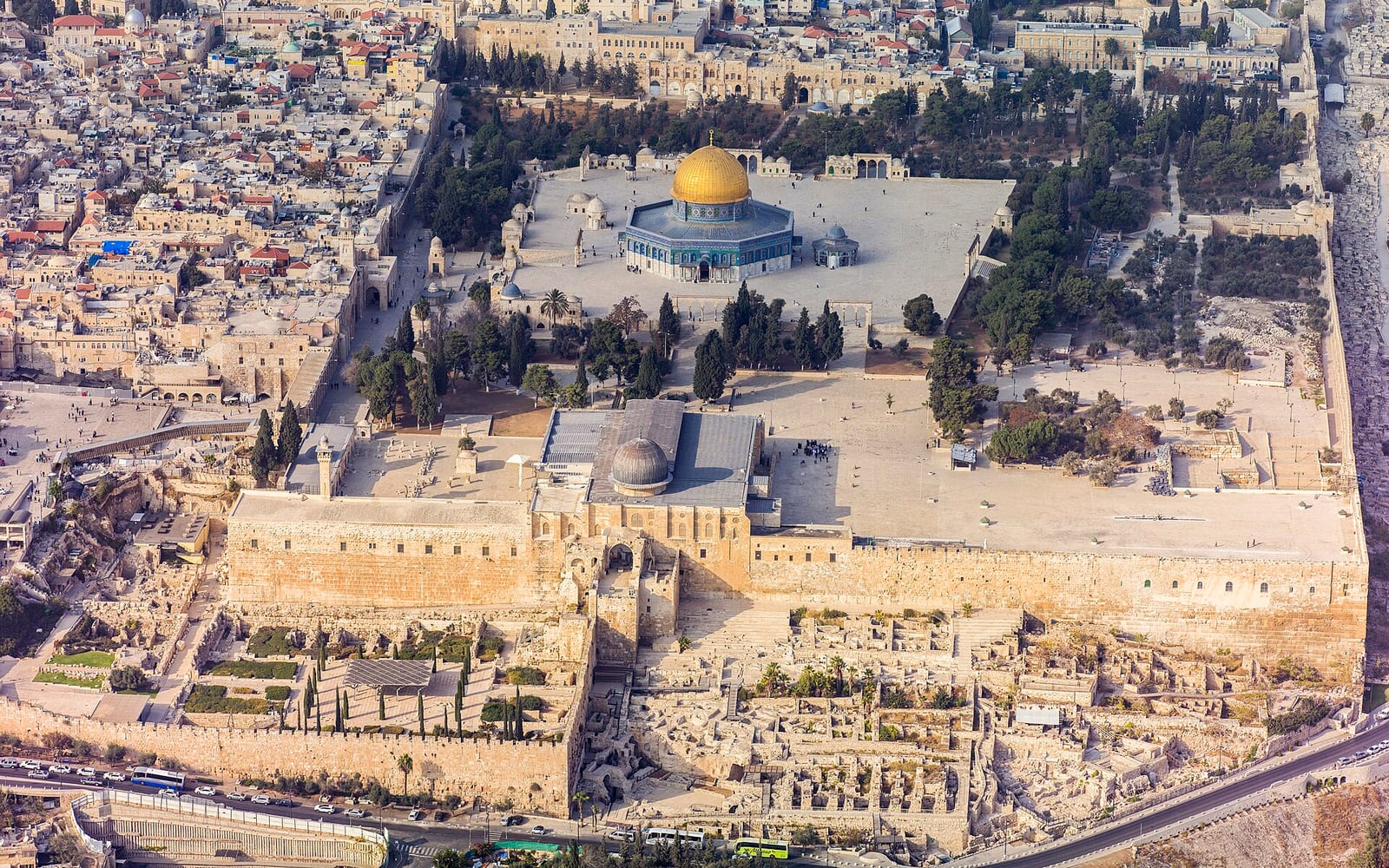
Israel offers unmatched historical density per day. In Jerusalem, you can walk in 20 minutes from the Western Wall — the most sacred site in Judaism — to the Church of the Holy Sepulchre — the site of the Crucifixion and Resurrection in Christian tradition — to the Al-Aqsa Mosque and Dome of the Rock on the Temple Mount. Three of the world’s major religions claim the same compact hilltop, and the layered archaeology beneath it spans 3,000 years of continuous civilisation. Add Masada (the Herodian desert fortress), Caesarea (a Roman port city), Akko (a Crusader fortress city), and Capernaum (the village of Peter on the Sea of Galilee), and Israel can absorb a week of serious historical exploration with ease.
Egypt delivers historical scale. The Pyramids of Giza — the only surviving member of the Seven Wonders of the Ancient World — stand 30 minutes from Cairo’s city centre. The temple complex at Karnak in Luxor is the largest religious structure ever built; the Valley of the Kings contains the tombs of Tutankhamun, Ramesses II and 60+ other pharaohs. Abu Simbel, near Aswan, is a UNESCO World Heritage site relocated in its entirety to save it from the rising Nile in the 1960s. Egypt’s ancient monuments span 5,000 years of civilisation and require travel across a country the size of France and Spain combined.
For historical intensity per day, Israel delivers more faster. For ancient scale and the specific experience of Pharaonic monuments at a civilisational sweep, Egypt is irreplaceable.
Beaches
Eilat gives Israel its Red Sea presence. Coral Beach Nature Reserve is one of the most accessible coral reef snorkelling sites in the world — walk from the shoreline into reef teeming with parrotfish, surgeonfish and moray eels. The water is warm year-round. The Mediterranean beaches of Tel Aviv are exceptional urban beaches — 14 km of public sand immediately accessible from the city. The best beaches in Israel guide covers the full national range.
Egypt’s Sinai coast — particularly Dahab and Ras Mohammed — has a global reputation among divers. Dahab’s Blue Hole (a submerged sinkhole at the reef edge) and Canyon dive site are world-famous; the visibility in the right season exceeds 30 metres. Sharm el-Sheikh has well-developed resort infrastructure. However, the Sinai peninsula carries active travel advisories from multiple governments; check the current advisory for your nationality before booking Sinai travel, as the situation has fluctuated. Egypt’s Mediterranean coast is primarily a domestic destination.
For beach holidays that combine snorkelling with a secure environment, Eilat is an easy choice. For world-class diving in a more remote, Red Sea setting (advisories permitting), Dahab has a global reputation that Eilat does not match for depth and variety.
Costs
Israel is priced at a Western European level. A mid-range hotel in Tel Aviv or Jerusalem runs ₪700–1,200 per room per night; a restaurant meal in a sit-down place ₪80–150 per person; a taxi across central Tel Aviv ₪40–70. Budget travel is possible but requires hostel accommodation and falafel-and-hummus eating patterns. See the Israel cost and budget guide for detailed tier breakdowns.
Egypt is substantially cheaper at current exchange rates, particularly for accommodation and food in Cairo, Luxor and Aswan. Internal flights from Cairo to Luxor or Aswan add cost (a one-hour flight can run USD 60–120 each way depending on timing). Organised tours — which are efficient given Egypt’s geography — add further cost. The gap between Egypt and Israel narrows considerably once you factor in tour costs and domestic travel.
For budget-conscious travellers, Egypt offers better day-to-day value. For travellers who want Western-standard infrastructure and are comfortable with Western European prices, Israel’s cost reflects a distinct experience.
Food
Israeli and Egyptian cuisines share a Levantine foundation: hummus, flatbreads, grilled meats, pickled vegetables and spiced legumes appear in both. The Israeli kitchen adds a Jewish diaspora dimension — Yemenite malawach flatbread, Persian-style rice dishes, North African shakshuka and Eastern European influences arrived with successive waves of immigration. Tel Aviv has a world-class restaurant scene with notable concentrations of fine dining and vegan options; Israel has one of the highest per-capita vegan populations globally. See the Israeli food and cuisine guide for the full picture.
Egyptian street food centres on koshari (a layered carbohydrate dish of rice, lentils, pasta and crispy onions — uniquely Egyptian and outstanding), ful medames (slow-cooked fava beans), ta’ameya (Egyptian falafel made with fava rather than chickpeas), and shawarma. Cairo’s food scene has genuine depth, particularly in the Zamalek and Dokki neighbourhoods. Spiced street food around the Egyptian Museum and in the Khan el-Khalili bazaar is cheap and good.
For travellers with dietary restrictions — kosher, vegan, gluten-free — Israel’s clearly labelled food culture is significantly easier to navigate. For authentic and cheap street food with a unique local identity, Egypt’s koshari and ful medames offer something genuinely different.
Safety
Both destinations are visited by millions of tourists annually on safe, well-trodden routes.
Israel operates a visible, pervasive security infrastructure: bag checks at mall entrances, armed security at major sites, a rapid national emergency response. The mainstream tourist experience in Jerusalem, Tel Aviv, Galilee, the Dead Sea and Eilat is highly secure. The is-israel-safe guide covers the security context in detail, including which geographic areas require more care. Always check your own government’s current travel advisory for the most up-to-date assessment.
Egypt is safe for tourists in Cairo, Luxor and Aswan — the Nile Valley tourist corridor is well-established and heavily visited. The Sinai peninsula is a different picture: multiple governments (including the UK, US and Australia) have active travel advisories for parts of Sinai due to past security incidents. Sharm el-Sheikh specifically has a complex advisory status depending on nationality; Dahab has generally been considered lower-risk but check current guidance. Cairo itself is a megacity of 20+ million people — petty crime and tourist-hustle at major sites (particularly Giza) are real, though violent crime against tourists is rare. Never fabricate a safety comparison — always link to official government advisories and instruct readers to verify before travel.
Visas and entry
Israel (ETA-IL): Citizens of the EU, USA, UK, Canada, Australia and many other countries apply for an Electronic Travel Authorisation online before travel. The fee is approximately USD 7 and authorisation is typically granted within minutes. See the Israel visa information guide for full details by nationality.
Egypt: Most Western nationalities can obtain a tourist visa on arrival at Cairo and Sharm el-Sheikh airports (approximately USD 25) or apply for an e-visa before travel. Some nationalities require advance visas from an Egyptian consulate. Verify requirements at Egypt’s official e-visa portal or your nearest Egyptian embassy — requirements vary by nationality and can change.
Getting there
Israel is served from most major European hubs. From London (Heathrow/Gatwick/Luton), El Al and British Airways fly to Ben Gurion Airport (TLV) in approximately 4.5 hours; EasyJet has served the Gatwick route seasonally (verify current status on easyjet.com before booking). Low-cost carriers have expanded Israel routes significantly since 2023.
Egypt has similar flight times from London to Cairo (approximately 5 hours), with EgyptAir and various European carriers operating the route. Charter and low-cost flights to Sharm el-Sheikh and Hurghada run from UK and German airports in summer.
Who should visit Israel
- Travellers whose primary goal is experiencing the most historically dense city in the world (Jerusalem)
- First-time Middle East visitors who want Western-standard infrastructure, reliable English and a compact geography
- LGBTQ+ travellers (Tel Aviv is one of the most queer-friendly cities in the world)
- Visitors combining with Jordan — Petra from Eilat is a practical extension
- Pilgrimage and religious travellers (Christian, Jewish and Muslim sacred sites)
- Winter sun seekers: the Dead Sea and Eilat remain warm through the winter months
See first time in Israel for a practical planning overview, and the Israel–Jordan itinerary if you are considering a combined trip.
Who should visit Egypt
- Travellers whose primary motivation is the ancient world — the Pyramids, Nile cruises, Luxor temples — in their full scale
- Divers and snorkellers drawn to the Red Sea (advisories permitting)
- Budget-conscious travellers who want maximum value from hard currencies
- Travellers with more time: Egypt rewards 10–14 days given the distances involved
- History enthusiasts who want ancient Egyptian civilisation specifically, not the multi-faith layering of the Levant
Combining both
A combined Israel–Egypt itinerary is feasible but requires planning. There are no direct commercial flights between the two countries; the most practical connection is the Eilat–Taba land crossing to the Sinai peninsula, or an indirect flight via a European hub (or via Amman) to Cairo. The standard combined trip inserts a Sinai beach extension at the end of an Israel trip — cross from Eilat to Taba, spend 3–5 days in Dahab or along the coast, then fly from Sharm el-Sheikh to Cairo for the Nile Valley leg. Budget a minimum of 3 weeks for a combined trip that gives both countries adequate time.
Most travellers with 10–14 days are better served by focusing on one country and seeing it well, rather than rushing both. If you have decided to do both, see our detailed Israel and Egypt combined trip guide for the Taba crossing logistics, sample itineraries and current safety notes.
More: First time in Israel · Best time to visit Israel · Israel costs and budget guide · Is Israel safe? · Israel visa information · Israel–Jordan itinerary · Israel vs Jordan · Israel vs Turkey · Israel vs Dubai · Eilat snorkeling guide · Best beaches in Israel · Tel Aviv vs Jerusalem