Tel Aviv rewards visitors who give it more than a single day. Three days here shifts the experience from rushing between sights to actually inhabiting the city: a slow morning at a Rothschild café, an afternoon floating in the Mediterranean, an evening in Florentin when the neighbourhood’s bars start filling. The itinerary below is designed to be walked — not driven — and builds each day around a different side of the city.
A note on the day order. The plan below assumes a Thursday–Sunday or Friday–Monday arrival — the most common pattern for European and US visitors. Adjustments for Shabbat are woven into each day. If your trip starts on a different day, the days can be reordered: Day 1 (White City + Carmel) works best Sunday through Friday when the market is open; Day 3 (Jaffa) works every day of the week.
Before you arrive: what to know
Getting to the city. From Ben Gurion Airport, the train to Tel Aviv HaShalom takes 20–25 minutes; to Tel Aviv Savidor (Central) about 30 minutes. A Rav-Kav card (₪5 from the station machine, then top up) covers trains, the light rail and buses. See the transport guide for full details.
Where to stay. Rothschild Boulevard, Neve Tzedek and the Gordon/Frishman beach strip are the best-positioned areas for this itinerary. For specific hotel picks at each budget tier, see best hotels in Tel Aviv.
Shabbat timing. Carmel Market closes on Friday afternoon (usually by 2–3pm). Public buses and trains stop Friday evening and resume Saturday night. Most restaurants, the beach and Jaffa remain open Saturday. If your itinerary overlaps with Friday afternoon, move the market visit to the morning.
Day 1: Bauhaus White City, Carmel Market and the beachfront
Morning: Rothschild Boulevard and the White City
Start on Rothschild Boulevard — the spine of Tel Aviv’s UNESCO-listed International Style (Bauhaus-influenced) district. The boulevard runs northwest from Neve Tzedek to Habima Square; the most photographed stretch is the central 800 metres between Shadal Street and Allenby.
Walk north from the southern end and look for:
- 84 Rothschild (Engel House, 1933) — Zeev Rechter’s first “pilotis” building in Israel, the pioneering design that lifts the structure off the ground on columns.
- Independence Hall (16 Rothschild) — the room where David Ben-Gurion declared the State of Israel on 14 May 1948; free entry, 30-minute guided presentation, call ahead for English times.
- Bauhaus Center (77 Dizengoff) — a small museum and design shop with books, maps and print reproductions of the original architectural plans; self-guided walking map available.
The side streets off Rothschild — particularly Ahad Ha’am, Sheinkin and Frishman — each hold clusters of well-preserved 1930s buildings. You are not looking at reconstructions: these are real inhabited apartment blocks, and the residents use the same pilotis as covered parking.
Allow 90 minutes for a relaxed walk. Combine with a coffee at one of the boulevard’s tree-lined café terraces — the shaded seating between the two traffic lanes is a Tel Aviv institution.
Midday: Carmel Market
Walk east 10–15 minutes to Carmel Market (HaCarmel). The market divides into two sections: the covered spice and deli half (saffron, za’atar, amba, pickled everything, halvah slabs, dried fruit) and the open-air produce half. The covered section is the more distinctive — walk it from south to north, sampling as you go.
Lunch: Shakshuka or a fresh falafel inside the shuk (₪15–30), or head one block east to Levinsky Street — the Levinsky Market spice strip is quieter, aimed more at professional cooks than tourists, and worth a short detour. Café Levinsky 41 (spice counter + coffee) is consistently cited as one of Tel Aviv’s most atmospheric spots.
Afternoon: Gordon Beach and the Tayelet
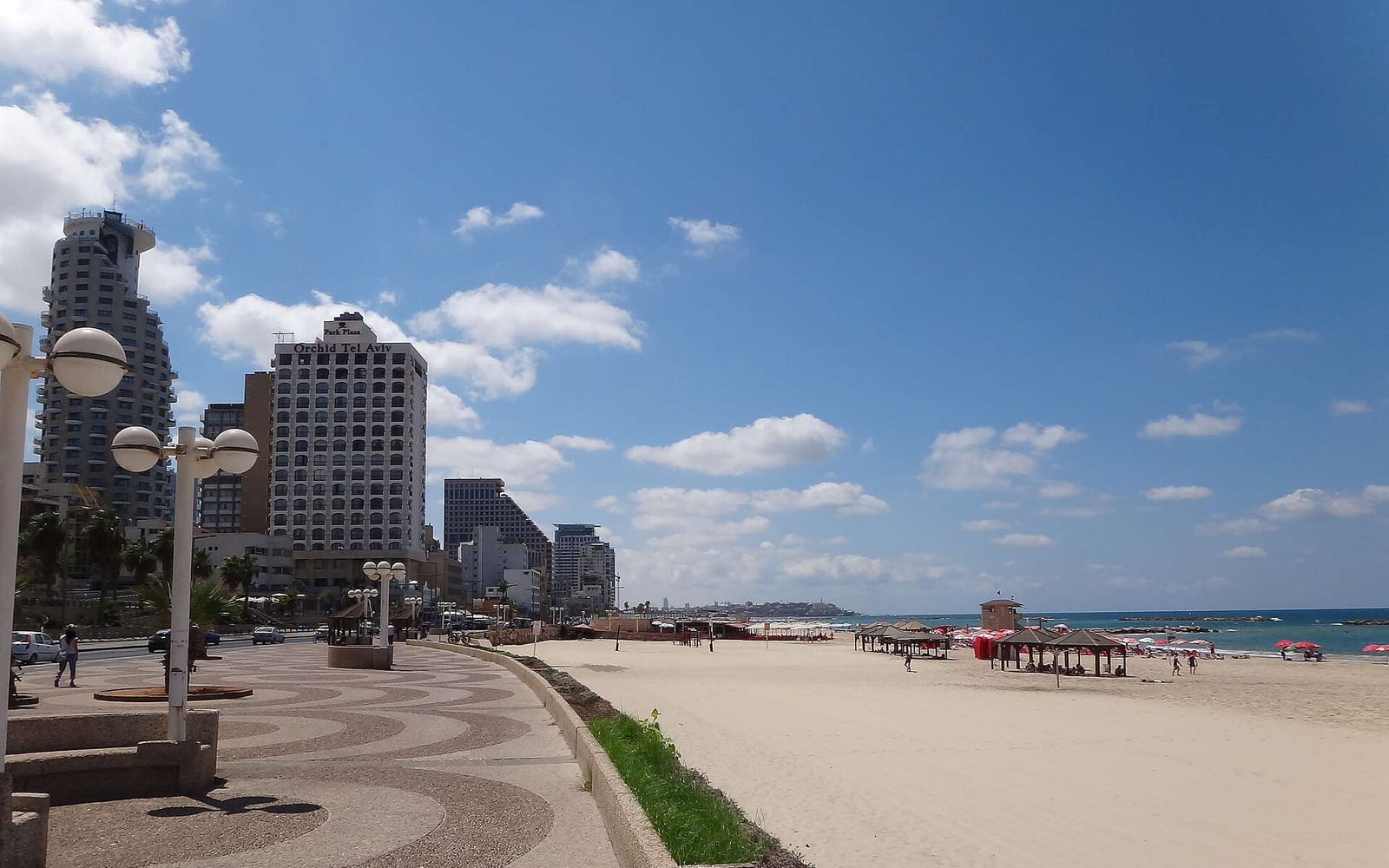
Head west to the seafront. Gordon Beach is the most central public beach: sun-lounger rentals, cafés, lifeguards in season (April–October) and freshwater showers. In summer the water reaches 27–28°C; in autumn and spring it is still swimmable.
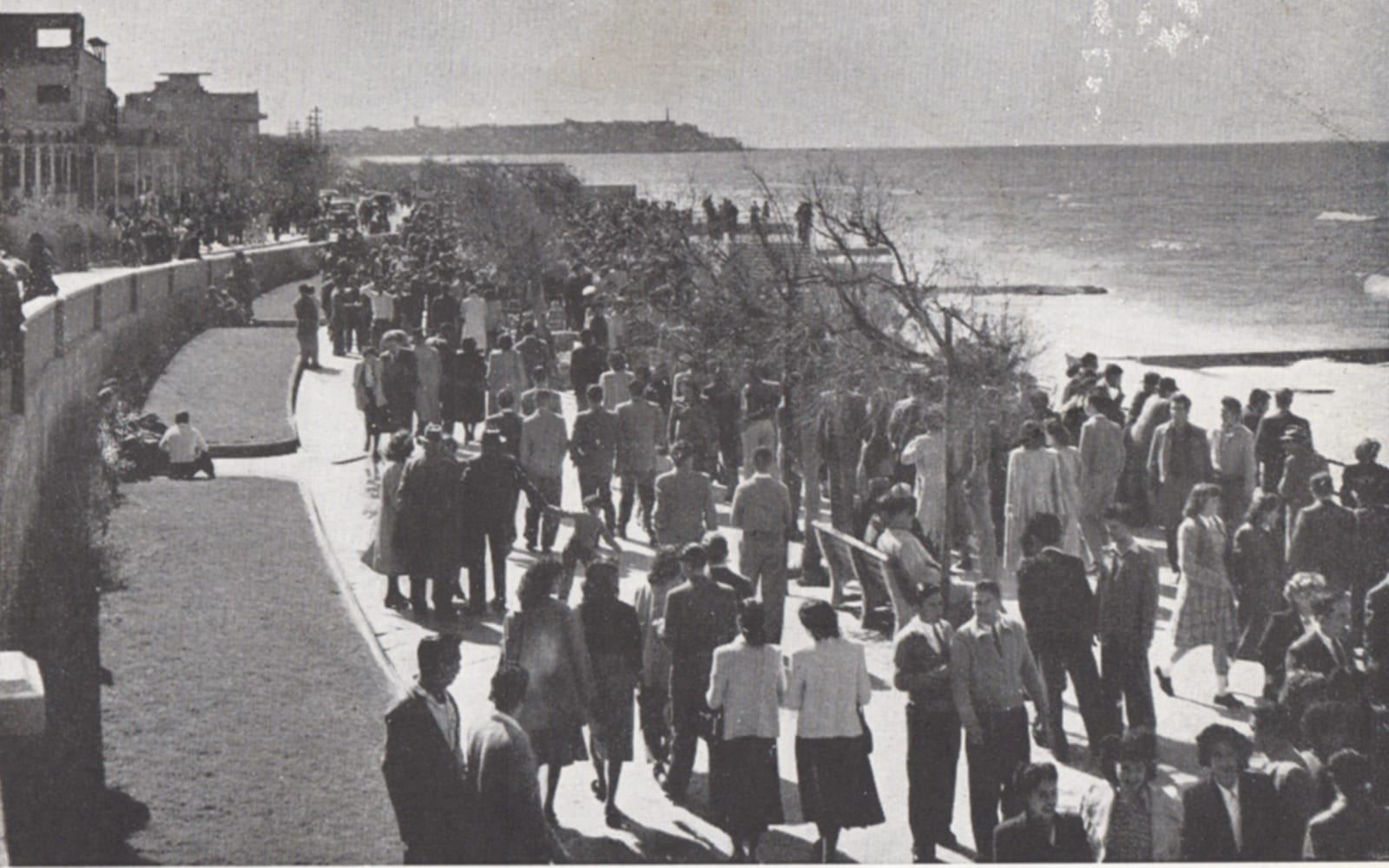
The Tayelet promenade runs 14 km from Jaffa port in the south to Reading Park in the north, entirely car-free. An hour’s walk or a 20-minute e-scooter ride in either direction gives you the full beach sequence: Alma, Charles Clore, Gordon, Hilton, Nordau, Metzitzim.
Evening: Jaffa port sunset dinner
Take the Tayelet south to Jaffa for sunset. The view from the old port looking back at the Tel Aviv skyline — illuminated, with the Mediterranean in the foreground — is the city’s signature image. The Clock Tower and the elevated promenade above the port offer the best vantage points.
For dinner, the Jaffa Port restaurants on the old quay serve fresh fish and mezze. The adjacent Arab neighbourhood of Ajami and the nearby Florentin quarter (see Day 2) have alternatives at most price points.
Day 2: Museums, Sarona and Florentin
Morning: ANU Museum of the Jewish People
The ANU Museum (Clore Center, Tel Aviv University campus — 20 minutes by bus or light rail from the city centre) is the world’s largest museum of Jewish diaspora history. The recently renovated “Golden Path” central exhibition traces Jewish communities from the ancient world to the contemporary Israeli state through objects, video, genealogy records and reconstructed community spaces.
Allow 2–3 hours. Pre-book the genealogy research desk if you want to search family records — appointments fill quickly.
Midday: Sarona Market
Return to the city centre via the Tel Aviv HaShalom train stop. Sarona Market is a five-minute walk away: an upscale indoor food hall inside a restored German Templar colony (19th-century limestone buildings with heritage designation). The 90+ vendors include bakeries, cheese counters, gourmet beer bars, Israeli artisan ice cream and a handful of sit-down restaurants.
Sarona is air-conditioned, fully covered and open daily — it is the best wet-weather alternative to Carmel Market, and a useful option if your Day 1 falls on a Saturday.
Afternoon: Tel Aviv Museum of Art
The Tel Aviv Museum of Art (Shaul HaMelech Boulevard, 20-minute walk north of Sarona) is Israel’s largest art museum: five pavilions covering Israeli modernism, Impressionist and post-Impressionist international works, and contemporary pieces. The Helena Rubinstein Pavilion for Contemporary Art hosts rotating exhibitions. Allow 2 hours minimum; extended Tuesday evening hours make it viable for a late-afternoon visit.
Entry is approximately ₪60 for adults; check tamuseum.org.il for current hours and temporary exhibitions.
Evening: Florentin and a rooftop bar
Florentin is the neighbourhood immediately south of the city centre — think street art, independent record shops, natural wine bars and late-opening restaurants at prices lower than the tourist drag. The main streets are Florentin Street itself and the surrounding grid; the neighbourhood is best explored on foot, wandering rather than following a fixed route.
For a rooftop sunset cocktail before dinner, the Norman Hotel (23 Nachmani, Rothschild area) and several boutique hotels in the Hayarkon beach strip have rooftop terraces open to non-guests. Arrive 30–45 minutes before sunset for a good position. See Israel rooftop bars guide for the full list.
Day 3: Jaffa, the Tayelet and airport departure
Morning: Old Jaffa in depth
Day 3 starts early in Old Jaffa before the cruise groups arrive (aim for 7:30–8am). The Jaffa flea market (HaPishpishim) opens at 9am Sunday through Friday and sells genuine antiques, mid-century Israeli furniture, vintage textiles and an enormous miscellaneous category — even non-buyers find 30 minutes here worthwhile.
Walk the artist colony alleys above the market: the Ilana Goor Museum in a converted caravanserai (₪20 entry), the elevated terrace above Andromeda’s Rock, and the Clock Tower that has anchored the Jaffa crossroads since 1906. The Church of Saint Peter (free, modest dress) is one of the better-preserved Ottoman-era churches in the region.
The old port itself is worth a final return: the quay faces Tel Aviv across the bay at an angle that captures both the ancient port and the modern high-rise skyline in a single frame.
Midday: Final Tayelet walk
Walk north along the Tayelet from Jaffa for the last time. A final swim at Gordon or Frishman Beach, a fresh juice from a market kiosk, or a coffee at one of the beachfront cafés makes a natural transition from three days of activity to departure mode.
For last food shopping before leaving, the covered section of Carmel Market (open until Friday early afternoon, all other weekdays until evening) stocks good portable gifts: spice blends, tahini, date honey, dried za’atar. Items in sealed packaging pass Ben Gurion security easily.
Afternoon/Evening: Ben Gurion Airport
Allow at least 3.5 hours before your flight departure time. Security at Ben Gurion operates in layers (vehicle check, check-in, airline security interview, passport control, screening), and the interview alone typically takes 15–30 minutes. Queues are longer in July and August and around Jewish holidays.
The train from HaShalom station (200m from Sarona Market) reaches the airport in about 20 minutes and avoids road traffic on busy Fridays. See the Ben Gurion Airport guide for full terminal logistics, lounge access and duty-free.
Budget reference
| Travel style | Per person per day | 3 nights total (hotels only) |
|---|
| Budget | ₪250–400 | ₪750–1,200 |
| Mid-range | ₪550–900 | ₪1,650–2,700 |
| Boutique / luxury | ₪1,200–2,500+ | ₪3,600–7,500+ |
Museum entries (ANU + Tel Aviv Museum ≈ ₪120 combined), Jaffa guided walk and food add ₪200–400 per person over three days. See the Israel cost and budget guide for the full breakdown.
Useful cross-links