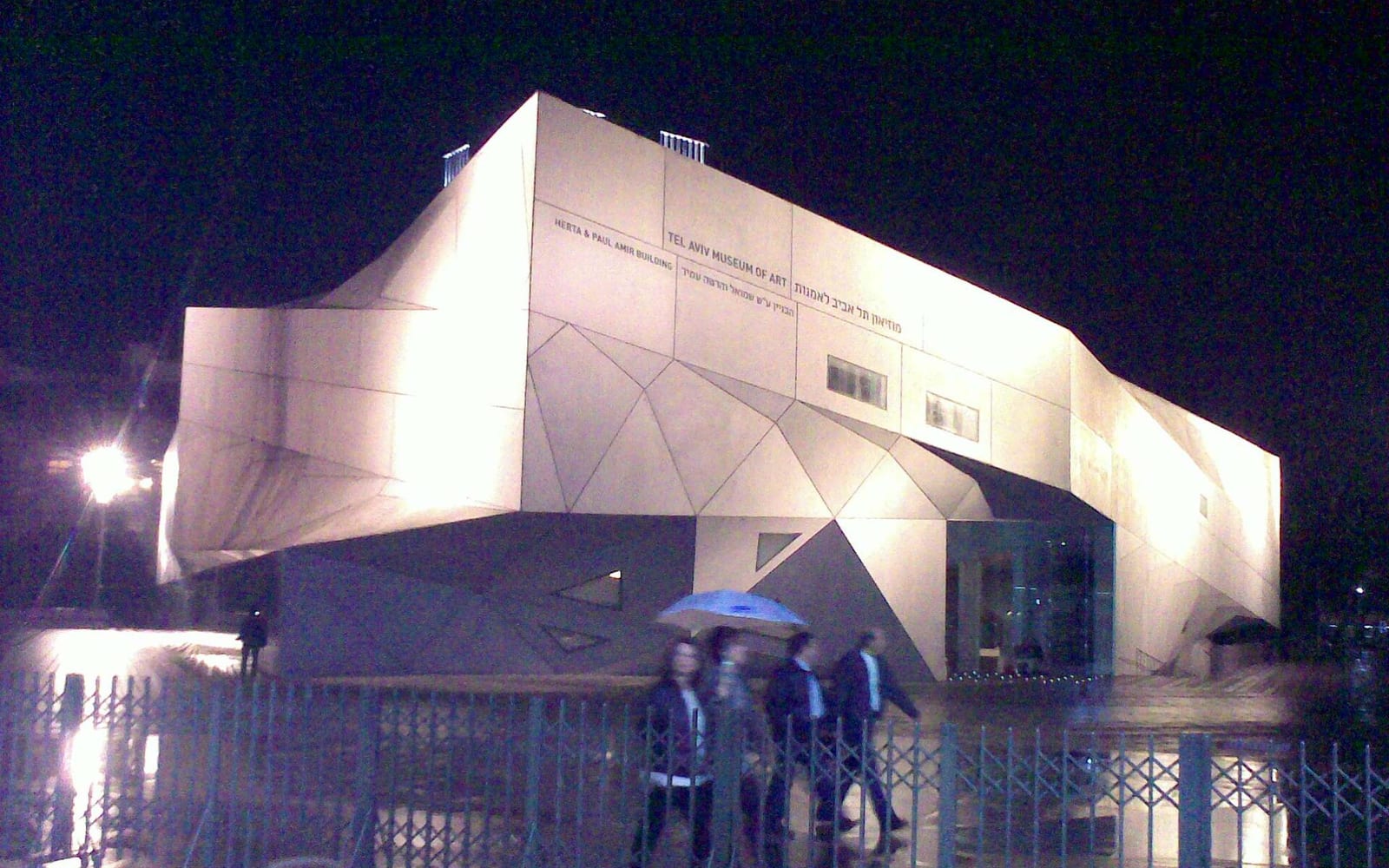
The ANU Museum of the Jewish People sits on the campus of Tel Aviv University in Ramat Aviv and tells a 3,000-year story — the movement, survival, cultural creation, and renewal of Jewish communities from every corner of the world. Reopened in 2021 after a comprehensive NIS 300 million redesign, it is now one of Israel’s most compelling museum experiences, with a permanent collection that includes the Codex Sassoon: one of the oldest and most complete Hebrew Bible manuscripts in existence, acquired for a world-record $38.1 million in 2023.
For first-time visitors, the museum rewards three to four hours of unhurried exploration. For those tracing Jewish family roots, the on-site genealogy database can anchor an entire research visit.
The Codex Sassoon
The ANU Museum’s most significant recent acquisition is also one of the most important Jewish cultural objects on public display anywhere. The Codex Sassoon is a near-complete Hebrew Bible — containing all 24 books — handwritten by a scribe named Shem Tov ben Mayer around 920 CE, placing it among the oldest surviving copies of the full Hebrew scriptural canon.
Named after a former British-Iraqi owner, the manuscript was auctioned at Sotheby’s New York in May 2023, where it sold for $38.1 million — a world record price for any Hebrew manuscript at auction. The ANU Museum acquired it through a philanthropic partnership and placed it on permanent display in Tel Aviv, where it remains the most valuable Jewish manuscript on public view anywhere in the world.
The codex is displayed in a climate-controlled case on the ground floor. The text is visible in detail, and interpretive panels explain the manuscript’s production, ownership history, and significance within the development of the biblical text tradition. Photography is typically permitted without flash — check current policy at the welcome desk. The page on display rotates periodically to protect the parchment.
Allow at least 30–45 minutes at the Codex Sassoon display. If biblical manuscripts interest you, pair this visit with the Shrine of the Book at the Israel Museum in Jerusalem, which holds fragments of the Dead Sea Scrolls — manuscripts roughly 1,000 years older than the Codex Sassoon and representing a different stage in the textual tradition.
The Four Permanent Floors
The museum is structured around four thematic floors, each exploring a dimension of Jewish diaspora experience.
Floor 1: Communities
The ground floor surveys Jewish communities across the world — from Ashkenazi Poland and Sephardic Iberia to the Yemenite Jews of Sanaa and the Bene Israel of Mumbai. The approach is comparative: what did Jewish communal life look like in radically different cultural contexts, and what threaded those communities together across geography and centuries?
Exhibits draw on objects, photographs, reconstructed interiors, and multimedia installations. The reconstruction of a synagogue interior — drawing on elements from a specific diaspora community — anchors the floor’s exploration of religious continuity.
Floor 2: Wanderings
The second floor addresses Jewish migration: the ancient dispersions, the medieval expulsions, and the waves of modern immigration to the Americas, South Africa, Australia, and — increasingly — to Israel. The floor does not shrink from the context of persecution, but frames migration as a story of adaptation and cultural resilience as much as exile.
The Holocaust is covered here in the context of the larger migration story, with a distinct section rather than a standalone floor — a deliberate curatorial choice that situates the genocide within the longer arc of Jewish population movement rather than treating it as a break from continuity. Visitors seeking a dedicated Holocaust memorial experience should visit Yad Vashem separately; it remains the definitive institution for that history.
Floor 3: Culture
The third floor presents Jewish contributions to science, literature, music, art, and philosophy. This is the most exhibition-like floor, with rotating and permanent displays covering figures from Maimonides and Spinoza through to Einstein, Kafka, and contemporary Israeli artists.
The music section — with listening stations, archival recordings, and an examination of how Jewish musical traditions transformed through diaspora contact — is a highlight that visitors often linger over unexpectedly.
Floor 4: Return
The top floor addresses the modern Jewish experience: the Zionist movement, the founding of the State of Israel, mass immigration from Arab countries and the former Soviet Union, and the contemporary relationship between diaspora communities and Israeli society. The tone is complex and does not paper over internal disagreements — the floor presents different perspectives on Israeli identity rather than a single triumphalist narrative.
The roof terrace above this floor offers a panoramic view over the Tel Aviv University campus and the Ramat Aviv district.
The Genealogy Database
The ANU Museum houses what is described as the world’s largest Jewish genealogy database, developed in partnership with MyHeritage. The database allows visitors to search family names, communities of origin, and diaspora migration records across thousands of Jewish communities and historical periods.
The database research desk on the ground floor offers guided access with staff assistance. For visitors tracing specific family roots, this can be the most personally significant part of the visit — a resource that contextualises your own family history within the larger story the museum tells.
Practical notes:
- Simple name searches can be done independently at kiosk terminals
- Complex genealogy research — cross-referencing community records, cemetery databases, and migration documents — benefits from a guided desk session
- Advance booking for research desk time is recommended for groups and for visitors with complex queries; check anu.org.il before arriving
The database is partially accessible online via the museum website, but the on-site archives offer deeper access.
Address: Klausner Street 2, Ramat Aviv (Tel Aviv University campus)
Getting there:
- Light rail: Red Line to the University area (Matalon station / Tel Aviv University direction); the campus is a short walk from the station
- Bus: Routes 7, 89, and 171 from central Tel Aviv; journey time roughly 20–25 minutes
- Car: 20 minutes from central Tel Aviv; paid campus parking is available
- Rideshare: Gett and Yango taxis operate in Ramat Aviv; ride time from the city centre is 20–30 minutes depending on traffic
Opening hours: Check current hours at anu.org.il before visiting. Historically open Sunday–Wednesday 10:00–17:00, Thursday 10:00–20:00, Friday 10:00–13:00; closed Shabbat (Saturday) and major Jewish holidays.
Admission: Verify current prices at anu.org.il. Approximate recent prices: adults ₪60, students/seniors ₪45, children under 18 free. ISIC cards typically valid for student discount.
Audio guide: Available in Hebrew, English, French, and Russian. Recommended for the Communities floor in particular.
Guided tours: English-language guided tours can be booked directly through the museum or via Tiqets. A guided tour adds meaningful context to the Communities and Wanderings floors, where the thematic connections between distant communities are easier to read with a narrative guide than from labels alone.
Photography: Permitted in most areas; confirm current Codex Sassoon photography policy at the welcome desk on arrival.
Café: On site, open during museum hours.
Accessibility: The museum is wheelchair accessible throughout, with lifts between floors.
Combining the ANU Museum with Other Nearby Visits
Eretz Israel Museum (2 km north): A multi-pavilion archaeology complex covering ancient glass, ceramics, numismatics, ethnography, and a functioning archaeological dig you can observe. Plan a full day to cover both ANU and Eretz Israel. Neither museum is covered by the Israel National Parks Pass.
Tel Aviv University campus: Worth 20–30 minutes of exploration between visits — a green, modernist campus that is one of the more pleasant university grounds in the region.
Ramat Aviv cafés: Several good cafés are within a short walk of the campus entrance on Einstein Street and in the Ramat Aviv Gimel neighbourhood. Plan lunch there between museum visits.
Central Tel Aviv: The ANU Museum is 20–30 minutes from the beach promenade, Rothschild Boulevard, and the Carmel Market. If you have a full day, a morning at ANU and Eretz Israel Museum and an afternoon in central Tel Aviv is a viable programme.
Who Should Visit
The ANU Museum rewards visitors who come with some curiosity about Jewish history but does not require prior knowledge — the museum’s design is accessible. Specific audiences who tend to find it particularly meaningful:
- Jewish diaspora visitors tracing family roots (the genealogy database is unique)
- Anyone interested in the Codex Sassoon — one of the great manuscript collections in any museum worldwide
- Cultural and history travellers interested in how a single people maintained distinct community identities across radically different geographies
- Visitors already covering Yad Vashem — ANU Museum provides a complementary, longer-arc framing of Jewish history that contextualises what Yad Vashem focuses on in concentrated form
It is less immediately engaging for young children who have no prior frame of reference for diaspora history, though the Youth Wing activities and the museum’s multimedia approach make it more accessible than traditional text-and-object museums.
Check anu.org.il for current hours, admission prices, and exhibition schedules before your visit. The museum is closed on Shabbat and major Jewish holidays. The Codex Sassoon display page rotates periodically for conservation — the manuscript itself is always on display but the specific page visible may vary.