In October 1945, a young Palmach officer led 200 Jewish survivors through a hole in an electrified fence, into a night that would become one of the most celebrated operations in pre-state Jewish history. The fence they breached surrounded Atlit Detainee Camp — a British Mandatory authority detention facility 20km south of Haifa where tens of thousands of Jewish Holocaust survivors were imprisoned while attempting to reach the Land of Israel.
The camp still stands. The fence, the barracks, the British guard towers, and the replica immigrant ship in the harbour are all there — and Atlit is one of the most emotionally powerful sites in Israel for understanding the years between the end of the Holocaust and the founding of the state.
The History: Aliyah Bet and the White Paper
The story of Atlit begins with a piece of British legislation. In May 1939, six months before World War II began, the British government issued the White Paper of 1939, which imposed strict limits on Jewish immigration to Mandatory Palestine: a cap of 75,000 over five years, followed by complete prohibition unless Arab consent was obtained. The policy was designed to stabilise Britain’s relationship with Arab governments. Its practical effect, as the full scale of Nazi persecution became clear, was to shut Jewish refugees out of their most accessible place of refuge.
The Jewish Agency and Zionist underground organisations responded with Aliyah Bet — the clandestine immigration network. Working through postwar Europe and from ports in Romania, Bulgaria, Yugoslavia, Italy and France, Aliyah Bet organisers bought or leased ageing vessels and packed them with displaced persons from the DP camps, survivors of Auschwitz, Bergen-Belsen, Dachau and dozens of other camps. These were not young idealists; most were the remnant of destroyed communities, carrying nothing.
The British Royal Navy intercepted many of the ships at sea. Refugees were transferred to British military vessels and transported to Atlit. Between 1938 and 1948, an estimated 16,000 to 30,000 Jews passed through the Atlit facility. At its peak the camp held more than 2,000 detainees at a time.
The detention of Holocaust survivors by a Western government shocked Jewish communities worldwide and dramatically shifted international opinion toward the Zionist project in the years before 1948.
The Night of the Raiders — 10 October 1945
By 1945 the camp held several hundred detainees. The Palmach — the elite strike force of the Haganah, the main Jewish underground army — planned a rescue operation. The commander assigned was Yitzhak Rabin, then 23 years old, who would later serve as Israel’s chief of staff and its fifth prime minister.
On the night of 10 October 1945, Rabin’s unit cut through the electrified perimeter fence, overpowered the British guards (without bloodshed), and led 208 detainees to freedom. Kibbutzim across the region had prepared to absorb the escapees; within hours they had dispersed into the surrounding countryside.
The operation — known in Hebrew as Mivtza Atlit — became a symbol of Jewish defiance of British immigration policy. Today a full reconstruction of the fence breach and escape route is part of the guided tour, walked at the actual locations where events occurred.
What You’ll See at the Camp
The site is remarkably well preserved. Unlike many historical memorials that rely primarily on photographs and artefacts, Atlit places you inside original and reconstructed structures at human scale.
The Barracks and Living Quarters
The detention barracks stand largely as they were: long huts with wooden bunk beds and period-authentic effects. The exhibits recreate the conditions in which detainees lived — personal documents, photographs, and the detritus of displacement. Many exhibits are anchored in specific individual or family stories, reconstructed from testimony and archival records.
The Electrified Perimeter Fence and British Watchtowers
The perimeter fence system — with reconstructed searchlights and guard towers — makes viscerally clear that this was a prison. The fence is walked as part of the guided Night of the Raiders reconstruction. Signage explains the operational mechanics of the camp’s British military administration.
The Immigrant Ship Replica
At the camp’s harbour, a full-scale replica of a Aliyah Bet immigrant ship — the type of vessel used to transport Jewish refugees across the Mediterranean — sits moored. Below-decks access replicates the cramped conditions: the hold where refugees crossed the sea, often for days, with minimal provisions and in fear of British interception. It is one of the most affecting parts of the visit — the physical constriction of the space tells the story more directly than any text.
The replica represents the ships of the Aliyah Bet fleet; it is a reconstruction, not an original vessel. The original ships rarely survived — many were scuttled or condemned after use.
The C-46 Curtiss Commando Aircraft
An aircraft representative of the type used for Aliyah Bet air operations is displayed at the site — a Curtiss C-46, the workhorse transport aircraft that carried Jewish volunteers and supplies during the period. The air dimension of pre-state clandestine immigration is less well known than the sea passages and makes for a complement to the maritime exhibit.
The Educational Centre and Film
The educational centre provides historical context in English and Hebrew, covering the full arc of the Aliyah Bet period. A documentary film — available in English screenings — condenses the camp’s history and integrates survivor testimony. Allow 20–30 minutes for the film; it is not required for a meaningful visit but provides important context for those less familiar with this period.
Planning Your Visit
Getting There
By car (recommended for most visitors): Atlit is on Route 2, 20km south of central Haifa — approximately 25 minutes by car. Ample free parking is available on site.
By public transport: Bus route 921 (Egged/Kavim) connects Haifa Central Bus Station with Atlit; from the bus stop in Atlit town, the camp is a short walk. Verify current timetables at the Egged or Kavim website before travelling, as services are less frequent on Fridays.
By guided tour: Day tour operators from Haifa and Tel Aviv include Atlit as part of Jewish heritage itineraries — this is the most contextually rich option, as a knowledgeable guide substantially deepens the experience.
Hours and Booking
- Open: Tuesday–Thursday 8:30–17:00; Friday 8:30–13:00
- Closed: Monday and Saturday (Shabbat)
- English guided tours: must be booked in advance via palmach.org.il/atlit or by contacting the site directly — walk-in English tours are not guaranteed
- Self-guided visits: possible during open hours; English-language information panels throughout the main complex
Verify current hours and any holiday closures before your visit, as schedules change seasonally.
Combining with a Haifa Day
| Route | Duration | Highlights |
|---|
| Atlit → Haifa German Colony | 25 min north by car | Bahá’í Gardens, Ottoman-era architecture, German Templar history |
| Atlit → Haifa → Akko | 25 min north + 30 min further | Atlit (Aliyah Bet, British Mandate) + Akko (Crusader underground city) |
| Atlit → Zichron Yaakov | 20 min south | Rothschild wine village, Carmel Winery, Ramat Hanadiv gardens |
| Atlit → Caesarea | 30 min south | Roman amphitheatre, aqueduct beach, Herodian harbour |
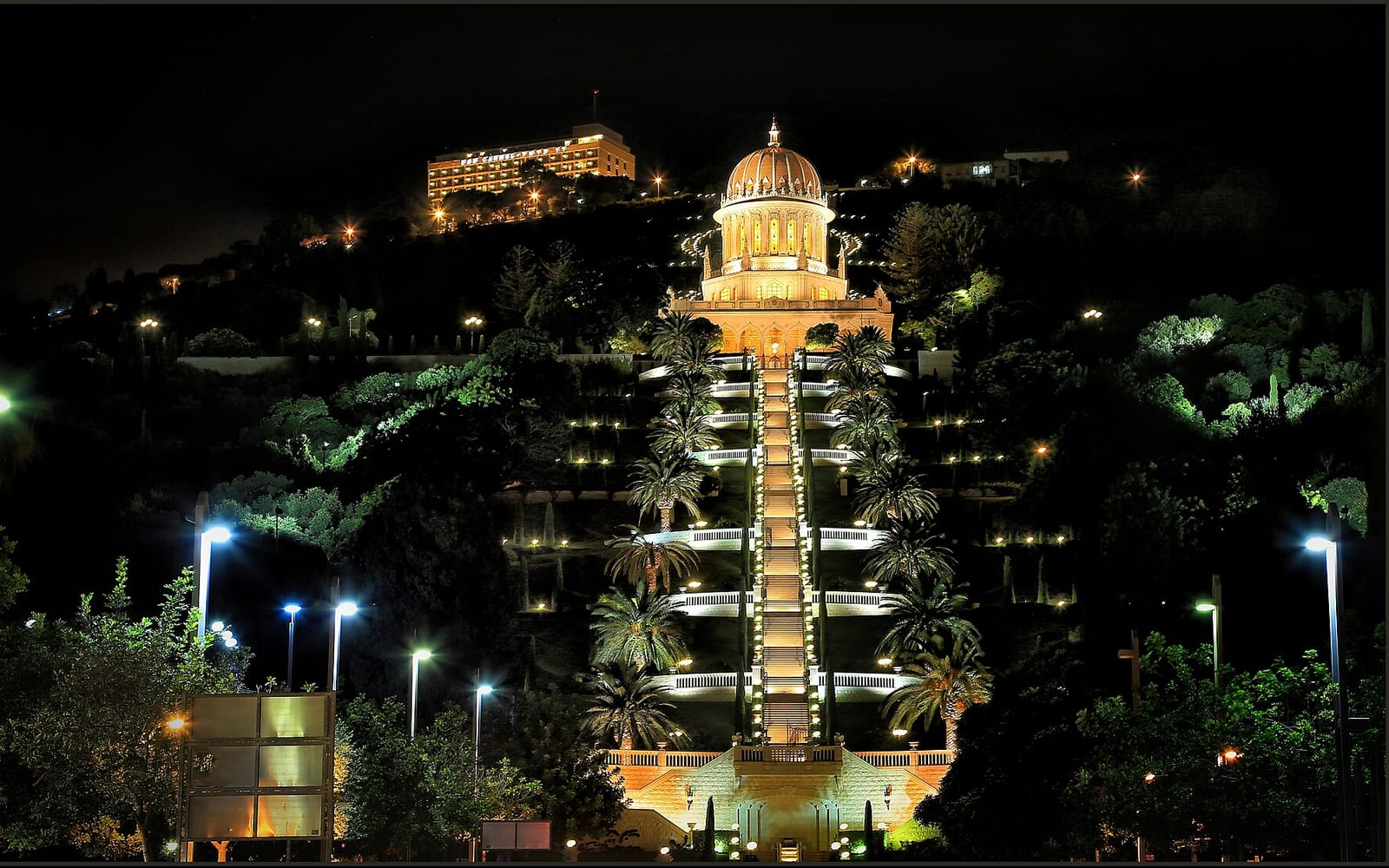
A natural full-day circuit: Atlit in the morning (the emotionally demanding site; better fresh) → drive north to Haifa for lunch in the German Colony → spend the afternoon at the Bahá’í Gardens (UNESCO World Heritage, free guided tours on the hour). This covers three distinct historical periods — British Mandate, Bahá’í 19th century, and Ottoman — within a 30km coastal stretch.
For the full northern itinerary, see our Haifa travel guide and day trips from Haifa.
Why Atlit Matters
The story of Atlit sits at one of the most significant intersections in modern Jewish history: between the catastrophe of the Holocaust and the founding of the State of Israel. The British detention of survivors in this camp — people who had survived Auschwitz and Bergen-Belsen and were now imprisoned again, this time by a Western democracy on the shores of the Land of Israel — was an act of policy that galvanised Jewish determination and shaped international opinion in the years before 1948.
For visitors with Jewish heritage, Atlit occupies a different register than Masada or the Western Wall. This is not ancient history or religious significance; it is the story of specific people in the middle of the 20th century, documented in personal testimony and physical evidence. The barracks, the ship’s hold, the electrified fence: they make the recent past immediate.
For visitors without that direct heritage connection, Atlit is a site about human displacement and the politics of refuge — themes that resonate far beyond the specific context of the 1940s.
Yitzhak Rabin, who led the Night of the Raiders at 23, said decades later that the night at Atlit remained one of the defining experiences of his life. The site where it happened is 20 minutes south of Haifa.
For broader context on Jewish heritage travel in Israel, see our Jewish heritage travel guide. For the pre-state and 1948 narrative in Jerusalem, the Jewish Quarter guide covers the Old City’s role in Israel’s founding story.