Beit She’arim Necropolis National Park (Hebrew: בֵּית שְׁעָרִים, also spelled Bet Shearim) is an Israel Nature and Parks Authority (INPA) site in the Lower Galilee foothills, 20 kilometres east of Haifa. It preserves one of the most significant Jewish archaeological sites in the world: a vast necropolis of 33 rock-cut catacombs that served as the premier Jewish burial ground of the Roman Empire from the 2nd to 4th century CE. In 2015, UNESCO inscribed Beit She’arim as a World Heritage Site under the title Necropolis of Beit She’arim: A Landmark of Jewish Renewal — recognition of its extraordinary density of carved sarcophagi, multilingual inscriptions and early Jewish art. It is rarely crowded, entirely INPA-managed, and one of the most rewarding half-day archaeology detours in northern Israel.
Historical context
The Sanhedrin and Rabbi Judah ha-Nasi
Beit She’arim rose to prominence in the late 2nd century CE when Rabbi Judah ha-Nasi — also known as Judah the Patriarch, the compiler of the Mishnah — relocated the Sanhedrin (the supreme Jewish court and legislative council) to the city. Under his leadership, Beit She’arim became the intellectual and administrative centre of Jewish life in Roman Palestine. Rabbi Judah ha-Nasi himself was interred here, and his tomb transformed the site into a prestige burial ground.
After Roman authorities prohibited Jewish burial on the Mount of Olives in Jerusalem following the Bar Kokhba revolt (132–135 CE), diaspora Jewish communities across the empire needed an alternative. Beit She’arim offered it: proximity to the Sanhedrin, the tomb of the patriarch, and a community capable of receiving and interring the dead with appropriate rites. Over the following two centuries, Jewish families from North Africa, Syria, Palmyra, Mesopotamia and further afield shipped their deceased — or at least their sarcophagi — to Beit She’arim for burial. The necropolis expanded accordingly.
The city declined after the 4th century CE and was largely abandoned. Systematic excavation began in the 1930s under Alexander Zaid and continued under Benjamin Mazar from 1936 to 1958, revealing the scale and richness of what lay beneath the hillside.
The catacombs
What you will see
Thirty-three rock-cut catacombs have been identified. Most are cut directly into the limestone hillside; a few are free-standing structures. They range from simple single-chamber rooms to multi-hall complexes with dozens of sarcophagi.
Catacomb 20 — Hall of Sarcophagi (the main catacomb open to independent visitors) is the largest and most elaborately decorated. A wide rock-cut entrance leads into a sequence of vaulted halls containing massive stone sarcophagi carved in relief. The decorative vocabulary draws on Roman funerary traditions — eagles, lions, bulls, shell motifs, Erotes (cupids), geometric borders — combined with distinctively Jewish symbols:
- Menorahs (seven-branched candelabra) — among the earliest known depictions of the Temple menorah after its destruction in 70 CE
- Arks of the Torah
- Shofars (ram’s-horn trumpets)
- Lulavs and etrogs (the four species of Sukkot)
The inscriptions cut into sarcophagi and walls are in Greek (the most common — Greek was the lingua franca of eastern Mediterranean Jewish communities), Aramaic, Hebrew and Palmyrene. Some identify the deceased by name, origin and profession; others contain formulaic burial blessings or warnings against opening the tomb.
Catacomb 14 — the Menorah Cave
Catacomb 14 is the most concentrated source of menorah carvings on the site — dozens of menorahs cut into the walls, niches and sarcophagi, of varying styles and sizes. It is opened only for pre-arranged guided tours. If you are visiting for the first time and have a serious interest in Jewish archaeology or art history, booking the Menorah Cave tour is worthwhile. The guided format also covers the iconographic evidence for the evolution of the menorah symbol in post-Temple Judaism — context that is difficult to absorb without an expert.
Booking: Contact the park directly via parks.org.il or the park office telephone. Friday and Saturday tours are popular and book out; weekday availability is generally easier.
The hilltop ruins and views
Above the catacombs, the hilltop preserves the outline of the ancient city of Beit She’arim itself — a synagogue complex, residential quarters, olive presses and a mosaic floor. The view from the summit takes in the Jezreel Valley and the Carmel ridge, and on clear days extends to the Mediterranean. The hilltop is accessible on foot from the visitor centre via a short but moderately steep path.
Entry and the INPA pass
Beit She’arim National Park is an INPA site; entry is covered by all Israel National Parks Pass tiers (Blue, Green, Orange, Matmon). If you plan to visit Beit She’arim alongside other INPA sites — Zippori, Megiddo, Caesarea, Masada, or any of the 63 sites in the network — the pass will almost certainly save money. Verify current single-entry and pass prices at parks.org.il before visiting, as the INPA revises them periodically.
Opening hours
Daily from 8:00 to 17:00 in summer and 8:00 to 16:00 in winter (hours are approximate — verify at parks.org.il as they may shift with the season). The visitor centre and café close 30 minutes before park closing time. Closed on Yom Kippur and certain Jewish holidays.
Getting there
By car (recommended): From central Haifa, drive southeast on Route 75 toward Kiryat Tivon. The national park entrance is signposted in Kiryat Tivon (Beit She’arim area). Total driving time is approximately 25–30 minutes. Free parking at the visitor centre.
From Haifa by train: Take the Israel Railways service to Kiryat Motzkin or Kiryat Bialik (Haifa Bay line), then a taxi to the park gate (~₪30–40). Alternatively, from Binyamina/Caesarea station south of Haifa, a taxi runs approximately ₪60–80 to the park. No direct bus currently operates to the park entrance — verify bus.gov.il before assuming current route availability.
From Tel Aviv: Drive north on Highway 2 to Haifa, then Route 75 east; approximately 1 hour 15 minutes total. Alternatively, train to Haifa and taxi as above.
What to bring
- A torch (flashlight) — the deeper catacomb sections are dark; most smartphones handle it but a dedicated light is better
- Sturdy closed-toed shoes — catacomb floors are uneven limestone
- Water — the visitor centre café is open but limited; bring water for summer visits
- Light jacket — catacombs maintain a cool underground temperature year-round, pleasant in summer, chilly in winter
- Binoculars optional but useful for identifying distant relief carvings on sarcophagi
Best time to visit
| Season | Notes |
|---|
| Spring (Mar–May) | Ideal: wildflowers on the hillside, mild temperatures, good for combining with Zippori |
| Summer (Jun–Sep) | Hot on the hilltop but catacombs are cool; visit early; rarely crowded |
| Autumn (Oct–Nov) | Comfortable temperatures; low visitor numbers |
| Winter (Dec–Feb) | Open but wet and muddy on the hillside paths; catacombs warm and sheltered |
Beit She’arim receives far fewer visitors than headline sites like Masada or Caesarea. Weekdays are almost always quiet; even peak-season Fridays and Saturdays see modest crowds compared to the coastal INPA parks. Arrive when the park opens at 08:00 for the best photography light inside the catacombs.
Combining with nearby sites
Beit She’arim sits at the western edge of a cluster of exceptional Lower Galilee archaeology sites. A full day with a rental car can cover two or three:
Zippori National Park (15 min east): The ancient capital of the Galilee (Sepphoris), famous for the “Mona Lisa of the Galilee” — an extraordinary 3rd-century CE Roman mosaic floor in the dining room of a villa. Also preserves a Roman theatre, Byzantine synagogue mosaics and a Crusader citadel. INPA pass valid.
Megiddo (25 min east): The UNESCO Biblical Tel of Armageddon — 25 layers of occupation from 7000 BCE, an Israelite-era water system and views over the Jezreel Valley. INPA pass valid.
Nazareth (20 min southeast): The largest Arab city in Israel; the Basilica of the Annunciation, the Ancient Nazareth village experience and a vibrant Arab restaurant scene. Combine with Beit She’arim for a day trip from Haifa.
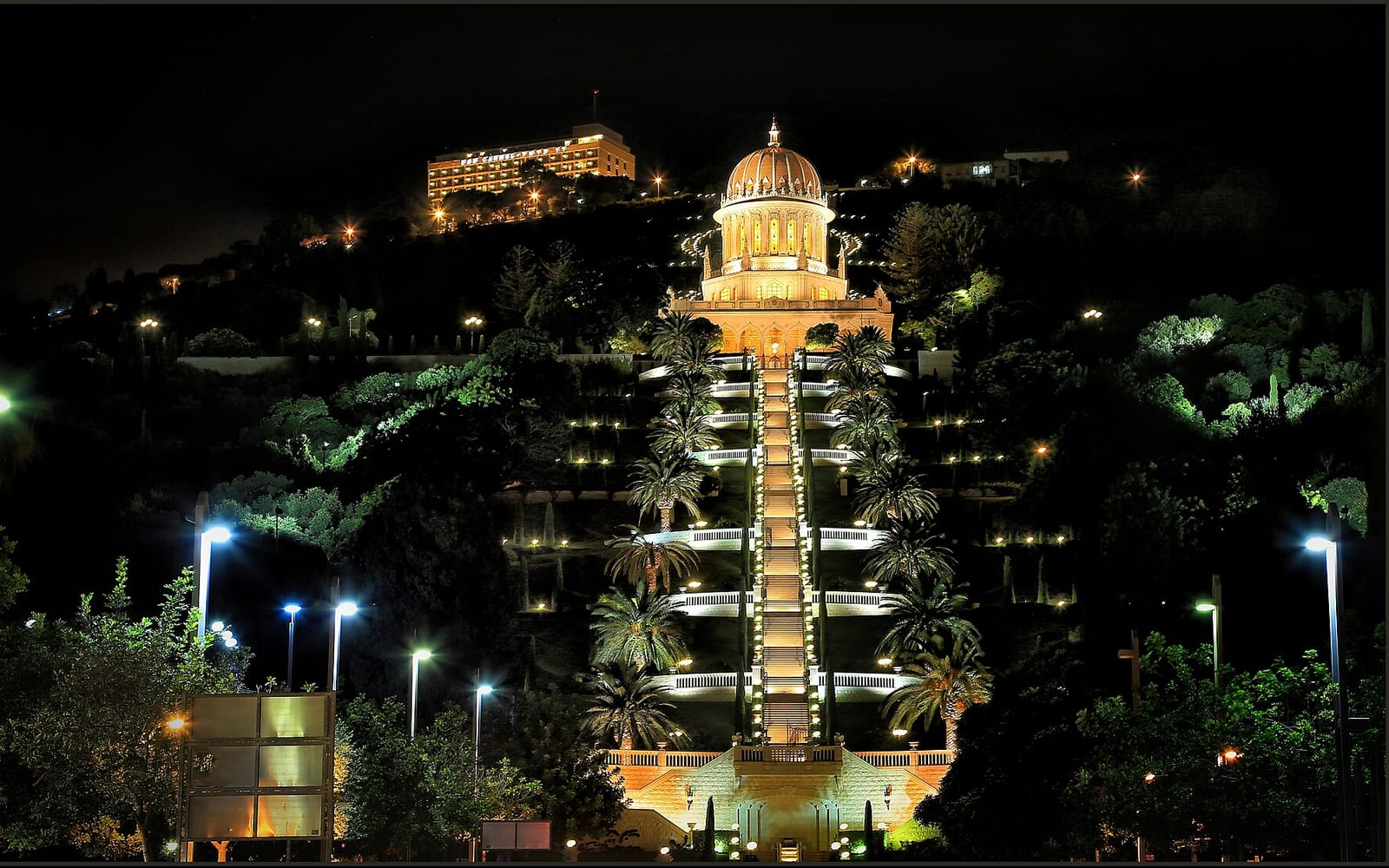
Haifa (30 min west): Beit She’arim pairs naturally with a Haifa morning (Bahá’í Gardens terraces, German Colony) followed by an afternoon in the catacombs.
Why Beit She’arim matters
The inscription evidence at Beit She’arim is among the richest sources available for understanding Jewish life in the Roman diaspora. The Greek-language epitaphs reveal names, occupations, family structures and home communities of the dead — a grandfather from Beirut, a butcher from Palmyra, a woman from “the city of the Romans.” The menorah carvings document how Jewish communities remembered the destroyed Temple and maintained shared iconographic language across dispersed communities.
For visitors interested in Jewish history, archaeology, or the broader Roman Empire, Beit She’arim offers something that the more famous sites do not: intimacy. The catacombs are quiet, the site is unhurried, and the connection to an actual community — the families who brought their dead here from across the Mediterranean world — is tangible in a way that museum exhibits rarely achieve.
See the Israel National Parks Pass guide · Jewish heritage travel guide · UNESCO World Heritage Sites in Israel · Day trips from Haifa