Jerusalem holds a concentration of museum collections that is extraordinary by any global measure — not just because of the Israel Museum’s world-class archaeology and art, but because the city itself is a layered site of multiple civilisations, and its museums map those layers with unusual depth and honesty. This guide covers the seven institutions that serious visitors should know about, with practical planning advice for combining them.
At a glance: Jerusalem’s museum map
Jerusalem’s museums cluster in two areas, making route planning straightforward:
Givat Ram cultural campus (western Jerusalem): the Israel Museum, the Schottenstein National Campus for the Archaeology of Israel (IAA’s new purpose-built museum, opened 2026), Bible Lands Museum Jerusalem (BLMJ), and the National Library of Israel all sit within a ten-minute walk of each other on Ruppin Boulevard, adjacent to the Knesset and the Wohl Rose Garden. This cluster takes two to three full days if explored thoroughly.
Old City and East Jerusalem: the Tower of David Museum (just inside Jaffa Gate) and the Rockefeller Archaeological Museum (near Damascus Gate) are natural additions to an Old City itinerary. Both take under two hours each and combine well.
Mount Herzl / Western Jerusalem: Yad Vashem is on its own — it is a half-day to full-day commitment and is best visited on its own day, not combined with other museums or Old City sightseeing.
1. Israel Museum Jerusalem
The Israel Museum is the largest and most significant museum in Israel — and by any measure one of the most important cultural institutions in the Middle East. Founded in 1965, it houses over 500,000 artefacts across archaeology, Jewish art and ethnography, fine art and the Shrine of the Book.
What to prioritise:
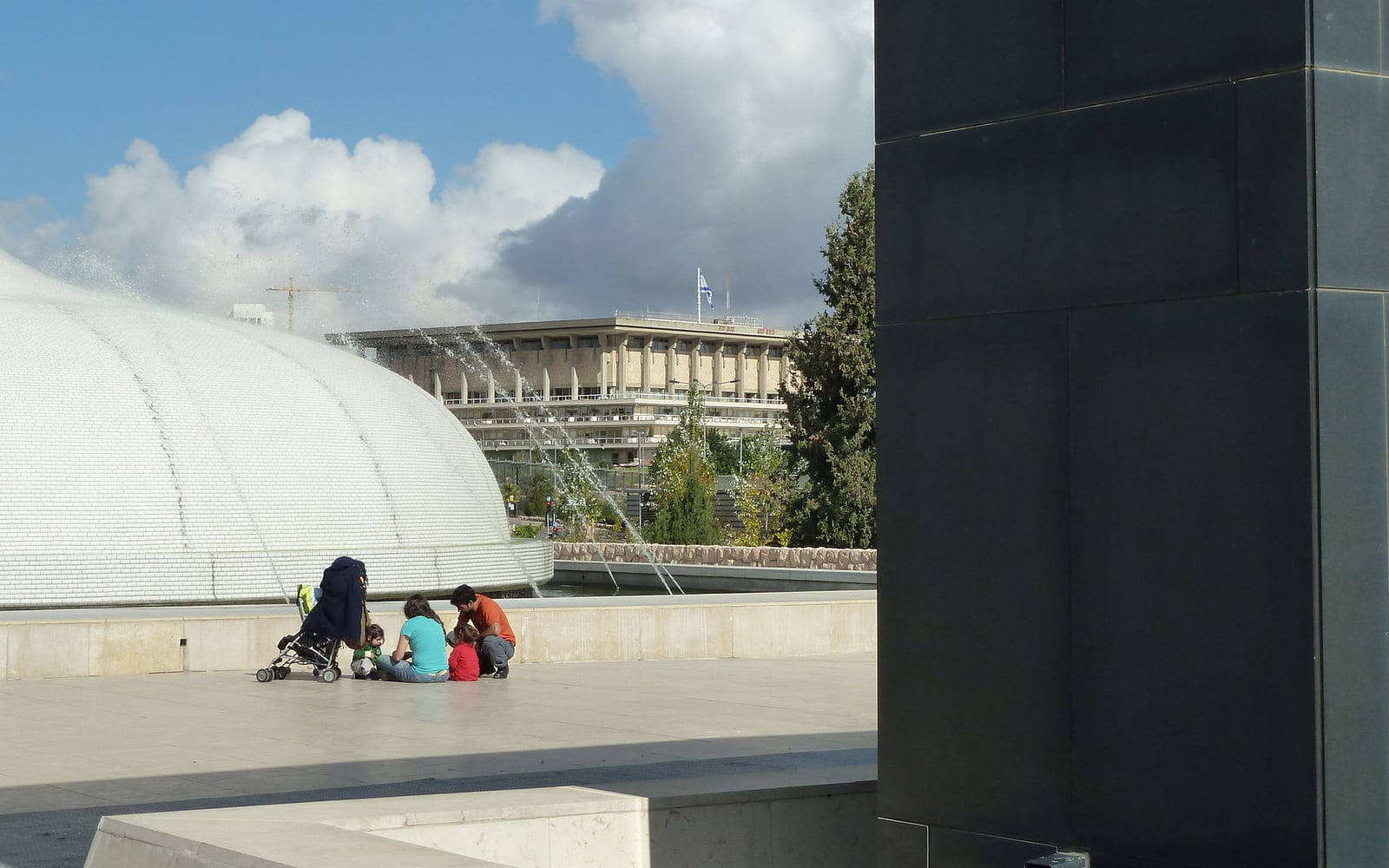
The Shrine of the Book is the architectural and intellectual centrepiece: a white dome designed to echo the lids of the clay jars in which the Dead Sea Scrolls were sealed. Inside, a reproduction of the Great Isaiah Scroll — the oldest complete copy of any biblical book, discovered at Qumran in 1947 — is displayed in a circular case. Original scroll fragments rotate on view. The building and its contents together take 45–60 minutes.
The Holyland Model (formally the Model of Jerusalem at the Time of the Second Temple) is a 1:50-scale reconstruction of Jerusalem as it appeared around 66 CE, just before the Roman destruction. Commissioned by historian Michael Avi-Yonah over several decades, it shows the Temple Mount, the Upper City villas, the Roman-era streets and the city walls in their full pre-war extent. Essential context for any visit to the Old City.
The archaeology wing spans the Canaanite period through to the Byzantine era, with exceptional Bronze Age and Iron Age collections. The Jewish art and ethnography wing covers diaspora communities from across the globe.
Practical details: ₪70 adult (as of 2026; confirm at imj.org.il). Free guided tours run on Thursdays at 11am. Closed on Saturdays and Yom Kippur. Half-day minimum; a thorough visit fills a full day. Kosher cafeteria and garden café on site.
For a comprehensive visitor guide to the Israel Museum — including directions, all wings and the Dead Sea Scrolls in depth — see our Israel Museum Jerusalem complete guide.
2. Yad Vashem — World Holocaust Remembrance Center
Yad Vashem on Mount Herzl is the primary Holocaust memorial and research institute in the world. It is not a conventional history museum: it is a place of witness, documentation and memory, and it should be approached as such.
What you will see:
The Holocaust History Museum — the main building, designed by Moshe Safdie — runs chronologically through the rise of Nazism, the ghettos, the Aktion killings, the death camps and the post-war aftermath. It is architecturally striking, built into the hillside with a triangular floor plan that ends in a panoramic opening over the Jerusalem hills. Plan three to four hours minimum.
The Children’s Memorial is a separate structure — a darkened room in which a small number of memorial candles are reflected in mirrors, creating the impression of millions of points of light, one for each of the approximately 1.5 million Jewish children killed in the Holocaust. It takes about twenty minutes and can be emotionally very intense.
The Hall of Names is the physical repository of Pages of Testimony — personal testimony forms submitted by survivors and relatives. You can view the archive and, if you have relatives documented, request access to their records.
The Central Database of Shoah Victims’ Names is freely searchable online at yadvashem.org before you visit — searching in advance is strongly recommended.
Practical details: Free admission. Advance timed-entry registration is mandatory for the Holocaust History Museum (book at yadvashem.org at least two to three weeks ahead; during peak periods, book further ahead). The grounds, Children’s Memorial and Hall of Names are generally accessible without pre-booking. Guided tours require booking months ahead. Closed on Saturdays. Allow a full day; do not plan other museum visits or Old City sightseeing on the same day.
3. Bible Lands Museum Jerusalem (BLMJ)
The Bible Lands Museum is the underrated member of the Givat Ram cluster — a focused, intellectually rigorous collection of artefacts from the ancient civilisations surrounding biblical Israel: Egypt, Mesopotamia, Assyria, Persia, Cyprus and the Aegean.
Where the Israel Museum is comprehensive and sometimes overwhelming, the BLMJ is curated: its collection of approximately 3,500 objects covers the ancient Near East with strong explanatory context that helps visitors understand the world the Hebrew Bible and New Testament describe. Bronze Age cylinder seals, Assyrian palace reliefs, Persian-period gold jewellery, Egyptian shabtis — all displayed in a quiet, unhurried setting.
What makes it worth the visit: The museum fills in the regional context that many visitors to the Old City feel they are missing. After a morning at the Israel Museum, an afternoon at the BLMJ provides a complementary lens.
Practical details: ₪50 adult (confirm at blmj.org); combined ticket with the Israel Museum is available at the box office. Located on Ruppin Boulevard, opposite the Israel Museum campus. About two hours for a thorough visit. Closed on Saturdays.
4. Tower of David Museum
The Tower of David Museum occupies the citadel of Jerusalem’s medieval fortifications, built into the fabric of the walls just inside Jaffa Gate. The history it presents — Jerusalem from 3,000 BCE to the modern city — is organised across the citadel’s courtyards, towers and moat with the archaeological strata visible as you walk.
Key highlights:
The rooftop provides one of the best unobstructed panoramas in Jerusalem: the Old City roofscape, the Church of the Holy Sepulchre dome, the Mount of Olives ridge and, on the western side, modern Jerusalem. Worth the visit for the view alone.
The Night Spectacular (projection-mapping show, seasonal) is a separate evening ticket — a 45-minute light-and-sound history of Jerusalem projected onto the ancient walls. It sells out weeks ahead in peak season; check the museum website or festivaloflight.co.il before your trip.
Practical details: ₪45 adult (confirm at tod.org.il). About 1.5 hours for the main circuit. Located inside Jaffa Gate — easiest to reach from the Old City on foot. Closed on certain Jewish holidays.
5. National Library of Israel
The National Library of Israel moved into a new building on the Givat Ram cultural campus in 2023–2024 — a landmark commission by architects Herzog & de Meuron (the firm behind the Tate Modern extension and Beijing’s Olympic Aquatics Centre). The building’s radial design is said to be inspired by the cross-section of a pomegranate; it is clad in Jerusalem stone and set in dialogue with the surrounding government campus and Israel Museum complex.
The collection itself is extraordinary: approximately five million books, 50,000 manuscripts (including some of the world’s oldest Hebrew manuscripts), the personal archives of Albert Einstein and Gershom Scholem, the largest collection of historical Jewish music in the world, and rotating public exhibitions of rare items from the collection.
What to see as a visitor: The public areas are open without pre-registration, and rotating exhibitions are open to all. The reading rooms and manuscript collections require registration (nli.org.il/en/visit). English-language guided tours are available on select days — check the website for current schedule. The building itself is worth visiting for architecture enthusiasts regardless of the collection.
Combining visits: The National Library is a ten-minute walk from the Israel Museum through the Wohl Rose Garden, making it a natural add-on to a Givat Ram morning. The Knesset exterior viewpoint is adjacent.
Practical details: General entry and public exhibitions free; paid exhibitions may apply (check nli.org.il). Open Sunday–Thursday; hours vary — confirm before visiting. Located at Eliezer Kaplan St 1, Givat Ram.
6. Rockefeller Archaeological Museum
The Rockefeller Archaeological Museum is the least-visited major museum in Jerusalem — an oversight worth correcting. Located near Damascus Gate in East Jerusalem, the museum occupies a striking Ottoman-era building commissioned in the 1920s by the British Mandatory government and funded by a donation from John D. Rockefeller Jr.
The collection is managed by the Israel Antiquities Authority and focuses on archaeological finds from the region: Bronze Age ivory carvings from Megiddo, Crusader-period architectural fragments, Islamic-period geometric stonework, and significant finds from excavations across the country. The building itself — carved Jerusalem stone courtyards, vaulted galleries, an octagonal tower — is worth seeing.
Practical details: Free entry. Open Sunday–Thursday plus Saturday mornings (confirm at antiquities.org.il for current hours). From Damascus Gate, the museum entrance is about a five-minute walk. East Jerusalem is fully tourist-accessible; the area around the museum is a standard part of the Old City circuit.
7. Museum of Tolerance Jerusalem
The Museum of Tolerance Jerusalem opened in 2023 in a dedicated building near the Russian Compound, targeting the themes of human dignity, coexistence and the shared responsibility to counter prejudice. It is operated by the Simon Wiesenthal Center and blends immersive technology (360-degree projection, interactive timelines) with archival material.
It is a distinct experience from Yad Vashem: the Museum of Tolerance focuses on building-forward themes — the human capacity for tolerance and the mechanisms of prejudice — rather than Holocaust documentation per se. It suits school groups, interfaith visitors and travelers who want to approach the topics of memory and coexistence through an interactive, forward-looking lens.
Practical details: Advance tickets recommended (museumoftolerance.com/jerusalem). Located near the city centre — easily combined with a Mahane Yehuda market visit or a stop on the light rail. Allow 2–3 hours.
See our dedicated Museum of Tolerance Jerusalem guide for full details.
Planning your museum circuit
Do not combine Yad Vashem with other museums or the Old City on the same day
This is the most important planning note. Yad Vashem is emotionally demanding, and attempting to visit it alongside the Old City — with its religious intensity and constant stimulation — on the same day often leaves visitors feeling overwhelmed and unable to absorb either fully. Give Yad Vashem its own day.
Suggested two-day museum itinerary
Day 1 — Givat Ram cultural campus:
- Morning (3–4h): Israel Museum — Shrine of the Book, Holyland Model, select archaeology galleries
- Afternoon (2–3h): Schottenstein National Campus — IAA collection, Dead Sea Scroll fragments, conservation lab windows
- Optional late afternoon: Bible Lands Museum Jerusalem or National Library of Israel (architecture + current exhibition)
Day 2 — Yad Vashem:
- Full day: Holocaust History Museum + Children’s Memorial + Hall of Names + café break
- Evening: quiet dinner in the German Colony neighbourhood (a 20-minute walk from Mount Herzl)
Day 3 — Old City cluster:
- Morning (1.5h): Tower of David Museum + rooftop panorama
- Afternoon: Rockefeller Archaeological Museum (1.5h) + Damascus Gate market area
What about the Museum of Tolerance?
Add it as a half-day alongside city-centre errands, the Mahane Yehuda market, or a rest day — it is centrally located and stands well independently of the museum clusters above.
Getting around between museums
- Givat Ram cluster (Israel Museum, Schottenstein Campus, BLMJ, National Library): these are within walking distance of each other. Bus lines 9 and 17 from the city centre stop near the cluster. A taxi from the Old City takes about 15 minutes.
- Yad Vashem: accessible by Light Rail (Red Line) to Yad Vashem station + short walk, or bus 27 from the Central Bus Station. Taxi from city centre 15–20 minutes.
- Tower of David: inside Jaffa Gate — walk from the Old City’s western entrance.
- Rockefeller: 5-minute walk from Damascus Gate; accessible by bus or taxi from anywhere in Jerusalem.
For Jewish genealogy research at Yad Vashem and the National Library, see our dedicated Jewish genealogy research in Israel guide.
For Jerusalem day-trip and wider itinerary planning, see 1-day Jerusalem itinerary and Jerusalem day trips.