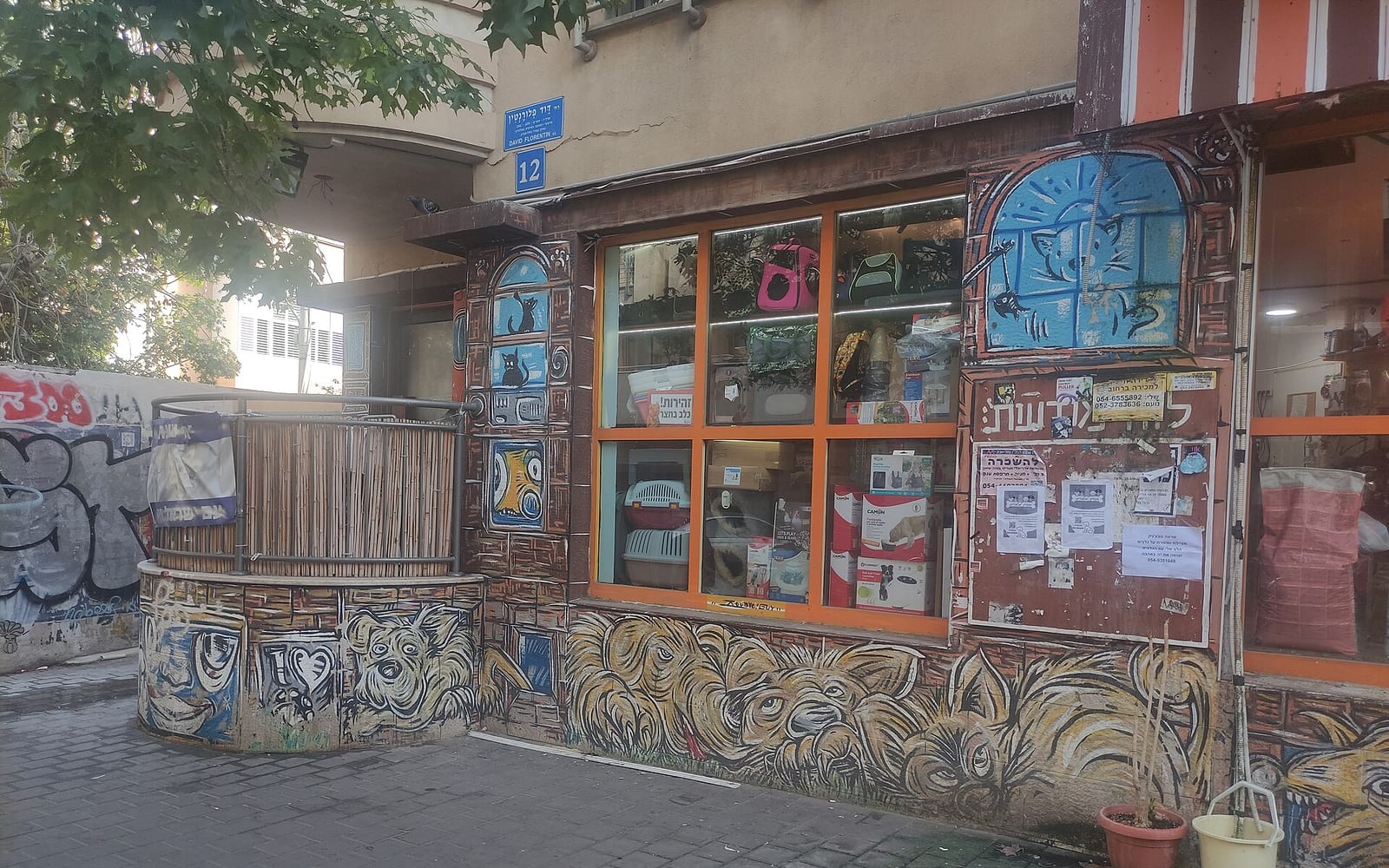
Tel Aviv’s street art scene is concentrated in a few compact streets in south Tel Aviv’s Florentin neighbourhood, where building façades have been covered in large-scale murals by Israeli and international artists since the early 2010s. Unlike many cities where street art clusters near tourist attractions, Florentin’s murals are in a working, inhabited neighbourhood — a mix of long-time residents, artist studios, budget hostels and late-night bars. The result is visual culture that still feels embedded in the city rather than curated for visitors.
This guide covers the Florentin self-guided walk, the emerging Jaffa street art scene, and how to connect both into a south Tel Aviv day.
Florentin: the core street art district
Florentin sits in the wedge of south Tel Aviv between Neve Tzedek to the west and the industrial/market area of Levinsky to the east, roughly bounded by Herzl Street to the north and the Jaffa border to the south. It takes its name from the Florentin family of Salonikan Jewish immigrants who developed the area in the early 20th century.
The neighbourhood’s street art concentration developed organically. When rents were low and walls were available, artists moved in. The city government supported some commissions; others were independent or underground. The result is a patchwork of permitted large-scale murals, commissioned pieces, political commentary and evolving small-format work — all within about a 15-minute walk.
The core streets
Frenkel Street is the anchor of any Florentin street art walk. Running roughly north–south through the heart of the neighbourhood, it has the highest concentration of large-scale murals: 3–6 storey pieces covering entire building ends, often featuring figurative work, surreal imagery or social commentary on Israeli life. Walk the full length from Herzl Street in the north to Florentin Street in the south — roughly 500 metres — and count how many different buildings carry significant painted works.
Vital Street runs east–west and crosses Frenkel, adding a second layer to the walk. The intersection of Vital and Frenkel is one of the densest mural corners in the city. Vital Street also connects naturally to the bar scene: many of Florentin’s evening venues are on or just off Vital, so the street art walk transitions naturally into an evening out.
Florentin Street itself — the street that gives the neighbourhood its name — runs east from Herzl in a slight curve. The ground-floor storefronts here are a mix of cafés, vintage shops and design studios. Look up: the upper floors and side walls carry commissioned and unofficial pieces that visitors on foot-level often miss.
The side alleys between these three streets are where the smaller-format work lives: stairwell walls, electricity box covers, courtyard corners. A guided tour adds the most value here — the alleys are unmarked and easy to walk past without knowing what’s inside.
What to expect from the art
The scale of Florentin’s murals is what strikes visitors first. These are not tags or stencil-scale work — they are architectural-scale paintings that reframe entire buildings. Subject matter covers a wide range: figurative portraiture, surrealism, social and political commentary (often specific to Israeli political context), abstract pattern and lettering.
Israeli street art draws on a culture that is deeply visual, often sardonic and shaped by both Jewish diaspora traditions and the realities of living in a contested region. Many pieces reflect this layering without being explicitly political — ambiguity is part of the mode.
Honesty note on specific artworks: Street art murals are temporary by nature. What is listed in any guide may have been painted over, modified or replaced by the time you visit. The neighbourhood’s overall visual density is consistent — there will always be significant work to find — but specific pieces cannot be guaranteed.
The Jaffa street art zone
Jaffa’s urban art scene is newer and more scattered than Florentin’s, concentrated in the southern part of Old Jaffa near the Flea Market and the regenerating warehouse district.
Flea Market alleys
The Jaffa Flea Market (Shuk HaPishpeshim) area on Olei Zion Street and its surrounding lanes has accumulated urban art on the walls of its converted warehouses and market buildings. The mixture of Ottoman-era stone buildings, 1950s concrete and more recent industrial architecture creates a distinct visual context from the plaster-wall canvas of Florentin.
The Flea Market area is most active and visually interesting on weekends, when the market itself is open and the cafés and bars are busy. The street art here complements the broader flea market experience — a good reason to arrive early for the market and then spend time walking the alleys.
The regenerating warehouse zone
North of the Flea Market, the area around Yefet Street and toward the Clock Tower has seen developer-led regeneration of old buildings, with some significant commissioned murals appearing on the newly exposed exterior walls of converted industrial spaces. This is a faster-changing zone than Florentin — pieces appear and disappear as buildings are renovated.
Self-guided walk: Florentin + Jaffa combined
This half-day route covers both districts in a logical south-Tel Aviv arc. Allow 3–4 hours for the walk with stops.
Start: Carmel Market (tel-aviv-carmel-market) end on HaMelech George Street — use the market’s Friday morning energy as the opening. From the market’s south end, walk south down Herzl Street for 10 minutes until you reach Florentin.
Florentin loop (1.5–2 hours):
- Enter Florentin from the north on Frenkel Street — note the large murals on the east side walls immediately.
- Walk south on Frenkel, then turn west on Vital Street — the corner of Frenkel and Vital has some of the district’s most photographed pieces.
- Continue west on Vital to Florentin Street, then south on Florentin Street itself.
- Explore the side alleys between these streets — look into courtyards and stairwell entrances.
- Exit south on Herzl/Matalon Street toward Neve Tzedek or continue directly to Jaffa.
Connection to Jaffa (15-minute walk south):
Follow Yefet Street south from the Florentin border — this is the main arterial road connecting Florentin to old Jaffa. The walk passes through the transition zone where Florentin blends into Jaffa’s northern edge, with occasional murals on the industrial buildings along the route.
Jaffa Flea Market zone (45 minutes–1 hour):
Enter the Flea Market area from the north on Olei Zion Street. Walk the alleys south of the main market building and west toward the Clock Tower. Exit near the Jaffa Port for a natural break with sea views.
Optional extension: From the Jaffa Port, it is a flat 5-kilometre walk or cycle north along the beachfront back to central Tel Aviv — passing Gordon Beach, Frishman Beach and Hilton Beach on the return.
Combining with other Tel Aviv cultural stops
The street art walk pairs naturally with:
Tel Aviv White City & Bauhaus architecture: The White City walking route (Rothschild Boulevard and surrounding streets) is about 20 minutes north of Florentin on foot or 5 minutes by light rail. An architecture-and-art day that covers White City in the morning and Florentin in the afternoon covers Tel Aviv’s two most visually distinctive neighbourhoods.
Tel Aviv neighborhoods guide: Florentin is one of the five main neighbourhood characters explained in the full neighborhoods guide — useful for understanding how Florentin compares to Neve Tzedek, the White City district and Old Jaffa.
Tel Aviv nightlife guide: Florentin’s daytime street art context transitions into its evening bar scene — the two activities are in the same streets. The nightlife guide covers the specific venues on Florentin, Vital and the surrounding blocks that become active from around 21:00.
Jaffa travel guide: Old Jaffa covers more than the Flea Market — the ancient port, the Hassan Bek Mosque views from the promenade and the Clock Tower square all warrant a longer visit. The street art Flea Market loop fits as the first hour of a full Jaffa half-day.
Tel Aviv Carmel Market: A Friday morning that starts at the Carmel Market, walks south through Florentin’s murals and continues to Jaffa’s Flea Market is one of Tel Aviv’s most satisfying daytime arcs.
Practical tips
Getting there: Florentin is roughly a 20-minute walk south from the main beach hotel strip or a 5-minute ride on the Red Line light rail (Salame or Florentin stations). Jaffa is a further 15–20 minutes south.
Photography: Morning is best for murals on west-facing walls; afternoon for east-facing. Midday flattens the light and washes out the vivid colours. Florentin’s narrow streets create shade that can help at any hour — avoid pointing into strong backlight.
When to visit: Friday morning before Shabbat (market buzz + good light + daytime activity in Florentin cafés). Saturday afternoon (the bars are quieter but the murals are unchanged; quieter streets allow photography). Weekday mornings for genuine quiet.
What to combine in a day: Carmel Market (morning) → Florentin street art walk (mid-morning) → lunch on Florentin Street → walk south to Jaffa Flea Market (early afternoon) → Jaffa Port sunset (if timing works).
The art changes: Florentin is not an open-air museum. Pieces are painted over, new ones appear. That is the medium’s nature. Visit with curiosity rather than a checklist — what you find is what is there now.