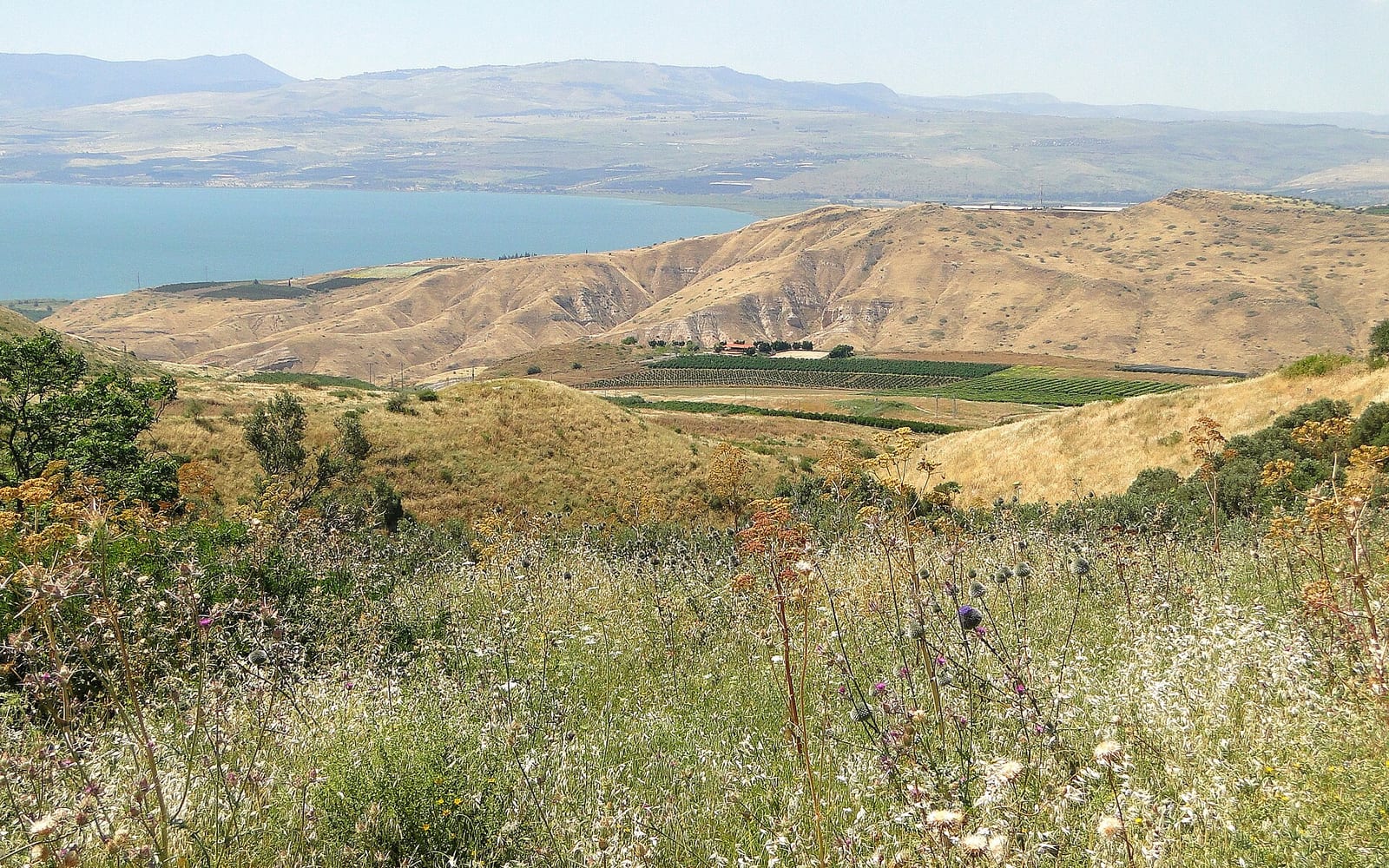
Rosh Pina sits on a limestone hillside above the Hula Valley in Upper Galilee, looking across one of the most dramatic panoramas in Israel: the valley floor, the Golan Heights plateau, the Lebanese border ridge and the snow-capped summit of Mount Hermon on clear days. The village was founded in 1882 by Romanian Jewish immigrants — Israel’s oldest surviving moshava in the Galilee — and the restored Ottoman-era stone quarter along HaKahal Street is one of the few places in Israel where a late 19th-century agricultural village streetscape is still intact and walkable.
Today, Rosh Pina functions as a gateway to the Upper Galilee wine route and as one of Israel’s premier romantic getaway destinations — a combination of heritage architecture, hilltop vineyard estates, and a village pace that the larger cities cannot match.
History: cornerstone of the Galilee
The name is drawn from Psalm 118 — “the stone that the builders rejected has become the cornerstone.” The first settlers were Romanian Jewish immigrants arriving in 1882, part of the First Aliyah wave that would eventually reshape the region. The early years were difficult: poor soil, malaria in the valley below, and near-financial collapse threatened to end the colony within its first decade.
The rescue came from Baron Edmond de Rothschild, the Paris-based Jewish philanthropist who made himself the silent patron of the early Zionist settlement enterprise. His intervention in Rosh Pina — providing agricultural expertise, drainage of the malarial swamps, and financial backing — saved the colony and established a pattern he would repeat across dozens of struggling settlements. The first settler families left traces still visible: the old cemetery on the hillside holds First Aliyah graves from the 1880s, and the restored houses along HaKahal Street are built in the limestone vernacular of the period, unchanged in their basic proportions since construction.
The old synagogue — built 1888, one of the earliest surviving synagogues of the Zionist settlement period — stands on HaKahal Street and remains in use for Shabbat services. Admission is generally free; respectful dress appropriate.
Old Quarter walking: HaKahal Street
The Old Quarter (HaRekhov HaYashan) is compact enough to walk in an hour at a gentle pace, but rewards slower movement. HaKahal Street is the main artery — limestone buildings with heavy wooden doors, interior courtyard gardens, small galleries and artisan ceramics studios that have moved into restored spaces. The street is lined with fig and pomegranate trees in the planting strips, and the stone holds warmth from the afternoon sun into the early evening.
Key stops on the walking circuit:
Bayit BeRosh Pina (“A House in Rosh Pina”) — a living museum of early Jewish settlement, set in one of the original 1880s houses with period furniture, farming tools, and archival photographs of the founding settlers. Small entrance fee; opens morning and afternoon most days — verify hours locally.
The 1888 Synagogue — the oldest building still in active use in the village. The stone façade is simple and weathered; the interior is modest, with carved wooden fittings from the late Ottoman period. Worth a quiet five minutes even if you have no particular connection to the religious context.
Artisan studios and galleries — several ceramics and glass studios have established themselves in restored ground-floor spaces along HaKahal and the side lanes. These change over the years; the combination of a Galilee setting and a romantic-getaway clientele has created a sustainable market for high-quality craft work.
Alma Winery operates within the village — a small boutique producer available by appointment for guided tastings with the winemaker. If you’re planning a full wine day, add this to your circuit before driving out to the larger estates.
Nimrod Lookout trail
From the village entrance, a 3km marked trail climbs to the Nimrod Lookout (Mitzpeh Nimrod) — the single most spectacular viewpoint accessible on foot from Rosh Pina, and arguably one of the finest valley panoramas in the north of Israel.
The ascent takes roughly 45 minutes at a steady pace. From the summit:
- The Hula Valley spreads below — once a malarial swamp drained by early Zionist settlers in the 1950s, now drained agricultural land and the Hula Nature Reserve (one of the most important wetland bird migration sites in the Middle East)
- The Golan Heights plateau rises to the east, basalt dark against the sky
- The Lebanese border ridge runs north
- Mount Hermon (2,814m; snow-covered October to April) anchors the northeastern horizon on clear days
The best light is late afternoon, when the valley floor fills with golden hour warmth and the eastern plateau turns deep terracotta. Allow 1.5 hours for the round trip; bring water. The trail is marked with Israeli hiking markers (blue for this section).
Note: the Nimrod Fortress — a Crusader-Mamluk castle on the Golan ridge, one of the most dramatic medieval fortifications in the region — is a separate site 20km northeast, and worth a standalone visit on the same Galilee circuit. See the Golan Heights guide for the full Golan loop.
Upper Galilee wine route
Rosh Pina sits at the convergence of the Upper Galilee wine sub-region, where altitude (500–900m), cool nights and complex basalt-and-limestone soils produce some of Israel’s most respected reds and aromatic whites. The estates within 30 minutes of Rosh Pina include:
Galil Mountain Winery — the closest large-production quality winery, near Kibbutz Yiron, 15 minutes northwest. Full visitor centre with organised tastings; no appointment necessary most days. Specialises in Cabernet Sauvignon and Viognier; their “Galil” red blend is a reliable benchmark for northern Israeli wine. Easy to combine with a drive through the western Galilee countryside.
Pelter Winery — a boutique producer known for expressive whites and single-vineyard reds; appointment recommended. A more intimate tasting than Galil Mountain, suited to visitors who want a one-hour conversation with the winemaker rather than a visitor-centre experience.
Dalton Winery — long-established, near the Moshav Dalton, 20 minutes north. Full visitor centre, regular opening hours, and consistently well-reviewed Cabernet and Chardonnay. One of the most visitor-accessible wineries in the north.
Alma Winery (in Rosh Pina village) — the smallest and most intimate option; appointment-only; the winemaker’s personal touch is the point.
A practical Upper Galilee wine day from Rosh Pina covers two to three tastings with lunch at one of the estates or back in the village. Drive time between sites is short — the landscape rewards stopping frequently.
For the broader Israel wine picture, see our Israel wine and wineries guide.
Restaurants and food
Rosh Pina has developed a small but seriously regarded restaurant scene, driven by the romantic-getaway clientele and the quality of Galilee produce:
Alef Alef — long considered Rosh Pina’s flagship dining address, set in a restored stone building in the Old Quarter. The menu is farm-to-table Galilean in orientation — local cheese, slow-braised lamb, seasonal vegetables. Reservations essential for Friday dinner and Saturday. Pricing is mid-to-upper-range; portions are generous.
Lemon — a more casual option in the Old Quarter neighbourhood, with a terrace and a menu that leans Mediterranean-Israeli (shakshuka, grilled meats, salads with local olive oil and za’atar). Popular for weekend brunch.
Auberge Shulamit — operates as both a guesthouse and a restaurant, with a formal dining room in a 19th-century stone building. The menu changes seasonally; the wine list skews toward local Galilee producers. Best reserved in advance.
Rosh Pina closes on Shabbat at the kosher establishments; the few Arab-owned cafés in and around the village may remain open. Stock up at the Tiberias market or Kiryat Shmona supermarkets if visiting over the weekend.
Day-trip logistics and combining Rosh Pina
From Tiberias: 35 minutes by car on Route 90 north; local bus services run but are infrequent — check bus.gov.il for current schedules. Rosh Pina is the natural add-on to a Sea of Galilee base for an afternoon of wine and historic quarter walking. See the Sea of Galilee guide for the full Kinneret circuit.
Northward to Kibbutz Gonen (Galilee Culinary Institute): 20 minutes north on Route 90 then east on Route 918. The Galilee Culinary Institute at Kibbutz Gonen — a NIS 100M farm-to-table culinary campus opened in 2026 — pairs naturally with a Rosh Pina overnight: visit the institute for lunch or a cooking workshop, then return to Rosh Pina’s Old Quarter for the evening.
From Safed (Tzfat): 20 minutes east on Route 89. Many visitors combine both on a single day — Safed for the mystical Kabbalistic quarter and artists’ colony in the morning, then drive east to Rosh Pina for the Hula Valley views in the afternoon. See the Safed guide.
From Tel Aviv: 2h 30min by car (Route 6 north, Route 77 east). A two-night stay — one night in Rosh Pina, one in Safed or Tiberias — makes a very satisfying northern circuit.
From Jerusalem: 2h 45min. Route 1 east to the Dead Sea junction, then Route 90 north through the Jordan Valley to Tiberias, then onward. Many Jerusalem-based visitors combine a Rosh Pina overnight with Beit She’an (Roman ruins; 45 min south) on the same northern loop.
Driving and parking: car rental is the most practical option; see our car rental guide for comparison prices and tips on driving in Israel. Parking in Rosh Pina’s Old Quarter is limited; a small car park sits at the entrance to the historic area, and overflow parking is available on the approach road. The village is walkable once parked.
Where to stay
Rosh Pina has developed into one of Israel’s premier romantic overnight destinations — its stone guesthouses, vineyard cabin complexes and restored Old Quarter B&Bs attract Israeli couples and international travellers seeking a quiet hilltop stay over Eilat or Tel Aviv coastal options.
In the village: HaHatzer guesthouse complex (stone buildings in and around the Old Quarter; range from standard rooms to private stone suites with valley views). Several other restored properties operate as intimate B&Bs — search Booking.com with “Rosh Pina” for current listings.
Outside the village: the surrounding Upper Galilee countryside has a dense network of zimmers (Israeli rural cabin complexes) — standalone wooden or stone cabins with private Jacuzzi, kitchenette and views. These are typically booked through zimmers.co.il or Booking.com. They are the more romantic option for couples; they require a car.
Summer weekends (particularly around Jewish holidays — Sukkot, Passover) and the winter holiday period (Hanukkah) sell out weeks in advance. Book early for these windows.
See the Israel zimmer guide for how the zimmer booking system works and what to expect.