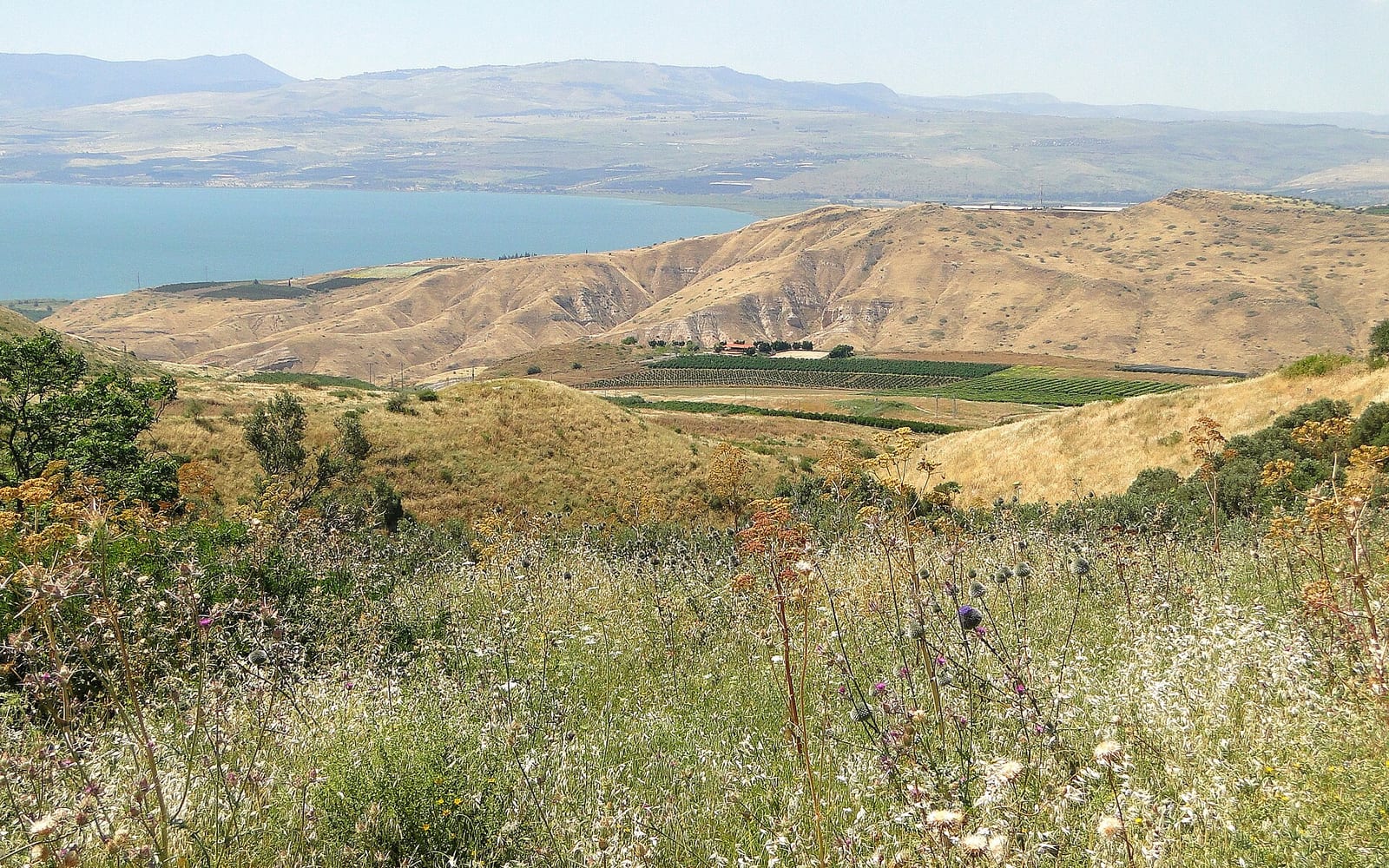
Gan HaShlosha National Park — known universally in Israel by its Arabic name Sachne — is one of the country’s most distinctive natural attractions: a series of large freshwater pools fed by warm mineral springs that maintain a constant 28°C throughout the year, set inside a national park of subtropical vegetation in the northern Jezreel Valley. Over 500,000 people visit annually, and the park draws Israelis and tourists alike in every season — which makes timing your visit one of the most important decisions.
The name “Sachne” comes from the Arabic for “warm,” and the description is apt. In the middle of a Jordan Valley winter, when the surrounding landscape is brown and the air temperature hovers around 14°C, the pool water is genuinely warm. In August, when the valley hits 42°C, the same 28°C feels like cool relief.
The Three Pools
Gan HaShlosha centres on three interconnected pools carved out of the Harod River — the same river that the Book of Judges names as the site where Gideon selected his 300 warriors from 32,000 volunteers by watching how they drank (Judges 7:4–7). Today the river emerges from springs at the northern end of the park, flows through the pools via small waterfalls, and continues south toward the Jordan.
Upper Pool: The largest of the three, closest to the park entrance, with the widest surface area and the main lawn surrounding it. This is where most families with young children congregate, drawn by the relatively shallow edges and easy access to the grass picnic areas. The water clarity is exceptional — the Harod springs filter water through limestone and the pools are regularly maintained by INPA.
Middle Pool: Connected to the upper pool by a small waterfall that provides a natural cascade. Slightly deeper and often slightly less crowded than the upper pool. Good visibility to the pool floor; the limestone bottom gives the water a blue-green quality in direct sunlight.
Lower Pool: The quietest of the three on most visits. Deeper, with a more natural feel — the surrounding vegetation presses closer. The lower pool is a favoured spot for those wanting a quieter swim away from the main family areas.
Waterfalls connect each pool, and it is possible to swim or wade between them when the flow allows. Lifeguards are stationed at the pools during standard visitor hours.
The Vegetation: Why Does This Feel Like a Tropical Park?
The Jezreel Valley and the Jordan Valley are semi-arid landscapes — the landscape around the park is typical dry farmland and low scrub. Gan HaShlosha is a striking exception: date palms, bamboo groves, eucalyptus trees and lush lawns fill the park interior, sustained entirely by the constant spring outflow from the Harod River source.
The springs produce approximately 160 litres per second at a constant temperature. This volume of warm water supports plant species that could not survive in the surrounding climate without artificial irrigation. The result — subtropical vegetation in the middle of a dry valley — is the source of the park’s distinctive atmosphere and explains why arrival from the car park feels like entering a completely different environment.
The bamboo groves in the western section of the park are particularly dramatic in early morning light, and the path between the pools follows the riverbank through sections of dense shade that are genuinely cool even in summer.
At a Glance
| Detail | Information |
|---|
| Official name | Gan HaShlosha National Park |
| Common name | Sachne |
| Location | Route 669, Beit She’an Valley |
| Pool temperature | 28°C / 82°F year-round |
| Nearest town | Beit She’an, 3 km north |
| Opening hours | Approximately 08:00–17:00 (summer extended); verify at parks.org.il |
| Entry fee | ~₪35–55 adult (INPA pass valid) |
| Parking | On-site; fills quickly on peak days |
| Booking | Advance reservation required on busy days via parks.org.il |
| Public transport | No direct tourist bus; taxi from Beit She’an bus station (3 km) |
Visiting Sachne in Each Season
Spring (March–May): The ideal season for most visitors. The park is genuinely beautiful — the surrounding valley shows wildflowers and green hills, the pool temperature is perfect, and crowds are at their lowest among the active months. Passover week (usually April) is the one exception: the park fills to capacity. Book ahead for Passover; visit in early or late April for the spring combination of good weather and manageable crowds.
Summer (June–September): The busiest period by a significant margin. Jordan Valley air temperatures reach 38–44°C, which drives enormous demand for the pools. Arrive before 08:30 to guarantee parking and entry without a reservation. The pools feel genuinely refreshing at 28°C against 42°C ambient heat. Tuesday and Wednesday mid-summer are the least crowded weekdays. School holiday weekends should be avoided unless you arrive early or have booked online.
Autumn (October–November): Excellent. Temperatures drop to a comfortable 22–28°C, the valley regains some colour after the summer dryness, and post-Sukkot (usually late October) brings a sharp drop in visitors. Sukkot week itself (October) is extremely busy — similar to Passover — but once the holiday ends the park becomes noticeably quieter almost immediately.
Winter (December–February): The surprise season. Air temperatures in the valley fall to 12–18°C, and the constant 28°C water temperature makes the pools the warmest outdoor swimming option in the country. Midweek winter visits are among the most peaceful experiences the park offers — relatively few visitors, the lush vegetation at its greenest, and warm water in cold air. Rainy days can cause turbidity in the pools if runoff enters the river system; check conditions before visiting.
The Day Circuit: Sachne, Beit She’an and Beit Alfa
Gan HaShlosha sits at the centre of a compact cluster of exceptional sites in the Beit She’an Valley — a half-day or full-day circuit that rewards combining them:
Beit She’an National Park (3 km north; ~2–2.5 hours)
The best-preserved Roman city in Israel: a 7,000-seat theater, a colonnaded Byzantine-era main street with fallen columns from the 749 CE earthquake, bathhouses, a nymphaeum, and the elevated Philistine-era tel from which Saul’s body was displayed after the Battle of Gilboa. Fully covered by the INPA national parks pass. See the Beit She’an guide for full logistics.
Beit Alfa Byzantine Synagogue (15 minutes south of Sachne; ~45 minutes)
A 6th-century CE synagogue floor containing one of the most complete and best-preserved mosaic zodiac wheels in the ancient world — all 12 zodiac signs depicted in brilliant tesserae, surrounding a central Helios figure, with biblical narrative panels at the borders. Entry is approximately ₪14 and this site is not covered by the standard INPA national parks pass. A 20–30-minute visit is sufficient to appreciate the mosaics; the explanatory panels put the zodiac iconography in its Jewish liturgical context.
Recommended day sequence:
- 08:00 — Beit She’an ruins (before the Jordan Valley heat peaks; 2 hours)
- 10:30 — Gan HaShlosha (swimming through the mid-day; 2–3 hours)
- 13:30 — Beit Alfa mosaic (after the pools; 45 minutes)
- 14:30 — Return north to Tiberias or onward toward Haifa
This circuit works in either direction; if you are driving from Haifa or the north, reversing the order (Beit Alfa first, then Sachne, then Beit She’an for the cooler late afternoon) is equally logical.
The Megiddo Jezreel Valley circuit adds Tel Megiddo and Beit She’arim for visitors building a longer multi-site northern day.
Practical Tips
Parking: The on-site car park is the only viable option — there is no alternative parking nearby. On busy summer weekends the car park fills before 09:30; arriving after 10:00 can mean a wait or being turned away.
Food and drink: INPA maintains a small kiosk at Gan HaShlosha, but its hours are limited and stock is basic. Bringing your own food and water is strongly advised. The grass areas around the pools are excellent picnic spots. Full-service restaurants are available in Beit She’an (10 minutes north) if you prefer to eat before or after the pools.
Shade: The date palms and eucalyptus provide genuine shade along the pool surrounds, but popular shade spots fill quickly on summer weekends. Arrive early if shade access matters to you. There are no sun loungers or umbrellas available for hire.
Safety: Lifeguards are stationed at the pools during visitor hours. Children must be supervised at all times — some pool sections reach depths of 1.5–2 metres. INPA signage marks depth zones at each pool.
Facilities: Changing rooms, toilets, showers and a basic kiosk are all available on site. The changing facilities can become congested on peak days; allow extra time.