Canada is one of the top five source markets for international visitors to Israel, driven by a substantial Jewish Canadian community of approximately 390,000 people, strong French-Canadian Catholic pilgrimage travel from Quebec, and the country’s general appetite for multi-cultural long-haul destinations. The 90-day visa-free allowance — combined with a growing number of direct flights from Toronto and Montreal — makes Israel one of the more accessible transatlantic destinations for Canadian travellers. This guide covers the practicalities specific to Canadian visitors.
For the broader trip-planning picture, see the complete first-time visitor guide and the safety guide.
Global Affairs Canada travel advisory
Global Affairs Canada publishes live travel advice for Israel at travel.gc.ca. The current overall advisory is Level 3 (“Avoid non-essential travel”), with area-specific guidance:
- Gaza Strip and area within 80 km of the Gaza border — Avoid All Travel (Level 4); the border crossing is closed to civilians.
- West Bank — Avoid non-essential travel in general; specific areas near settler-community roads and checkpoints carry heightened risk.
- Northern border zone — elevated caution near the Lebanese border; Haifa, Tiberias and the Sea of Galilee are outside the highest-caution zone.
- Main tourist areas — Jerusalem, Tel Aviv, the Dead Sea, Galilee (south of the border zone), the Negev and Eilat are the principal destinations visited by Canadian tourists and are not under Level 4 restriction as of mid-2026.
Register with ROCA. The Registration of Canadians Abroad (ROCA) service at travel.gc.ca/travelling/registration lets Global Affairs Canada contact you in an emergency and ensures you receive automatic advisory updates while you are travelling. Registration is free and takes a few minutes.
Flying from Canada
Direct services
| Departure | Carrier | Frequency | Approx. nonstop time |
|---|
| Toronto YYZ | El Al | ~1–2 × weekly | 11–12 hours |
| Montreal YUL | Air Canada | Suspended; resumes ~September 7, 2026 (Fri + Sun) — verify at aircanada.com | ~11 hours |
El Al’s Toronto–Tel Aviv service typically operates on narrow-to-wide body aircraft depending on season; book early as loads fill quickly, particularly around Jewish holidays. Air Canada’s Montreal seasonal service (popular with French-Canadian pilgrimage groups, church travel organisations and Quebec Jewish community travellers) is currently suspended — expected to resume around September 7, 2026; verify at aircanada.com before booking.
One-stop connections from other Canadian cities
Travellers from Vancouver, Calgary, Edmonton, Ottawa, Halifax and other cities usually connect via:
| Hub | Common carriers |
|---|
| London Heathrow (LHR) | British Airways or El Al; connection from all major Canadian cities |
| Paris CDG | Air France; good frequency from Montreal and Toronto |
| Frankfurt FRA | Lufthansa; connects from Toronto, Vancouver and Montreal |
| Toronto YYZ | Passengers from Western Canada can connect to the El Al YYZ–TLV direct |
| Istanbul IST | Turkish Airlines serves many Canadian cities with connections to TLV |
Total journey time for one-stop routings from Western Canada is typically 16–20 hours.
When to book
Fares from Canada are typically lowest in October–November (after the Jewish High Holiday season) and January–February. The most expensive windows are Passover (March–April), the High Holidays (September–October) and the Christmas–New Year period. Booking 10–16 weeks in advance usually produces competitive fares. See the cheap flights to Israel guide for fare-tool tips.
Entry requirements: ETA-IL
Since January 2025, Canadian citizens must hold an Electronic Travel Authorisation (ETA-IL) before boarding any flight to Israel. Canada is on the visa-exempt list — the ETA-IL replaces the old on-arrival stamp with a pre-approved electronic record linked to your passport.
Key facts:
- Cost: ₪25 per application (roughly $10 CAD at recent exchange rates; priced in shekels)
- Validity: Up to 2 years, or until your passport expires — whichever is earlier; valid for multiple entries
- Processing time: Usually 72 hours; can take longer during peak periods — apply at least a week before departure
- Apply at: iaa.gov.il (the Israel Airports Authority official portal; other sites charging higher fees are not official)
- Stay: Up to 90 days per visit as a tourist
Ben Gurion Airport no longer issues passport stamps; instead, you receive a small paper entry slip. Keep it throughout your trip — hotels and some checkpoints may ask to see it. See the full ETA-IL and visa guide for step-by-step instructions.
French-Canadian pilgrimage travel
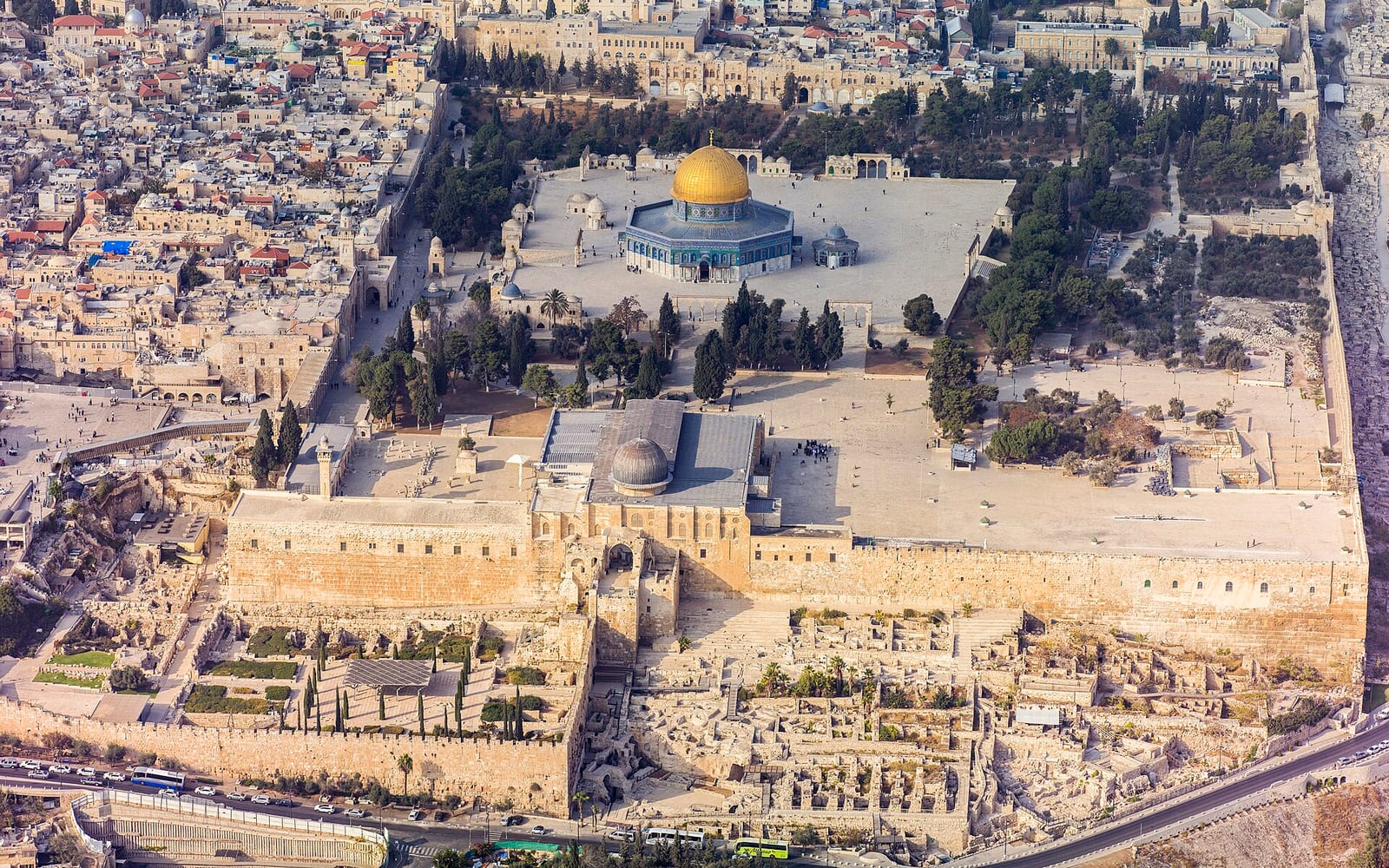
Quebec has one of the strongest Holy Land pilgrimage traditions in North America. Organized Catholic pilgrimage tours from Quebec have operated continuously for over a century, with groups travelling annually to Jerusalem, Bethlehem, Nazareth, the Sea of Galilee and the Jordan River — key sites in the Christian narrative of the land.
Specialist organizers: Companies such as Voyage Bertrand and Groupe Voyages Québec regularly offer structured itineraries for francophone Catholic groups, typically running 10–14 days and combining liturgical sites with cultural experiences.
Language in practice: French is spoken at a number of key pilgrimage sites in Jerusalem: Notre-Dame de France (a French pilgrim hospice near the New Gate with a rooftop view of the Old City), the French-operated Saint Anne’s Church inside the Lions’ Gate (a quiet Crusader basilica with extraordinary acoustics, popular with Quebec choirs), and the French-language services at several of the city’s Latin-rite churches. Many hotel staff and tour operators in Jerusalem’s Christian Quarter speak conversational French.
The Jordan River: Yardenit Baptismal Site on the Jordan River near Tiberias is the most-visited site for baptism renewals by Christian pilgrims. Facilities include robes, changing areas and a garden setting; Quebecois groups regularly arrange group baptism ceremonies here. See the Jordan River baptism guide for visiting information.
For a focused planning resource, see the Christian pilgrimage to the Holy Land guide, which covers the main sites, suggested itineraries and logistics.
Canada’s Jewish community of approximately 390,000 is the fifth-largest in the world (after the United States, Israel, France and Argentina). A visit to Israel carries particular resonance for many Jewish Canadian families — for heritage tourism, Birthright trips, bar and bat mitzvah celebrations, and family visits to relatives who made aliyah.
Aliyah and family visits: Israel and Canada share no reciprocal arrangement on consular access, but the Canadian Embassy in Tel Aviv assists Canadian citizens who encounter difficulties. Dual citizens (Canadian-Israeli) are treated as Israeli nationals while in Israel.
Heritage tourism: Yad Vashem in Jerusalem holds the world’s most comprehensive collection of records relating to the Shoah; many Canadian families use the Names Database to research relatives. See the Yad Vashem visitor guide for practical visiting information.
Bar and bat mitzvah: Israel is a popular destination for Canadian Jewish families celebrating bar and bat mitzvahs, particularly at the Western Wall (Kotel) or in the ancient synagogue of Safed (Tzfat). Plan and book ceremonies well in advance through a recognised synagogue contact or heritage-travel specialist.
Mobile phones and connectivity
Canadian SIM cards work in Israel on international roaming, though data rates vary by carrier and plan:
- Rogers/Fido — Roam Like Home ($15 CAD/day) extends most domestic plan benefits while in Israel. Activate through the MyRogers app before departure.
- Bell/Virgin Plus — Travel Day Pass ($15 CAD/day) works similarly.
- Telus/Koodo — Easy Roam ($14 CAD/day) covers Israel.
- Videotron (Quebec) — International data packages available; check the Videotron website for current Israel rates.
For stays longer than a week, a local Israeli SIM is usually more cost-effective:
- Local SIM at Ben Gurion: Golan Telecom and Hot Mobile kiosks in the arrivals hall are open around the clock. A 30-day unlimited data SIM costs approximately ₪50–90 (roughly $20–35 CAD). Your phone must be SIM-unlocked (not carrier-locked).
- eSIM: Providers such as Airalo, Nomad and Holafly sell Israeli eSIMs activated before departure. Compatible with iPhone XS and later and most recent Android flagships. See the Israel eSIM guide for comparisons.
Wi-Fi is broadly available in hotels, cafés and restaurants across Israel’s main tourist areas.
Currency and banking
Israel’s currency is the New Israeli Shekel (₪, ILS). Card payments are widely accepted in Tel Aviv, Jerusalem, Eilat and tourist-facing businesses throughout the country. The payments infrastructure is highly digitised — contactless Mastercard and Visa are accepted in most restaurants, shops and taxis.
Canadian card notes:
- No-fee international cards are worth setting up before you leave; the best current options for Canadians are the Scotiabank Passport Visa Infinite (no FX fee), RBC Avion Visa Infinite (no FX fee on certain tiers) and TD Aeroplan Visa Infinite (no FX fee). Standard Canadian bank debit/credit cards typically charge a 2.5–3% foreign transaction fee.
- Interac debit — Interac is a Canadian-only network and is not accepted in Israel. Use your Visa or Mastercard function on your debit card, not the Interac/Chequing or Savings function.
- e-Transfer — Not usable abroad; not relevant for in-country spending.
- Tap-and-pay (contactless) works on Canadian Visa/Mastercard cards; Apple Pay and Google Pay also work at most terminals.
- Wise debit card — A popular option for Canadians travelling internationally for low-fee FX conversion.
ATMs. Bank Leumi, Bank Hapoalim and Israel Post Bank ATMs are widely distributed in cities and tourist areas. Most accept foreign cards on the Visa/Mastercard/Plus/Cirrus networks.
Cash. Carry some cash (₪200–500) for smaller vendors, markets, shared taxis (sheruts) and rural areas. Exchange bureaus in city centres typically offer better rates than airport desks. See the Israel money guide for current rate benchmarks and tips.
Power adapter and voltage
Israel uses Type H sockets — a unique three-flat-pin configuration (V-shape) found only in Israel. Canadian plugs are Type A or B (flat two- or three-pin), which do not fit Israeli sockets without an adapter.
Important — voltage difference: Canada uses 120V/60Hz electricity; Israel uses 230V/50Hz. This is a meaningful difference:
- Modern smartphones, laptops, tablets and camera chargers — most carry a “100–240V” label on the power brick, meaning they are universal and work worldwide with just a plug adapter.
- Single-voltage appliances (hair dryers, electric shavers, travel irons, some beard trimmers) — a single-voltage appliance rated only for 120V will overheat, be damaged, or pose a fire hazard at 230V. You need a step-down voltage converter (240V → 120V) rated for the wattage of your appliance, in addition to the plug adapter.
- Check the label of every device before packing. “100–240V” = adapter only; “120V only” = converter needed.
A Type A/B to Type H plug adapter (or universal adapter with Type H) costs $15–30 at Canadian electronics retailers (Best Buy, The Source, London Drugs) or online. A step-down converter typically costs $30–60. Buy both before you leave — availability at Ben Gurion Airport is limited and prices are higher.
Health insurance
Canadian provincial health plans — OHIP (Ontario), MSP (British Columbia), RAMQ (Quebec), AHCIP (Alberta) and all others — provide zero coverage outside Canada. There is no reciprocal health agreement between Canada and Israel. Medical care in Israel without insurance can be expensive: a short hospital admission or emergency treatment can cost thousands of Canadian dollars.
What to consider:
- Check whether your employer benefits plan or credit card includes travel medical coverage — most do, but limits (often $1–2M) and exclusions vary.
- A standalone travel insurance policy with overseas medical coverage and emergency medical evacuation is strongly recommended, particularly for travellers with pre-existing conditions.
- Providers used by Canadian travellers include Manulife CoverMe, Blue Cross Canada, TuGo, Allianz Global Assistance and SafetyWing.
Embassy of Canada in Israel (main Canadian diplomatic mission)
99 Ibn Gabirol Street, Tel Aviv 6248211
Telephone: +972-3-636-3300
After-hours emergency line: +1 613 996 8885 (call the Emergency Watch and Response Centre in Ottawa, 24/7)
The Embassy provides consular assistance to Canadian citizens in Israel for lost or stolen passports, arrests, hospitalisation, death and other emergencies. The Embassy also processes visa applications for third-country nationals wishing to visit Canada.
Emergency numbers in Israel:
- Police: 100
- Ambulance (Magen David Adom): 101
- Fire: 102
- National emergency operator: 112 (works from Canadian mobile phones)
Canadian practicalities at a glance
| Item | Detail |
|---|
| Visa requirement | None for tourists (ETA-IL required since Jan 2025; ₪25 — apply at iaa.gov.il) |
| GAC advisory | Check travel.gc.ca; register with ROCA |
| Direct flights | El Al YYZ–TLV (~weekly); Air Canada YUL–TLV resumes ~Sep 7 2026 — verify at aircanada.com |
| Total flight time | ~11–12 hours nonstop; 16–20 hours via connections |
| Time zone (summer) | UTC+3 = 6 hours ahead of EDT (Toronto); 9 hours ahead of PDT (Vancouver) |
| Currency | New Israeli Shekel (₪) — cards widely accepted |
| Power socket | Type H (unique to Israel); 230V/50Hz — adapter + possibly voltage converter needed |
| Driving | Canadian licence valid; drive on the right (same as Canada) |
| Mobile data | Local SIM or eSIM recommended for stays over a week |
| Health insurance | Provincial plans not valid abroad — travel insurance essential |
| Emergency number | 112 (mobile); 100 police; 101 ambulance |
| Canadian Embassy | 99 Ibn Gabirol St, Tel Aviv; +972-3-636-3300 |
Planning your Israel trip from Canada
With nonstop flights from Toronto and Montreal, Israel is one of the more accessible transatlantic long-haul destinations for Canadians. Most visitors with 10–14 days combine Tel Aviv (2–3 nights), Jerusalem (2–3 nights), a regional excursion to the Galilee or Dead Sea, and optionally a day trip to Petra in Jordan. The 5 vs 7 vs 10 days guide helps calibrate the right itinerary length.
Is Israel safe? answers the security question in full with current advisory framing. How much does Israel cost? covers the budget picture — broadly comparable to Western Europe, with accommodation ranging from budget hostels to high-end resorts.
For the Quebec pilgrimage-travel angle, the Christian pilgrimage to the Holy Land guide covers the key Biblical sites, structured itineraries and tour logistics from a Canadian planning perspective.