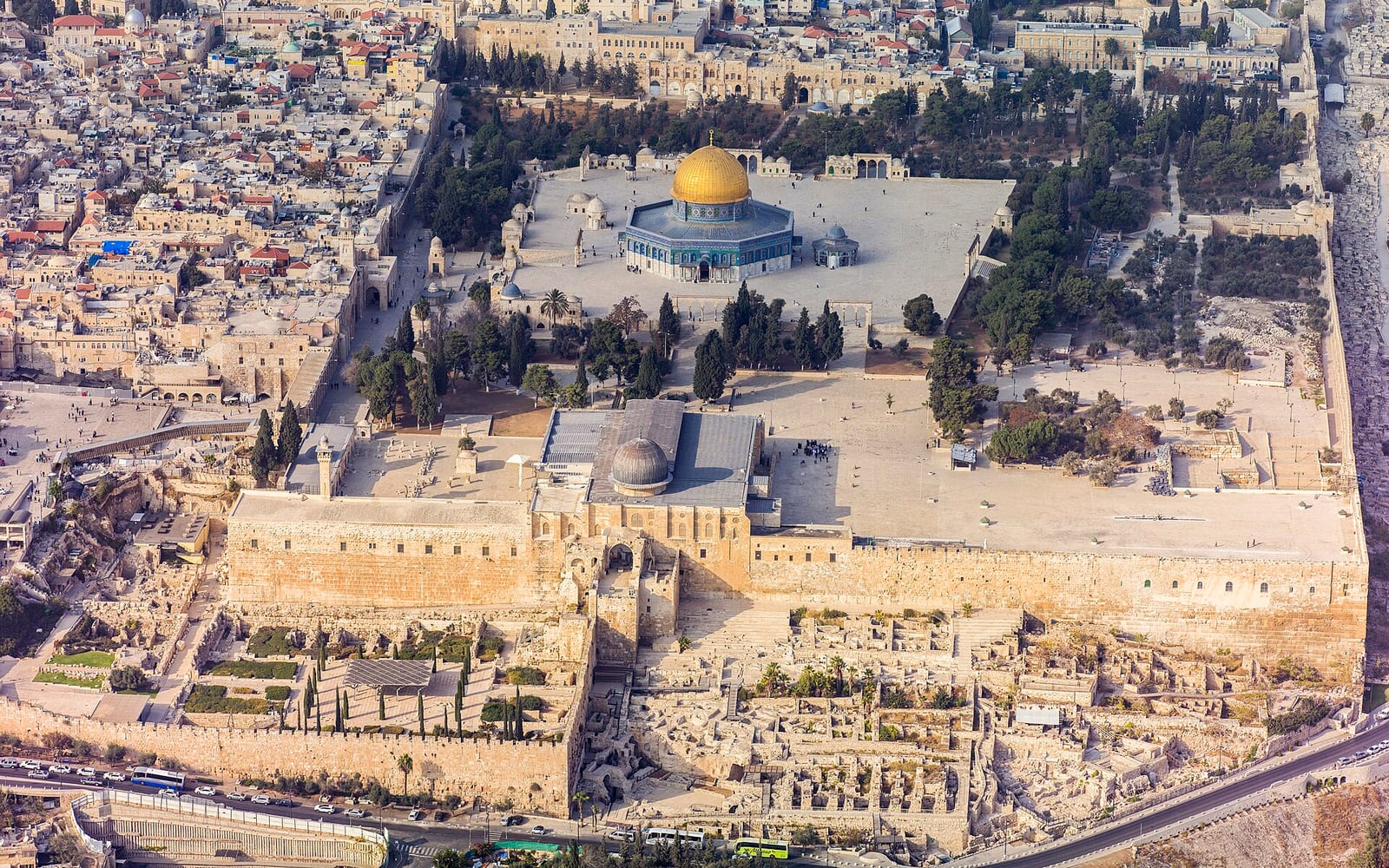
Norway, Sweden, Denmark and Finland share a deep biblical and cultural connection to Israel. The Lutheran church tradition — the majority faith across Scandinavia and Finland — has maintained Holy Land pilgrimage routes for generations, anchored by the Swedish Theological Institute in Jerusalem and mission societies operating across all four countries. At the same time, Israel’s desert landscapes, long-distance hiking trails and coastal scenery resonate strongly with Nordic travelers who rank outdoor activity among their primary travel motivations. The resumption of SAS nonstop CPH–TLV flights in late 2025, followed by airBaltic’s July 2026 launch of direct RIX–TLV service with an El Al codeshare, has made the journey more accessible than at any point in recent memory.
Here is the Nordic-specific practical information you need before you fly.
ETA-IL: required since January 2025
All four Nordic countries — Norway, Sweden, Denmark and Finland — are on Israel’s visa-exempt list for tourist stays of up to 90 days. But since January 2025, all visa-exempt travelers including Nordic citizens must hold an approved ETA-IL (Electronic Travel Authorisation for Israel) before boarding.
Apply at eta.gov.il — the process takes a few minutes online, costs approximately ₪25, and approval typically arrives within minutes to a few hours. The ETA-IL is linked to your passport electronically; airlines check for it at check-in, so apply before you leave for the airport.
Validity: the ETA-IL is valid for multiple entries over two years but is tied to the specific passport used at application. Renew your passport → apply for a new ETA-IL.
See the visa and ETA-IL guide for step-by-step instructions.
Flights from Scandinavia and Finland to Israel
SAS (Scandinavian Airlines): SAS returned Copenhagen (CPH)–Tel Aviv Ben Gurion (TLV) nonstop service in October 2025 after an extended break. Direct flights from Stockholm Arlanda (ARN) and Oslo Gardermoen (OSL) are available seasonally — check sas.com for current schedules and booking. Flight time from Copenhagen is approximately 4 hours.
Finnair: connects Helsinki (HEL) to TLV, typically via a European hub. HEL–TLV routing via Amsterdam (AMS) or Frankfurt (FRA) is common; check finnair.com for current options.
airBaltic + El Al codeshare: airBaltic resumed direct Riga (RIX)–TLV service on 1 July 2026, with an El Al codeshare making tickets bookable through both airbaltic.com and el-al.com. Riga is a practical hub for Finnish travelers from Helsinki (HEL–RIX ~1h) and for travelers from the Baltic states.
El Al: operates seasonal Copenhagen (CPH)–TLV nonstop flights; check current schedules at elal.com.
Norwegian Air: check norwegian.com for any current TLV routes — the airline has operated Israel flights in past seasons.
Budget routing: most Scandinavian travelers who cannot find direct options route through Amsterdam (KLM), Frankfurt (Lufthansa), London (British Airways), Paris (Air France) or Istanbul (Turkish Airlines, with current check on operating status).
Use the cheap flights to Israel guide for fare-tracking tools and the best booking windows.
For arrivals, see the Ben Gurion Airport guide for transport, lounge access and the security flow.
Nordic outdoor and cultural connections
Hiking and desert travel: Nordic travelers typically rank among the world’s most outdoor-active visitor segments, and Israel has a genuine wild-landscape offer to match. The Makhtesh Ramon (Ramon Crater) in the Negev — a geological erosion crater 40km long, the largest of its kind in the world — is unlike anything in Scandinavia; jeep and trekking tours from Mitzpe Ramon run year-round. The Israel National Trail (Shvil Israel) runs 1,100km from north to south and is walked end-to-end by a growing number of international hikers. The Arava Valley and Eilat Mountains offer desert canyon routes.
See the hiking in Israel guide and the Negev desert guide for route specifics.
Bauhaus architecture and design: Tel Aviv’s White City — a UNESCO World Heritage Site and the world’s largest concentration of International Style (Bauhaus-influenced) buildings — resonates with Nordic travelers who appreciate functional modernist design. Roughly 4,000 buildings from the 1930s–50s were designed by German-Jewish architects who fled Europe and brought Bauhaus principles to British Mandate Palestine. The Bauhaus Center on Dizengoff Street runs guided architecture walks.
Lutheran pilgrimage: the Swedish Theological Institute in Jerusalem (Gamla Ryska Kyrkan in the Old City), the Norwegian Mission in the East and the Finnish Missionary Society all maintain active programs and can connect travelers with denominationally organised pilgrimage itineraries. Lutheran group tours typically follow the Galilee–Nazareth–Jerusalem–Bethlehem–Jordan River circuit with a theological study emphasis distinct from Catholic relic-veneration pilgrimage. The Christian pilgrimage to the Holy Land guide covers the main sites and how to plan a self-guided circuit.
Health insurance: Nordic systems do not cover Israel
Försäkringskassan (Sweden), Helfo / trygdekort (Norway), the yellow card / sygesikringsbevis (Denmark) and Kela / Kela-kortti (Finland) provide coverage only within their domestic systems and, via the European Health Insurance Card (EHIC), within EU and EEA member states. Israel is not part of the EU or EEA, so none of these schemes provides any cover there — Norwegian and Danish travelers should note that their EHIC is not valid in Israel even though both countries participate in the EEA.
Medical costs for uninsured travelers in Israel can be high: an emergency room visit may reach several thousand euros equivalent; air ambulance repatriation is significantly more.
Before you fly, purchase a travel insurance policy with:
- Emergency medical treatment and hospitalisation
- Emergency repatriation (this is the highest-cost item in an Israel medical claim)
- Confirm the policy explicitly covers Israel
Some Nordic bank card packages (TF Bank Travel Card, Revolut Premium, Klarna Card with travel benefits) include travel insurance — check your policy carefully for Israel coverage and medical-evacuation limits before relying on it.
See the Israel travel insurance guide for what to look for in a policy.
Currency and payments
Israel uses the New Israeli Shekel (ILS, ₪). Exchange offices in Tel Aviv and Jerusalem city centres generally offer better rates than Ben Gurion Airport.
Cards: Visa and Mastercard from Nordic banks — Handelsbanken, SEB, Nordea, Swedbank, DNB, Danske Bank, OP Financial Group, Osuuspankki, Aktia and others — work at virtually all Israeli card terminals, ATMs and restaurants. Contactless payment is standard across Israel.
Does not work in Israel:
- Swish (Sweden) — closed domestic system, no international functionality
- Vipps (Norway) — closed domestic system
- MobilePay (Denmark) — closed domestic system
- Siirto (Finland) — closed domestic system
What does work: Revolut and Wise are widely used by Nordic travelers for fee-free foreign-exchange spending and are fully functional in Israel. Physical Visa or Mastercard is essential.
Cash: carry some shekels for the Old City bazaars, Machane Yehuda Market, Arab-quarter stalls and tips. Smaller vendors in markets often prefer cash.
Power adapter
All four Nordic countries use Type F Schuko plugs (two round pins with grounding clips, 230V/50Hz). Israel uses Type H sockets (three flat pins in a Y-shape), though most modern Israeli sockets also accept Type C (two thin round pins). The voltage is identical — 230V — so no converter is needed for Nordic laptops, cameras or phone chargers.
Buy a Type F to Type H adapter before departure — available at electronics stores (Elgiganten, Power, Elkjøp, Verkkokauppa) or online for a few euros. Adapters are available at Ben Gurion arrivals hall, but bring one from home to be certain.
Mobile and connectivity
Nordic SIM plans do not include Israel in their EU-roaming allowances (Israel is outside the EU). The most convenient option is an eSIM for Israel loaded before departure — see the Israel eSIM guide. Local Israeli SIMs are available at Ben Gurion Airport arrivals. WhatsApp, iMessage and standard apps work across Israel on Wi-Fi or data.
Airport security
Israeli airport security is the most thorough in the world. Expect a security interview before check-in at Ben Gurion — questions about your trip, accommodation and travel history. The process is professional; answer directly and honestly. Have your hotel booking confirmation and itinerary accessible. Arrive at least 3 hours before your international departure.
See the Ben Gurion Airport guide for the full security sequence and terminal layout.
Nordic embassies and consulates in Israel
Always verify current addresses and opening hours via your embassy’s official website before departure — consular premises occasionally move.
Quick reference: Scandinavia → Israel
| Topic | Detail |
|---|
| Visa | Not required (up to 90 days) |
| ETA-IL | Required — apply at eta.gov.il before departure |
| Direct flights | SAS CPH–TLV nonstop (~4h); airBaltic RIX–TLV (Jul 2026); Finnair HEL via hub |
| Health insurance | Försäkringskassan / Helfo / Kela / yellow card not valid — buy travel insurance |
| Power adapter | Type F Schuko → Type H (Israel); same voltage (230V) |
| Currency | New Israeli Shekel (ILS/₪); Visa/Mastercard widely accepted |
| Swish / Vipps / MobilePay | Do not work in Israel |
| Revolut / Wise | Work — popular among Nordic travelers |
| ETA-IL fee | Approximately ₪25 (~€6 / 70 SEK / 65 NOK / 45 DKK / 2.60 EUR) |
| Emergency number | 100 (police), 101 (ambulance), 102 (fire) |
Planning your trip
- Visa and ETA-IL guide — full application walkthrough
- Ben Gurion Airport guide — arrivals, transport, security
- Cheap flights to Israel — when to book, fare tools, airlines
- Hiking in Israel guide — trails, difficulty levels, gear
- Negev desert guide — Makhtesh Ramon, Arava, desert touring
- Israel travel insurance guide — what to look for
- Israel eSIM guide — connectivity before you land
- Christian pilgrimage to the Holy Land — Lutheran and ecumenical circuits
- Is Israel safe? — current context, region by region
- Israel cost and budget guide — daily spending, accommodation tiers