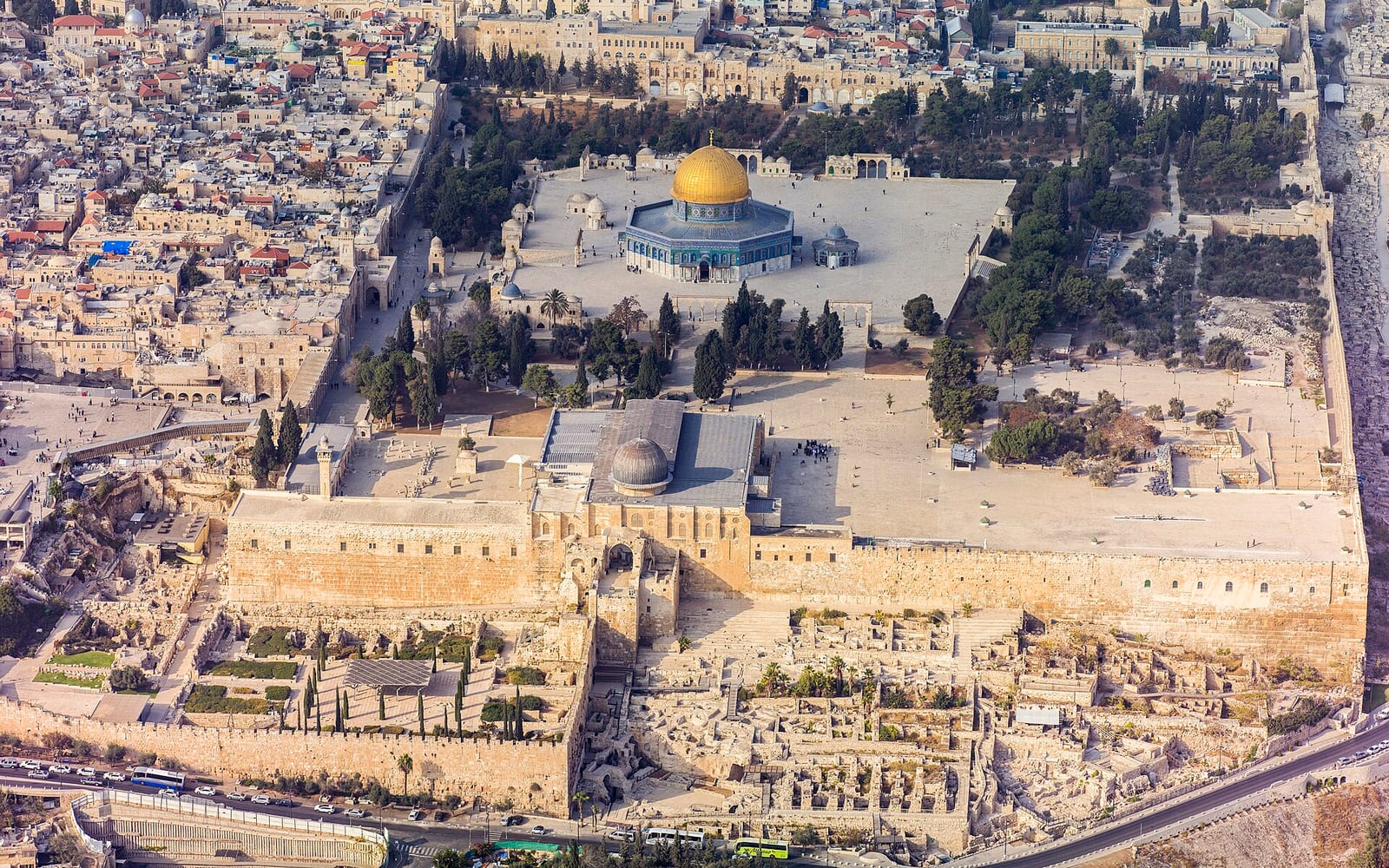
Poland has a uniquely intertwined history with the Jewish people and with the Land of Israel. Before the Second World War, Poland was home to the world’s largest Jewish population — approximately 3.5 million people, representing 10 per cent of Poland’s citizens. The near-total destruction of Polish Jewry during the Holocaust, and the subsequent establishment of the State of Israel partly populated by survivors and their descendants, creates a profound historical thread connecting Warsaw to Jerusalem. Today, Israel and Poland are each other’s mirrors for a shared past that both nations continue to process.
Beyond the Jewish heritage dimension, Poland has one of Europe’s most active Catholic pilgrimage traditions, and the Via Dolorosa, Church of the Holy Sepulchre, Sea of Galilee and the sites of Jesus’s ministry draw thousands of Polish Catholic visitors each year. The Anders Army story — Polish soldiers who passed through British Mandate Palestine in 1942 — adds a Second World War military heritage angle unique to Polish travellers.
For the broader trip-planning picture, see the complete first-time visitor guide and the safety guide.
Entry requirements: ETA-IL for Polish passport holders
Polish citizens are on Israel’s visa-exempt list — no full visa is required for tourist stays. Since January 2025, however, all visa-exempt nationals (including Polish) must obtain an Electronic Travel Authorisation (ETA-IL) before boarding any flight to Israel.
Applying for the ETA-IL
- Apply at: iaa.gov.il — the official Israeli Airports Authority portal
- Fee: ₪25 (approximately €6 or 25 PLN at recent exchange rates; charged in New Israeli Shekel)
- Validity: Up to 2 years or until your passport expires — whichever is earlier; valid for multiple entries
- Processing time: Usually 72 hours; can take longer in high season — apply at least one week before departure
- Stay: Up to 90 days per visit as a tourist
- ETA-IL ≠ Schengen visa: Your Polish passport and any Schengen visa you hold have no relevance to Israel entry — apply specifically for the ETA-IL
See the full ETA-IL and visa guide for step-by-step instructions and common pitfalls.
Flying from Poland
Warsaw Chopin (WAW) to Ben Gurion (TLV)
Two carriers operate direct service between Warsaw and Tel Aviv:
| Carrier | Route | Type | Notes |
|---|
| LOT Polish Airlines | WAW → TLV | Direct | Daily or near-daily; ~3h 50min flight; Poland’s flag carrier; Star Alliance |
| Wizz Air | WAW → TLV | Direct | Multiple weekly; budget fares; compare total price including luggage at wizzair.com |
LOT Polish Airlines is Poland’s national carrier and a member of Star Alliance; frequent flyers accumulating Miles & More or United MileagePlus miles can use LOT flights. Wizz Air offers lower base fares but charges separately for checked baggage and seat selection — always compare total prices before booking.
When to book. Fares from Warsaw are typically lowest in October–November (after the Jewish High Holy Day season) and January–February. The most expensive periods are Passover (March–April), the Jewish High Holidays (September–October) and the Christmas–New Year window. Booking 8–14 weeks in advance usually produces competitive fares. See the cheap flights to Israel guide for fare-tool tips.
Health insurance: NFZ is not valid in Israel
The Narodowy Fundusz Zdrowia (NFZ) — Poland’s national health insurance — does not cover medical costs incurred in Israel. Your EKUZ card (Europejska Karta Ubezpieczenia Zdrowotnego — the Polish European Health Insurance Card) is also not valid in Israel; it applies only within EU/EEA states.
Medical care for uninsured tourists in Israel can be expensive. A short hospitalisation or emergency treatment can cost thousands of euros out of pocket. A dedicated travel insurance policy with overseas medical coverage and emergency evacuation is strongly recommended before departure. Major Polish travel insurers (PZU, ERGO Hestia, Generali Poland, Compensa) offer Israel-covering policies — check that Israel is explicitly included and that the policy is not voided by any conflict-related exclusion clause.
Money: Polish zloty and payment cards in Israel
The New Israeli Shekel (₪ / NIS) is the currency of Israel. The Polish zloty (zł / PLN) is not exchangeable in Israel — do not bring PLN expecting to exchange it at Ben Gurion Airport or Israeli banks.
Best approach:
- Withdraw NIS at Israeli ATMs on arrival using your PKO BP, Bank Pekao, mBank, Santander or ING Poland Visa or Mastercard debit card. Standard foreign transaction fees apply (typically 2–3%); check your card’s international fee terms before travelling.
- Wise (formerly TransferWise) is widely used by Polish travellers and offers better exchange rates than standard Polish bank cards. The Wise Mastercard debit card is accepted at Israeli ATMs and payment terminals.
- Apple Pay / Google Pay work at NFC-enabled Israeli card terminals when linked to a Visa or Mastercard.
- Cash: Carry some NIS for markets (including Mahane Yehuda in Jerusalem and Carmel Market in Tel Aviv), sherut shared taxis and smaller venues. Israeli ATMs dispense NIS and accept foreign Visa/Mastercard cards.
Polish power plugs and adapters
Poland uses Type E plugs (two round pins with a central ground socket) at 230V/50Hz. Israel uses Type H sockets — a three-flat-pin V-shape configuration found only in Israel — also at 230V/50Hz.
Because both countries use the same voltage (230V), there is no need for a voltage converter — only a plug adapter. Your Polish smartphone charger, laptop and camera charger will work fine in Israel with a Type E → Type H adapter (or a universal travel adapter that includes the Type H configuration).
The POLIN–Yad Vashem connection: memory tourism
For many Polish visitors, a trip to Israel carries a specific dimension of historical memory. Poland was home to approximately 3.5 million Jews before the Second World War — the largest Jewish population of any country in the world. The Holocaust killed approximately 90 per cent of them, and the survivors who made it to what became the State of Israel brought Polish Jewish culture — language, food, music, community structures — with them.
Yad Vashem, Israel’s Holocaust memorial and research institute in Jerusalem, holds the world’s largest collection of Holocaust documentation and devotes significant focus to Polish Jewry. Entry is free. The Central Database of Shoah Victims’ Names records approximately 4.8 million individuals; many Polish visitors find names of relatives or community members. See the Yad Vashem visitor guide for opening hours, access and practical tips.
The POLIN Museum of the History of Polish Jews in Warsaw and Yad Vashem maintain an active academic partnership — visiting both gives a fuller picture of Jewish life in Poland before and after the Holocaust. Many Polish travellers visit POLIN before departure and Yad Vashem in Jerusalem, completing a two-city arc of memory.
The Anders Army: Polish military heritage in Israel
A less widely known connection between Poland and Israel is the Anders Army (Armia Andersa) — the Polish II Corps commanded by General Władysław Anders, which passed through British Mandate Palestine in 1942 en route from the Soviet Union to the Italian campaign.
Between 1942 and 1943, around 100,000 Polish soldiers and civilians evacuated from Soviet labour camps (via the “Anders Route” — through Iran and Iraq) were reorganised in Palestine. Many Polish Jews among the evacuees chose to remain in Palestine rather than continue to the Italian front; they later fought in Israel’s War of Independence in 1948.
Where to find the Anders Army legacy in Israel:
- Tel Aviv: The Polish Army memorial near Kikar HaMedina (Médina Square) area; the Great Synagogue on Allenby Street hosted services for the Polish soldiers
- Haifa: Commonwealth War Graves Commission (CWGC) Cemetery at Stella Maris, Haifa — contains graves of Polish soldiers who died in Palestine 1942–1943
- Rehovot: Polish soldiers’ cemetery
- Nazareth area: Several stopping points on the soldiers’ route through the Galilee
For Polish travellers with a family connection to the Anders Army, the Yad Vashem database and the CWGC website (cwgc.org) allow searching for individual names.
Polish Catholic pilgrimage in Israel
Poland has one of Europe’s strongest Catholic pilgrimage traditions, and the Holy Land has drawn Polish Catholic groups for generations. Key sites:
- Jerusalem Old City: Via Dolorosa (14 Stations of the Cross, ending at the Church of the Holy Sepulchre); Polish Franciscans have maintained a presence in the Holy Land since 1342 through the Custody of the Holy Land
- Sea of Galilee (Yardenit): Baptism site on the Jordan River at the outlet of the Sea of Galilee — one of the most visited pilgrimage sites for Polish Catholic groups
- Nazareth: Basilica of the Annunciation; Church of St Gabriel; archaeological excavations near the ancient village
- Bethlehem: Church of the Nativity (Palestinian Authority — requires day-trip planning)
- Mount of Beatitudes (Galilee): Site traditionally associated with the Sermon on the Mount
Many Polish pilgrimage tour operators (including Biuro Pielgrzymkowe, Orbis Travel’s religious arm, and various diocese-organised groups) offer 8–14 day Israel pilgrimage packages with group flights from Warsaw. See the Christian pilgrimage in the Holy Land guide for planning detail.
The Polish Embassy in Israel
The Embassy of the Republic of Poland in Israel is located in Tel Aviv:
- Address: 16 Soutine Street (Rehov Sutin), Tel Aviv
- Services: Emergency passport assistance, consular notarial services, support for Polish citizens in distress
- MSZ portal: gov.pl/web/izrael (official Polish Ministry of Foreign Affairs page for Israel)
In an emergency in Israel: 100 (police), 101 (ambulance — Magen David Adom / MDA), 102 (fire), 112 (universal emergency number — works from a Polish SIM on international roaming).
Practical quick-reference
| Topic | Details |
|---|
| Visa requirement | ETA-IL required since Jan 2025 — apply at iaa.gov.il (₪25 / ~25 PLN); no full visa needed |
| Direct flights | LOT Polish Airlines WAW–TLV (daily or near-daily); Wizz Air WAW–TLV (multiple weekly) |
| Flight time | ~3h 50min nonstop |
| Currency | New Israeli Shekel (₪ / NIS); PLN not exchangeable in Israel |
| Health cover | NFZ and EKUZ not valid in Israel — travel insurance required |
| Power adapter | Type E → Type H adapter; same voltage (230V) — no converter needed |
| Polish Embassy | 16 Soutine St, Tel Aviv — gov.pl/web/izrael |
| Emergency | 100 (police), 101 (MDA ambulance), 112 (universal) |
Plan your trip
Poland and Israel are natural partners for heritage tourism — in both the Jewish memory and the Christian pilgrimage dimensions. A typical Polish itinerary combines Jerusalem (2–3 nights) for Yad Vashem and the Old City, Tel Aviv (1–2 nights) for the beach promenade and White City Bauhaus architecture, the Sea of Galilee and Galilee (2 nights) for the Yardenit baptism site and Gospel sites, and optionally the Dead Sea (1 night) for the mineral spa experience.
The 5 vs 7 vs 10 days guide helps calibrate the right itinerary length. For travel insurance covering your Polish NFZ gap, see the Israel travel insurance guide. For eSIM options that avoid Polish roaming charges, see the Israel eSIM guide.