Israel has one of the most layered sustainability stories of any destination in the Middle East: a country that pioneered drip irrigation, recycles more of its wastewater than almost anywhere else on Earth, and has restored destroyed wetlands back into world-class wildlife habitat — while also facing real and visible environmental losses, most strikingly the continuing shrinkage of the Dead Sea. Eco-tourism here rewards visitors who travel with their eyes open.
Israel’s water story: world-leader and cautionary tale
Water is the thread that connects almost every environmental story in Israel.
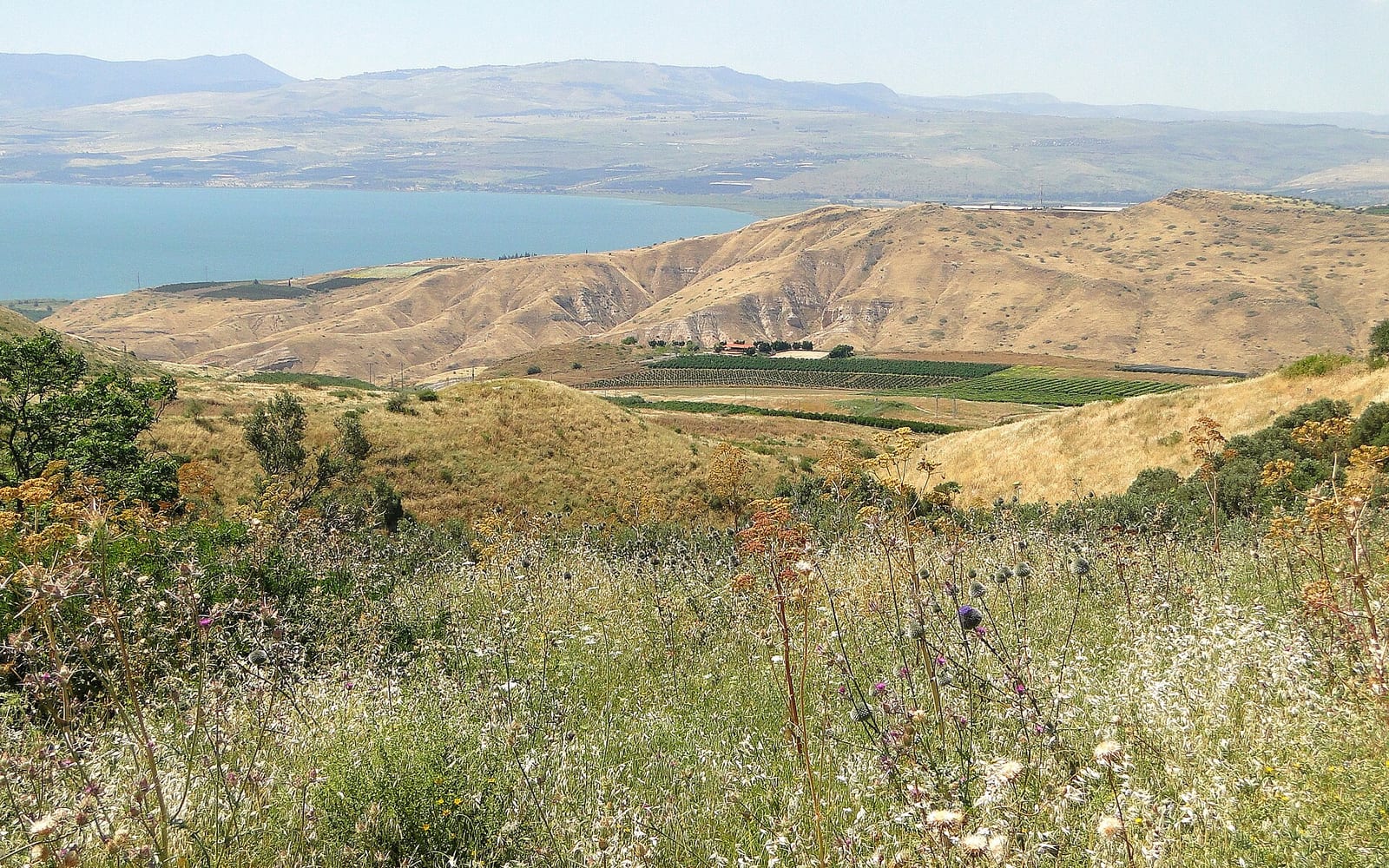
The country recycles approximately 90% of its municipal wastewater for agricultural use — the highest rate in the world by a significant margin (Spain, second globally, recycles around 20%). The National Water Carrier, completed in 1964, moves water from the Sea of Galilee southward. Drip irrigation — invented in Israel and commercialised by Netafim from the late 1960s — has spread globally and is credited with making modern desert agriculture viable on every continent.
The same water-engineering ambition created the Dead Sea’s crisis. The Jordan River, which once flowed into the Dead Sea year-round, is now heavily diverted for agriculture and drinking water along its entire length. The sea is shrinking at approximately one metre per year — a loss of roughly a third of its surface area over the past 70 years. The receding waterline has left kilometre-wide mudflat salt pans along the shores and created thousands of sinkholes as fresh groundwater dissolves ancient salt layers underground. This is one of the most visible ongoing ecological losses in the region, and any responsible visit to the Dead Sea should include that context.
Kibbutz Lotan: permaculture in the Arava desert
Kibbutz Lotan sits in the southern Arava desert, approximately 50 km north of Eilat, at an elevation where the temperatures in summer regularly exceed 40°C and the land is sparse scrub and acacia. Founded in the 1980s by North American Reform Jewish immigrants, it is one of the most committed eco-communities in Israel.
The kibbutz operates on permaculture principles: solar energy generation, organic date-palm and vegetable farming, natural building using adobe, straw bale, and locally-sourced clay, composting of all organic waste, and grey-water recycling through constructed wetland systems. The Eco-Campus runs guided permaculture tours for day visitors and guesthouse stays for overnight guests.
The Arava valley around Lotan is also an important birdwatching destination — the Great Rift Valley migration corridor passes directly overhead, making autumn and spring spectacular for raptors, waders, and passerines. The kibbutz’s location near the Yotvata area gives access to the Hai-Bar Yotvata Nature Reserve, where white oryx and Asiatic wild ass have been successfully reintroduced.
Practical note: Post-2023, Kibbutz Lotan’s offering is primarily day visits and hotel-style stays rather than longer work-exchange programmes. Check their current schedule before planning. Getting there requires a car or the Eilat-bound bus to the Lotan junction.
Succah in the Desert: off-grid in the Negev highlands
In a rocky hollow south of Mitzpe Ramon, Succah in the Desert offers accommodation in hand-built bamboo and open-wood structures — minimal, deliberate, and almost entirely without artificial light. The name refers to the open-sided harvest-festival shelters of the Jewish agricultural calendar; the design philosophy draws on that tradition of intentional simplicity.
The Negev highlands around Mitzpe Ramon are Israel’s only certified International Dark Sky Park — light pollution regulations protect the night sky across the Ramon Crater area, and on clear new-moon nights the Milky Way is visible with the naked eye. Succah in the Desert is positioned to take full advantage of this: stargazing from the structures, desert silence after dark, and no Wi-Fi as standard.
Capacity is very limited; advance booking is essential and typically required weeks ahead. The structures have evolved over the years — some guests now have access to more comfortable enclosed versions while retaining the off-grid wilderness character. The experience is most appropriate for visitors who want genuine desert immersion rather than a comfort-forward eco-lodge.
Ariel Sharon Park: a landfill becomes a forest
Twenty years ago, the Hiriya municipal waste dump east of Tel Aviv was the largest man-made structure in Israel — a mountain of rubbish visible from approaching flights. Today it is the centrepiece of Ariel Sharon Park (Ganei Yehoshua), a 2,000-acre metropolitan park that stands as one of the world’s most ambitious landfill-to-parkland reclamation projects.
The transformation took decades. The waste was capped, stabilised, and covered. The hillside was planted. Cycling paths, walking trails, and constructed wetlands now cover the former dump. The park now hosts an outdoor amphitheatre, a nature centre, and interpretive displays about the reclamation process that are genuinely worth reading.
For eco-minded visitors based in Tel Aviv, the park is a 15-minute cycle from the city centre and provides a direct, intelligently presented story about what can happen when a city reclaims its own waste. Guided tours of the reclamation project are available on certain weekends — check the Yarkon Parks Authority website for current programming.
The Hula Valley: a wetland restored
The Hula Valley in northern Galilee is a textbook example of ecological restoration — and of the damage that preceded it.
In 1953, the Israeli government drained the Hula Lake and surrounding papyrus swamps as a malaria-control and agriculture-expansion project. The land was converted to farmland. Within a decade it was clear the scheme had failed: peat soils began oxidising (releasing stored carbon), soil subsidence caused problems, and the ecological richness of the valley had been lost. In 1994, a section of the wetland was re-flooded, creating Lake Agmon-Hula (Agamon HaHula).
The results have exceeded expectations. Today the reserve hosts one of the world’s great bird migration spectacles: up to 100,000 common cranes winter here each season, along with pelicans, storks, herons, eagles, harriers, and hundreds of additional species from the rift valley corridor. The annual crane count has become a genuine ecological success story, with numbers growing year on year as the wetland matures.
Visiting responsibly
- The Sunrise Safari Wagon — a guided dawn tractor-wagon tour through the wetland while crane flocks take flight — is one of Israel’s most extraordinary wildlife experiences. Advance booking is essential.
- Walk or cycle the reserve’s perimeter trails for a quieter, slower experience.
- Remain on designated paths; the reed-bed habitat is fragile and protected.
- The Hula Valley Bird Festival (typically November) adds structured programming, guided walks, and photography workshops — check agamon-hula.co.il for current dates.
Coral Beach, Eilat: the reef that survived
The Eilat Coral Beach Nature Reserve is a marine protected area at the northern tip of the Red Sea — one of the northernmost coral reef ecosystems on Earth. It has survived better than many Red Sea equivalents, and Israeli marine scientists point to consistent enforcement of no-take, no-touch rules as the primary reason.
Visiting responsibly
- Do not touch the coral. Even a brief brush can damage decades of growth; physical contact is the primary cause of reef death in heavily visited sites.
- Use only reef-safe sunscreen — products without oxybenzone or octinoxate. These chemicals are absorbed by coral polyps and interfere with reproduction. Many dive shops in Eilat sell reef-safe alternatives.
- Do not remove anything: shells, sea glass, sea cucumbers, urchins. The marine environment is an interconnected system; removal of any element — however small it appears — disrupts it.
- Do not anchor in the reef zone. Visitors on private boats or kayaks should only anchor on designated sandy patches.
- The reserve has an Underwater Observatory accessible without diving or snorkelling — a good option for families and visitors who want to experience the reef without entering the water.
Clil is a small intentional community in the western Galilee hills, accessible by a winding road east of Nahariya. Founded in the 1980s by a mixed community of Israeli environmentalists, artists, and alternative-practice practitioners, it operates as a collectively-managed village.
The community includes organic gardeners, herbalists, natural builders, and permaculture practitioners. Clil runs occasional workshops and hosts guests in limited accommodation; it is less developed as a tourism destination than Kibbutz Lotan and more appropriate for visitors with a specific interest in intentional community living or natural building techniques. Check clil.co.il for current visitor availability, as programming varies.
Ein Gedi Kibbutz: a botanical garden by the Dead Sea
Ein Gedi Kibbutz, adjacent to the Dead Sea nature reserves, operates one of Israel’s most impressive botanical gardens — a collection of 900+ plant species from five continents, maintained in desert conditions using treated wastewater. The garden is also a date-palm plantation, and the kibbutz produces dates, cosmetics, and dried fruits from its agriculture.
The kibbutz hotel (Kibbutz Ein Gedi Hotel) is a sustainable accommodation option in a genuinely extraordinary location: close to the Ein Gedi Nature Reserve, Nahal Arugot waterfalls, the Dead Sea beaches, and Masada. It is one of the few accommodation options in the Dead Sea area that is not a large resort hotel, and it contributes to a community rather than a multinational chain.
Guests can walk the botanical garden (small admission fee), use the kibbutz’s heated sulphur pool and spa, and combine a nature-reserve morning with a Dead Sea float in the afternoon.
Low-impact hiking: trail ethics in Israel
Israel has an excellent marked trail network — the 1,100 km Israel National Trail (Shvil Israel) and thousands of day-trail kilometres maintained by the Society for the Protection of Nature in Israel (SPNI). Trail ethics here are broadly similar to international leave-no-trace principles:
- Stay on marked trails. The trail markers (blue/white/red/green/black combination) exist for navigation and habitat protection. Off-trail shortcuts damage fragile Mediterranean scrubland, desert crust, and sensitive vegetation.
- Pack out everything you pack in. Many trails have no rubbish collection facilities; the assumption is that visitors carry waste out.
- No campfire in nature reserves. Wildfire risk is high for most of the year; fires are only permitted in designated fire pits at campgrounds.
- Water is scarce. Plan water supply before entering any desert or semi-arid trail — natural springs cannot be relied on year-round and water sources change seasonally.
- Dry-toilet facilities exist at major reserve trailheads; beyond these, the standard backpacking practice applies (150m+ from water sources, no paper left in the environment).
The SPNI’s website (teva.org.il, in Hebrew; English content available) publishes trail conditions and seasonal closures. The iNature app (also available in English) provides offline trail maps and plant/animal identification tools useful for nature-focused visitors.
Getting around sustainably
Tel Aviv and major cities: The intercity rail network, Tel Aviv Light Rail, and bus network (covered by the Rav-Kav smartcard) make car-free urban travel straightforward. Tel-O-Fun bike-share in Tel Aviv gives access to cycling infrastructure.
Northern Israel and Golan: The train reaches Tiberias and Haifa, from which local taxis or a day-hire car can reach the Galilee and Golan attractions without a full car-rental itinerary.
Negev and Eilat: Public transport is sparse outside Beer Sheva and Eilat city. A shared taxi (sherut) covers the Eilat–Beer Sheva route; smaller Negev destinations require a car. Where self-driving, fuel up on Friday — petrol stations in rural areas are often closed Shabbat (Friday sunset to Saturday night).
For international flights, Israel’s location — equidistant from Europe, East Africa, and South and Southeast Asia — means that the Negev carbon-offset context is relevant. The Israeli Tourism Ministry has not introduced a formal tourism carbon offset programme as of 2026, but international offset providers allow voluntary flight offsetting by route.
A note on honesty
Eco-tourism in Israel does not mean everything is pristine. The Dead Sea is shrinking. Coastal development continues. Agricultural runoff affects the Sea of Galilee. The coral reef in Eilat is healthy today partly because the Egyptian and Jordanian reefs on either side have suffered more damage, putting Eilat’s conservation in a broader context.
What makes sustainable travel in Israel worthwhile is engaging with a genuinely complex environmental picture: a country that leads the world in some areas, that has made real restoration achievements, and that also faces real losses. That complexity is more interesting, and more honest, than a simple eco-paradise narrative.