Binyamina sits at the foot of Mount Carmel on the coastal plain between Caesarea and Zichron Yaakov — a small, unhurried town that most visitors pass through on the train without pausing. That is a mild oversight. Binyamina is home to two serious wineries, a Rothschild-era winery building, and a rail station that makes the whole Carmel coast accessible without a car. It also connects naturally to the free Ramat Hanadiv memorial gardens above — and in July 2026, an IAA excavation along the coastal railway line nearby unearthed two Greco-Roman marble statues, adding an archaeological footnote to the area’s already rich Roman-Byzantine history.
On its own, Binyamina warrants a half-morning. Combined with Zichron Yaakov (3 km uphill) or Caesarea (15 minutes south), it makes an excellent full Carmel coast day.
Binyamina Winery
The centrepiece of Binyamina’s wine story is the Binyamina Winery, one of Israel’s larger wine producers, housed in a substantial stone building that dates to the Rothschild colonisation era of the late 19th and early 20th centuries. The original structure served as a processing and storage facility for the Rothschild-sponsored agricultural settlements along the Carmel plain — the same philanthropic wave that established Carmel Winery in Zichron Yaakov above.
Today the winery produces several million bottles annually across ranges from accessible table wines to premium reserve labels. The visitor centre offers guided tours and tasting sessions, typically covering the production cellar, barrel room and a guided tasting of multiple wines.
What to expect: tastings usually run around ₪50–90 per person, though pricing and tasting formats vary — check the current rates at the Binyamina Winery website (binyaminawines.co.il) before visiting. Tours are conducted in Hebrew and English. The winery is kosher and observes Shabbat and Jewish holiday closing schedules; Sunday through Thursday is the most reliable visiting window. Book in advance for weekend and holiday periods.
Note on honesty: the visitor centre occasionally updates its hours and tour formats — always verify current information directly with the winery rather than relying on third-party listing sites.
Tishbi Estate Winery
Three kilometres from the town centre, Tishbi Estate offers a contrasting experience to the large-format Binyamina Winery. The Tishbi family has operated this boutique estate for three generations, and the visitor focus is deliberately intimate: guided wine and chocolate pairings using Valrhona chocolate are a signature offering, and the on-site kosher dairy restaurant serves European-influenced farm cooking.
Tishbi is quieter and more personal than the large cooperative wineries — there is a genuine family-operation feel that can be harder to find at the region’s bigger producers. The wine quality has received consistent recognition within Israel.
Practical: check tishbi.co.il for current tour booking, hours and restaurant reservations. The restaurant books up on weekends and Jewish holidays. Wine purchases are available without a tour at the estate shop.
Ramat Hanadiv — accessible from Binyamina
Two kilometres south of Zichron Yaakov — and reachable from Binyamina by a 20-minute drive or taxi — Ramat Hanadiv is one of Israel’s most undervisited formal gardens, and entry is free. The estate was bequeathed by Baron Edmond de Rothschild to the Jewish people, and his family tomb sits at the heart of terraced gardens of rose beds, olive groves and stone walls. The panoramic viewpoint takes in the coastal plain, the Mediterranean, the ruins of Caesarea and the Carmel hills.
The reserve extends beyond the formal gardens into Mediterranean scrub and secondary forest, with marked trails of 1–4 hours. A visitor centre and small café are on site. Ramat Hanadiv closes on Jewish holidays and adjusts hours for private events — check ramat-hanadiv.org.il before visiting.
Ramat Hanadiv is most naturally visited as part of a Zichron Yaakov half-day, but if you have a car and are based in Binyamina for the morning, the two-kilometre drive to the gardens before heading up to Zichron Yaakov’s Hameyasdim Street makes a natural loop.
The 2026 archaeological discovery
In July 2026, during an Israel Antiquities Authority (IAA) excavation ahead of coastal railway construction near Binyamina, archaeologists uncovered two Greco-Roman marble statues in what appears to have been a Roman-Byzantine winepress or villa complex. One statue bears an inscription identifying the figure as “Lycurgus” — a figure from Greek mythology associated with viticulture, fitting for a region that has been wine-producing territory since antiquity.
The statues are now in IAA care and are not yet on public display. The find underscores that the Carmel coastal plain was densely settled in the Roman and Byzantine periods — the same era that produced the elaborate mosaics at Caesarea 15 kilometres south. For context on Israel’s active excavation landscape, see the Israel archaeology experience guide.
Day-trip combinations
Binyamina + Zichron Yaakov (the natural pair)
This is the most obvious combination: train to Binyamina for a morning winery tasting, then taxi up to Zichron Yaakov for Hameyasdim Street, lunch at a wine-bar terrace and an afternoon at Ramat Hanadiv. The vertical relationship between the two towns — Binyamina on the coastal plain, Zichron Yaakov perched on the Carmel ridge 3 km uphill — means you get dramatically different scenery within the same visit.
See the full Zichron Yaakov guide for what to do in the village and how to combine the Carmel Winery cellar tour.
Binyamina + Caesarea (archaeology and wine)
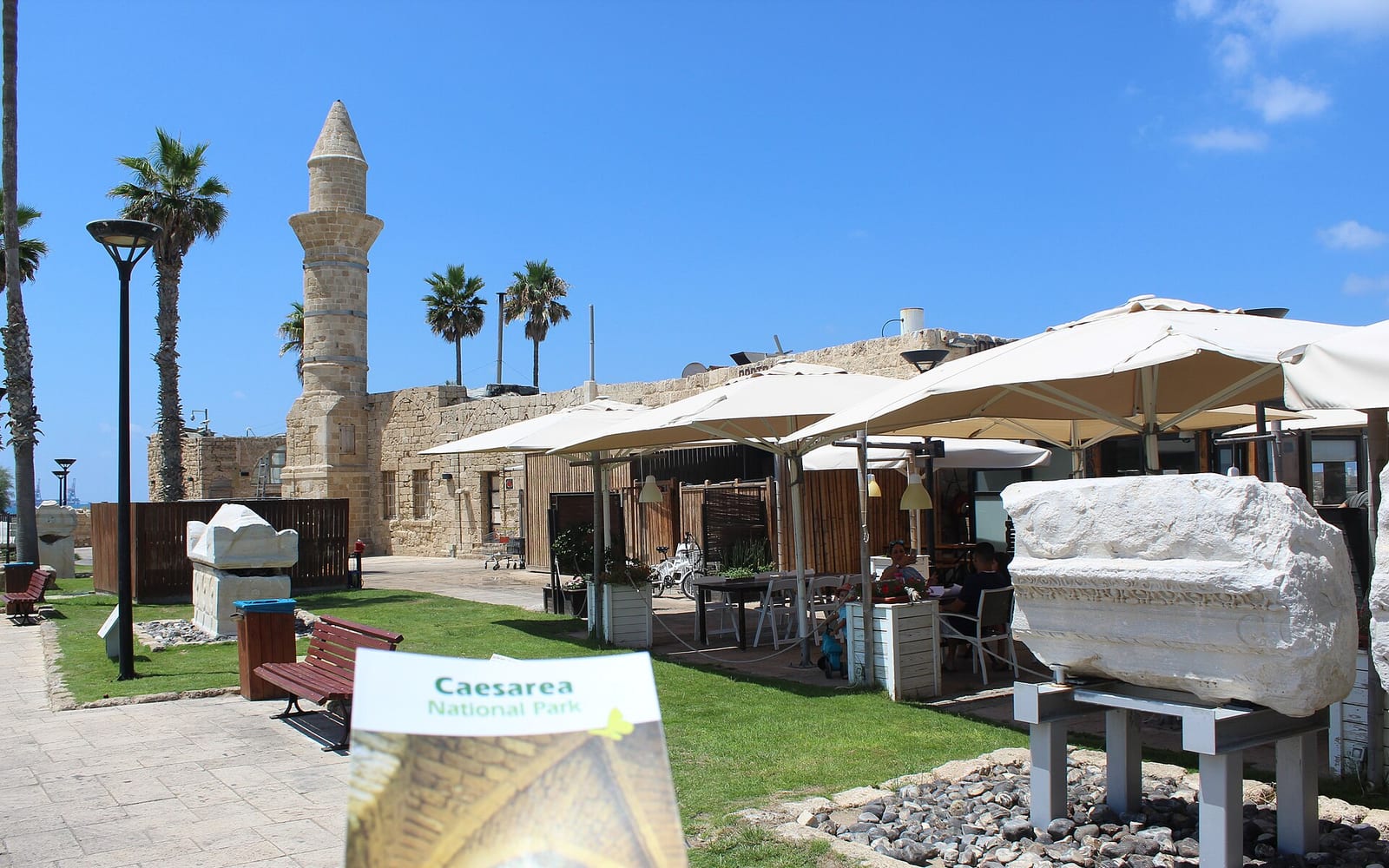
Caesarea is 15 minutes south of Binyamina by car. A natural itinerary: morning at Caesarea National Park (Roman Theatre, Herodian harbour, Crusader walls — allow 2.5 to 3.5 hours), Aqueduct Beach for a swim and light lunch, then drive 15 minutes north to Binyamina for an afternoon winery tasting at Binyamina Winery or Tishbi Estate. A rental car is needed for this combination — see car rental in Israel. Caesarea has its own INPA national park entry; the wineries are separate paid experiences.
Full Carmel coast day (Caesarea → Binyamina → Zichron Yaakov)
With an early start and a rental car, it is possible to do all three in one day: Caesarea National Park in the morning, Binyamina Winery visit midday, then Zichron Yaakov in the afternoon for Hameyasdim Street and Ramat Hanadiv. This is an ambitious but genuinely satisfying combination — allow 8–9 hours for a comfortable pace. See the day trips from Tel Aviv guide and day trips from Haifa guide for transport planning.
Getting there
From Tel Aviv
By train: take any northbound Israel Railways coastal service from Tel Aviv HaShalom, Savidor Center or Hagana to Binyamina station — approximately 50–55 minutes. Trains run every 30–60 minutes on weekdays; check the Israel Rail app or rail.co.il for the live timetable. From Binyamina station, Binyamina Winery is about 10–15 minutes on foot; Tishbi Estate is a short taxi ride (₪15–25). For Zichron Yaakov above, take a taxi from the station (₪20–30, under 10 minutes).
By car: north on Route 2 (Tel Aviv–Haifa coastal highway) to the Binyamina/Zichron Yaakov junction — approximately 50 minutes from central Tel Aviv. Paid parking is available near the town centre and at each winery. A car unlocks the full Caesarea–Binyamina–Zichron Yaakov circuit; see car rental in Israel.
From Haifa
By train: southbound coastal service from Haifa Bat Galim or Merkaz HaShmona to Binyamina station — approximately 35–40 minutes.
By car: south on Route 2 to the Binyamina/Zichron Yaakov junction — approximately 40 minutes.
Practical tips
Winery hours: both Binyamina Winery and Tishbi Estate follow kosher production schedules — they close on Shabbat (from Friday afternoon) and Jewish holidays. Sunday through Thursday is the reliable window. Always verify current hours directly before visiting.
Best months: late September and October is harvest season across the Carmel wineries — a lively and atmospheric time to visit, with fresher grapes being processed and the vineyards at their most active. Spring (March–May) is also pleasant, with cooler temperatures and the Ramat Hanadiv wildflower season at its peak.
Combining with Israel wine regions: Binyamina and the Carmel coast sit within the broader Shomron/Mount Carmel wine appellation. For an overview of Israeli wine regions and the full tasting landscape — Golan Heights, Upper Galilee, Judean Hills and Negev as well as Carmel — see the Israel wine guide.
Cross-links: Caesarea guide · Zichron Yaakov guide · Day trips from Tel Aviv · Day trips from Haifa · Israel wine guide · Car rental in Israel · Israel archaeology experience · Israel National Parks Pass