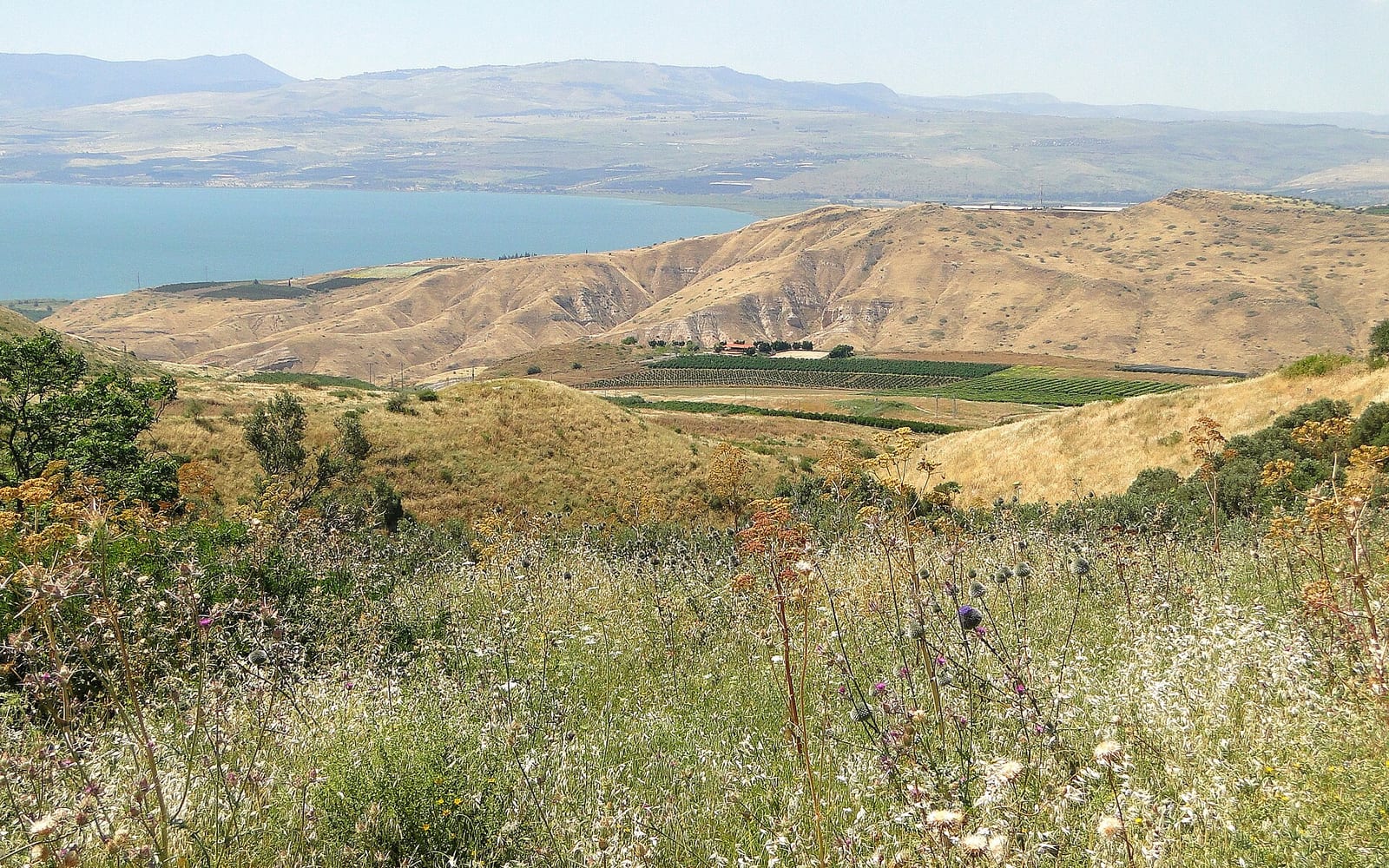
The Galilee and Golan wine trail is one of Israel’s least-known self-drive experiences — two days through volcanic highland plateaus, red-soiled Mediterranean hills, and a string of wineries that have spent the past four decades demonstrating that the Middle East can make world-class wine.
This guide covers the Upper Galilee half of the circuit, distinct from the Golan-only trail covered in the Golan Heights wineries guide. Together, they form a two-day loop from Tiberias or Haifa that most visitors underestimate — and almost everyone who makes the trip ends up wishing they had more time.
The two wine regions: an overview
Upper Galilee (where this guide focuses) occupies the highland zone north and east of Rosh Pinna, the restored Ottoman village that functions as the trail’s unofficial capital. The main plateau — around Kerem ben Zimra, Manot and the Dalton area — sits 500–900 metres above sea level, with red Mediterranean terra rossa soils, good rainfall and cool nights. The producers here range from a 6-million-bottle kibbutz winery (Galil Mountain) to 30,000-bottle boutique estates that pour by appointment only.
The Golan Heights (to the north-east) is the older wine story: volcanic basalt soils, elevations up to 1,200 metres, and the Golan Heights Winery — Israel’s largest fine-wine producer, responsible for the Yarden and Gamla labels that first put Israeli wine on export shelves in the 1980s. The Golan Heights wineries guide covers this half of the circuit in detail.
The two regions are connected by Route 91 and Route 886 — a 45–60 minute drive from Rosh Pinna to Katzrin, making a combined day or two-day loop practical with a car.
Suggested 2-day circuit
Day 1: Golan Heights (Katzrin area)
Base yourself in Tiberias the night before (easiest access point) or drive directly from Haifa.
Morning: Drive up Route 87 from Tiberias to Katzrin (~40 minutes), the Golan’s main town. The Golan Heights Winery / Yarden visitors’ centre has the most developed tasting facilities in the region and is the natural first stop. Tasting sessions run at set times; mid-week you can often walk in without booking, but reserve ahead for weekends. See the Golan Heights wineries guide for full winery details, tasting logistics and boutique producers.
Afternoon: Depending on energy, add a boutique producer (Chateau Golan or Assaf in Alonei Habashan — both require advance booking) or a short drive to Mount Bental for the panorama toward Kuneitra. Return to Tiberias or drive to Rosh Pinna overnight.
Overnight: Rosh Pinna (45–60 min from Katzrin) or Tiberias (35 min from Katzrin). Rosh Pinna is strongly preferred if you want the wine-trail immersion — the village has been restored from Ottoman-era dereliction into a cluster of guesthouses, galleries and a genuinely good restaurant street.
Day 2: Upper Galilee — Galil Mountain, Dalton and Kerem ben Zimra
Morning: Galil Mountain Winery (Kibbutz Yiron)
Galil Mountain is the Upper Galilee’s flagship producer and the most accessible winery on this half of the circuit — open daily (including Fridays), no appointment required, large visitors’ centre with guided tours and a well-stocked shop. The winery sits inside Kibbutz Yiron, a few kilometres west of the Lebanon border, with vineyard views toward the northern highlands.
The winery produces around 6 million bottles per year under the Galil Mountain label (premium) and Ela label (accessible tier). The Galil Mountain Cabernet Sauvignon and the Yiron blend are the wines worth seeking out. The visitors’ centre tasting bar allows you to try 4–6 wines with or without a guided pairing; food platters can be ordered in advance.
Practical: ~10 km north of Rosh Pinna via Route 886. Open daily 09:00–17:00 (confirm current hours at galilmountain.co.il). Tasting: approximately ₪80–120 per person for a guided tasting session; individual glass pours also available. Winery tours run at set morning and afternoon times; check the website.
Midday: Kerem ben Zimra plateau
From Galil Mountain, drive south-east along Route 899 through the Kerem ben Zimra plateau — the highest planted wine zone in Galilee, at around 800–900 metres. This is the heartland of Upper Galilee’s boutique wine scene: small estates, old-vine parcels and a handful of producers who sell almost exclusively to Israeli restaurants and wine bars.
Midday is a good time to stop in Rosh Pinna for lunch — the main street (Yossefon St) has a concentration of café-restaurants including the consistently-cited Auberge Shulamit, Dag Al HaDan fish restaurant, and several local hummus and flatbread spots. The old quarter hill above the main street has a panoramic view north toward the Golan.
Afternoon: Dalton Winery (Dalton)
Dalton is a boutique-to-medium winery (around 300,000 bottles per year) on the high Dalton plateau north of Safed, at 900 metres — the highest winery in Israel. Founded in 1995 by David Keren, a California-trained winemaker, Dalton pioneered the use of international varieties (Merlot, Sangiovese, Barbera) in Galilee. The winery is known for its Canaan Red blend and a Barbera d’Asti-inspired rosé that rarely makes it out of Israel.
The visitors’ centre has tasting tables with vineyard views. Advance booking is strongly recommended on weekends and holidays; mid-week visits are often possible on short notice. Email or phone ahead.
Practical: Located on Route 899 west of the Dalton junction. Tasting sessions: approximately ₪80–150 per person depending on the package; the higher tier includes vertical tastings and food pairings. Around 2 hours is comfortable. daltonwinery.com for current opening dates.
Late afternoon: Safed descent
From Dalton, the drive south to Safed (Tzfat) takes 15–20 minutes. The winding mountain road descends into the kabbalistic city at 900 metres — Israel’s highest city and one of the most atmospheric afternoon stops in the north. The Artists’ Quarter and the 16th-century synagogue district are 30–45 minutes of walking; Safed’s main street restaurants are open for early dinner. This makes a natural end to the wine trail before heading back to Tiberias or Haifa.
Planning notes
Base options:
- Rosh Pinna — the wine-trail village; boutique guesthouses and B&Bs; strong restaurant scene; central position between Galilee and Golan.
- Tiberias — widest hotel range; lakeside setting; 30–45 min from most Galilee wineries and Golan.
- Haifa — viable starting point (1.5 hours from the Galilee); more accommodation variety; less atmospheric for a wine circuit overnight.
Getting there: Tel Aviv to Rosh Pinna is approximately 2.5 hours via Route 6 north and Route 65. Haifa to Rosh Pinna is approximately 1.5 hours. Tiberias to Rosh Pinna is 25 minutes.
Driving logistics: Route 6 (Kvish 6) toll road from Tel Aviv to the north is the fastest approach; a transponder (toll tag) or post-rental billing via your car rental company handles the toll automatically. Waze is the standard navigation app in Israel — Israeli drivers use it universally; GPS alone misses road updates.
Shabbat: Some winery visitors’ centres close on Saturday. Many open Friday morning. For a two-day trail, Friday morning start → Saturday rest in Tiberias or Rosh Pinna → Sunday Galilee wineries avoids Shabbat complications.
Designated driver: Israeli police enforce the 0.05% BAC limit strictly with roadside checks — a non-drinking driver is strongly recommended for a tasting circuit. Guided tours (see CTAs above) solve this by handling all transport.
How the Galilee–Golan wine trail fits into a wider northern itinerary
The wine trail pairs naturally with other northern Israel highlights:
- Northern Israel road trip: the northern self-drive circuit covers Caesarea, Akko, Rosh Hanikra, Sea of Galilee and the Golan in a 3–4 day loop — the wine trail slots into the Golan and Galilee days.
- Galilee food circuit: pair winery visits with the Galilee food guide — Druze village flatbread, Tiberias lakeside fish and Nazareth Arab-Israeli mezze complement a wine-focused day.
- Safed: the Safed travel guide covers the kabbalistic city in depth; a half-day in Safed fits naturally at the end of the Dalton winery visit.
- Golan Heights: the Golan Heights guide covers the broader Golan itinerary including Mount Bental, Nimrod Fortress and Banias, which can be combined with Golan winery visits.
For the full Israel wine picture, see the Israel wine regions guide covering all five growing regions including the Judean Hills and Negev.
Cross-links: Golan Heights wineries guide · Israel wine regions guide · Northern Israel road trip · Safed travel guide · Galilee food guide · Car rental Israel · Driving in Israel