Argentina has the world’s fifth-largest Jewish community — approximately 180,000 practicing Jews and many more with Jewish heritage — making it one of the most significant sources of Jewish heritage travel to Israel outside the United States. Buenos Aires is also home to a large and organised Catholic community, and the Buenos Aires Archdiocese runs regular Holy Land pilgrimage programmes. This guide covers the essential practical information for Argentine passport holders: ETA-IL requirements, the new direct El Al flight, Jewish heritage travel, Catholic pilgrimage sites, health insurance, currency logistics and safety contacts.
For the broader trip-planning picture, see the complete first-time visitor guide and the is Israel safe guide.
Entry requirements: ETA-IL for Argentine passport holders
Argentine citizens are on Israel’s visa-exempt list — you do not need a full visa. However, since January 2025, all visa-exempt nationals (including Argentines) must obtain an Electronic Travel Authorisation (ETA-IL) before travelling to Israel.
Applying for the ETA-IL
- Apply at: iaa.gov.il — the official Israeli Airports Authority portal
- Fee: ₪25 (pay in shekels; check the current ARS/ILS rate at XE.com before applying — do not rely on a fixed peso figure)
- Validity: 2 years, multiple entries
- Processing time: typically 72 hours to several days — apply at least one week before departure
- What you need: your passport number, date of birth and basic travel details — no supporting documents are required for the ETA-IL itself
The ETA-IL is not a guarantee of entry. Israeli immigration officers at Ben Gurion Airport may ask about your travel purpose, accommodation details and return flight. Having your hotel bookings and return ticket on your phone or printed will help the process go smoothly.
On arrival at Ben Gurion Airport
Argentine Jewish visitors often travel with a heritage itinerary or organised community tour confirmation — this is helpful to have available alongside your passport and ETA-IL confirmation. Passport stamps: Israel no longer stamps passports by default; you receive a paper entry card instead. Keep this card for the duration of your stay.
Flying from Buenos Aires to Israel
El Al direct service (29 November 2026)
El Al Israel Airlines is launching a direct non-stop service between Buenos Aires Ezeiza Airport (EZE) and Tel Aviv Ben Gurion Airport (TLV) starting 29 November 2026, operating 2 times per week (Sundays and Tuesdays). This will be the first confirmed ongoing direct service between South America and Israel, cutting travel time from 22+ hours with connections to a single non-stop flight. For the Argentine Jewish market in particular — with extended family in Israel and heritage travel demand — this is a significant milestone. Check elal.com for launch updates and booking availability.
Current connections (before the direct service)
Until 29 November 2026, and as an alternative to the El Al direct:
| Routing | Main Carriers | Typical Total Time |
|---|
| EZE → CDG (Paris) → TLV | Air France, El Al | 22–25 hours |
| EZE → FRA (Frankfurt) → TLV | Lufthansa, El Al | 22–24 hours |
| EZE → IST (Istanbul) → TLV | Turkish Airlines | 22–26 hours |
| EZE → TLV (seasonal direct) | Aerolíneas Argentinas | ~14 hours |
| EZE → GRU / SCL → TLV | LATAM + connections | 24–28 hours |
Aerolíneas Argentinas has operated a direct EZE–TLV service seasonally in prior years. Verify current schedule at aerolineas.com.ar — this route is subject to seasonal availability and the schedule can change.
Air France via Paris and Lufthansa via Frankfurt are among the most reliable connections year-round with good frequency. Both carriers work with El Al on codeshare arrangements for the Tel Aviv leg.
When to book
Fares from Buenos Aires to Tel Aviv are typically lower in January–February and October–November. The most expensive windows are Passover / Semana Santa (March–April), the Jewish High Holidays (September–October), July–August summer peak (Israel’s peak summer), and December–January. See the cheap flights to Israel guide for airline comparison tools and fare timing.
Jewish heritage travel for Argentine visitors
Argentina’s Jewish community traces its roots primarily to three waves of immigration: Ashkenazi arrivals from Eastern Europe and Russia in the 1880s–1930s fleeing pogroms and persecution; Holocaust survivors and displaced persons arriving in the 1940s; and Sephardic immigration from Syria, Morocco and Egypt in the 1950s–1970s. Many Argentine Jewish families also have relatives in Israel following the economic crisis of 2001–2002, which drove a significant wave of aliyah.
Yad Vashem: the Holocaust memorial
Yad Vashem is one of the world’s leading Holocaust research and memorial institutions, and for Argentine Jewish visitors it carries a particular resonance. Yad Vashem holds records and testimonies related to the 1994 AMIA bombing in Buenos Aires — Argentina’s most devastating antisemitic attack (85 killed, hundreds wounded), honoured alongside Holocaust commemoration. The Hall of Names contains submissions covering more than 4.7 million victims; many Argentine families have used Yad Vashem’s research resources to document relatives lost in Europe.
Practical: Free entry. Guided tours in Spanish are available — pre-book at yadvashem.org. Allow at least 3 hours. Closed on Shabbat and Jewish holidays. Modest dress required.
The Old City: Jewish Quarter and Sephardic heritage
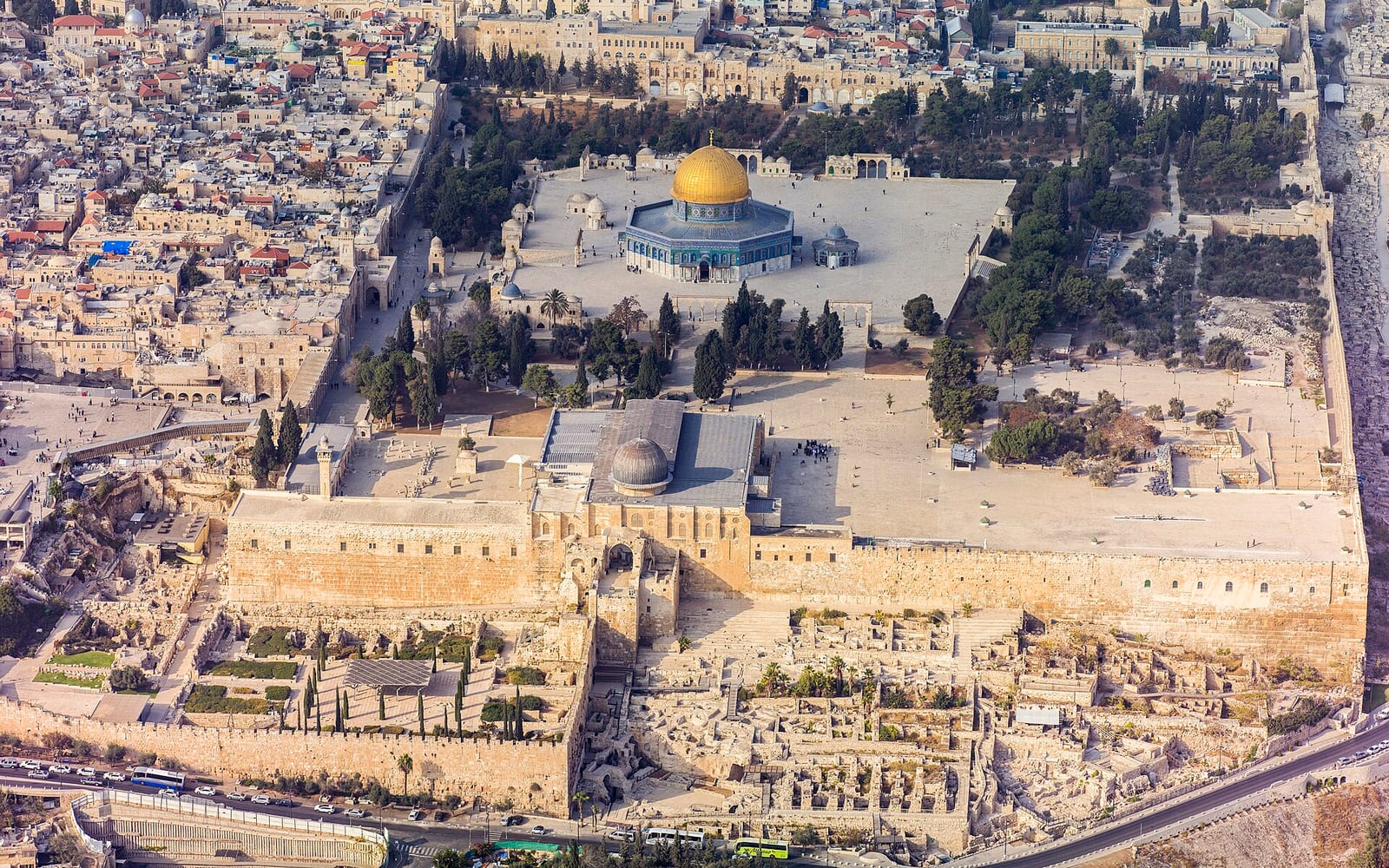
For Argentine families with Sephardic roots, the Ben Zakkai Sephardic Synagogue complex in the Jewish Quarter of Jerusalem’s Old City is one of the most moving sites in Israel. Four small 17th-century synagogues built by Sephardic immigrants from Spain and North Africa — including the Yochanan Ben Zakkai Synagogue and the Eliyahu Hanavi Synagogue — stand at the heart of the Jewish Quarter. The complex was destroyed in 1948 and rebuilt after 1967.
The Jewish Quarter itself is excellent for walking: excavated Roman street (the Cardo), Broad Wall ruins from the First Temple period, and Hurva Synagogue (restored 2010, now a prominent landmark).
Genealogy research in Israel
For Argentine Jewish visitors interested in family history, two institutions offer outstanding resources:
- ANU Museum of the Jewish People (Tel Aviv University campus): the world’s largest Jewish genealogy database. The genealogy research desk allows visitors to search family records from Jewish communities across Eastern Europe, North Africa and the Middle East. Pre-book a research session at anumuseum.org.il.
- National Library of Israel (Jerusalem): holdings include community records, newspapers and documentation from many of the same Eastern European and North African communities from which Argentine Jews trace their origins.
See the Jewish genealogy and roots travel guide for full detail.
The Western Wall (HaKotel)
The Western Wall (Kotel) in Jerusalem is the holiest accessible site in Judaism — a remnant of the retaining wall of the Second Temple compound. It is a place of prayer and deeply personal significance for Jewish visitors worldwide, including those who are secular or non-observant. Open 24 hours, free entry. Modest dress required (head covering for men at the wall itself; available free of charge at the entrance). Western and Orthodox Jewish sections of the plaza are separate; tourists are welcome on both sides.
Zionist heritage trail
For visitors interested in the history of Zionism and the founding of the State of Israel, the Jewish heritage travel guide covers the key sites: Independence Hall (Rothschild Boulevard, Tel Aviv — where the Declaration of Independence was signed on 14 May 1948), Ben-Gurion House, the Palmach Museum, and the Herzl Museum and Mount Herzl cemetery in Jerusalem.
Catholic pilgrimage for Argentine visitors
The Buenos Aires Archdiocese and many Argentine Catholic dioceses organise regular Holy Land pilgrimages. The Argentine Catholic connection to Israel is also deepened by the 2014 papal visit of Pope Francis — born Jorge Mario Bergoglio in Buenos Aires, the first Latin American and first Jesuit pope — who visited Jerusalem, Bethlehem and Yad Vashem during his three-day visit. For many Argentine Catholics, this visit established a personal bond with the Holy Land.
The core Holy Land pilgrimage circuit
Galilee region:
- Basilica of the Annunciation (Nazareth) — the largest church in the Middle East, built over the site where the angel Gabriel is said to have appeared to Mary
- Church of the Beatitudes — hilltop chapel at the traditional site of the Sermon on the Mount; panoramic views over the Sea of Galilee
- Capernaum — ruins of the village where Jesus based his Galilean ministry
- Sea of Galilee boat tour — a traditional wooden boat voyage on the lake; guides read Gospel passages during the crossing; pre-book through your tour operator
Jordan River — Yardenit Baptism Site:
- Most visited baptism site in Israel for Christian tourists; located at the southern end of the Sea of Galilee
- Pilgrims may renew their baptismal vows or receive full immersion baptism in the Jordan River
- White robes available for hire; changing facilities and lockers on-site
- Note: Yardenit is a well-managed, commercial site near the Sea of Galilee; historically the Baptism Site of Jesus is associated with Qasr al-Yahud, a separate location near Jericho — many Argentine pilgrimage operators include both
- See the Jordan River baptism sites guide for full logistics
Jerusalem:
- Via Dolorosa (14 Stations of the Cross) — the route through the Old City’s Muslim Quarter followed by Jesus carrying the cross; Franciscan friars lead a public procession every Friday at 3pm (confirm arrival times)
- Church of the Holy Sepulchre — site of the crucifixion, burial and resurrection according to Christian tradition; no entry fee; several Christian denominations share custody, including the Franciscan Custody of the Holy Land; arrive before 8am or after 5pm to avoid peak crowds
- Garden of Gethsemane — ancient olive grove where Jesus prayed before his arrest; the Church of All Nations (Basilica of the Agony) stands adjacent
Bethlehem:
- Church of the Nativity — UNESCO World Heritage Site; one of the oldest continuously operating churches in the world; the Grotto of the Nativity below the main altar marks the traditional birthplace; Manger Square events at Christmas draw large Argentine pilgrim groups
- See the Bethlehem visitor guide for full planning information
Practical note: Buenos Aires Archdiocese pilgrimages and Argentine Catholic tour operators typically run 10–14 day programmes covering Galilee, Nazareth, Jerusalem, Bethlehem and the Dead Sea. The Buenos Aires diocesan travel office and specialist operators such as Turismo Cósmic, Rumbos and Viajes Arroyo can arrange group pilgrimages with Spanish-speaking Israeli guides.
Practical Argentina-specific tips
Electricity and adapter
Argentina runs on 220V / 50Hz — the same voltage standard as Israel (230V / 50Hz). Your Argentine appliances, laptop chargers and phone chargers will work without a voltage converter.
However, Argentina primarily uses the Type I plug (two flat angled pins in a V shape, plus a flat ground pin — the distinctive triangular configuration), while Israel uses the Type H socket (three rounded prongs unique to Israel). You will need a Type I to Type H plug adapter. Buy one before departure — they are widely available in Buenos Aires electronics shops and travel stores; in Israel they are sold at the airport and major electronics retailers.
Older Argentine buildings also use Type C (European round-pin) sockets. Type C to Type H adapters are equally available.
Health insurance and PAMI abroad
PAMI (Programa de Atención Médica Integral) does not cover medical costs outside Argentina. If you need emergency treatment in Israel, PAMI will not reimburse the cost. Israeli hospital emergency care for uninsured tourists can run into thousands of dollars.
Travel insurance with international medical cover is strongly recommended. Assist Card Argentina is the most widely recognised Argentine travel insurance brand for international trips and is accepted globally. Alternatives: MAPFRE Argentina, Zurich Argentina, La Caja, SMG. Global providers SafetyWing, World Nomads and Allianz all cover Israel — confirm the destination is included before purchasing.
Organised pilgrimage and heritage tour packages from Argentine operators typically include group travel insurance — confirm coverage details with your operator.
Banking and currency in Israel
Do not try to exchange Argentine pesos (ARS) in Israel — cambio offices and bank branches in Israel do not handle ARS. The Israeli new shekel (₪, ILS) is the local currency.
What to bring and use:
- USD or EUR in cash are the best currencies to exchange in Israel. Israeli cambio offices (exchange bureaux) offer competitive rates for both. Bring a reasonable amount for markets and smaller purchases.
- Argentine bank cards (Visa / Mastercard) issued by Galicia, Santander Argentina, Banco Nación, HSBC Argentina, Naranja X, or Mercado Pago with international feature enabled work at Israeli ATMs and payment terminals. Inform your bank before travelling and confirm international transactions are enabled.
- Wise debit card is strongly recommended. It lets you convert from USD or EUR (not ARS) at mid-market exchange rates and avoids the complexity of the Argentine currency control context. Load in USD or EUR before departing.
- Mercado Pago international Visa may work at Israeli POS terminals — verify current compatibility with Mercado Pago customer service before travelling, as international functionality varies.
Currency note: Israeli costs referenced in this guide are in USD or NIS only. Argentine peso amounts are not provided because the ARS/ILS rate changes substantially from week to week. Use XE.com for current rates before travel.
Mobile and SIM
Argentine mobile operators (Claro, Movistar, Personal) offer international roaming in Israel but at high daily rates. More economical alternatives: buy an Israeli prepaid SIM at Ben Gurion Airport arrivals (Hot Mobile, Cellcom and Partner all have kiosks; ~₪50–80 for 10–15GB data for 30 days) or activate an eSIM before departure. See the Israel eSIM and SIM guide for options.
Getting around Israel
Israel has a good public transport network connecting the main tourist cities:
- Train (Rakevet Israel): Ben Gurion Airport → Tel Aviv (20 min), Tel Aviv → Jerusalem (30 min, the Express line), Tel Aviv → Haifa (55 min), Haifa → Akko (20 min). Trains do not run on Shabbat (Friday evening to Saturday night).
- Bus (Egged, Dan): extensive inter-city and local networks; Rav-Kav card covers all public transport. See the Rav-Kav guide.
- Car rental: strongly recommended for the Galilee, Golan Heights and Negev. See the driving in Israel guide and the car rental guide.
- Sherut (shared taxi): runs on Shabbat on key routes when trains stop; ask your hotel for the nearest sherut station.
When to visit
Argentina’s peak summer (December–February) corresponds to Israel’s winter — Jerusalem and the Galilee can be cold and rainy; the Negev and Eilat remain warm and sunny. Israel’s high season (July–August) coincides with Argentine winter, making it a natural travel window. Easter / Passover (March–April) is the busiest pilgrimage period but requires booking 6–12 months in advance. See the best time to visit Israel guide for full seasonal detail.
For the broader planning picture, see our first-time in Israel guide, visa and ETA-IL guide, is Israel safe guide, and Israel trip cost and budget guide.