Italy has one of Europe’s deepest historical connections with Israel — from Rome’s 2,000-year-old Jewish community, one of the oldest in the world, to the Italian Franciscan friars who have maintained the Christian holy sites of Jerusalem since 1342. Today, Italian travellers have more direct flight options than ever: as of July 2026, ITA Airways operates twice-daily nonstop services between Rome Fiumicino and Tel Aviv. This guide covers the essential practical information for Italian passport holders planning a trip to Israel: ETA-IL requirements, flight options from Rome and Milan, the Tessera Sanitaria/TEAM gap, power adapters, banking, and the unique Italian–Israeli heritage connections.
For the broader trip-planning picture, see the complete first-time visitor guide and the is Israel safe guide.
Entry requirements: ETA-IL for Italian passport holders
Italian citizens are visa-exempt for Israel — you do not need a full visa to enter Israel. However, since January 2025, all visa-exempt nationals (including Italian citizens) must obtain an Electronic Travel Authorisation (ETA-IL) before travelling.
Applying for the ETA-IL
- Apply at: iaa.gov.il — the official Israeli Airports Authority portal
- Fee: ₪25 (approximately €6–7; check the current ILS/EUR rate at XE.com — you pay in shekels as charged)
- Validity: 2 years, multiple entries
- Processing time: typically 72 hours to several days — apply at least one week before departure
- What you need: your passport number, date of birth and basic travel details — no supporting documents are required
The ETA-IL is not a guarantee of entry. All final admission decisions are made by Israeli immigration at the port of entry. Have your hotel booking and return flight confirmation ready when you arrive at Ben Gurion Airport.
Important for group travel: the ETA-IL is an individual application — each traveller in a pilgrimage or tour group must apply separately. Travel operators and parish organisers cannot apply on behalf of their participants. This is a common source of confusion for Italian group trip coordinators.
MAECI travel advisory
The Italian Ministry of Foreign Affairs and International Cooperation (Ministero degli Affari Esteri e della Cooperazione Internazionale — MAECI) publishes current travel advisories for Israel at viaggiaresicuri.mae.aci.it. Always check the MAECI advisory before booking and before departing, as the advisory level may change.
Italian Embassy in Israel
Italy has an Embassy in Tel Aviv at 54 Hayarkon Street, Tel Aviv (+972-3-5100400). Italian citizens who need consular assistance while in Israel — including passport issues, emergency documentation or emergency contact with next of kin — should contact the embassy directly. Current contact details and opening hours are also available at the MAECI portal above.
Flying from Italy to Israel
ITA Airways: Rome to Tel Aviv
ITA Airways has doubled its direct Rome Fiumicino (FCO) to Tel Aviv Ben Gurion Airport (TLV) service to twice daily, effective July 1, 2026. This makes Rome one of the most conveniently connected European cities to Israel, with flight time of approximately 4 hours. Always check itaairways.com for current schedules — frequency may be adjusted seasonally.
El Al also operates a daily nonstop FCO–TLV service, providing additional flight options and competition on the Rome–Tel Aviv route.
Flying from Milan
From Milan, El Al operates multiple weekly nonstop flights from Milan Malpensa (MXP) to Tel Aviv. This is the primary option for travellers from Lombardy, Piedmont, Veneto and northern Italy. Frequency varies by season — check the El Al and fare comparison sites (Skyscanner, Google Flights) for current schedules.
Connecting options from other Italian cities
For travellers departing from cities without a direct service, the most common connections to Tel Aviv are:
| Hub | Main Carriers | Typical Total Journey |
|---|
| Rome (FCO) | ITA Airways, El Al | 4 hours (direct) |
| Milan (MXP) | El Al, Lufthansa via FRA | 4–8 hours |
| Frankfurt (FRA) | Lufthansa | 6–8 hours |
| Amsterdam (AMS) | KLM | 7–9 hours |
| Istanbul (IST) | Turkish Airlines | 6–9 hours |
| Paris (CDG) | Air France | 7–9 hours |
Seasonal charter flights operate from Catania (CTA) and Palermo (PMO) — check comparison tools in spring for summer availability.
When to book
The cheapest fares from Italy to Tel Aviv are typically found in January–February and October–November, outside Israel’s peak seasons. The most expensive periods are Passover and Easter (March–April), the Jewish High Holidays (September–October) and July–August. See the cheap flights to Israel guide for booking strategies.
Italian Jewish heritage: a 2,000-year connection
Rome’s Jewish community is one of the oldest continuous Jewish communities in the world, tracing its history back over 2,000 years — predating the destruction of the Second Temple in 70 CE. This history creates a distinctive depth of connection between Italian travellers and Israel that few other nationalities share.
Italian Jewish heritage sites in Israel
- ANU Museum of the Jewish People (Tel Aviv) — the world’s leading museum on Jewish diaspora history; includes substantial material on the Roman and Italian Jewish community, from ancient Rome through the Renaissance and the Shoah. The genealogy research centre (pre-book) allows visitors with Italian Jewish ancestry to trace family records. See the ANU Museum guide.
- Jewish Quarter, Jerusalem Old City — the Sephardic community of Jerusalem has deep Italian connections; the medieval Jewish manuscript tradition (Codex Aleppo was partially authenticated by Italian-trained scholars); several synagogues in the Jewish Quarter reflect the Italian rite (nusach Italy), one of Judaism’s oldest surviving liturgical traditions.
- Yad Vashem Holocaust Memorial (Jerusalem) — the Central Database of Shoah Victims’ Names includes extensive records from Italy, where approximately 8,500 Italian Jews were deported and murdered under German occupation (1943–1945). The Hall of Names and the research institute can help Italian visitors trace relatives.
The Franciscan Custody of the Holy Land
The Franciscan Custody of the Holy Land — founded in 1342 and headquartered at the Monastery of San Salvatore in Jerusalem’s Old City — has long been the institution responsible for maintaining Christian holy sites in Israel. The Custody is funded in part by Spain and Italy, and its friars — often Italian — lead the public Via Dolorosa procession every Friday at 15:00. This institution gives Italian Catholic travellers a unique institutional continuity with the history of pilgrimage they will encounter at the Church of the Holy Sepulchre, the Via Dolorosa and the Garden of Gethsemane.
Catholic pilgrimage for Italian travellers
Italy has the world’s most active Catholic pilgrimage tradition, and the Holy Land has been the destination of Italian pilgrims since the early medieval period. The three main pilgrimage operators serving Italian Catholics are Opera Romana Pellegrinaggi (ORP) — the Vatican’s official pilgrimage operator, based in Rome — and private operators including CTS Viaggi and Italperegrinaggi. These operators typically offer 10–12 day group pilgrimage packages covering the full Holy Land circuit.
The core Holy Land pilgrimage circuit for Italian visitors
Galilee Region:
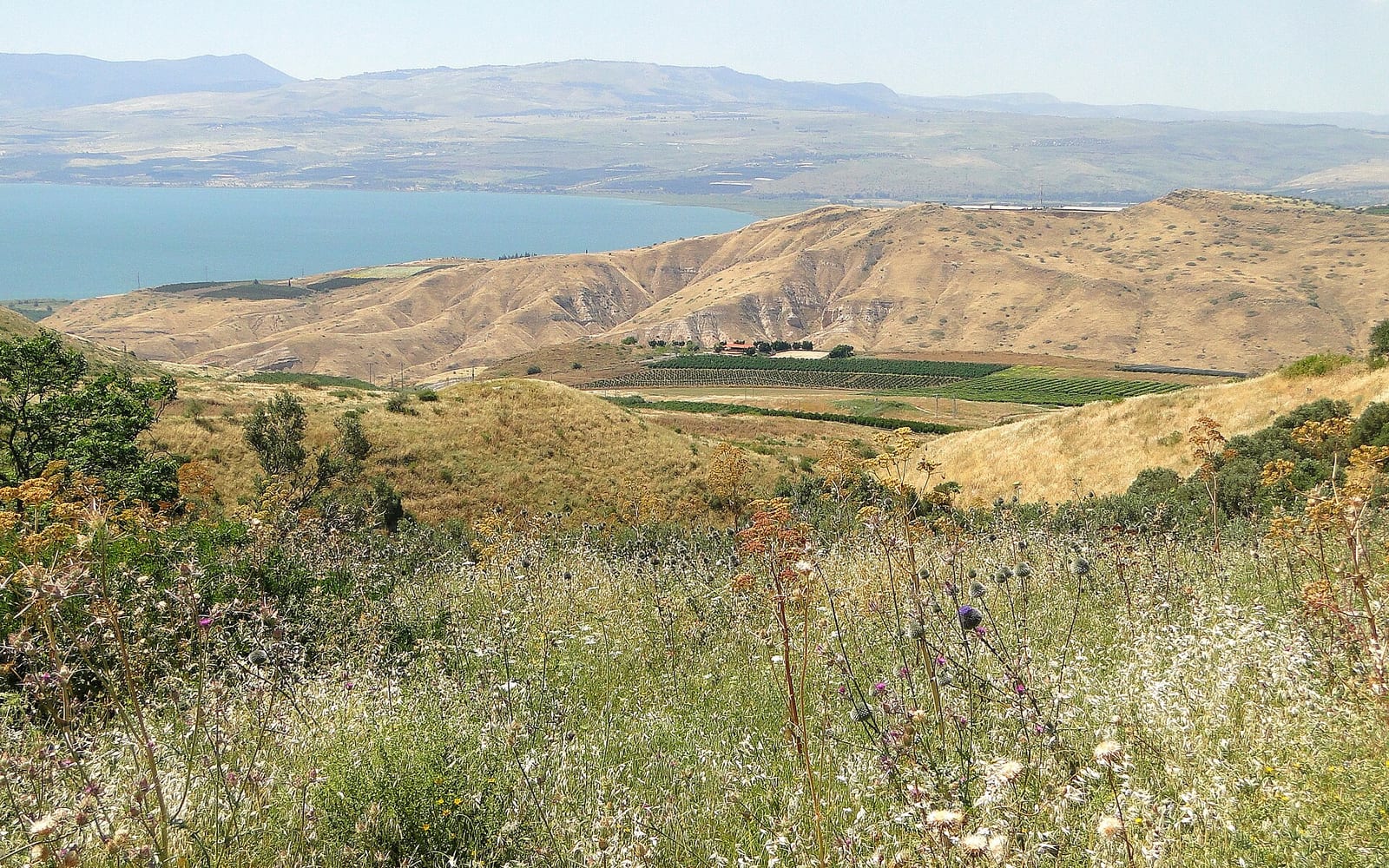
- Sea of Galilee (Kinneret) — traditional wooden boat tours from Tiberias; guides read Gospel passages on the water; the Galilee Boat (Ginosar Kibbutz Museum) is a first-century fishing vessel contemporaneous with the time of Jesus, preserved and displayed in full
- Church of the Beatitudes — hilltop Franciscan chapel at the traditional site of the Sermon on the Mount; panoramic views across the Sea of Galilee; maintained by Italian Franciscan sisters (Franciscan Missionaries of Mary)
- Capernaum — the fishing village where Jesus lived and taught; ancient synagogue ruins, Byzantine octagonal church over Peter’s traditional house
- Tabgha and the Church of the Multiplication — site of the miracle of the loaves and fishes; fourth-century Byzantine mosaic floor
- Yardenit Baptism Site — the Jordan River baptism site; white robes available for hire; many Italian pilgrimage groups include a baptism or baptismal renewal ceremony here. See the Jordan River baptism guide for logistics
Nazareth:
- Basilica of the Annunciation — the largest church in the Middle East; the Lower Church includes an important mosaic collection including national ceramic panels; Italy’s national panel is among the most striking in the collection
- Old Nazareth, Mary’s Well — the traditional water source at the time of the Annunciation; Greek Orthodox Church of the Annunciation at the well site
Jerusalem:
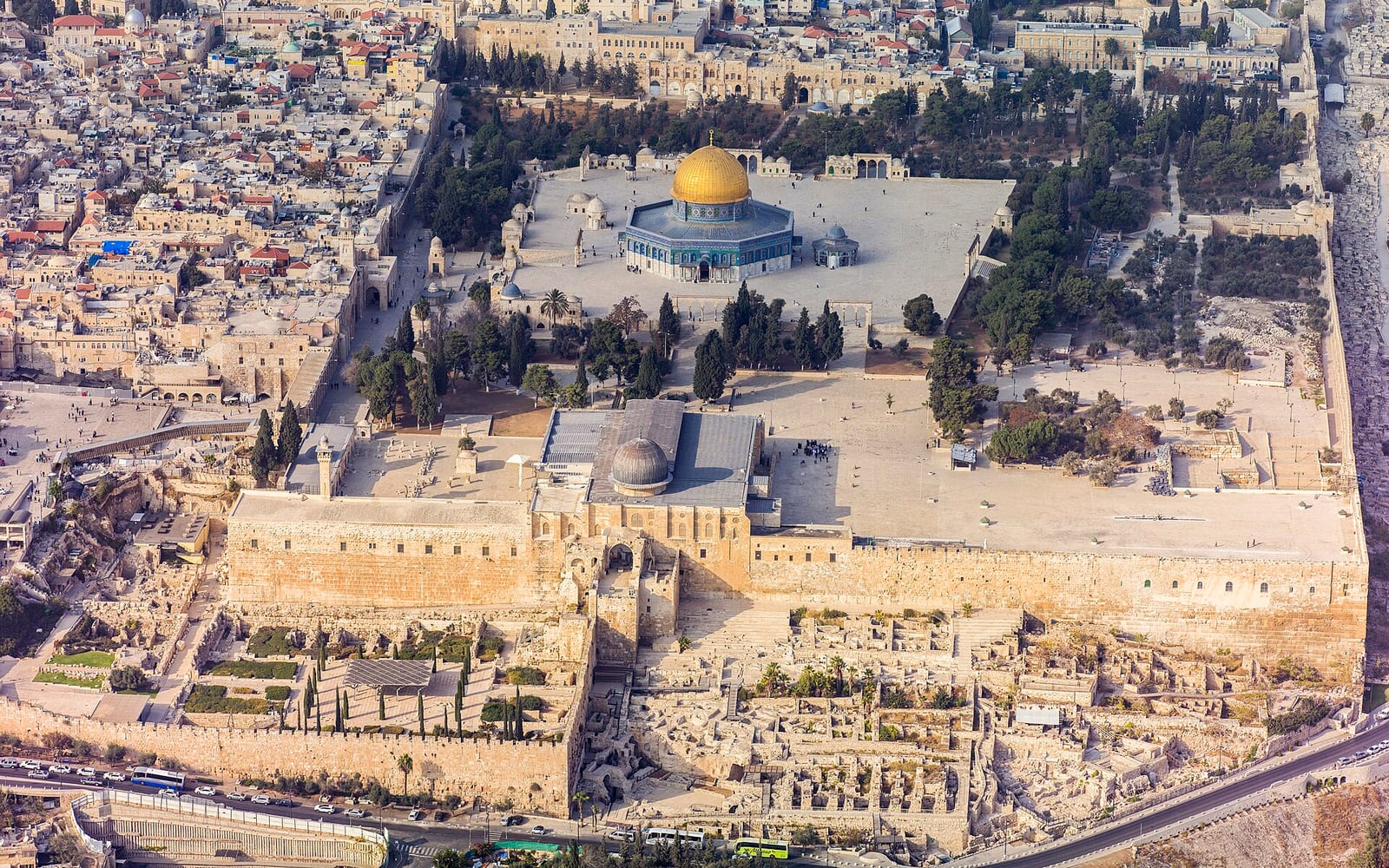
- Via Dolorosa — the fourteen Stations of the Cross through the Muslim and Christian Quarters of the Old City. See the Via Dolorosa guide. The public Friday procession at 15:00 is led by Franciscan friars of the Custody
- Church of the Holy Sepulchre — built over the Crucifixion and Resurrection sites according to Catholic and Orthodox tradition; the Franciscan Custody maintains specific chapels and leads the Latin Mass at the Stone of Anointing daily. Early morning (07:00–08:30) is significantly quieter than midday
- Garden of Gethsemane — the olive grove at the foot of the Mount of Olives; the Church of All Nations (1924, Italian architect Antonio Barluzzi) stands adjacent — Barluzzi was Italy’s most prolific architect of Christian sites in the Holy Land and designed more than ten churches across Israel
- Room of the Last Supper (Cenacle) — on Mount Zion; the upper room traditionally associated with the Last Supper and Pentecost; free entry; access limited during Jewish prayer times (the same building contains the Tomb of David below)
Bethlehem (West Bank):
- Church of the Nativity — the birthplace of Jesus; UNESCO World Heritage Site; located in Bethlehem (Palestinian Authority, Area A); accessible as a half-day trip from Jerusalem via Checkpoint 300. See the Jerusalem–Bethlehem day trip guide for crossing logistics
Health insurance: the Tessera Sanitaria/TEAM gap
The TEAM card does not cover Israel
The Tessera Europea Assicurazione Malattia (TEAM) — the European Health Insurance Card issued through Italy’s Servizio Sanitario Nazionale (SSN) — is valid for emergency medical treatment in EU and EEA countries only. Israel is not a member of the EU or the EEA. Your TEAM card is not accepted in Israeli hospitals, clinics or emergency services.
Medical costs for uninsured tourists in Israel can be very high — an emergency room visit, hospitalisation or medical evacuation may cost thousands of euro.
Before travelling to Israel:
- Take out a comprehensive assicurazione di viaggio (travel insurance) that explicitly covers Israel, including emergency medical treatment, hospitalisation and repatriation
- Read the policy exclusions (esclusioni) carefully — some policies exclude Middle East destinations or active conflict zones; confirm Israel is covered
- Keep the insurer’s emergency phone number and your policy number accessible on your phone
Italian and international providers
- Generali Italia and Allianz Italia — Italy’s largest travel insurers; confirm Israel coverage when purchasing
- Cattolica Assicurazioni, UnipolSai and Zurich Italia — available through brokers
- SafetyWing and World Nomads — international providers popular with Italian independent travellers; both explicitly cover Israel; SafetyWing offers flexible monthly subscriptions suitable for longer stays
Currency and money in Israel
Euro is not the currency in Israel
Israel’s currency is the New Israeli Shekel (₪). Euro cash is occasionally accepted at tourist-oriented shops in the Old City or at large hotels, but you should not rely on paying in euro for day-to-day expenses.
Bancomat and Italian cards
Italian Nexi Visa and Nexi Mastercard debit cards are widely accepted at Israeli ATMs and card terminals. Standard credit and debit cards from Intesa Sanpaolo, UniCredit, BNL, Banco BPM and other major Italian banks also work reliably.
Older Bancomat cards that carry only the PagoBancomat domestic network — without a Visa or Mastercard international logo — may not be accepted at all Israeli ATMs. Check the back of your card: if you see a Visa or Mastercard logo alongside the Bancomat logo, the card will work in Israel.
Practical money tips for Italian travellers
- Revolut or N26 — widely used by Italian travellers; both operate at mid-market exchange rates and work at Israeli ATMs; download before departure and use as a backup alongside your Italian bank card
- Wise debit card — converts at mid-market rates; a good alternative if you already have a Wise account
- Inform your Italian bank of your travel dates to prevent Israeli transactions being blocked as suspicious
- When withdrawing from Israeli ATMs, always select “charge in local currency (NIS)” — reject the terminal’s offer to convert to euro (dynamic currency conversion applies an unfavourable rate)
Power adapter
Italy uses the Type L plug (a unique three-round-pin configuration, CEI 23-50 standard; 230V/50Hz). Israel uses the Type H socket (three pins in a distinctive V-shape; 230V/50Hz).
Voltage: Both countries run at 230V — the voltage is identical. Your Italian phone chargers, laptop power supplies and camera batteries will work in Israel with just a plug adapter; no voltage converter is needed.
Adapter needed: a Type L to Type H plug adapter (or a universal travel adapter that covers Type L and outputs Type H). Note: older Italian buildings may have Type F (Schuko) sockets rather than Type L — if your chargers are already on Type F plugs, you need a Type F to Type H adapter instead. The safest option for Italian travellers is a universal travel adapter that handles both input types. These are available at Mediaworld, Unieuro, Esselunga and Amazon Italy under “adattatore universale da viaggio”. Adapters are also sold at Ben Gurion Airport on arrival.
Mobile phones and connectivity
Italian mobile operators — TIM, Vodafone Italia, WINDTRE and Iliad Italia — support international roaming in Israel, but roaming charges can be significant. Check your carrier’s international data day-pass or zone rates before departure — some Italian operators include Israel in a “Zone 2” or “Rest of World” roaming plan.
Better options for Italian travellers:
- Israeli tourist SIM — available from Golan Telecom and Hot Mobile kiosks in the Ben Gurion Airport arrivals hall (typically open around the clock); a 30-day unlimited-data SIM costs approximately ₪50–90; your phone must be SIM-unlocked — confirm with TIM, Vodafone or WINDTRE before travel
- eSIM — Airalo and Holafly offer Israel data eSIMs activatable before departure; compatible with most modern iPhones and Android handsets; lets you keep your Italian number active for incoming calls while using an Israeli data line; no physical SIM swap required
Airport security: what Italian travellers should know
Israeli airport security at Ben Gurion Airport is thorough and different from what Italian travellers experience at most European airports. The process is security-interview based, not just X-ray.
Practical tips:
- Arrive 3 hours before departure for international flights — even if this seems early by Italian airport standards, Israeli departure security takes longer than comparable European checks
- Security questions are standard and respectfully asked — staff are trained professionals; questions about the purpose of your visit, who you are meeting and where you are staying are routine
- Passports, hotel bookings, tour operator confirmations and return flight details should be easily accessible on your phone or printed
- Electronic devices are subject to closer inspection than at most European airports
Quick reference for Italian travellers
| Item | Detail |
|---|
| Entry requirement | ETA-IL required (not a full visa); apply at iaa.gov.il; ₪25; 72h+ before travel; 2-year multi-entry |
| ETA-IL for groups | Each traveller applies individually — operators cannot apply on your behalf |
| MAECI advisory | Check viaggiaresicuri.mae.aci.it before booking |
| Flights (Rome) | ITA Airways FCO–TLV: twice daily since July 1, 2026; El Al FCO–TLV: daily |
| Flights (Milan) | El Al MXP–TLV: multiple weekly; compare at Skyscanner |
| Currency | New Israeli Shekel (₪); Revolut or N26 recommended; Bancomat domestic may not work |
| Payments | Nexi Visa/Mastercard and major bank cards work; notify your bank before travel |
| Power | Type H socket (230V = same as Italy); Type L → H adapter only; bring universal for Type F compatibility |
| TEAM card | NOT valid in Israel — take out separate assicurazione di viaggio with medical cover |
| Italian Embassy | 54 Hayarkon Street, Tel Aviv; see viaggiaresicuri.mae.aci.it for current contact |
| Emergency numbers | 100 (police), 101 (ambulance), 102 (fire), 112 (international emergency) |
| Airport security | Arrive 3 hours before departure; security interview standard — have hotel + return flight to hand |
Planning your Israel trip from Italy
A 10–14 day itinerary suits Italian travellers well, combining the pilgrimage circuit with Jewish heritage and secular highlights:
- 3–4 nights Jerusalem — Via Dolorosa and Church of the Holy Sepulchre (Franciscan Custody Friday procession); Jewish Quarter (Sephardic synagogues + Jewish history); Yad Vashem (Italian Shoah memorial research); Western Wall
- 1–2 nights Galilee — Church of the Beatitudes (Italian Franciscan sisters); Sea of Galilee boat; Capernaum; Tabgha; Yardenit
- 1 night Tiberias or Nazareth — Basilica of the Annunciation (Italian national mosaic panel)
- 1 day Bethlehem — Church of the Nativity (from Jerusalem, via Checkpoint 300)
- 2–3 nights Tel Aviv / Jaffa — ANU Museum of the Jewish People (Italian Jewish heritage galleries); Tel Aviv seafront; Jaffa Old City
The 5 vs 7 vs 10 days guide helps calibrate trip length. For the full pilgrimage circuit, see the Christian pilgrimage Holy Land guide. For Jewish heritage sites, see the Jewish heritage Israel guide. For transport logistics, see the Israel transportation guide.