Israel is home to approximately 1.2 million people who immigrated from the former Soviet Union — roughly one-eighth of the country’s population. Russian is effectively Israel’s third spoken language, FSU-culture neighbourhoods are woven through its cities, and Yad Vashem dedicates extensive resources to the specific Holocaust histories of Ukraine, Belarus and the Russian Soviet territories. This guide is for Russian-speaking travellers from across the FSU — Ukrainians, Kazakhs, Georgians, Armenians, Moldovans, Azerbaijanis, Belarusians and others — regardless of passport. For the broader planning picture, see the complete first-time visitor guide and the is Israel safe guide.
Entry requirements: ETA-IL for FSU travelers
Most FSU passport holders are on Israel’s visa-exempt list — no full visa is required for stays of up to 90 days. Since January 2025, all visa-exempt travelers must obtain an Electronic Travel Authorisation (ETA-IL) before travelling.
Applying for the ETA-IL
- Apply at: iaa.gov.il — the official Israeli Airports Authority portal
- Fee: ₪25 (approximately €6–7; equivalent in your local currency varies — check at XE.com)
- Validity: 2 years, multiple entries
- Processing time: typically 72 hours to several days — apply at least one week before departure
- What you need: your passport number, date of birth and basic travel details — no supporting documents required
Eligible FSU passports (visa-exempt + ETA-IL required): Ukrainian, Kazakh, Georgian, Armenian, Moldovan, Azerbaijani, Belarusian, Russian.
On arrival at Ben Gurion Airport, immigration officers may ask about your travel purpose, accommodation and return travel. Having your hotel booking confirmation and return flight details on your phone helps the process go smoothly. Israel no longer stamps most passports — you receive a paper entry card; keep this for the duration of your stay.
Flying to Israel from FSU countries
No direct flights operated between Israel and Russia since February 2022 (El Al suspension). The standard routing for all FSU travelers is via Istanbul or Dubai.
| Origin | Routing | Typical total journey |
|---|
| Kyiv (KBP/LWO) | Istanbul (TK) or Warsaw/Bucharest | 5–9 hours |
| Almaty (ALA) | Istanbul (TK) or Dubai (EK) | 7–11 hours |
| Tbilisi (TBS) | Georgian Airways direct or Istanbul | 3–5 hours |
| Yerevan (EVN) | Flyone Armenia direct or Istanbul | 3–5 hours |
| Moscow (SVO/DME) | Istanbul (TK) or Dubai (EK) | 7–10 hours |
| Baku (GYD) | Istanbul or direct Silk Way/AZAL | 4–7 hours |
| Minsk (MSQ) | Istanbul or Warsaw | 6–9 hours |
Istanbul hub: Turkish Airlines operates from most FSU cities to Istanbul Atatürk (IST), with frequent onward connections to Tel Aviv Ben Gurion (TLV). Istanbul is the most convenient single hub for FSU travelers.
Tbilisi and Yerevan: Georgian Airways and Flyone Armenia both operate direct services to Tel Aviv — check current schedules at georgian-airways.com and flyone.am respectively as frequencies vary seasonally.
Ben Gurion Airport (TLV) is located between Tel Aviv and Jerusalem. Trains run to central Tel Aviv in ~20 minutes and to Jerusalem in ~30 minutes. Shared sherut taxis run 24 hours. See the Ben Gurion Airport guide for full arrival logistics.
Russian language in Israel
Russian-speaking travelers will find Israel one of the most linguistically accessible countries in the Middle East:
- Everyday Russian is understood by a large portion of Israelis aged under 65 who came from the FSU or grew up with FSU-immigrant parents. In supermarkets, taxi queues, hotel lobbies and market stalls, staff will often switch to Russian when addressed in it
- Licensed Russian-speaking guides are available in Jerusalem, Tel Aviv, Haifa and at most major sites — see the GetYourGuide CTA above for pre-bookable options; also search at israel-guides.net for licensed Ministry of Tourism guides
- Russian-language menus and signs appear in tourist-facing restaurants and shops in Ashdod, Bat Yam, Be’er Sheva and parts of Tel Aviv
- Russian-language audioguide is available at Yad Vashem
- Wolt (food delivery in Tel Aviv) and Gett (taxi app in Tel Aviv) share interface familiarity with Yandex equivalents — quick to navigate
”Russian Israel”: FSU communities and culture
Israel absorbed over one million immigrants from the FSU between 1990 and 2000 — one of the largest per-capita migration events in modern history. Their cultural impact on Israeli cities is visible and lasting.
Cities with the largest FSU communities
Ashdod (Israel’s fifth-largest city, south of Tel Aviv): arguably the most Russian-speaking city in Israel. The northern and eastern quarters contain Russian-language bookshops, grocery stores stocking eastern European staples, FSU-oriented cafés and social clubs. Ashdod’s beach and port are accessible and the city is a low-cost base relative to Tel Aviv.
Nahariya (northern coast): a historic FSU community with Russian cultural clubs, concerts and a relaxed Mediterranean atmosphere. Accessible from Haifa or Akko.
Be’er Sheva (Negev capital): the Aleph and Bet residential neighborhoods were built largely for 1990s FSU immigrants; Russian is widely spoken, and the city has good connections to the Negev desert and Makhtesh Ramon crater.
Bat Yam (south Tel Aviv metro): compact, affordable and heavily FSU-flavored — a practical alternative base to Tel Aviv with 20-minute bus access to the city centre.
Tel Aviv — “The Dacha”: at 1 Galil Street, this cultural and community centre for the FSU community runs Hebrew language courses, cultural events and social programming. Open to visitors.
Mahane Yehuda market, Jerusalem
The main Jerusalem market has stalls selling Russian-style pickled cucumbers, smoked fish, beet and cabbage salads, sausages and eastern European pastries alongside Israeli produce. Walk the Shuk on a Thursday morning for maximum crowd energy and find the FSU-flavoured stalls in the covered passages. See the Mahane Yehuda guide.
Georgian food in Israel
Georgian cuisine is widely popular in Israel — Georgian immigrants form a sizable sub-community of the FSU wave, and Georgian restaurants (serving khinkali dumplings, khachapuri cheese bread and churchkhela walnut sweets) are found throughout Tel Aviv, Jerusalem and Haifa. For a taste of home, Georgian restaurants are a reliable and familiar option.
Jewish heritage for FSU visitors
Yad Vashem Holocaust Memorial (Jerusalem)
The Holocaust History Museum at Yad Vashem is the world’s preeminent Holocaust memorial. For FSU visitors, it carries specific personal weight: the Babi Yar massacre (Kyiv, September 1941 — 33,771 Jews killed in two days), the systematic destruction of the Jewish communities of Belarus, Ukraine and the Baltic states, and the fate of the one million Soviet Jews who died in the Shoah are all documented in depth here.
- Russian-language audioguide: available from the admissions desk
- Russian-speaking licensed guides: bookable directly or via GetYourGuide
- Hall of Names: contains testimony pages for approximately 4.7 million victims; searchable by name — many FSU families find relatives listed here
- Practical: free entry; closed Saturdays and Jewish holidays; advance booking recommended for groups; the Yad Vashem visitor guide has full logistics
The 1990s Aliyah — Israel’s FSU story
The mass immigration of the 1990s is one of Israel’s defining modern chapters. The Diaspora Museum at Tel Aviv University (Anu — Museum of the Jewish People) has a large exhibition dedicated to the FSU-Jewish experience — from the Soviet Jewry movement and refuseniks to the Operation Solomon-era Ethiopian aliyah and the 1990s FSU wave. A meaningful stop for those whose families were part of this history.
Rishon LeZion (south of Tel Aviv): site of the first major Jewish colony in pre-state Israel (1882), founded by Eastern European Jewish pioneers. The Carmel wine cellars (originally financed by Baron Edmond de Rothschild) and the Rishon LeZion history museum document the early Zionist settlement story. A short drive or train from Tel Aviv.
Haifa — ZIM Ship Memorial and Immigration Experience: Haifa Port was the arrival point for hundreds of thousands of Jewish immigrants. The Aliyah and Naval Museum documents the immigration experience from the Ottoman period through the British Mandate era and the founding of the state.
Western Wall and Old City Jerusalem
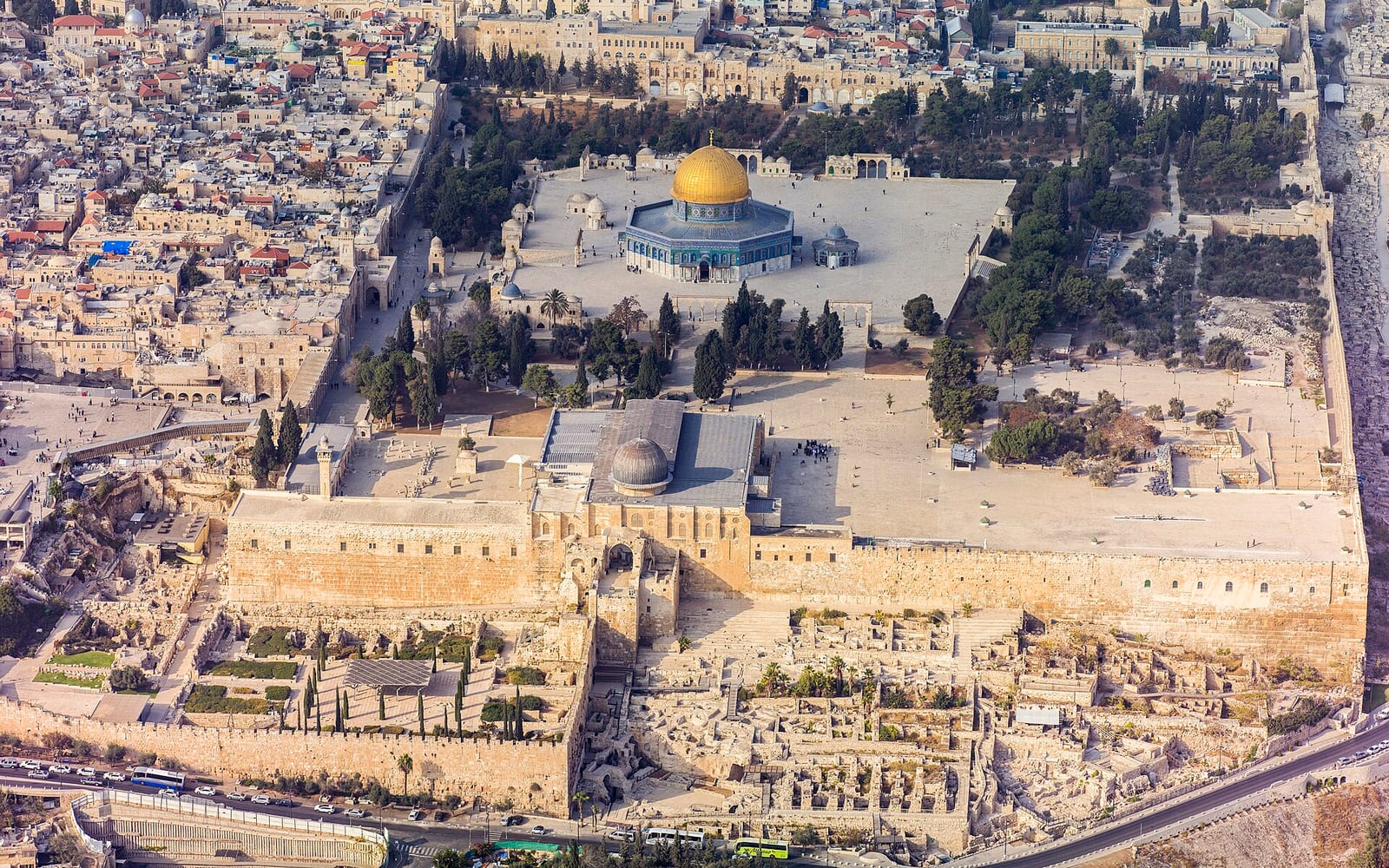
The Western Wall (Kotel) is the most sacred accessible site in Judaism. The Jewish Quarter of the Old City — rebuilt after 1967 — contains the Hurva Synagogue and four Sephardic synagogues. The Western Wall Tunnels run beneath the Old City; guided tours in English (and Russian via licensed guides) should be booked in advance.
Practical tips for FSU travelers
Power and voltage
Israel uses Type H sockets (three pins in a V-shape; 230V/50Hz). FSU countries use Type C / Type F (Schuko, two round pins; 220–230V). The voltage is compatible — your chargers, adapters and electronics from Ukraine, Russia, Kazakhstan or Georgia will work in Israel with a Type C/F to Type H plug adapter only; no voltage converter is needed. These adapters are available in electronics shops before departure, at Ben Gurion Airport on arrival, or at most hardware and household stores in Israel.
Currency and payments
Israel uses the New Israeli Shekel (₪). Cards (Visa and Mastercard) are accepted almost everywhere, including taxis, supermarkets and most market vendors. Ukrainian hryvnia, Russian rubles, Kazakhstani tenge and Georgian lari are not exchangeable in Israel — change to USD, EUR or Swiss francs before travel if you plan to exchange cash at Israeli counters. Wise debit card (wise.com) is strongly recommended: it holds multiple currencies, converts at mid-market rates and avoids both poor exchange spreads and Israeli ATM dynamic-currency conversion traps.
Mobile connectivity
Your FSU SIM will work in Israel on international roaming but at high cost. Better options:
- Israeli tourist SIM — Golan Telecom, Hot Mobile or Cellcom kiosks in the Ben Gurion arrivals hall; unlimited-data 30-day SIM approximately ₪50–90; phone must be SIM-unlocked
- eSIM — providers such as Airalo or Nomad offer Israel data eSIMs activated before departure; compatible with most modern smartphones; keeps your original number active for incoming calls
Apps to know: Gett (taxi, similar to Yandex.Taxi interface); Wolt (food delivery, similar to Yandex.Eats interface); Moovit (public transport navigation).
Food considerations
Israeli restaurant culture is strongly shaped by Jewish dietary laws. In Jewish neighbourhoods, pork products are generally unavailable in kosher-certified restaurants — though Georgian, Arab and non-kosher Tel Aviv restaurants do serve them. Borscht, pickled vegetables and smoked fish are all available at Mahane Yehuda and in FSU-community areas of Ashdod and Bat Yam. Georgian food (khinkali, khachapuri) is genuinely popular in Israel and easy to find in most cities.
Quick reference for Russian-speaking FSU travelers
| Item | Detail |
|---|
| Entry requirement | ETA-IL required (not a visa); apply at iaa.gov.il; ₪25; 72h+ before travel; 2-year multi-entry |
| Russian passport: flights | No direct Israel–Russia service; route via Istanbul (Turkish Airlines) or Dubai (FlyDubai — note: Emirates has suspended TLV service) |
| Georgian/Armenian: direct flight | Georgian Airways TBS→TLV direct; Flyone Armenia EVN→TLV direct — check current schedule |
| Currency | New Israeli Shekel (₪); FSU currencies not exchangeable in Israel; bring USD/EUR or use Wise card |
| Power adapter | Type C/F → Type H adapter needed; 230V compatible — no converter required |
| Mobile data | Local SIM (₪50–90) at Ben Gurion arrival, or eSIM via Airalo/Nomad before departure |
| Russian language | Widely spoken in Israel; Russian-speaking guides available at all major sites |
| FSU community hubs | Ashdod, Nahariya, Bat Yam, Be’er Sheva; “The Dacha” in Tel Aviv |
| Safety advisory | See is-israel-safe.md; check your government’s current travel advisory before booking |
| Emergency numbers | 100 (police), 101 (ambulance), 102 (fire), 112 (international emergency — works from any SIM) |
Planning your Israel trip
A 7–10 day itinerary covers the main sites comfortably: 3 nights Jerusalem (Yad Vashem, Western Wall, Old City, Jewish Quarter); 2 nights Tel Aviv (Jaffa Old Port, Tel Aviv beaches, Mahane Yehuda if day-tripping); 1 night Haifa (Baha’i Gardens, Carmel views, the FSU-flavoured Hadar neighbourhood); optional extension: 1–2 nights Galilee (Sea of Galilee, Nazareth, Tiberias hot springs) or Dead Sea day trip.
The 5 vs 7 vs 10 days guide helps calibrate trip length. For heritage sites, see the Jewish heritage Israel guide. For transport between cities, see the Israel transportation guide.