South Africa has one of the world’s largest Jewish communities per capita — approximately 70,000 practising Jews concentrated mainly in Johannesburg and Cape Town, with strong institutional and community ties to Israel through Birthright Israel, the South African Jewish Board of Deputies and decades of family aliyah. South Africa also has a large evangelical, Anglican, Methodist and Catholic Christian population, and organised church pilgrimages from South Africa to the Holy Land are well established. This guide covers the essential practical information for South African passport holders: ETA-IL requirements, direct flight options, Jewish heritage travel, Christian pilgrimage, medical insurance gaps, currency and power adapter.
For the broader trip-planning picture, see the complete first-time visitor guide and the is Israel safe guide.
Entry requirements: ETA-IL for South African passport holders
South African citizens are on Israel’s visa-exempt list — you do not need a full visa. However, since January 2025, all visa-exempt nationals (including South Africans) must obtain an Electronic Travel Authorisation (ETA-IL) before travelling to Israel.
Applying for the ETA-IL
- Apply at: iaa.gov.il — the official Israeli Airports Authority portal
- Fee: ₪25 (the rand equivalent varies — check the current ZAR/ILS rate at XE.com before applying; you pay in shekels as charged)
- Validity: 2 years, multiple entries
- Processing time: typically 72 hours to several days — apply at least one week before departure
- What you need: your passport number, date of birth and basic travel details — no supporting documents are required for the ETA-IL itself
The ETA-IL is not a guarantee of entry. Israeli immigration officers at Ben Gurion Airport may ask about your travel purpose, accommodation details and return flight. Having your hotel bookings and return ticket on your phone or printed will help the process go smoothly.
A note on South African–Israeli diplomatic relations
South Africa’s government has taken a critical diplomatic position toward Israel, including closing its embassy in Tel Aviv in 2018. This does not affect South African citizens’ right to travel to Israel. South Africans continue to travel freely to Israel on their passports with an ETA-IL. However, there is no South African embassy in Israel: if you require emergency consular assistance while in Israel, the nearest South African diplomatic mission is the Embassy of South Africa in Amman, Jordan. Register your trip with DIRCO’s online travel registration system and carry the Amman embassy contact details.
On arrival at Ben Gurion Airport
South African Jewish visitors travelling with an organised heritage or Birthright Israel programme typically carry their tour operator confirmation letter — have this available alongside your passport and ETA-IL confirmation. Passport stamps: Israel no longer stamps passports by default; you receive a paper entry card. Keep this card for the duration of your stay.
Flying from South Africa to Israel
El Al direct service (Johannesburg to Tel Aviv)
El Al Israel Airlines operates a direct route between Johannesburg O.R. Tambo International Airport (JNB) and Tel Aviv Ben Gurion Airport (TLV). Exact schedule and frequency vary seasonally — check elal.com for current availability and to verify that the direct service is operating when you plan to travel.
Connecting options from South Africa
| Hub | Main Carriers | Typical Total Journey |
|---|
| Dubai (DXB) | FlyDubai | 13–15 hours |
| Addis Ababa (ADD) | Ethiopian Airlines | 12–14 hours |
| Istanbul (IST) | Turkish Airlines | 14–16 hours |
| Amsterdam (AMS) | KLM | 15–17 hours |
| Paris (CDG) | Air France | 16–18 hours |
FlyDubai via Dubai is a connection option from both Johannesburg and Cape Town — FlyDubai (distinct from Emirates but also Dubai government-owned) operates up to 10 daily DXB–TLV flights. Note: Emirates has permanently suspended its Tel Aviv service. Ethiopian Airlines via Addis Ababa is often the most affordable option. From Cape Town (CPT), all routes involve at minimum a connection through Johannesburg or a Middle East hub, adding approximately 2 hours to the journey.
When to book
The most affordable fares from South Africa to Tel Aviv are typically in January–February and October–November, outside Israel’s peak seasons. The most expensive periods are Passover and Easter (March–April), the Jewish High Holidays (September–October) and July–August. See the cheap flights to Israel guide for airline comparison tools.
Jewish heritage travel for South Africans
South Africa’s Jewish community has deep roots — predominantly Lithuanian (Litvak) Jews who emigrated to South Africa in the late 19th and early 20th centuries. Most South African Jewish families have relatives in Israel and many have personal connections to the founding-generation institutions of the State of Israel.
Core Jewish heritage sites
Yad Vashem — Holocaust Memorial and Museum (Jerusalem)
The world’s preeminent Holocaust memorial and research centre. South African Jewish visitors often find the Lithuanian section deeply personal given the community’s Litvak roots. The Children’s Memorial and Avenue of the Righteous are among the most powerful spaces. Free entry; advance reservations recommended for groups; closed Saturdays and Jewish holidays.
Western Wall (Kotel) and Jewish Quarter, Old City Jerusalem
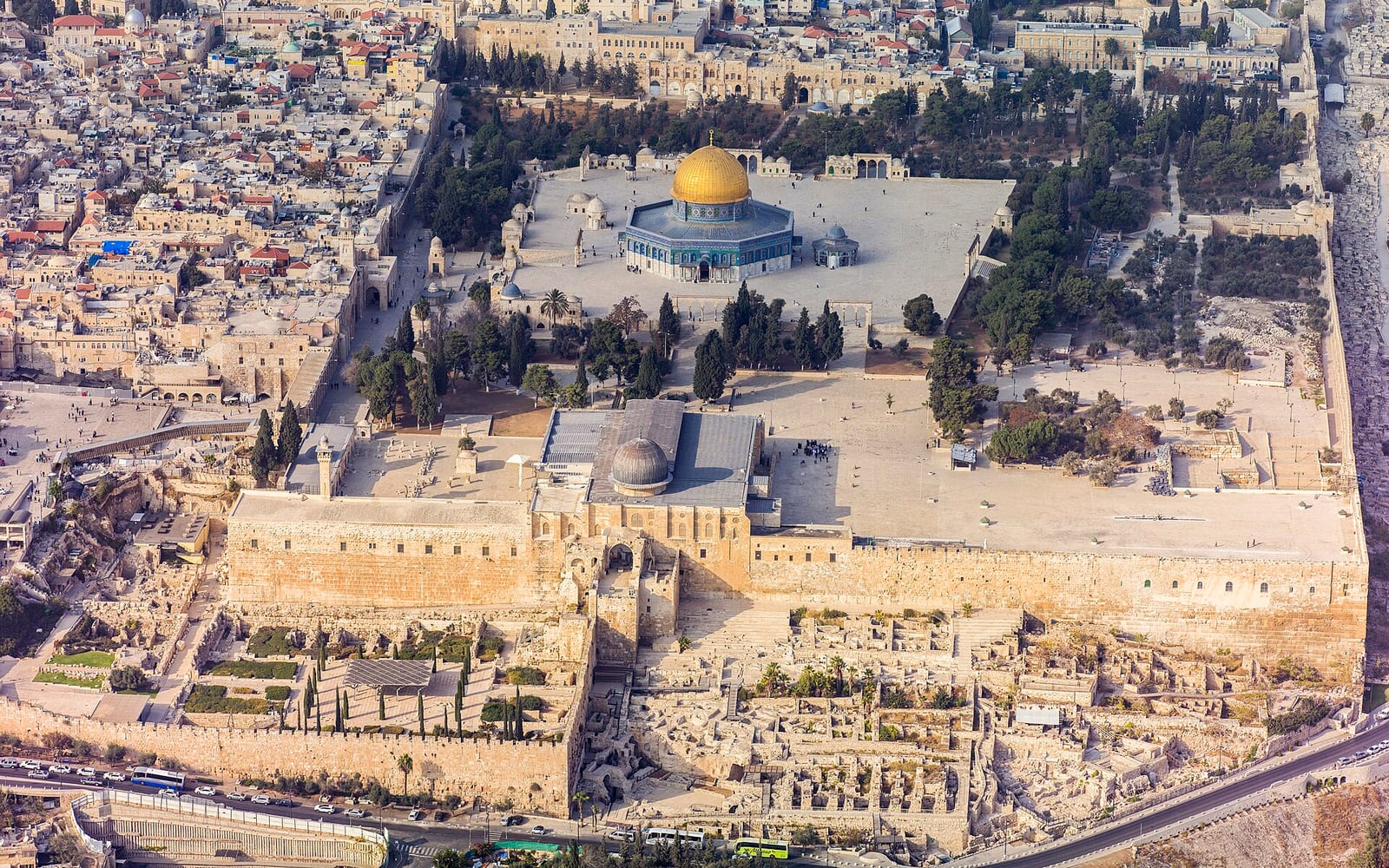
The Western Wall is the most sacred accessible site in Jewish tradition. The Jewish Quarter of the Old City — rebuilt after 1967 — contains the Hurva Synagogue (restored 2010), four Sephardic synagogues open to visitors, and direct access to the Western Wall plaza. The Western Wall Tunnels run beneath the Old City; guided tours in English are available and should be booked in advance.
Mount Herzl and the Military Cemetery (Jerusalem)
Israel’s national military cemetery — the resting place of Theodor Herzl, the founder of modern Zionism, and of Israel’s fallen soldiers. For South African Jewish visitors who grew up with the Zionist narrative in their community institutions, the site carries particular meaning.
Ben Gurion’s Home, Tel Aviv
Ben Gurion Avenue, Tel Aviv — the original home of Israel’s first prime minister, preserved as a museum. His library, personal effects and photographs from the nation-building period are on display. Free entry; excellent English-language audio guide.
Mahane Yehuda Market (Shuk), Jerusalem
The most vibrant market in Jerusalem — fresh produce, spices, prepared food stalls, and bakeries. A practical and sensory centrepiece of an Israel trip. See the Mahane Yehuda market guide for what to eat and when to visit.
South African connection to Israel
The Zionist Federation of South Africa and the South African Jewish Board of Deputies have been foundational institutions for South African aliyah and Israel engagement since the early 20th century. Several Israeli cities have streets named for South African Jewish donors and community leaders. Yad Vashem’s South African section commemorates South African Jews who perished in the Holocaust, and the Diaspora Museum (Anu — Museum of the Jewish People) in Tel Aviv holds materials on the South African Jewish community’s history.
Christian pilgrimage for South African travellers
South Africa’s Anglican, Methodist, Presbyterian, Catholic and evangelical communities all organise regular Holy Land pilgrimages. South African church groups visiting Israel typically run 10–14 day programmes that combine Jerusalem, the Galilee, the Jordan River and Nazareth.
The core Holy Land pilgrimage circuit
Galilee Region:
- Sea of Galilee (Kinneret) — traditional wooden boat tours from Tiberias and Ginosar; guides read from the Gospels during the crossing; the Galilee Boat Museum at Ginosar holds a 2,000-year-old wooden fishing boat
- Church of the Beatitudes — hilltop chapel at the traditional site of the Sermon on the Mount; panoramic lake views
- Capernaum — ruins of Jesus’ ministry base; Byzantine synagogue; octagonal church over Peter’s house site
- Yardenit Baptism Site — South African church groups frequently include baptism or baptismal renewal at the Jordan River; white robes for hire; changing facilities; the Jordan River baptism guide covers logistics
Nazareth:
- Basilica of the Annunciation — the largest church in the Middle East; the Lower Church’s mosaic collection includes panels from many nations
Jerusalem:
- Via Dolorosa — the route of the Stations of the Cross through the Old City; Franciscan procession every Friday afternoon; see the Via Dolorosa guide
- Church of the Holy Sepulchre — built over the crucifixion and resurrection sites according to Christian tradition; the most important church in Christendom; no entry fee; arrive early morning to avoid peak crowds
- Garden of Gethsemane — the ancient olive grove at the foot of the Mount of Olives; the Church of All Nations stands adjacent
- Mount of Olives — panoramic viewpoint over the Old City; the Church of the Pater Noster with the Lord’s Prayer in 140 languages
Bethlehem (West Bank):
- Church of the Nativity — the birthplace of Jesus; UNESCO World Heritage Site in Bethlehem (Palestinian Authority); accessible as a half-day trip from Jerusalem via the Rachel’s Crossing checkpoint; see the Jerusalem–Bethlehem day trip guide for full logistics
Yad Vashem:
South African pilgrimage itineraries commonly include Yad Vashem as an interfaith stop — the Holocaust and the creation of the State of Israel are presented as a single historical arc, and the experience resonates across faith traditions.
Medical insurance and health cover
Medical aid schemes do not cover Israel (by default)
South African medical aid schemes — Discovery Health, Momentum Health, Bonitas, Bestmed, Medihelp, Fedhealth — are designed for use within South Africa’s healthcare system and typically do NOT cover international medical costs. If you are injured or fall ill in Israel, your medical aid card will not be accepted and costs will not be reimbursed by your scheme unless you hold a specific international plan.
What to do before you travel:
- Check with your medical aid scheme whether your plan includes international emergency cover and whether Israel is included as a covered destination
- If not covered, take out a standalone travel insurance policy with emergency medical, hospitalisation and repatriation cover
- Confirm your policy explicitly includes Israel — some policies exclude specific Middle East destinations; read the fine print
South African travel insurance providers with international cover
- Genric Insurance — specialist travel insurance available directly and through brokers
- Travel Insurance Consultants (TIC) — well-established South African travel insurer; available through travel agents
- Dial-a-Flight, Flight Centre SA — bundled travel policies for package itineraries
International providers also available to South Africans: SafetyWing, World Nomads, Allianz Travel, AIG Travel Guard — confirm Israel is included as a covered destination before purchasing.
Currency and money in Israel
Rand is not accepted in Israel
South African rand (ZAR) is not a freely tradeable currency internationally and is not accepted at Israeli banks, ATMs or exchange offices. Do not attempt to carry rand to exchange in Israel.
What to bring
- USD or EUR cash — Israeli cambio offices and airport exchange desks accept USD and EUR; rates are typically competitive in Tel Aviv and Jerusalem city centre
- Visa/Mastercard debit or credit card — South African bank cards (FNB, Standard Bank, Nedbank, ABSA, Capitec, Investec) on the Visa or Mastercard network are accepted at Israeli ATMs and card terminals; inform your bank of your travel dates before departure
- Wise debit card — strongly recommended for South Africans; converts at mid-market rates and avoids both the high ZAR/USD spread of South African banks and dynamic currency conversion fees at Israeli terminals
Using ATMs in Israel
Withdraw New Israeli Shekel (₪) from Israeli ATMs on arrival. Always select “charge in local currency (NIS)” — do not accept the terminal’s offer to convert to ZAR or USD, which applies a poor rate.
Power adapter
South Africa primarily uses the Type M plug (three large round pins, 15 ampere, 230V) — the distinctive large-pin three-round socket used throughout South Africa. Israel uses the Type H socket (three pins in a V-shape, 230V/50Hz).
Voltage: Both countries run at 230V, so the voltage is compatible. Your South African phone chargers, laptop adapters and camera batteries will work in Israel with just a plug adapter — no voltage converter is needed.
Adapter: You DO need a Type M to Type H plug adapter. These are not always stocked in South African travel shops — check Takealot (search “Israel plug adapter” or “Type H adapter”) before departure. Universal travel adapters covering Type H are a reliable alternative. Adapters are also sold at Ben Gurion Airport on arrival, though at a higher price.
Mobile phones and connectivity
South African mobile operators (MTN, Vodacom, Cell C, Telkom) work in Israel on international roaming but roaming rates can be high. Check your carrier’s international roaming add-on before departure.
Better options:
- Israeli tourist SIM — available at Ben Gurion Airport arrivals hall from Golan Telecom and Hot Mobile kiosks, typically open around the clock; a 30-day unlimited-data SIM costs approximately ₪50–90; your South African phone must be SIM-unlocked — confirm with your South African carrier before travel
- eSIM — providers such as Airalo or Nomad offer Israel data eSIMs activatable before departure; compatible with most modern iPhones (XS and later) and Android handsets; lets you keep your South African number active for incoming calls while having Israeli data on a separate line
Diplomatic context: South Africa’s position on Israel
South Africa’s government has taken a high-profile critical diplomatic position toward Israel, including closing the South African Embassy in Tel Aviv in 2018 and, from 2023–2024, bringing proceedings at the International Court of Justice. This diplomatic situation does not prevent South African citizens from travelling to Israel, and South Africans continue to visit freely on their passports.
Practical consequences for South African travellers:
- There is no South African Embassy or High Commission in Israel — register your trip through DIRCO’s travel registration system and carry emergency contact details for the South African Embassy in Amman, Jordan (+962 6 592 3192)
- Check the current DIRCO travel advisory for Israel at dirco.gov.za before booking and before departing
- Israeli border officials are aware of South Africa’s government position; this does not affect individual travellers, but be prepared to clearly explain your personal travel purpose (tourism, family visit, pilgrimage, heritage travel)
Quick reference for South African travellers
| Item | Detail |
|---|
| Entry requirement | ETA-IL required (not a visa); apply at iaa.gov.il; ₪25; 72h+ before travel; 2-year multi-entry |
| Flights | El Al direct JNB→TLV (check current schedule at elal.com); FlyDubai via Dubai (note: Emirates has suspended TLV service) |
| Currency | New Israeli Shekel (₪); ZAR not accepted; bring USD/EUR cash or Wise card |
| Payments | FNB/Standard Bank/Capitec Visa/Mastercard cards work; inform your bank before travel |
| Power | Type H socket; 230V — same voltage as SA; Type M → Type H adapter needed |
| Medical cover | Medical aid (Discovery, Momentum) typically not valid abroad; get travel insurance |
| Mobile data | Local SIM (₪50–90) or eSIM recommended; SA roaming expensive |
| Safety advisory | Check dirco.gov.za before booking and departure |
| No SA embassy in Israel | Nearest: South African Embassy, Amman, Jordan — +962 6 592 3192 |
| Emergency numbers | 100 (police), 101 (ambulance), 102 (fire), 112 (international emergency) |
Planning your Israel trip from South Africa
A 10–14 day itinerary covers the main Jewish heritage and Holy Land pilgrimage circuit comfortably: 3 nights Jerusalem (Western Wall, Yad Vashem, Via Dolorosa, Mount of Olives); 1–2 nights Galilee (Sea of Galilee boat tour, Capernaum, Nazareth, Yardenit); a Bethlehem morning (Church of the Nativity); 2 nights Tel Aviv (Jaffa, Mahane Yehuda, Mediterranean coast); optional extension: Dead Sea or Eilat.
The 5 vs 7 vs 10 days guide helps calibrate trip length. For pilgrimage sites in depth, see the Christian pilgrimage Holy Land guide. For the Jewish heritage circuit, see the Jewish heritage Israel guide. For transport between cities, see the Israel transportation guide.