The Israel Bike Trail (IBT) is a 1,200km mountain-bike route crossing the full length of the country — from the northern forests of Kibbutz Dan near the Lebanese border to the Red Sea coast of Eilat. It is Israel’s answer to cycling epics like the Great Divide or the Via Rhôna: a continuous off-road route through radically different landscapes, built for multi-day bikepacking rather than roadies or leisure spinners.
This guide is for international cyclists planning an IBT trip of 5 to 30 days. It covers the best sections for limited time, logistics for flying in with a bike, water planning, accommodation and seasonal safety.
For the official GPX files and up-to-date segment status, the authoritative source is ibt.org.il. This guide complements — not replaces — the official resource.
IBT at a glance
| Detail | Information |
|---|
| Total length | ~1,200km from Kibbutz Dan to Eilat |
| Official segments | 27 segments; typical stage 35–40km |
| Surface | MTB singletrack, dirt roads, gravel; no paved roads |
| Open sections (mid-2026) | Northern ~400km (Galilee + Carmel) fully waymarked; southern segments progressively open |
| Minimum bike | Hardtail MTB, 100mm+ front suspension, tubeless-capable tyres |
| Navigation | ibt.org.il GPX tracks; Trails of Israel app (offline capable) |
| Official site | ibt.org.il |
| Annual event | The Israel Ride — Jerusalem to Eilat, ~500km, November |
Why the IBT exists
Until 2020 Israel had the INT — the Israel National Trail, a 1,100km hiking route celebrated by National Geographic as one of the world’s greatest long-distance walks. Cyclists had no equivalent. The IBT was developed by the Ministry of Tourism, INPA (Israel Nature and Parks Authority) and the JNF as a response: a purpose-built off-road cycling corridor crossing the same ecological and geographical diversity.
Like the INT, the IBT benefits from a trail-angel network — Israeli families and kibbutzim who leave water taps and bike-wash hoses outside for passing cyclists, and occasionally offer a floor or guest room. This is not guaranteed, but it is a genuine expression of Israeli hospitality toward long-distance travellers.
The five landscape zones
The IBT passes through five distinct environments, which is part of its appeal:
1. Upper Galilee (segments 1–6) — Dense Mediterranean forest, the Jordan River headwaters, Druze villages in the high Galilee ridgeline, and the Hermon foothills. Technically moderate. Best March–May (wildflowers) and October–November (autumn colour).
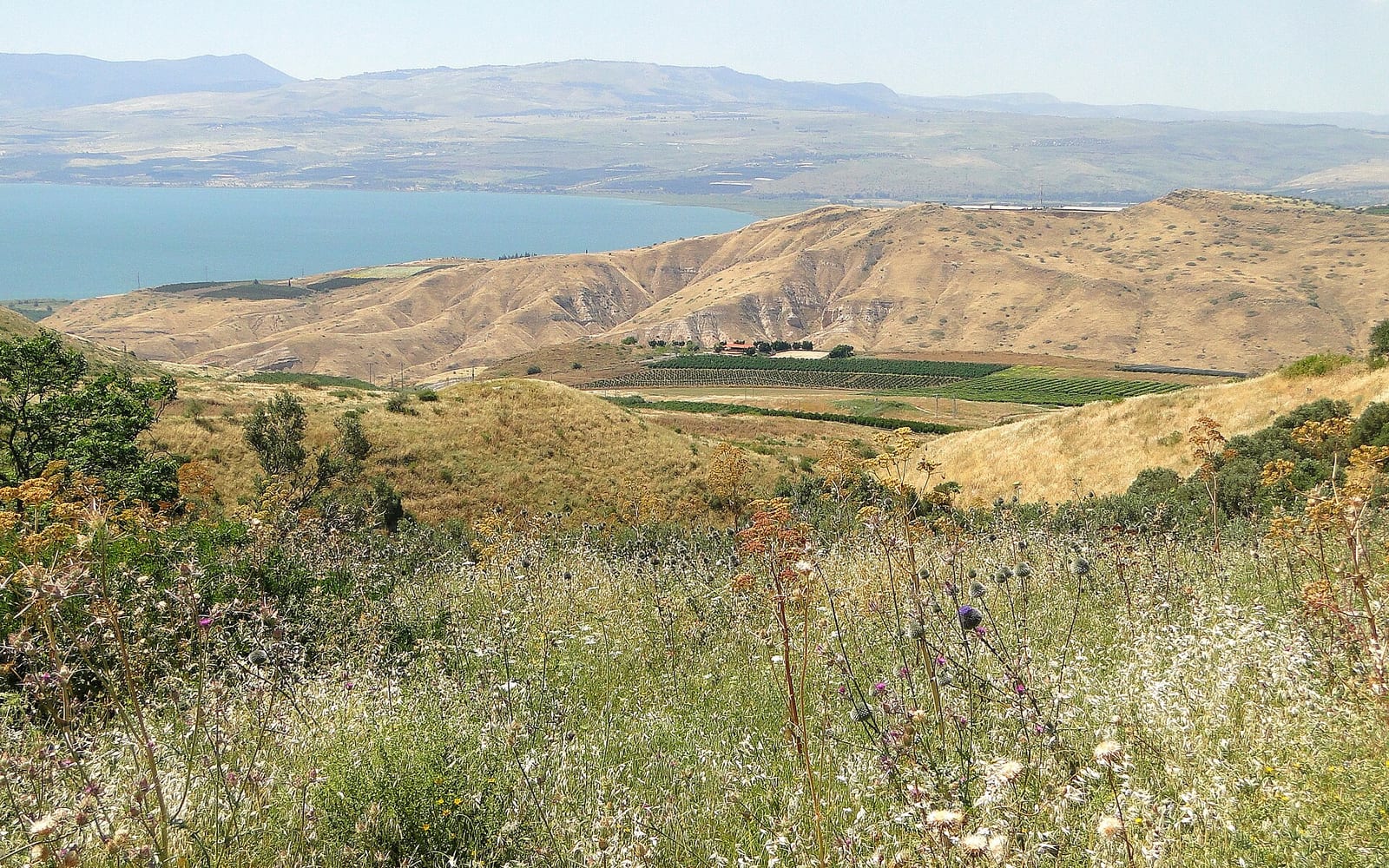
2. Lower Galilee and Jezreel Valley (segments 7–11) — Mount Arbel’s dramatic limestone cliffs above the Sea of Galilee, the fertile Jezreel Valley plains, and the Carmel range. Trail surfaces become more varied. Good year-round except July–August.
3. Sharon and Samaria corridor (segments 12–16) — Foothills running south through the central part of the country. Some of the IBT’s quieter and less-documented sections. Accessible from Tel Aviv for day rides.
4. Jerusalem Hills and Judean Desert (segments 17–21) — Biblical landscape with dramatic ridge riding and a technically demanding descent toward the Dead Sea and Arava Valley. Year-round except July–August.
5. Negev and Arava (segments 22–27) — The IBT’s defining desert challenge. The new Yahel-to-Timna singletrack (opened 2025–2026) forms the southernmost 100km+ of the route, dropping from the Arava highlands to Timna National Park and then descending into Eilat. October–March only. Never ride these sections May–September.
Best sections for limited time (5–7 days)
Galilee circuit (segments 1–8, ~280km)
The most accessible entry point for international cyclists. You can fly into Tel Aviv, take a train to Kiryat Shmona or Rosh Pinna, and start riding north-to-south through Upper and Lower Galilee before finishing at the Sea of Galilee or continuing south toward the Carmel.
Why choose this section: Best-developed trail network on the route; densest accommodation options; temperate climate; technically rewarding without the logistical demands of the Negev.
Trailhead access: Trains from Tel Aviv to Kiryat Shmona (via Haifa, ~3h). Return from Tiberias or Haifa. No car needed to start, though a hire car helps with trailhead drops between some segments.
Jerusalem Hills and Judean Descent (segments 15–20, ~200km)
A week riding from the central highlands down through the Jerusalem Hills toward the Arava is the IBT’s most historically resonant section. You pass through pine and oak forests, terraced agricultural valleys, and stark Judean Desert ridges before the trail drops toward the Dead Sea basin.
Why choose this section: Dramatic visual contrast; logistically compact (Jerusalem as base); suits cyclists who want to combine trail riding with city time.
Trailhead access: Jerusalem is 50 minutes from Tel Aviv by train. Hire bikes available in Jerusalem at MamaFish. Return from Beer-Sheva by train.
Negev-Arava-Eilat finale (segments 22–27, ~230km)
The most challenging and remote section, and the one with the highest potential for exceptional riding. The Yahel-to-Timna singletrack — built 2025–2026 — is technically some of the best desert MTB in the region: exposed granite ridgelines, ancient riverbeds and long fast descents into the Timna basin.
Critical constraint: October–March only. The Arava summer is incompatible with safe cycling. Carry 3 litres of water at minimum; check ibt.org.il water-point status before each stage. Never rely on water points that the website marks as seasonal.
Trailhead access: Fly into Eilat or drive from Beer-Sheva (~1h30). Return by bus or flight from Eilat. A hire car based in Eilat for shuttles between segment endpoints is strongly recommended.
Hiring a bike in Israel
If you do not want to fly with your own bike, Israeli hire shops stock decent MTB hardware, though carbon bikes and top-spec full-suspension are rare:
Tel Aviv
- Bike & Beyond (Hayarkon Street area) — hardtail and e-bike hire by day or week
- Tel-O-Fun (city dock system) — hybrid/road only; not suitable for IBT terrain
Jerusalem
- MamaFish — mountain bike hire, day or multi-day, central Jerusalem location
Eilat
- Time Bikes — MTB hire, local trail knowledge
- Reef Bikes — full range including downhill; helpful for Yahel-Timna segment logistics
Availability of quality MTB hire is not guaranteed in peak Israeli holiday periods (Passover week, Sukkot week, Christmas). Book at least 2–3 weeks ahead for any multi-day rental.
Navigation
The IBT uses trail markers matching the INT system: orange stripes on rocks, posts and trees, with the IBT logo. Navigating on markers alone is feasible in the Galilee where the route is well-established. In the Negev and new Yahel-Timna sections, offline GPS is essential.
Download the official GPX files from ibt.org.il before leaving home. The Trails of Israel app (iOS and Android) has the full IBT loaded for offline use and shows real-time position without a data connection.
Komoot has a user-created IBT collection (collection 1917030) with segment-by-segment navigation notes from cyclists who have completed sections — useful as supplementary intelligence but not a replacement for the official ibt.org.il tracks.
Flying in with your bike
Most major airlines serving Ben Gurion Airport carry bikes as oversized checked baggage:
- El Al — Israel’s national carrier; standard bike-as-luggage policy with cardboard box or bike bag; fees and dimensions on el.al website
- EasyJet — bike bags accepted; fixed fee applies; book in advance (verify current TLV service status at easyjet.com)
- Ryanair —
bikes accepted with advance booking Note: Ryanair has suspended all Israel flights since 2023 and has confirmed no restart for summer 2026 — Ryanair is not currently an option for flying to Israel with a bike
Ben Gurion Airport has no bike-box suppliers airside. Buy a cardboard bike box from your local bike shop before travel, or ship a bike bag ahead to your hotel in Israel. The best IBT starting points (Tel Aviv, Jerusalem, Haifa, Eilat) all have UPS/FedEx offices if you need to ship equipment.
Check each airline’s current bike policy and fees directly — these change and the figures above are illustrative, not current commitments.
Accommodation on the IBT
The ibt.org.il website publishes accommodation lists per segment. The main options:
Kibbutz guesthouses — Most IBT segment endpoints are near a kibbutz, and many welcome cyclists actively. Expect private rooms, shared bathrooms in older blocks, and a communal dining room (where available). Prices vary. Book ahead; many kibbutz guesthouses have limited online presence — call directly.
INPA campsites — Designated camping areas within or adjacent to nature reserves. Reserve at parks.org.il. Camping outside designated sites in INPA nature reserves is prohibited.
Urban hostels — Tiberias, Haifa, Jerusalem, Beer-Sheva and Eilat have hostel infrastructure useful for rest days and resupply.
Trail-angel homes — The ibt.org.il website lists registered trail angels who have offered water, showers or floor space to IBT riders. This network is voluntary and variable — never depend on it for your core water or shelter plan, but enjoy it when it occurs.
Water planning by section
| Section | Water availability | Recommended carry |
|---|
| Upper Galilee (1–6) | Springs + kibbutz taps | 2 litres |
| Lower Galilee / Jezreel (7–11) | Community supply + stores | 2 litres |
| Carmel + Sharon (12–16) | Village water points | 2 litres |
| Jerusalem Hills (17–20) | Kibbutz stores + occasional springs | 2.5 litres |
| Judean Desert approach (21) | Limited; check ibt.org.il | 3 litres |
| Negev + Arava (22–27) | Seasonal and critical | 3 litres minimum; refill at every confirmed point |
Never enter the Negev or Arava segments without confirming that the water points ahead are active. This is not a precaution — it is a safety rule. The ibt.org.il segment pages publish water-point status updates; check the night before each stage.
The Israel Ride: annual event
Each November, the Israel Ride — a fundraising cycling event organised by the Arava Institute — runs a ~500km route from Jerusalem to Eilat following the approximate IBT corridor. Approximately 200–300 international cyclists participate annually. A support vehicle travels with riders, accommodation is pre-arranged and full catering is provided at camp each evening.
The Israel Ride is the simplest way to experience IBT-adjacent riding without handling all logistics yourself. Registration opens approximately 12 months before each event; it typically sells out. Visit israelride.com for current dates and registration.
Practical tips
Start in the north, finish in Eilat. The prevailing wind in Israel runs north-to-south, giving a gentle tailwind advantage on the full-route direction. Logistically, flying into Tel Aviv and out of Eilat also allows you to combine an IBT section with a beach rest day at the Red Sea before flying home.
Solo vs. group. Riding the Galilee and Carmel sections solo is safe and common. The Negev-Arava sections in groups of 2+ are strongly advised — desert rescue is expensive and slow. If you are riding solo in the south, share your daily itinerary with someone not on the trail.
Shabbat logistics. Most Israeli bike shops and kibbutz services shut Friday afternoon through Saturday night. Plan resupply, hire extensions and rest-day accommodation with Shabbat closure in mind. This affects roughly one day of every seven; it is easy to work around with advance planning.
Emergency contact. The Israel Nature and Parks Authority (INPA) emergency line is the appropriate resource for trail incidents in INPA-managed sections. Magen David Adom (Israel’s emergency services, equivalent to 101 for ambulance) covers the road network. In the Negev and Golan, mobile coverage can be patchy — download offline maps and share your GPS track.
Golan Heights segments. Some IBT segments in the Golan pass near areas with historical military significance. Stay on the marked IBT route. INPA and ibt.org.il flag any restricted areas on the official maps — follow the trail markers and do not deviate toward unmarked terrain near the Syrian-side perimeter.
Cross-links and further reading