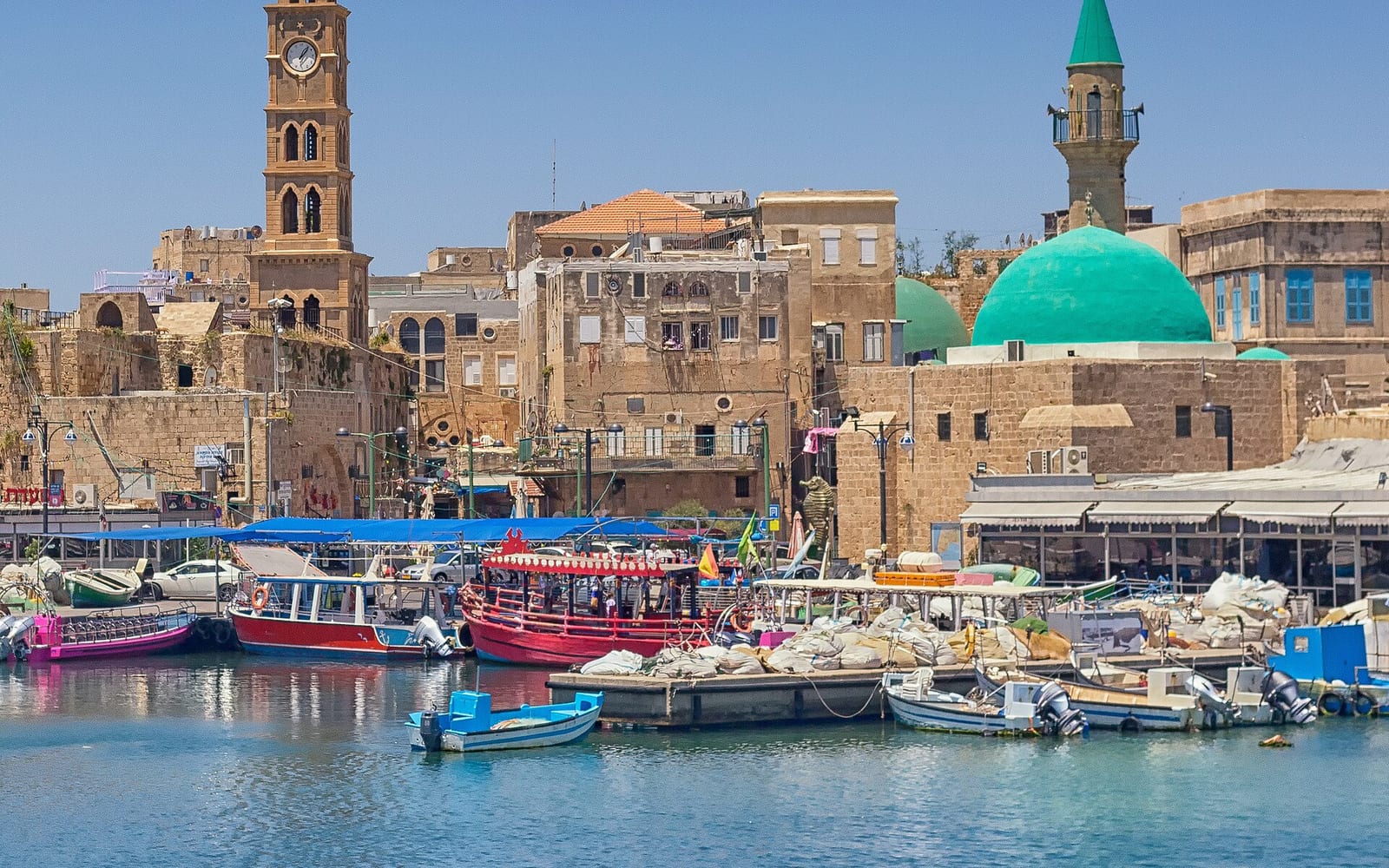
Israel’s biggest theatre festival doesn’t happen in a shiny purpose-built arts centre. It happens in the subterranean Crusader halls of Akko’s UNESCO Old City, in centuries-old courtyards, and in cobblestone alleys where performers set fire to things at close range to an unsuspecting crowd.
The Acco Festival of Alternative Israeli Theatre has been running since 1983. It draws 300,000 visitors over four days each Sukkot — making it one of the largest cultural events in the country and the definitive showcase for original Israeli theatre and street performance.
What is the Acco Festival?
The festival is formally a competition: Israeli theatre companies submit original productions, which are performed across the Old City and judged by a professional jury for a set of coveted festival prizes. But the competition frame is almost beside the point for most visitors, who come for the spectacle of having a medieval city turned into a living stage.
The programme splits into four types of experience:
- Competition theatre — premiere-quality original Israeli plays, many of them world premieres, staged in intimate venues inside the Crusader halls, Hospitaller compound, and Pisan Quarter. Tickets ₪30–75.
- Street theatre — fire performances, physical theatre, juggling, pantomime, and acrobatics spilling through the Old City alleys at all hours. Largely free.
- Mango Outdoor Stage — large-format concerts and headline performances for bigger audiences, typically Israeli music acts.
- Arts and crafts bazaar — local artists selling through the festival grounds; food stalls running throughout.
The venues are half the attraction. The Crusader-era Knights’ Halls — massive underground chambers that date to the 12th century — host some of the most atmospheric productions. The Templar tunnel and Ottoman-period courtyards serve as stages and between-show promenades. The entire UNESCO World Heritage site effectively becomes one large theatre.
2026 dates and tickets
Sukkot begins on the evening of September 24, 2026. Hol HaMoed (the intermediate days) runs September 26 – October 1 — the festival’s window. Exact programme and scheduling appears on accofestival.co.il roughly 4–6 weeks before the event.
Tickets for competition plays and the Mango Stage are sold online at the festival site and at the gate. Individual shows: ₪20–75 depending on category and venue. A 4-day pass is worth buying if you plan to catch more than three or four productions — it typically offers 15–20% savings.
Buy online well ahead: the festival has sold out high-demand shows in past years, particularly the Saturday evening Mango Stage headline and any competition play that gets early word-of-mouth buzz. The Old City itself charges no entry during the festival period.
Getting to Akko
From Tel Aviv
The intercity train from Tel Aviv HaHagana or Tel Aviv Savidor Center reaches Akko Station in approximately 1 hour on the direct coastal line. Trains run every 30–60 minutes; check the Israel Railways real-time app (Reka) for schedules. From Akko Station, it is a 15-minute walk west to the Old City gates or a ₪15–20 taxi.
From Haifa
30 minutes by train from Haifa Merkazit HaMifratz (the main northern transit hub) or Haifa Bat Galim. Trains are frequent. This makes Haifa an excellent base for the festival — you can return south after a late-evening show and be back in your hotel within the hour.
By car
Parking near the Old City is limited to the perimeter — use Waze to find the designated festival lots. Late-evening return is awkward if you drove alone and want to drink; the train is the better call for evening festival visits.
Accommodation strategy
Akko’s hotel stock is small, and properties fill 8–10 weeks ahead for the festival. Three practical bases:
| Base | Travel to festival | Best for |
|---|
| Akko Old City | Walking distance | Maximum immersion; book very early |
| Nahariya | 10 min by train north | Beach resort feel; broader choice; good value |
| Haifa | 30 min by train south | Widest hotel choice; Carmel restaurants; Bahá’í Gardens day |
The Efendi Hotel inside Akko’s Old City is the most atmospheric stay but books out almost immediately for Sukkot. For Nahariya, the beachfront strip has several medium-range options. Haifa’s Carmel and Central Carmel areas offer the best range — from budget to four-star — with good transport links.
See best hotels in Haifa for a full Haifa breakdown. The Akko guide covers year-round visiting and the full Old City circuit.
Combining the festival with the wider Sukkot week
The Acco Festival runs during the same Hol HaMoed window (Sep 26–Oct 1) as several other Israeli events. From a northern base you can add:
- Rosh Hanikra sea grottoes — 20 minutes north of Akko by car; cable car to the chalk caves, dramatic sea-level light show. A strong half-day add-on before an evening performance.
- Western Galilee and Golan wineries — harvest season begins in October; day trip from Haifa or Akko is 1–2 hours by car, ideal for Hol HaMoed when most Israelis are also travelling.
- Sea of Galilee — 1 hour east of Haifa by car; Tiberias, Nazareth, and the northern shores are all reachable on a festival-free day.
For the broader Sukkot picture across Israel — Jerusalem events, Tel Aviv outdoor concerts, the Tamar classical music festival at the Dead Sea — see the Sukkot in Israel guide and the Israel events and festivals calendar.
What makes the festival special
The Acco Festival occupies a specific niche: it is not a comfortable, audience-friendly arts experience. The productions can be challenging (it is, after all, an alternative theatre festival), the crowds at street performances press close, and performances run in parallel so you are always choosing what to sacrifice. That friction is the point. The festival has been a launchpad for some of the most important figures in Israeli theatre over four decades — and the setting, a living medieval city turned over to performance for four days, is genuinely unlike any theatre experience elsewhere in the world.
For the Israel in October calendar, the Acco Festival is among the top three reasons to visit Israel during Sukkot. The full October travel picture — weather, events, crowds — is covered in the Israel in October guide.
For an overview of Israel’s music and performance festival calendar across the year, see Israel music festivals.