Sukkot is the harvest festival at the heart of the Jewish autumn — a week-long holiday that turns Israel into the best place on earth to experience it. Temporary sukkah booths appear on apartment balconies, in restaurant courtyards, outside synagogues and shopping centres; the markets of Jerusalem fill with lulav and etrog sellers; and at the Western Wall, tens of thousands gather at dawn for the Birkat Kohanim — the ancient Priestly Blessing, chanted under a sea of tallitot in one of the most striking communal ceremonies in the world. For a visitor, Sukkot combines Israel’s best autumn weather with a holiday that is simultaneously sacred, domestic, and deeply alive.
It is also Israel’s second-busiest domestic holiday week after Passover. Prices spike, sites fill, and accommodation books out months in advance. Knowing how the week is structured — and planning around it — makes the difference between a stressful trip and an exceptional one.
Sukkot dates
| Year | Sukkot begins | Sukkot ends | Shemini Atzeret / Simchat Torah |
|---|
| 2026 | September 25 (evening) | October 2 | October 3 |
| 2027 | October 15 (evening) | October 22 | October 23 |
All Jewish holidays begin at sunset the evening before the date listed. The first full day of Sukkot 2026 is September 26; the holiday atmosphere — sukkot appearing on every balcony, the Old City decked out — is fully underway from sunset on September 25.
How the holiday week is structured
Understanding the Yom Tov / Chol HaMoed division is essential for planning what you can and can’t do each day.
First day (Yom Tov) — September 26 in 2026: a full holiday equivalent to Shabbat. Public transport stops, most shops and restaurants close, and Jewish cities are quiet. The Old City is a remarkable place to walk on this day, but plan to be self-sufficient with food and transport.
Intermediate days (Chol HaMoed) — September 27–October 1 in 2026: five days during which Israel is essentially open for business, with buses and trains running and all national parks and tourist sites operating. This is the busiest stretch: Israeli families flood every attraction simultaneously, so arriving early at any popular site is not optional — it is necessary. Masada, the Old City, Ein Gedi, and the Dead Sea beaches all reach capacity by mid-morning on Chol HaMoed.
Hoshana Raba — October 2 in 2026: the seventh and final day of Sukkot. Still part of Chol HaMoed in practical terms (things are open), but the morning synagogue prayers have a special, solemn character. The Western Wall holds large morning services.
Shemini Atzeret / Simchat Torah — October 3 in 2026: a full Yom Tov again. In Israel, these two holidays are observed on the same day. Public transport stops; the celebrations (particularly in Jerusalem) run late into the night. Torah scrolls are taken into the streets of Mea She’arim and the Western Wall plaza fills with dancing and singing — see the Simchat Torah in Israel guide for visitor logistics and what to expect.
The Western Wall Birkat Kohanim
The Birkat Kohanim (Priestly Blessing) at the Western Wall is the single most extraordinary public event in Israel’s holiday calendar — and most visitors have never heard of it.
The ceremony takes place on one of the Chol HaMoed mornings during both Sukkot and Passover. Kohanim — Jews who trace their descent from the priestly caste — gather in the Western Wall plaza, spread their tallitot over their heads and hands, and recite the threefold blessing from Numbers 6:24–26 over the thousands below. What makes it arresting is the scale: a vast crowd fills the plaza in the predawn dark, the Kohanim form long rows under their prayer shawls, and the ancient words carry across the stones. It is simultaneously intimate and overwhelming.
Practical details:
- No ticket or advance booking is needed — the Western Wall plaza is open to all
- Arrive by 6:30am at the latest; the plaza fills fast, and good viewing positions go quickly
- The ceremony takes place during the Shacharit (morning) prayer service; the Birkat Kohanim portion begins around 7:30–8:00am but the build-up from the early morning is worth experiencing
- Security lines at the Old City gates can be long — allow 30 minutes to pass through from Jaffa Gate or the Dung Gate
- Dress modestly: covered shoulders and knees for both men and women; free kippot and head scarves are available at the entrance to the prayer area
- Separate sections for men and women are in operation; both have clear sightlines to the plaza
The exact morning for Birkat Kohanim shifts each year — in 2026, confirm the date in the days before you arrive by checking the Western Wall Foundation website or asking your hotel.
Jerusalem during Sukkot
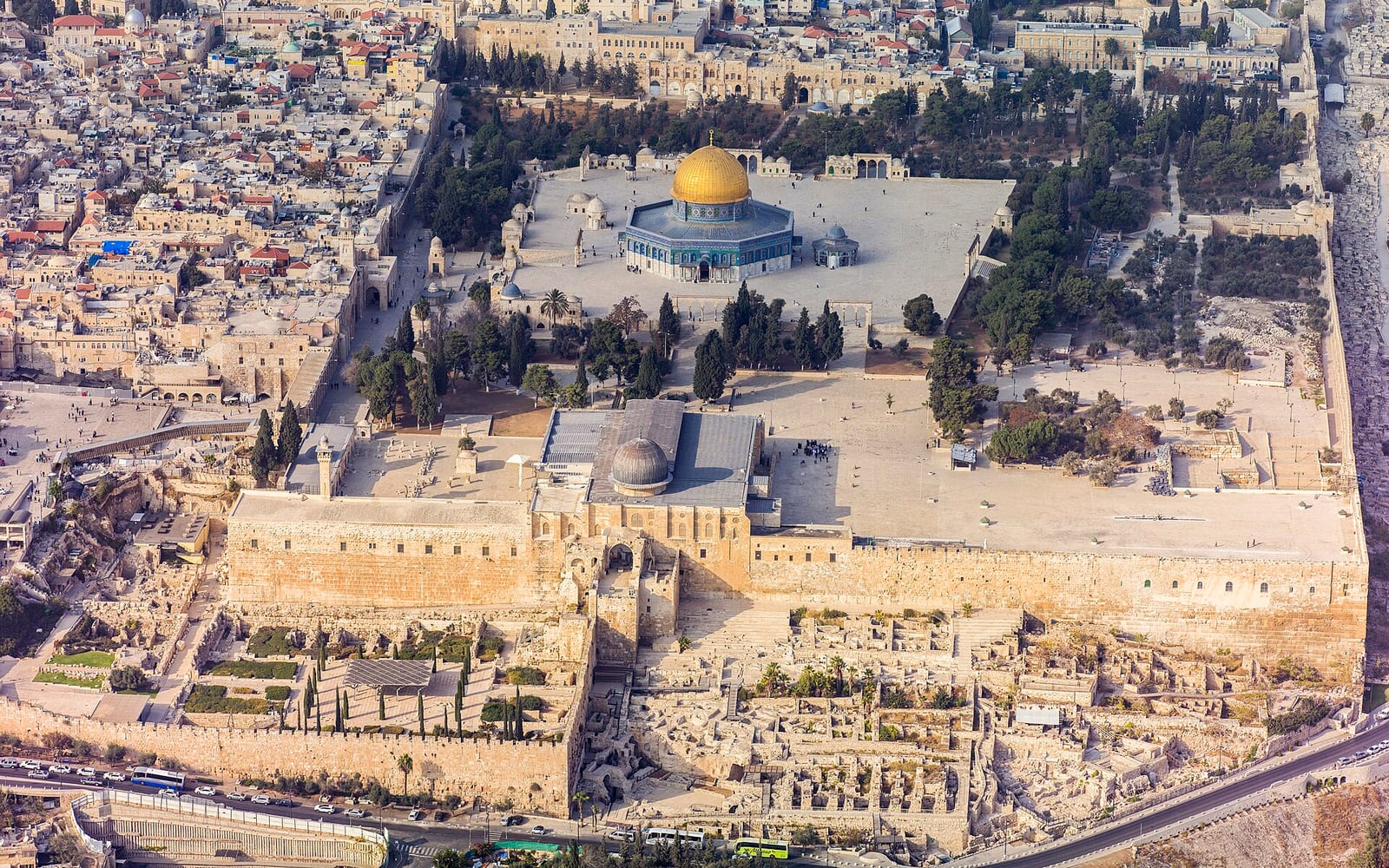
Jerusalem is the natural centre of Sukkot. The Old City wears the holiday visibly: sukkot appear in courtyards and on balconies throughout the Jewish Quarter; the markets stock four-species sets; and the evenings bring a festive energy to the city.
What to expect:
- The Jewish Quarter of the Old City has sukkot outside shops, restaurants, and private homes — it is the most immersive neighbourhood to walk during the week
- Mahane Yehuda market becomes especially atmospheric in the evenings during Chol HaMoed: outdoor seating under sukkot, live music, and crowds
- The Jerusalem municipality organises outdoor concerts, cultural events, and public celebrations throughout the week; check the Jerusalem city portal for the current year’s programme
- National parks and archaeological sites — the City of David, Tower of David, and Israel Museum — all run extended programmes during Chol HaMoed, but ticket demand is high. Book in advance where possible
- The Tower of David light show runs nightly during Sukkot week; this is among the most popular ticketed events in Jerusalem and should be booked weeks ahead
Practical note on restaurants: many Jerusalem restaurants build a sukkah for the week and serve meals inside it. Some close entirely on the first day and Shemini Atzeret; others operate throughout. Check hours before making plans on Yom Tov days.
Northern Israel during Sukkot
The Galilee and Golan offer a different kind of Sukkot experience. Sukkot falls at the very beginning of autumn in the north, and by late September the summer heat has broken and the landscape is at its greenest since spring.
Crane migration season begins: the Hula Valley, north of the Sea of Galilee, is one of the world’s great bird migration corridors. Common cranes arrive from northern Europe in mid-October, but by late September the early vanguard — along with storks, pelicans, and raptors — has already reached the valley. A dawn walk at Agamon HaHula during Sukkot catches the beginning of migration season before the main October crowds arrive. See the birdwatching in Israel guide for Hula Valley access and logistics.
The Galilee national parks — Banias, Dan, Tel Dan, and Nahal Amud — are all accessible during Chol HaMoed and are considerably less crowded than Jerusalem or the Dead Sea. The trails are still green and the waterfalls are flowing. A Sukkot week that begins in Jerusalem and migrates north to the Galilee for its middle days is a well-tested itinerary for visitors who want both the city atmosphere and outdoor time. See the Galilee region guide.
Practical planning: accommodation, prices, and logistics
Book two to three months ahead. Sukkot accommodation in Jerusalem, Tel Aviv, and the Galilee at peak. Prices rise steeply — the holiday week sits at the same demand level as Passover for the most popular areas. Jerusalem Old City-adjacent hotels are the first to sell out; kibbutz guesthouses in the Galilee follow. If you can be flexible, the days immediately before the holiday (mid-September in 2026) offer the same excellent weather at significantly lower prices.
A useful timing strategy: plan the heavy logistics (Birkat Kohanim, Old City, Masada) for weekday Chol HaMoed mornings rather than weekends. Israeli families typically travel on Friday–Saturday transitions, making Friday Chol HaMoed the most crowded single day of the week. A Tuesday or Wednesday morning arrival at Masada or the Dead Sea is a materially better experience.
Driving versus public transport: during Yom Tov days (first day and Shemini Atzeret), public transport stops entirely. Having a hire car gives you flexibility to move between sites and reach places outside city centres. During Chol HaMoed, transport runs normally and traffic into Jerusalem is heavy; arriving by bus or train from a base outside the city can be easier. See the car rental Israel guide.
Chag sameach: it is appropriate — and well received — to wish people Chag Sameach (happy holiday) or Moadim l’Simcha throughout Sukkot.
Combining Sukkot with more of Israel
Sukkot falls in what many experienced Israel travellers consider the best week of the year: the heat has broken, the sea is still warm from summer, national parks are green, and the holiday fills the country with a spirit that has no equivalent. A few natural combinations:
- Jerusalem deep-dive: Jerusalem is the heart of Sukkot. The Sukkot in Jerusalem guide covers the city-specific events — Birkat Kohanim timing, the Jerusalem March, Tower of David Sukkot shows, and Old City hotel booking strategy — in full.
- Tel Aviv’s Sukkot: a different holiday register — Hayarkon Park outdoor concerts, warm beach swimming at 26–28°C, sukkah-terrace dining in Neve Tzedek and Rothschild, and Dizengoff Square family celebrations. See the Sukkot in Tel Aviv guide for the full programme, transport, and hotel booking strategy.
- High Holidays arc: if you plan to be in Israel for Rosh Hashanah (September 11–12, 2026) and Yom Kippur (September 20, 2026), staying through Sukkot gives you the full Jewish New Year season — a deeply immersive three-week Israel experience. See the guide to traveling in Israel during Jewish holidays for the full holiday-by-holiday tourist breakdown.
- Autumn nature: the post-Sukkot lull in October and November is Israel’s quietest good-weather window. Combine Sukkot week with hiking in the Negev or Galilee in the weeks after. See the Israel in autumn guide.
- Birdwatching in the Hula Valley: the crane migration peaks in late October and November, after Sukkot ends — but arriving during the holiday puts you in the north at just the right moment to catch the migration’s beginning. See the birdwatching in Israel guide.
- Jewish heritage sites: Israel’s deep history of Jewish life and tradition resonates especially strongly during Sukkot. The Jewish heritage guide covers the main historical and spiritual sites beyond the Western Wall.
- The Shabbat rhythm: during Sukkot week, Yom Tov days follow the same practical rules as Shabbat for tourists. The Shabbat guide covers what to expect on any day with full closures — the guidance applies equally to Yom Tov.