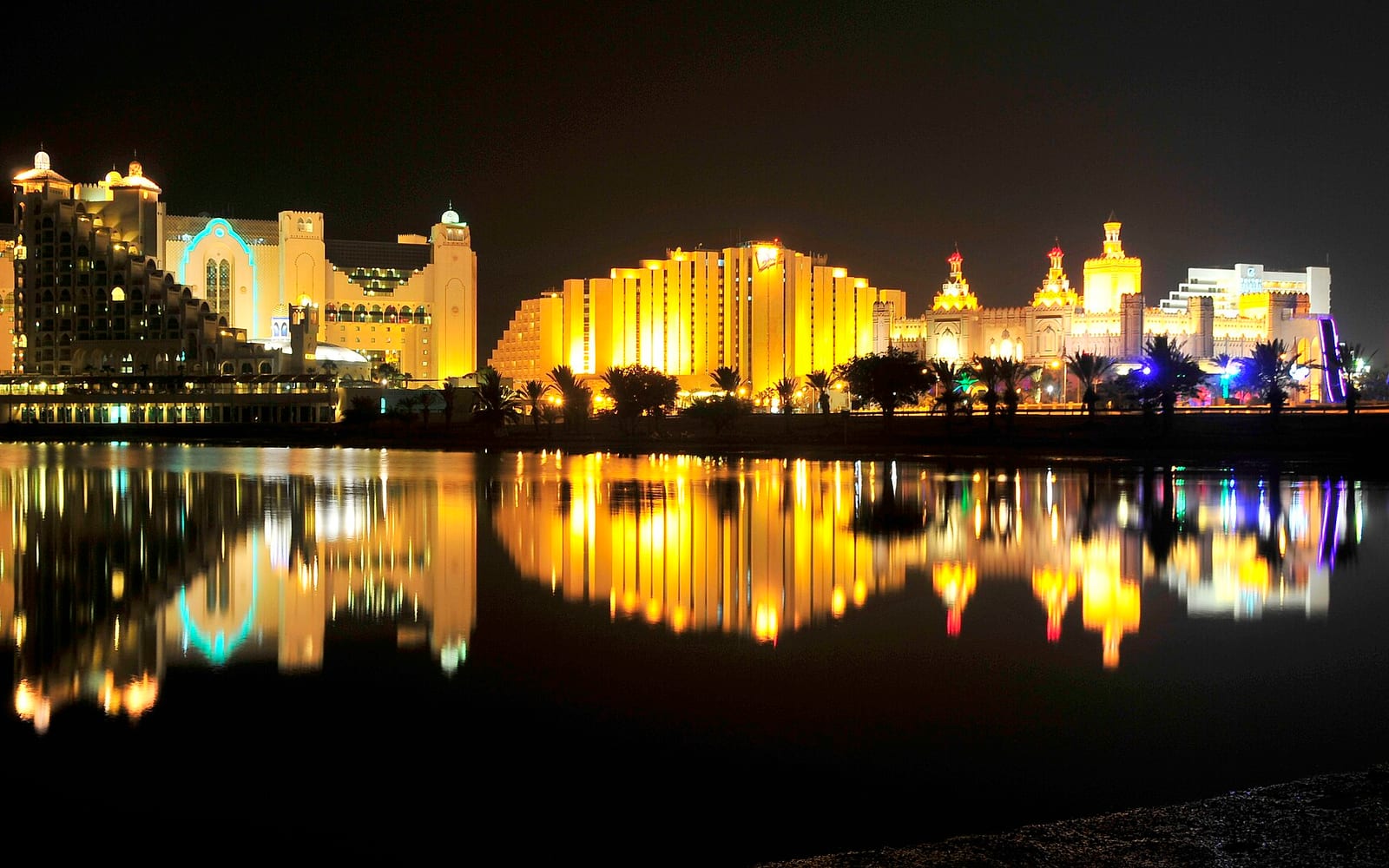
The Eilat Chamber Music Festival brings world-class classical and chamber music to Israel’s Red Sea city each late November or December — intimate recitals in concert halls and hotel performance spaces, with selected outdoor concerts against the backdrop of the Gulf of Aqaba and the red-hued Edom mountains of Jordan visible across the water.
For visitors who want to combine serious classical programming with Eilat’s year-round outdoor lifestyle — the Coral Beach fringing reef, Red Canyon hikes, Timna Park — the festival’s winter timing is ideal: warm and clear without summer’s 40°C heat, and far quieter than the busy Sukkot-season weekends that fill Eilat’s hotels each October.
The Eilat Chamber Music Festival runs annually for approximately 4 to 6 days in late November or December. Exact dates vary from year to year and are announced on the official festival channels in September or October. Always verify the current year’s dates at eilatfestival.co.il before booking travel.
The festival is structured around evening concerts — typically one to two performances each day, running through the early evening and into the night. A daytime programme of open rehearsals, masterclasses, and informal sessions accompanies the main concerts in some editions, providing an additional dimension for visitors with deeper interest in the music.
Venues and stages
The festival uses several complementary spaces across Eilat:
Indoor concert halls: air-conditioned auditoriums suited to the acoustic demands of chamber music. String quartets, piano trios, and vocal recitals are generally staged indoors. Seating is venue-style; the indoor settings allow the detail of chamber playing to be heard without the acoustic compromise of outdoor sound.
Hotel performance spaces: Eilat’s North Beach resort hotels have hosted evening recitals in their auditoriums and convention spaces, placing concerts within walking distance of the main hotel district. These are typically intimate settings for smaller ensembles.
Red Sea waterfront: outdoor or semi-outdoor stages with the Gulf of Aqaba as backdrop have been used for selected concerts, particularly for orchestral-scale works or operatic performances where the visual drama of the setting adds to the experience. The Edom mountains in Jordan glow in the evening light across the water — a combination of landscape and music found nowhere else on the classical festival circuit.
What’s on the programme
The Eilat Chamber Music Festival anchors its programming in the classical chamber tradition — the string quartet, piano trio, and chamber sonata literature at the heart of European classical music — while broadening the programme in two directions:
Orchestral and operatic works scaled for chamber forces appear regularly in the programme. Opera highlights and vocal recitals bring singers to a festival otherwise dominated by instrumental music.
World music and Romani music traditions have featured in past editions, reflecting the festival’s position in a city at the crossroads of European Jewish, Middle Eastern, and Mediterranean musical cultures. Gypsy (Romani) music strands within the programme give the festival a distinct character beyond the purely academic chamber circuit.
Israeli composers and performers share the programme with international soloists and ensembles. Israeli classical musicians of international standing — particularly in chamber repertoire — are a consistent presence.
The specific programme and participating artists are announced each year. Check the official site or Israeli classical music listings for the current edition’s lineup.
Tickets
Single-concert tickets have historically ranged from approximately ₪80 to ₪250 per seat depending on the programme and seating category. Multi-concert passes — covering several evenings — are generally available at better per-concert value for visitors attending multiple nights.
Tickets are typically sold via:
- The official festival site: eilatfestival.co.il (verify current URL)
- IsraTicket (israelticket.co.il)
- Leaan (leaan.co.il)
Headline recitals with internationally prominent soloists sell out first. Purchase as soon as the programme and tickets are announced — typically September or October for a November/December festival.
Eilat in late November and December
The festival’s timing places it in one of Eilat’s genuinely comfortable seasons:
Weather: daytime highs of 22–26°C, almost no rain, and clear skies. The intense heat of July and August (when daytime temperatures exceed 40°C) is long past. Evenings drop to 14–18°C — a light jacket is appropriate for outdoor evening concerts.
Red Sea conditions: the sea temperature in late November is around 22–23°C — comfortable for snorkelling without a wetsuit and excellent for diving. The Coral Beach Nature Reserve fringing reef is accessible year-round and uncrowded compared to summer.
Hotel availability and prices: late November is quieter than the Sukkot festival period (October) and the summer peak. Hotel availability in Eilat is generally good, and nightly rates are lower than during festival periods that draw larger domestic Israeli crowds. The Eilat hotels guide covers the North Beach and Coral Beach zones with practical accommodation guidance.
Daytime activities to combine with festival evenings:
- Coral Beach Nature Reserve: Eilat’s world-class fringing reef — snorkelling from the shore, visibility excellent in November. Bring your own or rent from the beach. See the Eilat beach guide.
- Red Canyon: a 3-km hike through red Nubian sandstone formations, 30 minutes north of the city. Half-day with a car. See the Red Canyon Eilat guide.
- Timna Park: ancient copper landscape with the Mushroom Rock and King Solomon’s Pillars. 25 km north of Eilat. See the Timna Park guide.
- Eilat Underwater Observatory Marine Park: giant shark tunnel, submarine cruise, and coral aquarium — a 3–4 hour visit. Eilat Dolphin Reef is 5 km south of the city and requires advance booking in the winter season.
Getting to Eilat
By air: Ramon Airport (HRL), 18 km north of Eilat, handles domestic Israeli flights. El Al, Arkia, and Israir operate the Ben Gurion–Ramon route (45–55 minutes). In late November and December, seats are readily available midweek. Book return flights at the same time as your hotel to lock in availability.
By bus: Egged operates direct services from Jerusalem’s Central Bus Station (approximately 3 hours) and from Tel Aviv’s Southern Bus Terminal (approximately 4.5 hours). Late-evening return buses from Eilat to Jerusalem and Tel Aviv run until early evening — check schedules if you plan to return after an evening concert.
By car: approximately 3 hours from Tel Aviv via Route 40 through the Negev. Driving gives you the flexibility to combine festival evenings with Negev day trips (Red Canyon, Timna, Mitzpe Ramon) that are harder to reach by public transport.
Both Eilat classical festivals
Eilat’s late-autumn music calendar pairs the Eilat Chamber Music Festival with the Red Sea Jazz Festival Eilat — held in November each year for four open-air evenings on the North Beach waterfront. The Jazz Festival is a large-scale outdoor event (70,000 attendees, multiple stages, headline acts running past midnight); the Chamber Music Festival is smaller, quieter, and primarily indoors. Together they give Eilat the most concentrated classical and jazz calendar of any Israeli city in its winter season.
If both festivals fall in the same calendar window, combining a trip around both events is feasible — Eilat’s North Beach hotel district is compact, and the two festival formats complement rather than duplicate each other.
Eilat’s year-round music calendar also includes the Fattal Rock Festival Eilat each June — 3 evenings of Israeli rock headliners at Fattal Hotels’ North Beach beachfront. Together, these three festivals (June rock, November jazz, November/December classical) give Eilat one of the most diverse annual music calendars of any Israeli city.
For the full picture of Israeli music events, see the Israel music festivals guide. For planning a longer Eilat stay around either festival, the Eilat travel guide covers the city’s beach zones, transport, dining, and practical logistics in detail.