Israel’s oldest and largest film festival has been running since 1983. Forty-one editions in, the Haifa International Film Festival draws around 300,000 visitors over 10 days each October, making it one of the most attended cultural events in the country and the definitive annual showcase for both international and Israeli cinema.
The 2026 edition runs October 1–10 — opening on Hoshana Rabbah (the final day of Sukkot Hol HaMoed) and running through the quieter post-holiday week that follows. For visitors, this timing is near-ideal: Haifa during Sukkot is festive and full of atmosphere, and the post-holiday days from October 3 onwards are among the most comfortable in the Israeli travel year.
What is the Haifa International Film Festival?
The festival is Israel’s oldest, established a year before even the Jerusalem Film Festival. It is competitive: international films and Israeli productions enter separate competition tracks, with awards judged by professional juries. But for most visitors, the competitive frame is background context — the draw is the programme itself and the experience of seeing 280+ films screened across a city that spends 10 days operating as one large cinema.
The programme divides into three main tracks:
- International competition — world and Israeli premieres of films from across the globe; many are works that have already screened at Cannes, Venice, or Toronto
- Israeli competition — the most significant annual showcase for new Israeli cinema; world premieres of Israeli productions
- Out of Competition — retrospectives, documentary sections, special screenings, and thematic selections
The full lineup is published at haifaff.co.il in late August or early September. The festival does not publish titles before then — any guide that lists specific films ahead of the official programme should be read with caution.
Venues and free outdoor screenings
The main hub is Cinematheque Haifa (Sha’ar HaPalme Street, near the German Colony), a purpose-built four-screen cinema that runs the bulk of competition and special screenings. The Cinematheque is a 10-minute walk from Haifa Hof HaCarmel train station and a 5-minute walk from the heart of the German Colony.
Alongside the ticketed Cinematheque programme, the festival sets up free outdoor screenings at several points across the city:
- Hadar HaCarmel square — the large public square at the heart of Haifa’s commercial Hadar district; accessible by bus or a short Carmelit ride from the lower city
- Carmel Center plateau — on the ridge above the city; combine with the panoramic views and the restaurants clustered around the Gan Ha’Em park area
The outdoor screenings programme crowd-accessible films rather than competition entries, and they draw large local audiences. Evening outdoor screenings in October Haifa — 22–25°C, the sea visible below, sukkah decorations still in the streets — are one of the more pleasant free cultural experiences in the country.
Tickets and how to buy
Individual screening tickets are typically ₪40–80 depending on the venue, programme slot, and whether the screening is a competition premiere or retrospective. Multi-film passes (5-film, 10-film) offer meaningful savings for anyone planning to see three or more screenings — current pass pricing and availability appear at haifaff.co.il when the programme launches.
For popular competition premieres and the opening/closing night screenings, buy online well ahead — these sell out in past editions. Standard programme slots are usually available at the Cinematheque box office on the day, but mid-day purchases give more choice.
Free outdoor screenings require no ticket. Times and locations are listed on the festival website and on Haifa Municipality social channels.
Visiting Haifa during the festival
Getting there
From Tel Aviv: Israel Railways coastal express from Tel Aviv Savidor Center or Tel Aviv HaShalom to Haifa Hof HaCarmel (the station nearest the German Colony and Cinematheque). Journey: approximately 55–65 minutes. Trains run every 20–30 minutes during the day. From Haifa Hof HaCarmel, the German Colony is a flat 10-minute walk north; the Cinematheque is in the same direction, another 5 minutes.
From Jerusalem: Train via Tel Aviv (~2 hours total) or direct Egged/GB Tours bus from Jerusalem Central Bus Station (~1 hour 45 minutes).
By car: Highway 2 north from Tel Aviv, 55–75 minutes depending on traffic. Haifa’s parking is manageable outside the central business district — Waze is reliable for parking near the German Colony and Cinematheque.
Accommodation
The German Colony is the festival’s natural accommodation hub: boutique hotels on Ben Gurion Boulevard sit within walking distance of the Cinematheque and within 15 minutes of the Bahá’í Gardens lower terrace. Colony Hotel Haifa is the flagship address; smaller guesthouses on the same boulevard offer quieter alternatives.
Higher on the ridge, Carmel Center hotels — including the Dan Carmel — suit visitors who want altitude, panorama, and proximity to the outdoor screenings at the Carmel Center square.
The festival opens on October 1, which falls during Sukkot — Israel’s highest-demand domestic travel week. Haifa hotels, particularly in the German Colony, fill 6–8 weeks ahead for these dates. Book early.
| Area | Travel to Cinematheque | Best for |
|---|
| German Colony | 5 min walk | Festival immersion; restaurant strip |
| Carmel Center | Carmelit + 10 min walk | Panoramic views; outdoor screenings |
| Port / Bat Galim | 15 min by bus | Beach access; budget options |
For a full hotel comparison at every tier — Colony Hotel, Dan Carmel, Port Inn — see the best hotels in Haifa guide.
What to do alongside the festival
The festival runs 10 days; screenings concentrate in afternoons and evenings, leaving mornings open. October is Haifa at its best: comfortable 22–27°C days, the Mediterranean still warm enough to swim (around 25°C at Bat Galim beach), and the post-Sukkot streets quieting pleasantly after the holiday crowd departs.
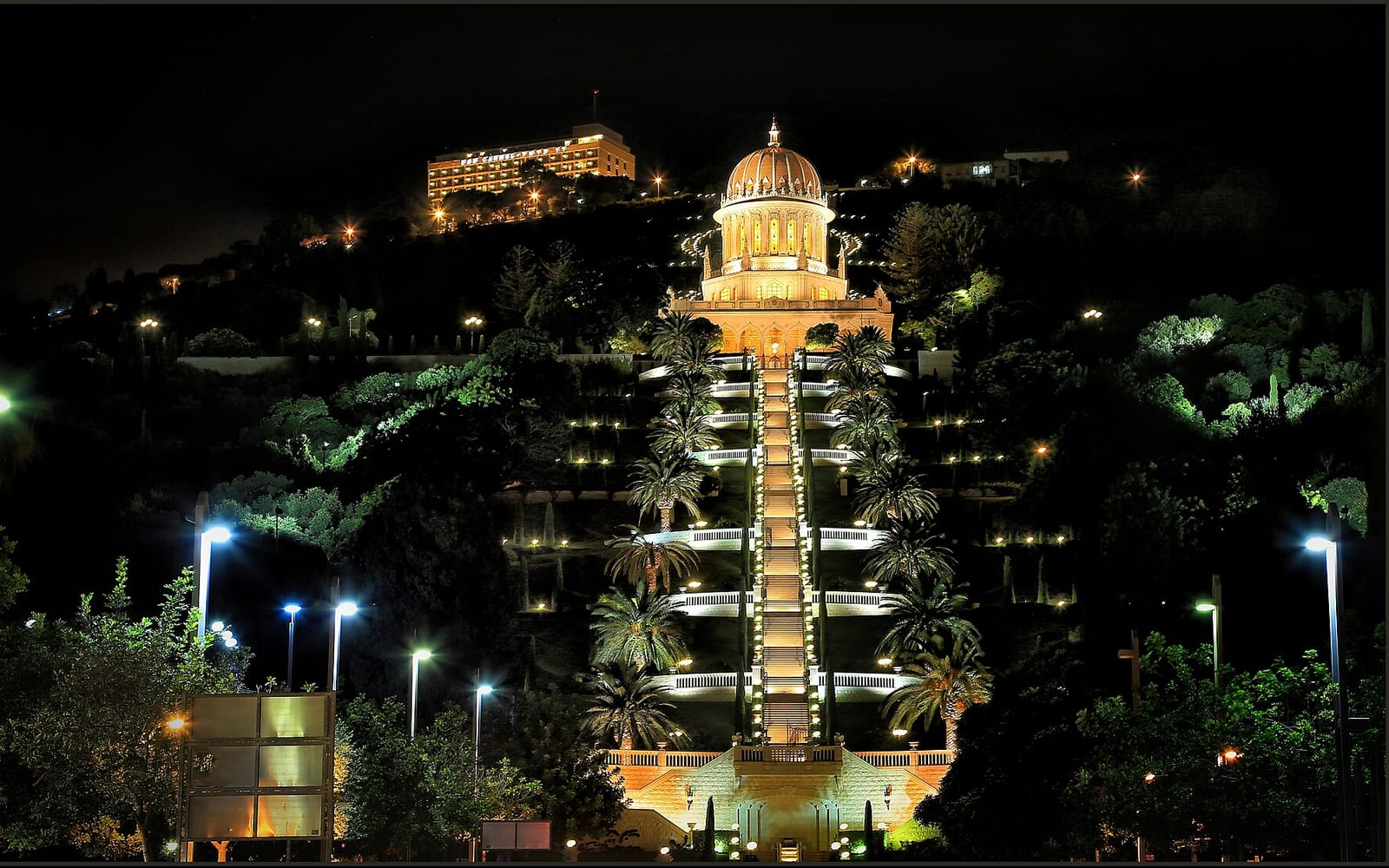
Bahá’í Gardens (UNESCO): Morning guided tours depart at 09:00 Sunday to Friday — book in advance at bahai-haifa.org. The 75-minute guided descent of all 19 terraces is one of the most impressive free-access experiences in Israel. See the Bahá’í World Centre guide for full logistics.
Wadi Nisnas: Haifa’s Arab neighbourhood and the city’s most characterful street for lunch — hummus, freshly baked taboun bread, and the Haifa Municipal Museum of Art are all within a short walk of each other. The neighbourhood hosts a craft market on Friday mornings.
Carmelit funicular: The only underground cable funicular in Israel connects Paris Square (lower city) to Gan Ha’Em on the Carmel ridge in 8 minutes — ride it for the views and the curious mid-century engineering, and use it to reach the Carmel Center outdoor screenings in the evenings.
Akko (25 minutes north by train): Combine a festival stay with a morning in the UNESCO Crusader underground city. In 2026 the Acco Fringe Theatre Festival overlaps with the first days of HIFF (September 26–October 1 for the theatre festival; October 1–10 for film). A film festival visitor arriving early for the Acco Theatre Festival’s final days gets two major cultural events in one trip.
Haifa food scene: The German Colony restaurant strip and the Talpiot market area are both in strong form in October. For a full breakdown of the city’s eating landscape — from Druze food in Talpiot to Arabic pastry in Wadi Nisnas — see the Haifa food guide.
The festival’s place in Israel’s cultural calendar
The Haifa International Film Festival sits at the heart of Israel’s annual cultural autumn. It arrives immediately after the Sukkot holiday cluster (Rosh Hashanah, Yom Kippur, Sukkot, Simchat Torah), which in 2026 spans mid-September through early October. As the holiday crowds clear, the film festival fills Haifa with a different kind of visitor — international programmers, Israeli film industry figures, and the kind of engaged audience that travels specifically for cinema.
For an overview of Israel’s full festival calendar — Sukkot events, Jerusalem concerts, Negev hiking season, and the Hula Valley crane migration that begins in October — see the Israel in October guide and the Israel events and festivals calendar.
The complementary northern Israel picture — Akko, Rosh Hanikra, the Galilee, and the Golan — is covered in the 3 days in Haifa itinerary. For visitors combining Haifa with the Galilee or approaching from a day trip, the day trips from Tel Aviv guide covers the full set of options from the coast.