Turkey and Israel share centuries of Ottoman history: Jerusalem, Akko, Jaffa, Tiberias and the Sea of Galilee all bear the architectural and cultural imprint of four centuries of Ottoman rule (1517–1917). For Turkish visitors, travelling to Israel is in many ways returning to a landscape shaped in part by Turkish hands — the covered bazaars, the mosques, the fortress walls and the land registry records all carry that continuity.
Relations between Turkey and Israel have been complex in recent years, but Israeli authorities welcome Turkish tourists. The main practical difference for Turkish visitors versus most European or North American nationals is the requirement for a tourist visa and a security clearance process, both managed through Israeli embassies. This guide walks through the process step by step and covers flights, health insurance, money, cultural considerations and practical tips.
For the wider trip-planning picture, see the complete first-time visitor guide and the safety guide.
Entry requirements: visa and security clearance for Turkish citizens
Turkish passport holders are not on Israel’s visa-exempt or ETA-IL list — a standard tourist visa is required. The process involves two parallel steps:
Step 1: Tourist visa application
Apply at the Israeli Embassy in Ankara or the Israeli Consulate General in Istanbul. The standard tourist visa (B/2 category) allows a stay of up to 90 days. Required documents typically include:
- Valid Turkish passport (with at least 6 months validity beyond your travel dates)
- Completed visa application form (from the embassy website)
- Passport-size photographs
- Proof of onward travel (return flight booking or onward itinerary)
- Proof of accommodation (hotel reservation or invitation letter)
- Bank statements showing sufficient funds for your stay
- Travel insurance certificate
Step 2: Security clearance
In addition to the standard visa, Turkish nationals undergo a security review administered by Israeli security authorities. This is a background screening process, not an interview — it runs concurrently with the visa application and is handled by the embassy. Processing typically takes 2–4 weeks from the date your complete application is submitted; allow extra time during peak periods (Passover, high holidays, summer).
Key practical tips:
- Apply early: Allow 4–6 weeks before your travel date to absorb any processing delays
- Apply in person or by tracked post: The Israeli Embassy in Ankara (Mahatma Gandhi Caddesi 85, Çankaya) and the Consulate General in Istanbul (İnönü Caddesi 19, Beyoğlu / Taksim area) accept applications — check current hours at embassies.gov.il
- Contact ahead: Visa requirements and processing procedures can change; always confirm the current process directly with the embassy before applying
- No visa on arrival: Turkish nationals cannot receive a visa on arrival at Ben Gurion Airport — you must have your visa in hand before boarding
See the ETA-IL and visa guide for broader Israel entry context.
Flying from Turkey to Israel in 2026
Turkish Airlines suspended its Tel Aviv (TLV) service in 2024 and the route had not resumed as of mid-2026. Several alternatives are available:
Direct service from Istanbul
| Carrier | Route | Notes |
|---|
| TUS Airways | IST (Istanbul) → TLV | Cyprus-based scheduled carrier; check tus-airways.com for current frequencies |
Via connecting hubs
| Hub | Carrier options | Notes |
|---|
| Larnaca (LCA), Cyprus | Cyprus Airways → TLV | Short hop to Cyprus, then connect to TLV |
| Athens (ATH), Greece | Aegean Airlines or Ryanair → TLV | Both operate ATH–TLV direct |
| Budapest (BUD), Hungary | Wizz Air or other BUD-based carrier → TLV | Wizz Air has a TLV hub since May 2026 |
Booking tip: Flight availability and pricing on the TUS Airways route is more limited than the former Turkish Airlines service — book early, especially for travel in July–October. Indirect routing via Athens or Budapest can be competitively priced. See the cheap flights to Israel guide for fare-tool tips.
Health insurance: SGK is not valid in Israel
The Turkish Sosyal Güvenlik Kurumu (SGK) — Turkey’s state social security and health insurance — does not cover medical costs incurred in Israel. Private Turkish health policies also typically exclude Israel.
Medical care for uninsured tourists in Israel can be expensive:
- A GP visit or urgent-care consultation: ₪400–800 (roughly €100–200)
- Hospitalisation per night: ₪2,000–8,000 (roughly €500–2,000)
- Emergency medical evacuation: tens of thousands of euros
A dedicated travel insurance policy with overseas medical coverage and emergency evacuation is strongly recommended before departure. Major international providers (SafetyWing, AXA, Allianz Travel, ERV) offer policies covering Israel — verify that Israel is explicitly included and that the policy is not voided by any conflict-related exclusion clause. See the Israel travel insurance guide for a comparison of major options.
Money: Turkish lira and payment cards in Israel
The New Israeli Shekel (₪ / NIS) is the currency of Israel. The Turkish lira (TRY) is not accepted or exchangeable in Israel — do not bring TRY expecting to exchange it at Ben Gurion Airport or Israeli banks.
Best approach:
- Withdraw NIS at Israeli ATMs on arrival using your Turkish Visa or Mastercard debit/credit card (Ziraat Bank, Vakıfbank, Garanti BBVA, İş Bankası, Yapı Kredi all issue Visa/MC cards accepted internationally). Standard foreign transaction fees apply — check your card’s international fee terms before travelling
- Wise (formerly TransferWise) offers better exchange rates than standard Turkish bank cards and is widely used by travellers. The Wise Mastercard debit card is accepted at Israeli ATMs and payment terminals
- Apple Pay / Google Pay work at NFC-enabled Israeli card terminals when linked to a Visa or Mastercard
- Cash: Carry some NIS for markets (Mahane Yehuda in Jerusalem, Carmel Market in Tel Aviv), sherut shared taxis and smaller venues
Turkish power plugs and adapters
Turkey uses Type C and Type F plugs (two round pins; 230V/50Hz). Israel uses Type H sockets — a three-flat-pin V-shape configuration found only in Israel — also at 230V/50Hz.
Because both countries use the same voltage (230V), there is no need for a voltage converter — only a plug adapter. Your Turkish smartphone charger, laptop and camera charger will work fine with a Type C/F → Type H adapter (or a universal travel adapter that includes the Type H configuration).
For Turkish visitors, travelling through Israel is a journey through shared Ottoman history. Some highlights:
Jerusalem Old City
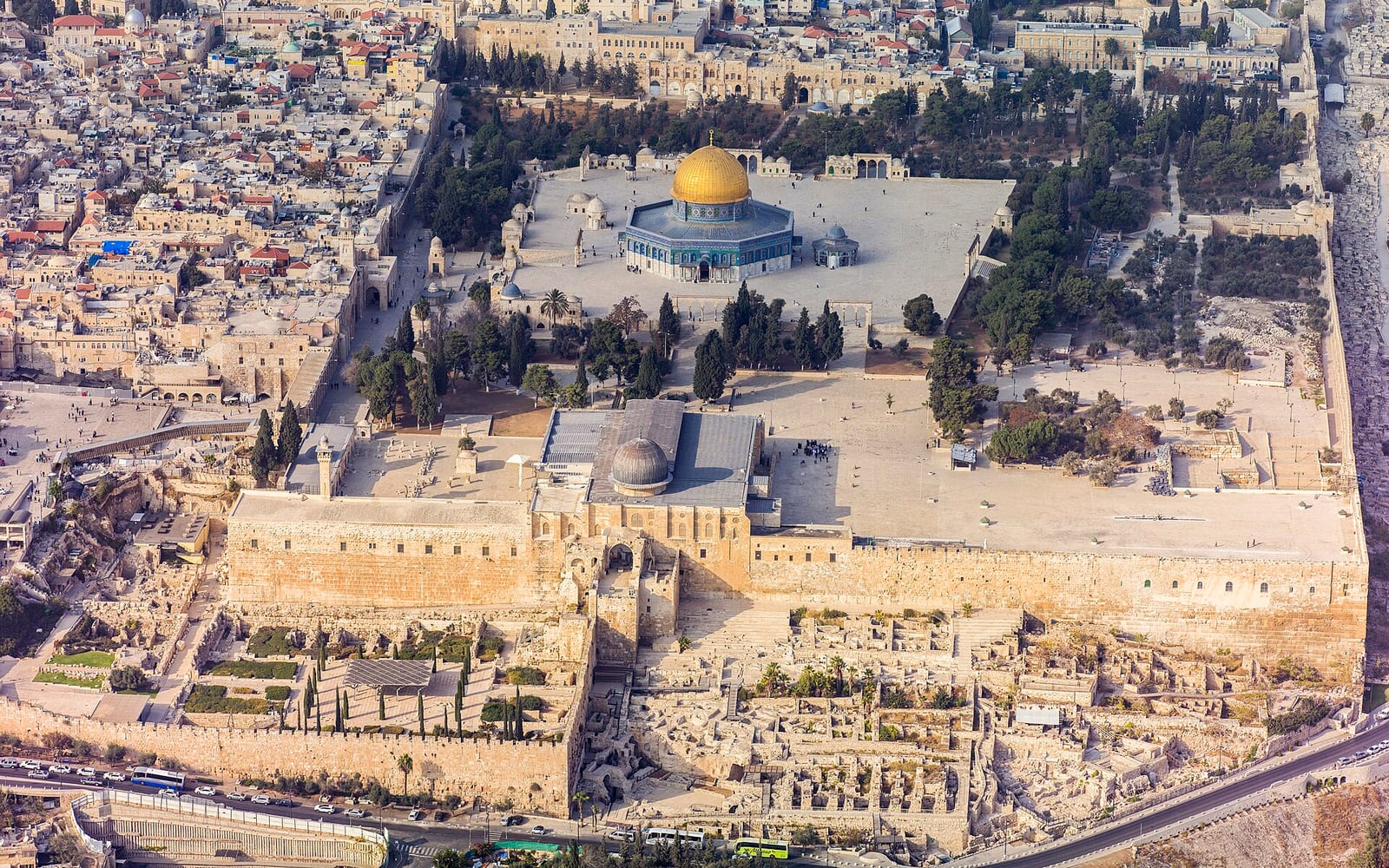
- The walls and gates: The current walls of the Old City — including Jaffa Gate, Damascus Gate (Bab el-Amud) and the Lion’s Gate — were built by Suleiman the Magnificent between 1537 and 1541. The Mamluk and Ottoman architectural layers visible throughout the Old City are a direct legacy of Istanbul
- The Cağaloğlu (Sabil) fountains: Sultan Mahmud I commissioned public drinking fountains (sebils) throughout Jerusalem in the 18th century — several survive today
- The Ottoman cadastral archive: Jerusalem’s land registry records from the Ottoman tapu (title deed) system are still consulted in legal disputes today
Akko (Acre)
Akko contains some of the best-preserved Ottoman urban fabric in the region. The walled old city — a UNESCO World Heritage Site — includes the Ottoman bazaar (Souk el-Abyad), khans (caravanserais) built for Ottoman merchants, the Al-Jazzar Mosque (built 1781 under Ahmed Pasha al-Jazzar, one of the most powerful Ottoman governors of the Levant), and underground Crusader halls that the Ottomans repurposed as cisterns and prisons. See the Akko travel guide for visiting logistics.
Tiberias and the Sea of Galilee
Tiberias was substantially rebuilt under the Ottomans after a 1837 earthquake, and the Sea of Galilee (Kinneret) was central to the Ottoman vilayet of Damascus. The Ottoman-era waterfront structures are still visible in the city.
Jaffa (Yafo)
The Mahmoudiya Mosque in Jaffa (1815, commissioned by Muhammad Abu Nabbut, the Ottoman governor of Jaffa) is one of the finest Ottoman mosques in historic Palestine, still active today.
Christian pilgrimage for Turkish visitors
Turkey has a growing Evangelical Christian community and active Catholic and Orthodox communities, and many Turkish Christian visitors combine an Israel trip with pilgrimage to the Gospel sites:
- Galilee: Sea of Galilee / Kinneret, Capernaum, Magdala, Mount of Beatitudes, Tabgha (feeding of the 5,000 site), Yardenit baptism site on the Jordan River
- Jerusalem: Via Dolorosa, Church of the Holy Sepulchre, Garden of Gethsemane, Cenacle (Upper Room), Mount of Olives
- Bethlehem: Church of the Nativity (Palestinian Authority — requires day-trip logistics from Jerusalem)
- Nazareth: Basilica of the Annunciation, Church of St Gabriel, ancient village excavations
See the Christian pilgrimage in the Holy Land guide for a detailed planning resource.
Cultural notes for Turkish visitors
Israeli directness
Israelis are famously direct in communication — this can feel abrupt to Turkish visitors accustomed to more formal social registers. It is rarely intended as rudeness; it’s simply the Israeli cultural style. Negotiations in markets (particularly Mahane Yehuda and Carmel Market) are expected and normal.
Shabbat planning
Jewish Shabbat (Sabbath) runs from Friday at sundown to Saturday night. During Shabbat most Jewish-owned businesses, restaurants, public transport and shops close. Jerusalem is most affected; Tel Aviv less so (many secular Tel Aviv businesses remain open). Plan Shabbat days for walking the Old City, beaches or Christian/Muslim sites. See the Shabbat guide for detailed city-by-city information.
Al-Aqsa and Haram al-Sharif
Turkish Muslim visitors may access the Al-Aqsa Mosque compound for prayer during open hours. Non-Muslim visitors are permitted in the outer compound during restricted daytime hours but cannot enter the mosques. Access rules for non-Muslims change frequently — check current conditions locally on the day. See the Temple Mount visitor guide for the most current access information.
Eid and prayer times
Israel has a significant Arab Muslim population, and mosques (including Al-Aqsa) operate prayer call schedules. During Ramadan and Eid, the atmosphere in Arab-majority areas of Jerusalem, Akko, Jaffa and Nazareth changes noticeably — these can be very atmospheric times to visit if you plan around them.
The Turkish Embassy in Israel
The Embassy of the Republic of Turkey in Israel is located in Tel Aviv:
- Address: 1 Pinhas Rosen Street (Rehov Pinhas Rosen), Tel Aviv
- Services: Emergency passport assistance, consular notarial services, support for Turkish citizens in distress
- MFA portal: mfa.gov.tr (Turkish Ministry of Foreign Affairs — use the Israel listing for current contact details and opening hours)
In an emergency in Israel: 100 (police), 101 (ambulance — Magen David Adom / MDA), 102 (fire), 112 (universal emergency number — works from a Turkish SIM on international roaming).
Practical quick-reference
| Topic | Details |
|---|
| Visa | Tourist visa required — apply at Israeli Embassy Ankara or Consulate Istanbul; security clearance process 2–4 weeks |
| Flights | TUS Airways IST→TLV (direct); or via Larnaca, Athens, Budapest — Turkish Airlines TLV service suspended as of mid-2026 |
| Currency | New Israeli Shekel (₪ / NIS); Turkish lira (TRY) not accepted or exchangeable in Israel |
| Health cover | SGK not valid in Israel — travel insurance required |
| Power adapter | Type C/F → Type H adapter; same voltage (230V) — no converter needed |
| Turkish Embassy | 1 Pinhas Rosen St, Tel Aviv — mfa.gov.tr |
| Emergency | 100 (police), 101 (MDA ambulance), 112 (universal) |
Plan your trip
A typical Turkish visitor itinerary combines Jerusalem (2–3 nights) for the Old City Ottoman walls, Dome of the Rock, and Yad Vashem, Akko (half-day or overnight) for the finest Ottoman urban fabric in the region, Tel Aviv (1–2 nights) for the beach promenade and Jaffa old town including the Mahmoudiya Mosque, and the Sea of Galilee (2 nights) for the Gospel sites and the green northern landscape.
The 5 vs 7 vs 10 days guide helps calibrate the right itinerary length. For travel insurance covering your SGK gap, see the Israel travel insurance guide. For eSIM options to avoid Turkish roaming charges, see the Israel eSIM guide.