May is Israel at its most nationally charged and seasonally rewarding. Three major public holidays — Lag BaOmer, Yom HaAtzmaut, and Jerusalem Day — unfold across the month, each layered with history, ritual, and a kind of collective emotion that few countries still produce in public life. The Galilee runs green for the last time before the summer dryness arrives. The Mediterranean opens its beach season. And everywhere — in the parks, on the street corners, in the smell of woodsmoke drifting from Lag BaOmer bonfires — there is the sense of a country doing something that is genuinely and entirely its own.
Yom HaZikaron & Yom HaAtzmaut
The transition from Memorial Day to Independence Day is one of the most emotionally distinctive experiences available anywhere in the world. It happens in a single moment.
Yom HaZikaron (Memorial Day)
On the eve of Yom HaZikaron, Israel pauses. A two-minute siren sounds at 8:00pm — traffic freezes on motorways, drivers leave their cars and stand at attention on the asphalt, pedestrians stop mid-stride wherever they are. The silence spreads across the entire country simultaneously. A second siren sounds at 11:00am the following morning.
Entertainment venues and most restaurants close for the Yom HaZikaron evening. Military cemeteries and memorials hold public services; the state ceremony at the Western Wall is broadcast nationally. The national mood is genuinely solemn — this is not a performance.
For foreign visitors: standing still at both sirens is the appropriate response and is deeply appreciated. There is no requirement and no pressure on tourists, but observing the siren wherever you are — on a street corner, in a taxi, at a market stall — is a moment that stays with visitors long after they leave.
The transition
At nightfall, when Yom HaZikaron ends, the sky above Jerusalem breaks open with fireworks. The streets fill within minutes. The sound shifts from silence to celebration in a way that has no parallel in any national calendar.
Yom HaAtzmaut (Independence Day)
Independence Day is Israel’s most joyful public holiday.
Free national parks: Every Israel National Parks (INPA) site is free to enter on Independence Day. This includes Masada, Ein Gedi, Caesarea, Beit Guvrin, Nimrod Fortress, Banias, and all 60+ INPA-managed sites. Parks fill significantly — arrive at major sites before 8:00am or expect queues.
The mangal tradition: Virtually every park, green space, and open area in Israel fills with families grilling (the Hebrew word is mangal — the grill, and by extension the national Independence Day tradition). HaYarkon Park in Tel Aviv turns into a city-wide BBQ; the Yarkon riverbanks run end-to-end with families from before noon. The smell is unmissable.
Concerts and celebrations: The Balfour Garden near the Knesset in Jerusalem hosts the official national ceremony and public concerts. HaYarkon Park in Tel Aviv hosts free outdoor concerts throughout the day. Dizengoff Square and the beach promenade fill with street music.
Fireworks: Independence Day eve fireworks over Jerusalem — typically visible from the Haas Promenade (Armon HaNatziv) and the rooftops of many hotels — are among the most dramatic the country produces.
HONESTY: Yom HaAtzmaut and Yom HaZikaron dates shift each year with the Hebrew calendar. Never plan travel around specific May dates without first verifying the current year’s schedule at jewishvirtuallibrary.org or chabad.org/holidays.
For a full guide to planning around Independence Day, see Yom HaAtzmaut in Israel.
Lag BaOmer
On the eve of the 33rd day of the Omer — typically a night in May — Israel’s cities light up.
The Lag BaOmer bonfire tradition fills every park, empty lot, and street corner with flames: children and families gather around fires from dusk until well past midnight, the whole country smelling of woodsmoke. In coastal cities the fires run along the beaches; in Jerusalem the hillsides glow. It is one of the most visually arresting evenings in the Israeli year for a foreign visitor who has not encountered it before.
The major Lag BaOmer pilgrimage is to the tomb of Rabbi Shimon Bar Yochai at Meron, near Safed in the upper Galilee — typically drawing several hundred thousand pilgrims through a single night, one of the largest annual gatherings in the world. The approach roads to Meron fill from the afternoon; local accommodation books out weeks ahead.
HONESTY: Lag BaOmer dates shift annually — verify at chabad.org/holidays for the current year. The Meron pilgrimage has significant crowd management requirements; check current access conditions before planning travel to Meron specifically.
See the dedicated Lag BaOmer guide for full logistics including the Meron pilgrimage, bonfire traditions, and Galilee visit planning.
Jerusalem Day (Yom Yerushalayim)
Jerusalem Day falls on 28 Iyar — late May in most years (2027: May 25). It commemorates the reunification of Jerusalem in 1967 and is one of the most politically charged events in the Israeli calendar.
The Flag March
The central public event is the Flag March: tens of thousands of young Israeli nationalists, many from youth movements and yeshivot, carry Israeli flags through the Jewish Quarter and the Muslim Quarter of the Old City and conclude at the Western Wall plaza. The march is a significant religious-nationalist celebration.
For visitors: the route through the Muslim Quarter has historically caused tension at certain points. Many tourists choose to observe from the Jewish Quarter or the Western Wall plaza rather than following the full march route through the Muslim Quarter. The Western Wall plaza on Jerusalem Day is festive and welcoming — large prayer gatherings, singing, and dancing fill the plaza from mid-morning.
Visiting on Jerusalem Day
- The Jewish Quarter is crowded but accessible and celebratory
- The Western Wall plaza is a highlight — one of the most spirited days of the year there
- The Muslim Quarter and Christian Quarter have restricted commerce on Jerusalem Day; some businesses close
- The Old City is significantly more crowded than a normal day; arrive before 9:00am to move freely
HONESTY: Jerusalem Day is a visually dramatic and emotionally significant event for many Israeli Jews. It is also a contested political event — describing it accurately and allowing visitors to form their own responses is the appropriate approach. The march route and its political implications are part of the experience visitors should be aware of before arriving. See Is Israel Safe? for the general security context.
The last of the wildflowers
May is the final month of Israel’s spring wildflower season — and one of the most rewarding for visitors who know where to look.
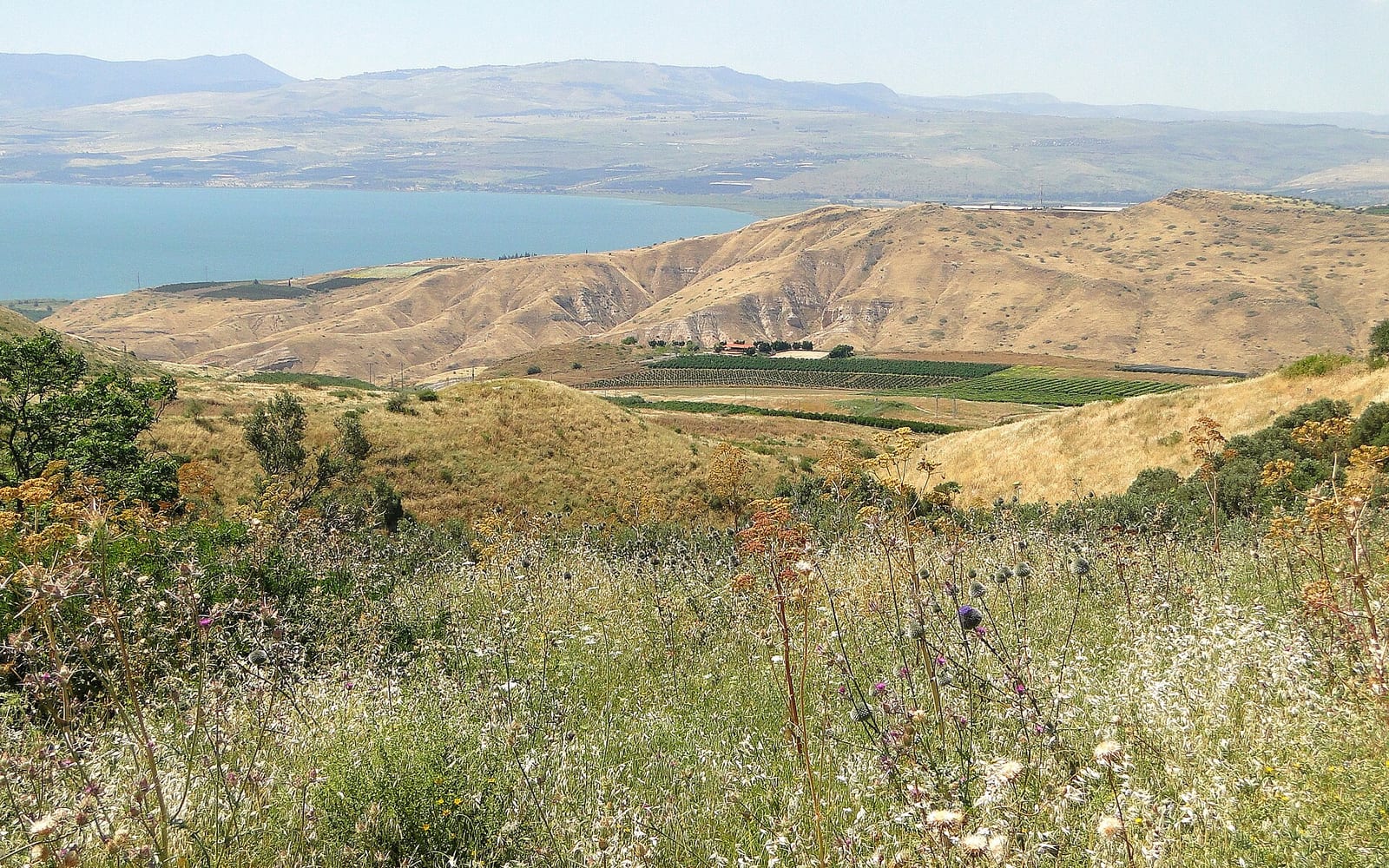
The Negev’s red anemone (kalanit) season — the Darom Adom spectacle that peaks in January and February — is long finished by May. But the Galilee, Golan Heights, and Judean Hills offer their own late-spring displays: wild orchids, cyclamens, irises, Judas trees in bloom, and the green rolling hills of the Golan reaching their last lush peak before the summer dryness arrives.
Upper Galilee and Golan Heights: The Golan plateau in May runs green from the winter rains, with wildflowers still visible on roadsides and nature trails. Banias Nature Reserve and the Gamla Reserve are at their most photogenic before the July and August arid season. The Sea of Galilee (Kinneret) is a clear turquoise at this time of year.
Judean Hills and Jerusalem forest: The Jerusalem pine forests, Adulam-France Regional Forest, and the Elah Valley still carry some colour in early May — though late April through early May is the more reliable window for the Judean Hills.
Timing caveat: Wildflower timing varies significantly year to year depending on winter rainfall totals. Early May is more reliable for Galilee late-spring colour than late May, when the season ends. Check live bloom reports closer to your travel dates.
See the Israel spring wildflowers guide for site-by-site details on the full February–May bloom calendar.
The beach: May opens the season
May is when Israel’s Mediterranean beach season properly begins.
Sea temperatures: The Mediterranean warms from approximately 20°C in early May to 22–24°C by the end of the month — genuinely swim-comfortable for most visitors, even if not the 26–28°C of June–July. The beach infrastructure (lifeguards, beach bars, kayak rentals, paddleboard hire) is running across the Tel Aviv strip from May.
Crowd levels: May is significantly less crowded on the beach than June through August. Israeli school holidays have not yet begun; the major summer crowds arrive in late June. The Tel Aviv beach strip in May — Gordon, Hilton, Frishman, Nordau, Banana — is at its most accessible and relaxed.
Weather for the beach: Days are warm and dry (24–28°C coast), evenings pleasant (18–22°C). May beach mornings in Tel Aviv — sunrise at approximately 5:30am — are among the most beautiful in the Mediterranean year: calm water, soft light, and the city still largely asleep.
Haifa’s beaches: Dado, Bat Galim, and Carmel Beach are in full operation from May. A more local, less tourist-heavy alternative to Tel Aviv with the same warm conditions.
Eilat and the Red Sea: The Red Sea at Eilat is 24–27°C in May — excellent diving and snorkelling, and the surrounding desert heat (30–35°C) is easier to manage than July and August. May is one of the better months to combine Eilat Red Sea diving with a broader Israel itinerary.
See the best beaches in Israel guide for the full beach-by-beach breakdown.
Tel Aviv in May
May is when Tel Aviv transitions from a springtime city into a fully summer mode — without yet reaching the intensity of June or July.
The promenade (Tayelet): The seafront promenade from Hilton Beach to Jaffa runs at full capacity in May. Outdoor dining on the Tayelet, sunset walks from Tel Aviv Port (HaNamal) toward Old Jaffa, and beach volleyball are all in their stride.
Rooftop bars and outdoor dining: Rooftop culture in Tel Aviv begins in earnest from May. The Norman Hotel rooftop, the Aloft pool bar, and the rooftop terraces of the Hilton strip all run evening service from May. The warm evenings (18–22°C after dark) make outdoor dining viable from around 7pm.
Florentin and the Carmel Market: The Shuk HaCarmel runs at its pre-summer peak in May — stone fruits, early strawberries, and fresh herbs fill the stalls. Friday morning at the Carmel Market (7–11am) is the high point of the week.
Independence Day in Tel Aviv: HaYarkon Park on Yom HaAtzmaut is a genuine urban phenomenon — thousands of families grilling, free concerts on multiple stages, and the air thick with woodsmoke from mid-morning. It is one of the most socially rich experiences the city offers.
Jerusalem in May
Jerusalem in May is warm, dry, and excellent for daytime sightseeing before the July and August heat makes midday walks uncomfortable.
Old City: 21–26°C by day, 13–17°C in the evening — almost ideal for extended walking. The Church of the Holy Sepulchre, the Western Wall, and the Via Dolorosa are best visited before 10:00am before tour groups arrive at mid-morning. Evenings on the Mamilla Mall terrace and the Haas Promenade (Armon HaNatziv) viewpoint are pleasant well into the night.
Mahane Yehuda (the Shuk): The market runs its full schedule in May — 7am to 3pm for produce; from approximately 8pm on Thursday and Sunday evenings the stalls transform into bar seating under the arched roofs. May evenings here are busy, warm, and excellent.
May national holidays in Jerusalem: Yom HaZikaron, Yom HaAtzmaut, and Jerusalem Day all take place in Jerusalem with particular intensity — the city is the focal point for each of these national moments in a way that Tel Aviv, for all its energy, is not.
May events calendar
Lag BaOmer (33rd day of Omer, exact date shifts annually): Bonfire night across Israel; Meron pilgrimage in the Galilee; family gatherings from dusk. Verify date at chabad.org/holidays.
Yom HaZikaron (4 Iyar, typically first half of May): Memorial Day for fallen soldiers; two-minute national sirens at 8pm and 11am; entertainment venues close for the evening.
Yom HaAtzmaut (5 Iyar, typically first half of May): Independence Day; free national parks entry; street parties and BBQs nationwide; fireworks over Jerusalem. Dates and exact month vary annually — verify at jewishvirtuallibrary.org.
Jerusalem Day (28 Iyar, typically late May): Flag March through the Old City; large prayer gathering at the Western Wall plaza; crowded but accessible Jewish Quarter.
HONESTY: All Hebrew calendar holiday dates shift annually relative to the Gregorian calendar. Some years, Yom HaAtzmaut falls in April rather than May. Always verify the current year’s dates before planning travel around any of these events.
Practical May planning
Weather
- Coast (Tel Aviv, Haifa): 24–28°C days, 18–22°C evenings. Warm, dry, sunny. UV index 8–9 — SPF 50 essential.
- Jerusalem: 21–26°C days, 13–17°C evenings. A light layer for after sunset.
- Galilee and Golan: 20–25°C. Late-spring green; lush and excellent for hiking and driving.
- Negev and Dead Sea: 28–35°C. Masada: climb before 7am or take the cable car. Dead Sea floating: before 10am or after 4pm.
- Eilat: 30–35°C. Red Sea diving conditions are excellent; land heat is significant.
What to pack for May
Light summer clothing for the coast and Galilee days. A mid-layer for Jerusalem evenings (13–17°C after dark). Sunscreen, hat, and sunglasses are non-negotiable — UV is high. Comfortable walking shoes for the Old City’s cobblestones. Modest clothing for religious sites: covered shoulders and knees for the Western Wall, churches, and mosques.
Booking priorities
- Yom HaAtzmaut week in Jerusalem and Tel Aviv: 6–8 weeks ahead for central accommodation.
- Lag BaOmer near Meron: 4–6 weeks for Galilee accommodation if visiting the pilgrimage.
- Jerusalem Day (late May): 3–4 weeks ahead for Old City–adjacent hotels.
- Non-holiday May: 2–3 weeks is generally sufficient across the country.
- National parks on Independence Day: No booking needed (free entry), but arrive early — popular sites fill by 9am.
Where May fits in the bigger picture