Ramadan transforms pockets of Israel into something you will not easily forget. The Damascus Gate plaza in Jerusalem fills with families at dusk, Al-Wad Street fills with the scent of grilled meats and Ramadan sweets, Nazareth’s Old City erupts in lanterns and street food after sunset, and Jaffa’s Clock Tower square becomes one of the liveliest spots in the Tel Aviv area. For Muslim travelers, this is a pilgrimage season with a spiritual intensity that the rest of the year cannot replicate. For non-Muslim visitors, it is a window into the living Arab community of Israel — festive, warm, and genuinely welcoming.
This guide covers both audiences: Muslim travelers planning around Al-Aqsa and Ramadan prayer, and non-Muslim tourists wondering how the month affects logistics, access and atmosphere.
When Ramadan Happens
Ramadan follows the Islamic lunar calendar, which runs approximately 10–11 days shorter than the Gregorian calendar each year. This means Ramadan arrives earlier each year relative to the seasons.
Approximate upcoming dates (based on standard calculations — confirm via islamicfinder.org before booking):
| Year | Start | End |
|---|
| 2026 | 17 February | 18 March |
| 2027 | 6 February | 7 March |
| 2028 | 26 January | 24 February |
The exact start date is determined by moon sighting and can shift by one day. Eid al-Fitr follows immediately after Ramadan ends.
Ramadan in Jerusalem
Jerusalem is the gravitational centre of Ramadan in Israel. The Temple Mount / Haram al-Sharif compound — home to Al-Aqsa Mosque and the Dome of the Rock — draws hundreds of thousands of Muslim worshippers during the month, particularly for Friday Jumu’ah prayers and for Tarawih prayers each evening.
The Damascus Gate Area
The Damascus Gate plaza and Al-Wad Street in the Muslim Quarter are where the Ramadan atmosphere is most concentrated. From around an hour before iftar, stalls selling dates, juices and Ramadan sweets appear along the streets leading into the Old City. At iftar, families gather to break the fast together — an extraordinarily communal experience. After sunset, the Damascus Gate area continues with lights, noise and food late into the night.
Al-Aqsa Mosque Access for Muslim Worshippers
Al-Aqsa Mosque and the Dome of the Rock within the Haram al-Sharif compound are open to Muslim worshippers throughout Ramadan. Tarawih prayers attract large congregations each evening; the final ten days (including Laylat al-Qadr) are the most spiritually significant and the most crowded. Plan to arrive early if attending major prayer times.
Access from the West Bank for Palestinian Muslims with relevant permits is subject to Israeli authorities’ decisions, which vary each year during Ramadan.
Non-Muslim Access to the Temple Mount / Haram al-Sharif
Non-Muslim visitors access the Temple Mount esplanade only through the Mughrabi Gate (the wooden ramp from the Western Wall plaza), which normally operates Sunday to Thursday with morning and afternoon windows. During Ramadan, these windows are often reduced or suspended entirely — particularly during the final ten days and on Fridays throughout the month.
Never assume access will be available. Check current conditions via the Israeli police website (police.gov.il) or the Jerusalem municipality close to your visit date. If visiting the Temple Mount / Haram al-Sharif esplanade as a non-Muslim is a priority, schedule multiple mornings in Jerusalem and have an alternative plan. See holy sites dress code and etiquette for what is and is not permitted.
Ramadan in Nazareth
Nazareth, Israel’s Arab cultural capital, hosts what many locals and visitors consider the country’s most atmospheric Ramadan evenings outside Jerusalem. The Old City market — the ancient covered souk stretching from the Basilica of the Annunciation up through the narrow alleys — comes alive after iftar with lanterns, grilled meat smoke, knafeh vendors and community music.
The Nazareth travel guide covers the city’s sites in full; during Ramadan, the core draw is the evening market atmosphere rather than any specific attraction.
Practical notes:
- Arab-owned restaurants in the Old City area typically close during the day and open only after sunset during Ramadan.
- The White Mosque in the old city and several neighbourhood mosques serve the local community throughout the month.
- Thursday and Friday evenings are the busiest — arrive before sunset if you want a spot near the market centre.
Ramadan in Jaffa
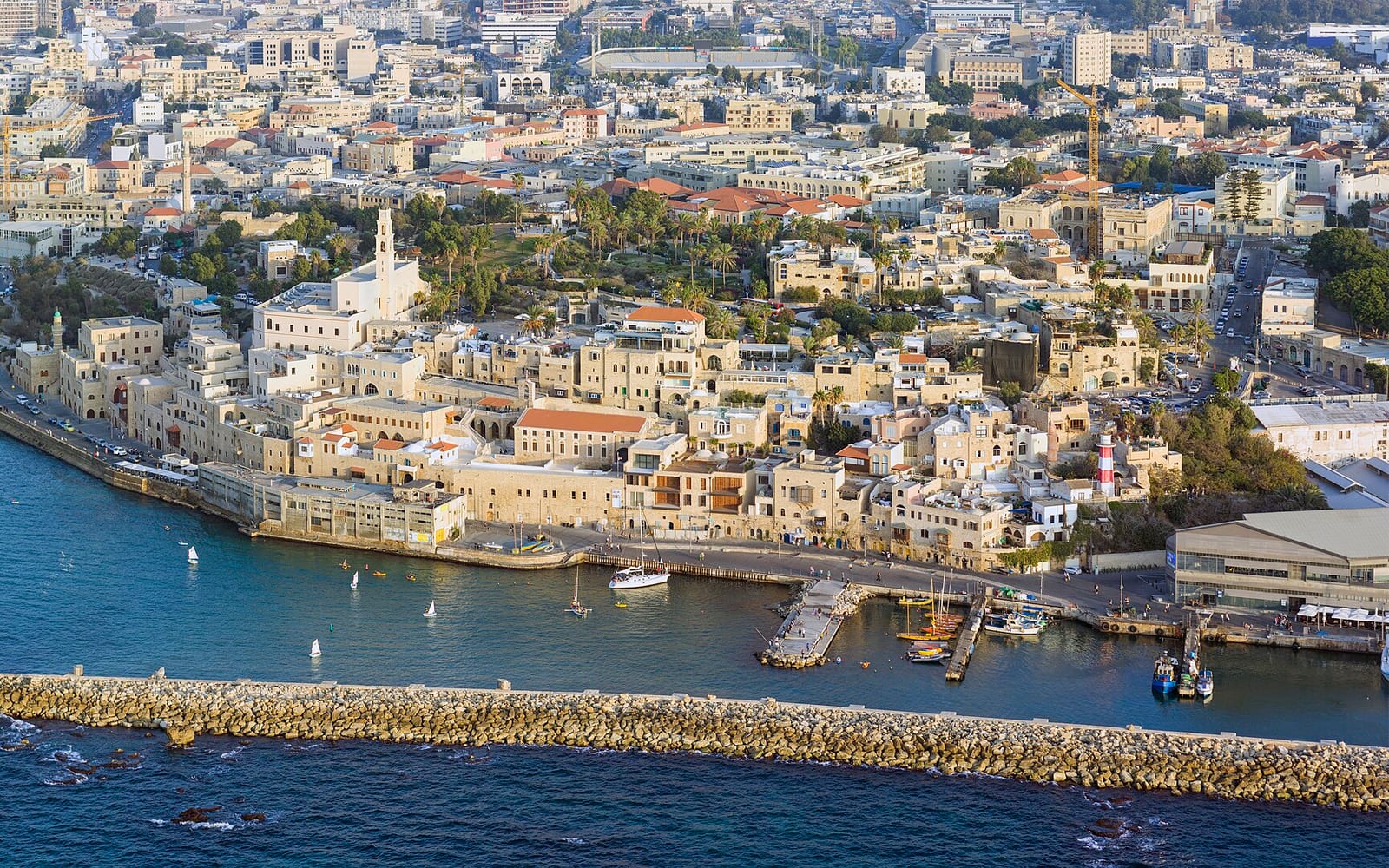
Jaffa (Yafo) — the ancient port city absorbed into greater Tel Aviv — is the most accessible Ramadan experience for visitors based in Tel Aviv. The Arab-Israeli community along Yefet Street and around the Clock Tower observes the month with a visible festivity that the surrounding Tel Aviv restaurant scene does not have.
After iftar on Yefet Street — the main commercial street through central Jaffa — restaurants like Abu Hassan open to evening crowds, the pavement fills with tables, and the street food scene peaks. Msabbaha (warm chickpeas), knafeh, grilled meats, and freshly pressed juice stalls line the surrounding streets. The Jaffa travel guide has the full context on the neighbourhood year-round.
Jaffa Flea Market area (Shuk HaPishpishim) is especially atmospheric on Thursday and Friday evenings during Ramadan, when the antiques and crafts stalls operate late and the surrounding café bars (some non-Arab-owned, unaffected by fasting observance) stay open alongside the Ramadan street food scene.
Hassan Bek Mosque on the seafront at the border between Jaffa and Tel Aviv holds its Tarawih prayers each evening during Ramadan — the minaret’s amplified call to prayer marks the end of each fasting day.
Ramadan in Akko (Acre)
Akko’s old city — a UNESCO World Heritage Site with one of Israel’s densest concentrations of Ottoman-era mosques — observes Ramadan in a manner similar to Nazareth and Jerusalem. The Souq Al-Abyad (White Market) and the streets around the Al-Jazzar Mosque become the evening gathering points after iftar. Al-Jazzar Mosque, normally open to non-Muslim visitors during the day for a small fee, may adjust its visiting hours during peak prayer periods in Ramadan — check locally before arrival.
What Non-Muslim Tourists Should Know
If you are not visiting specifically for Ramadan and happen to be in Israel during the month, the practical impact on a typical tourist itinerary is minimal:
What is unaffected:
- Jewish-sector restaurants, cafes, supermarkets and hotels — fully normal hours.
- Museums, archaeological sites, nature reserves — normal hours throughout.
- Ben Gurion Airport, public transport, intercity trains — completely normal.
- Christian sites (Church of the Holy Sepulchre, Basilica of the Annunciation, etc.) — normal visiting hours.
- Dead Sea resorts, Eilat hotels, Masada, the Galilee — no change.
What may change:
- Arab-owned restaurants and shops in Muslim-majority neighbourhoods (Muslim Quarter of Jerusalem, Jaffa Arab areas, Nazareth old city, Akko Arab market) may close during daylight hours and open only after sunset.
- The Temple Mount / Haram al-Sharif non-Muslim visiting windows are often restricted or suspended during Ramadan.
- Ben Gurion Airport security queues may be slightly longer around Eid al-Fitr as Palestinian diaspora and international Muslim visitors return home.
The upside: Ramadan evenings in Jaffa, Nazareth and Jerusalem’s Muslim Quarter are genuinely special — if you find yourself in Israel during the month, attending an evening in any of these neighbourhoods is one of the more memorable cultural experiences the country offers.
Planning Your Visit
Who is the trip for? If your primary goal is Al-Aqsa prayer, Ramadan is spiritually ideal but logistically challenging — plan 4–5 nights in Jerusalem and hold your schedule loosely given access variability. If you are a non-Muslim traveller with a general Israel itinerary, Ramadan changes very little — lean into the evening Jaffa or Nazareth atmosphere as a bonus rather than building the trip around it.
Accommodation: During Ramadan, East Jerusalem hotels near the Old City book up quickly among Muslim pilgrim groups. Book well in advance if you want to stay in the Muslim Quarter or Christian Quarter. For Jaffa, the neighbourhood has grown significantly — browse current options through Booking.com. Nazareth accommodation is also in demand but generally less pressured than Jerusalem.
Safety: Israel remains a safe destination for tourists during Ramadan. See Is Israel Safe to Visit? for the current security context. The large Ramadan crowds at Damascus Gate and Al-Aqsa can create congestion — take the usual precautions of any busy city crowd. None of the locations described in this guide present elevated safety concerns for tourists.
Dress code: In the Muslim Quarter of Jerusalem, the Damascus Gate area and Arab town souqs, modest dress (covered shoulders, long trousers or skirt) is respectful during Ramadan. This is the same standard as when visiting any religious community. The holy sites dress code guide covers requirements for specific sites.
Food and drink: Non-Muslims can eat and drink in public anywhere in Israel without restriction. In deeply observant neighbourhoods during fasting hours, choosing to eat in a restaurant rather than openly on the street is a consideration many visitors make as a courtesy — but it is not required.
For entry requirements, ETA-IL information and border crossing options, see the Israel visa and entry guide. For Islamic site visiting etiquette, see the Muslim travelers’ guide to Israel and the holy sites dress code guide.