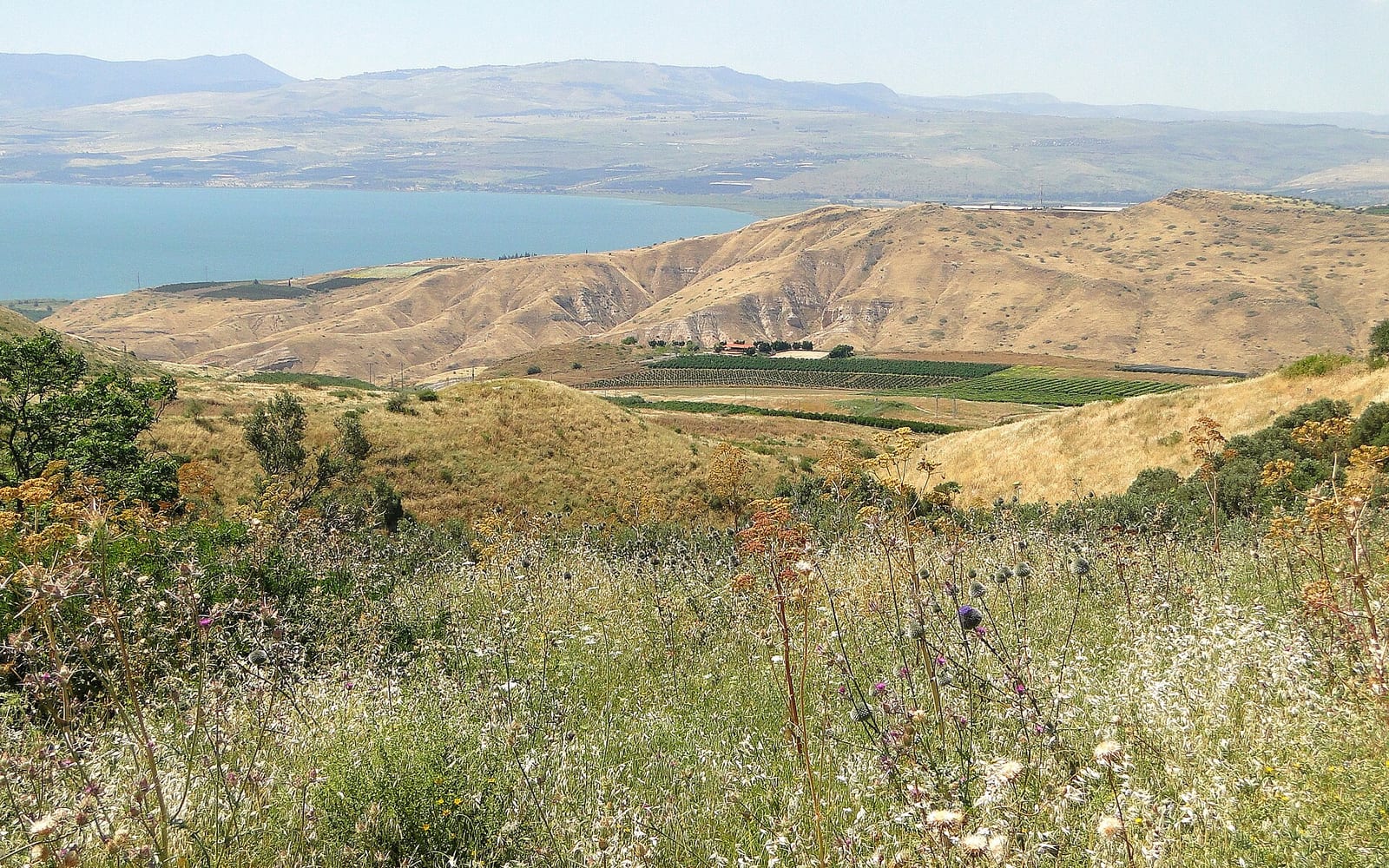
Jacob’s Ladder is Israel’s longest-running folk and world music festival — a gathering held twice a year at the Pastoral Hotel, Kibbutz Kfar Blum, on the banks of the Jordan River in the Upper Galilee. The festival calls itself “Israel’s Friendliest Music Festival,” a claim rooted in its community character: the All-In Ticket covers everything, the atmosphere is participatory rather than passive, and the setting — a working kibbutz surrounded by northern Israeli mountain scenery — is unlike any other Israeli music venue.
The festival has two annual editions: a winter edition over New Year’s Eve (typically Dec 31 – Jan 2) and a spring edition in May. Both editions run the same musical character but in very different weather: winter brings cold Galilee nights and the unique circumstance of spending New Year’s Eve at a folk festival in the Jordan Valley; spring brings wildflowers, warm days, and the Upper Galilee in its greenest season.
What the festival is
Jacob’s Ladder’s musical scope is deliberately broad. The festival’s own billing spans folk, bluegrass, world music, Irish jigs, country rock, blues, and bagpipes — genres that cluster around the international folk tradition rather than any single national style. International artists perform alongside Israeli folk musicians; workshops run in parallel with main stage sets; jam sessions and informal music circles are as much a part of the programme as ticketed performances.
The All-In Ticket covers:
- All main stage performances across the festival days
- Music workshops and masterclasses
- Wellness and movement sessions (Tai Chi, Chi Gong, yoga)
- Guided nature walks in the surrounding Hula Valley and Jordan River area
- Jam sessions and informal ensemble playing
- Children’s activities and craft fair
Meals and accommodation at the Pastoral Hotel are separate; staying on-site at Kfar Blum is the first choice for most festival regulars, with nearby kibbutz guesthouses as overflow.
Verify the current year’s All-In Ticket scope, artist lineup, and exact programme at jlfestival.com — the programme changes between editions and artists are announced in the months before each festival.
The winter edition: New Year’s Eve in the Upper Galilee
The winter edition of Jacob’s Ladder is held over the New Year’s Eve period — typically Dec 31 through Jan 2 or Jan 3 (verify exact dates at jlfestival.com for the upcoming edition). This makes it one of Israel’s most distinctive New Year’s Eve alternatives: instead of a Tel Aviv rooftop party or Eilat resort countdown, you spend December 31 at a folk festival in a kibbutz on the Jordan River.
Upper Galilee in winter: late December in Kfar Blum is cold by Israeli standards. Nights drop to 5–10°C; daytime temperatures on clear days reach 12–17°C. Rain is possible in December and January — the Galilee is Israel’s wettest region. On clear winter days, the mountain views across the Hula Valley and toward the Anti-Lebanon range are exceptional. Pack accordingly:
- Layered warm clothing: thermal base layer, fleece mid-layer, windproof/waterproof outer shell
- Waterproof shoes or boots: the Pastoral Hotel grounds include grass areas that can be wet
- Hat, gloves, and scarf: festival sets are outdoors or in large marquees, not heated venues
The combination of folk music, communal atmosphere, and crisp winter Galilee air has made the winter edition a favourite for Israeli regulars — it books out far ahead of the spring edition.
The spring edition
The spring edition typically takes place in May (exact dates vary — check jlfestival.com). The Upper Galilee in May is at or near its most beautiful: winter rains have ended, wildflowers are fading but the landscape remains green, and daytime temperatures are warm (20–26°C) without the summer heat. The Jordan River kayaking season at Kfar Blum itself is in full swing during May, allowing you to combine the festival with white-water kayaking on the Jordan (Kfar Blum Kayaks runs just beside the hotel).
Kibbutz Kfar Blum and the Pastoral Hotel
Kibbutz Kfar Blum was founded in 1943 and is named after the writer Léon Blum. It sits in the Hula Valley — the flat agricultural basin between the Galilee hills to the west and the Golan Heights plateau to the east, with the Jordan River running through it and the Hermon massif visible to the north. The kibbutz is known for its English Book Club, Jordan River kayaking operation, and the Pastoral Hotel.
The Pastoral Hotel is the festival’s permanent home venue. Rooms are comfortable rather than luxury-level; the setting — on the banks of the Jordan River with mountains behind — is the attraction. Book as early as possible for the winter edition: festival-goers and New Year travellers combine to fill every room in the Jordan Valley in late December.
Nearby alternatives:
- Kibbutz Hagoshrim guesthouses — 3 km north; also known for kayaking; comfortable self-contained units
- Kfar Giladi guesthouse — approximately 10–15 minutes north; popular heritage kibbutz near Tel Hai
- Kiryat Shmona hotels — the regional town, 10–15 minutes south; more options at mid-range price points
Getting to Kfar Blum
By car from Tel Aviv: Route 6 north to the Afula/Beit She’an junction, then Route 90 north along the Jordan Valley. The drive is approximately 3 hours under normal traffic. Route 90 runs along the Jordan Valley floor with the Golan Heights visible to the east — one of Israel’s more scenic drives. The Pastoral Hotel at Kfar Blum is signposted from Route 90 at the Kfar Blum/Hagoshrim junction.
By car from Haifa: Route 70 or Route 85 east toward Tiberias, then Route 90 north. Approximately 1.5 hours. This is the fastest route from the north-centre.
By public transport: public transport to Kfar Blum itself is limited. The most practical approach is:
- Bus or train to Kiryat Shmona (Kavim bus from Tiberias, approximately 1 hour; Egged from Haifa/Nahariya, approximately 2 hours)
- Sherut (shared taxi) or taxi from Kiryat Shmona to Kfar Blum (10–15 minutes; approximately 10 km north of town)
A hire car is the most convenient way to reach the festival and to explore the surrounding Upper Galilee during your stay. See the car rental Israel guide for pick-up options at Haifa Airport, Ben Gurion, and Kiryat Shmona area.
Combining with Upper Galilee and Golan Heights
A festival trip to Kfar Blum gives you an excellent base for the northern tip of Israel:
- Dan Nature Reserve — 10 minutes north of Kfar Blum; the Dan River springs (one of the Jordan’s three main headwaters) run through dense forest with a nature trail; free entry; exceptional for birding
- Banias (Caesarea Philippi) — 25 minutes east into the Golan foothills; Hellenistic and Roman sanctuary at the source of the Banias River (another Jordan headwater); Pan sanctuary ruins + waterfall trail; one of the most historically layered sites in northern Israel
- Metula and the Lebanese border — 20 minutes north; Israel’s northernmost town with a border-viewpoint park; a curious place to visit from an Israeli geography perspective
- Tel Dan archaeological site — immediately beside Kfar Blum; the ancient city of Dan (northernmost of the biblical cities “from Dan to Beersheba”) with Bronze Age to Iron Age walls, the gate associated with Abraham’s pursuit in Genesis, and the Dan River running through the site; extremely accessible
For a wider itinerary, see the 3 days in Galilee itinerary for a structured northern route from Tiberias to Kfar Blum.