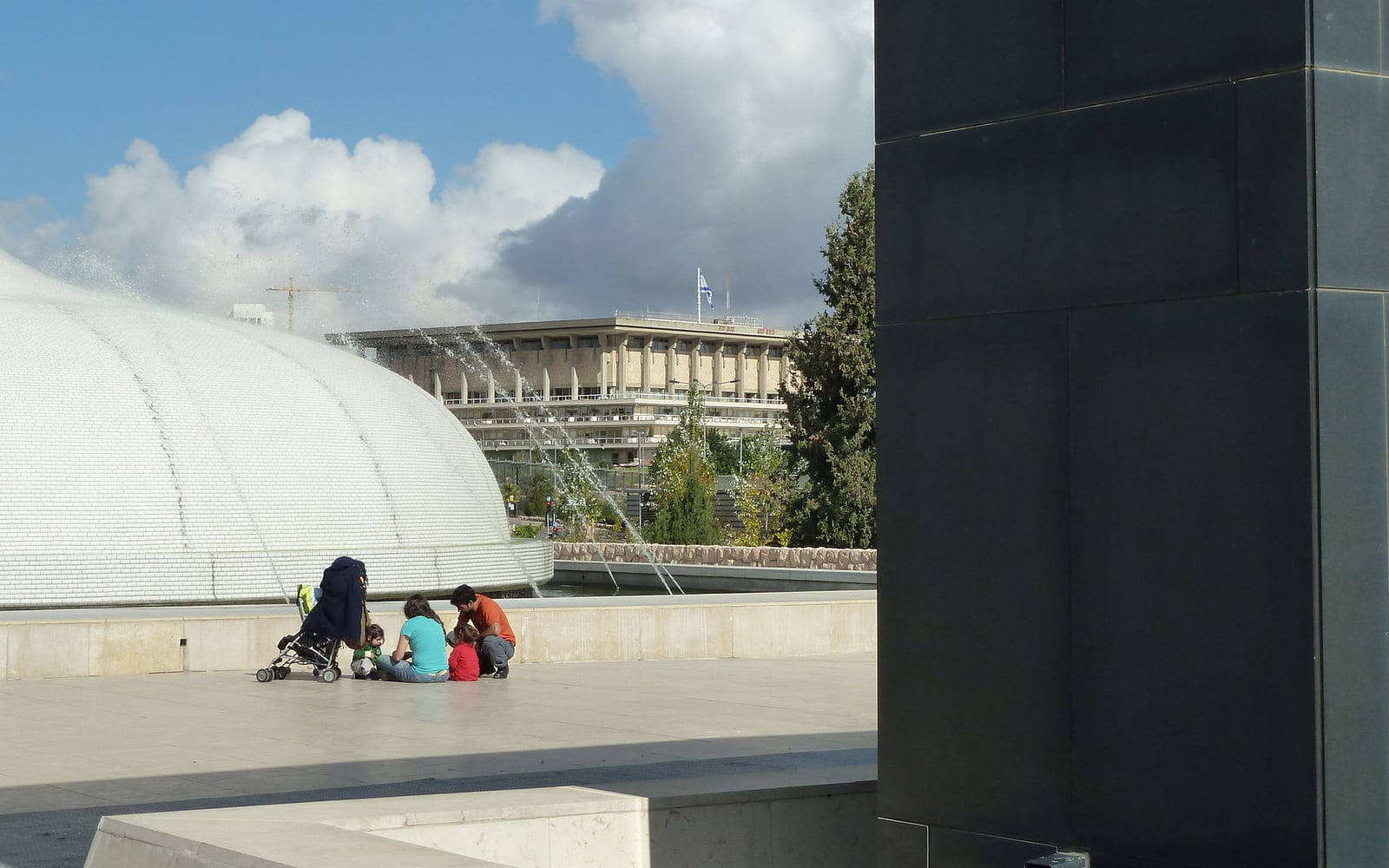
The Jay and Jeanie Schottenstein National Campus for the Archaeology of Israel opened in 2026 on Jerusalem’s Givat Ram cultural campus — the most significant new museum opening in Israel in decades. Designed by architect Moshe Safdie and built by the Israel Antiquities Authority, the campus consolidates under one roof a collection that was previously in government storage and largely inaccessible: nearly two million archaeological objects from across the country, including approximately 15,000 Dead Sea Scroll fragments that have never been on public display before.
For visitors with a serious interest in the history of the Land of Israel — or in the Dead Sea Scrolls in particular — the campus is an essential Jerusalem stop alongside the Israel Museum.
What is the Schottenstein National Campus?
The campus is the new permanent home of the Israel Antiquities Authority (IAA), the government agency responsible for all archaeological excavation, conservation and research in Israel. The IAA has held legal custody of archaeological finds from every excavation in Israel since 1948 — a collection that has grown to nearly two million objects, spanning every period from prehistoric flint tools to Ottoman-era ceramics. Until the campus opened, most of this material was held in government warehouses and research facilities not open to the public.
The campus changes that. For the first time, the IAA’s full collection is accessible — in purpose-built galleries, conservation laboratories with public observation windows, and a research library that serious scholars can access by appointment.
The naming reflects a major philanthropic gift from the Schottenstein family (Columbus, Ohio), joining a pattern of diaspora philanthropy that has funded several of Israel’s major cultural institutions.
The IAA collection: what to see
The gallery sequence is organised chronologically, covering every major period of human occupation in the region.
Prehistoric and Bronze Age
The earliest galleries cover the Chalcolithic period through to the Late Bronze Age, displaying objects that include some of the most significant finds from Israel’s excavations: Chalcolithic copper objects from the Cave of the Treasure near Ein Gedi (a hoard of 442 copper objects dating to approximately 3500 BCE, including sceptres, crowns, and tools — one of the richest prehistoric copper finds anywhere); Canaanite gold jewellery and ivories from coastal and inland sites; and Egyptian and Phoenician imports that document the trade networks connecting ancient Israel to the broader Mediterranean world.
Iron Age: the Israelite and First Temple period
The Iron Age galleries address the period most familiar to readers of the Hebrew Bible — the kingdoms of Israel and Judah, the First Temple period, and the Assyrian and Babylonian destructions. Stand-out objects include:
- Bullae (clay seal impressions) bearing the names of biblical figures, including seals associated with individuals mentioned in the Book of Jeremiah
- Lachish reliefs (facsimile, the originals being in the British Museum): the Assyrian campaign of 701 BCE against the Judahite city of Lachish is documented in both the relief and the excavation finds at Tel Lachish, several of which are displayed here
- LMLK storage jars: handled storage vessels with royal administrative stamps from the late 8th century BCE, found in their hundreds at sites across Judah
Hellenistic, Second Temple and Roman periods
This section covers the period from Alexander’s conquest (332 BCE) through to the Roman destruction of Jerusalem (70 CE) — the period from which the Dead Sea Scrolls date. It includes:
- Hasmonean and Herodian architectural fragments from excavations around the Temple Mount and the City of David
- Coins from the Jewish revolts: the First Jewish–Roman War (66–73 CE) and the Bar Kokhba Revolt (132–135 CE) produced distinctive coinage that has become among the most recognised symbols of Jewish resistance in antiquity
- Glassware from the Roman period, when blown glass was invented (probably in the Syro-Palestinian region) and Israel was a centre of glass production
Byzantine and Islamic periods
The Byzantine (4th–7th century) and early Islamic (7th–11th century) galleries are particularly strong in mosaic floors — Israel has an extraordinary concentration of Byzantine-era mosaic work, and the campus holds material from excavations that includes fine geometric and figurative compositions — and Islamic-period ceramics from sites across the country.
The scroll fragment galleries are the campus’s most internationally significant display. Understanding what is here requires a distinction that is often misunderstood.
The Israel Museum’s Shrine of the Book displays a facsimile of the Great Isaiah Scroll — the oldest complete copy of any biblical book — alongside a small rotating selection of original scroll fragments. These fragments come from the approximately 900 Dead Sea Scrolls that have been formally published by scholars over the past seven decades. They are among the most studied ancient manuscripts in existence.
The Schottenstein Campus holds something different: the IAA’s custody of approximately 15,000 additional Dead Sea Scroll fragments — scroll material that is partially published, unpublished, or in ongoing scholarly study. These fragments range from tiny scraps with a few letters visible to pieces large enough to read several lines. They include material from the same Qumran caves as the published scrolls, plus fragments from later discoveries at sites in the Judean Desert.
Displaying this material is a landmark event: it marks the first time the IAA’s scroll collection has been made accessible to the general public in a purpose-built environment. Not all fragments are on view at any given time — light-sensitive parchment and papyrus require controlled-exposure rotation — but the galleries display a significant selection alongside explanatory panels on the Qumran community, the discovery story, and the scroll contents.
For context on where the scrolls were found, our Qumran National Park guide covers the caves, the excavation history, and how to visit the discovery site itself.
The National Archaeological Conservation Laboratories
One of the campus’s most distinctive features is the public observation corridor overlooking the National Archaeological Conservation and Restoration Laboratories. Visitors can watch professional conservators working on objects behind glass: stabilising fragile pottery, reassembling sherds, cleaning metal artefacts, and treating organic materials.
This is genuinely unusual in the museum world. Conservation work is almost always invisible — conducted in restricted-access areas that visitors never see. Making it observable was a deliberate design decision, and the result is a sequence of gallery windows that reveal the practical science behind keeping a 3,000-year-old object intact.
The Moshe Safdie design
Safdie’s design for the campus draws on a metaphor of archaeological excavation: three staggered open-air courtyards, each descending slightly below the previous, creating the sensation of moving downward through time as you progress through the building. The courtyards are open to the sky, bringing natural light into the galleries and maintaining the visual connection to Jerusalem’s landscape throughout.
The building is clad in Jerusalem stone — the local limestone required for all construction in Jerusalem since a 1918 British Mandatory regulation — tying it visually to the city and to the historic buildings of the Givat Ram campus around it. The descending courtyard sequence differs architecturally from Safdie’s other Jerusalem buildings (the triangular prism of Yad Vashem’s Holocaust History Museum; the geometric Knesset-facing façade of the Supreme Court), but all three share a quality of working with the specifics of Jerusalem’s topography rather than imposing a form onto them.
Combining with adjacent institutions
The Schottenstein Campus sits within a short walk of three other major institutions on the Givat Ram cultural campus:
Israel Museum (10-minute walk): the world’s largest collection of Israeli and Near Eastern archaeology in a private museum setting. The Schottenstein Campus and the Israel Museum are complementary rather than overlapping — the IAA focuses on the state collection and the research-conservation mission; the Israel Museum’s presentation of similar periods is more heavily curated for a general audience. Visiting both on a single day is ambitious; two days for the Givat Ram cluster is more comfortable. See our full Israel Museum Jerusalem visitor guide.
National Library of Israel (10-minute walk): the new Herzog & de Meuron building holds five million books, rare manuscripts, and the personal archives of Einstein and Scholem. For visitors interested in ancient manuscripts and the history of Hebrew writing, combining the Schottenstein scroll galleries with the National Library’s rare manuscript exhibitions on the same day is a natural pairing.
Bible Lands Museum Jerusalem (5-minute walk): a focused collection of artefacts from the ancient civilisations surrounding biblical Israel — Egypt, Mesopotamia, Assyria, Persia, Cyprus. A two-to-three-hour visit. See the full Jerusalem museums overview in our Jerusalem museums guide.
The Wohl Rose Garden and Knesset exterior viewpoint connect these institutions through a pleasant pedestrian route.
Practical planning
Opening: The campus opened in 2026. Confirm current hours and ticket pricing at iaa.gov.il before your visit — as a newly opened institution, admission structures, opening days, and timed-entry requirements may evolve during the first year of operation.
Getting there: Ruppin Boulevard, Givat Ram, Jerusalem. Bus lines 9 or 17 from the city centre; Light Rail Green Line (Givat Ram–Hebrew University station); taxi approximately ₪35–55 from the Old City or Mahane Yehuda. Car park on campus.
Time to allow: Two hours minimum; three to four hours for a thorough visit. Plan a café break if combining with the Israel Museum.
Guided tours: Licensed archaeology guides are available for private and small-group bookings. The difference between self-guided and guided is significant — particularly in the scroll fragment galleries, where the scholarly context that a specialist provides transforms what you are looking at. See the GetYourGuide listings for Jerusalem archaeology tours for options.
Visiting nearby: The most natural day combines the Schottenstein Campus (morning) with the Israel Museum (afternoon), or the campus alone with the National Library as a shorter add-on. From the campus, the Old City is approximately 20 minutes by bus or 15 minutes by taxi.
Jewish heritage context: For the genealogical research dimension of Jerusalem’s museums and archives, see our Jewish genealogy travel guide.
For the broader Jerusalem museum picture, see our Jerusalem museums guide.
For day-trip and itinerary planning, see 1-day Jerusalem itinerary and day trips from Jerusalem.