Israel’s Middle Eastern food culture has a strong natural overlap with gluten-free eating — hummus, grilled fish, roasted aubergine, fresh salads and rice dishes are the everyday staples of the Israeli table, and none of them contain wheat. For celiac travellers and those with gluten intolerance, this is a significant advantage compared to countries where bread and pasta dominate every meal.
The complications are real, however. Pita, laffa and bread are central to Israeli food service; schnitzel is a national comfort dish; burekas (wheat pastry) are sold at every bakery and market; and shared-fryer cross-contamination is common in casual street food. Managing those risks while eating well requires preparation — the right phrases in Hebrew, familiarity with the safe and unsafe dishes, and a sense of which restaurant types offer the most reliable gluten-free environment.
The naturally gluten-free foundation of Israeli food
The simplest starting point is recognising how much of traditional Israeli and Arab cooking is wheat-free by default.
Hummus — the chickpea, tahini, lemon and garlic paste that appears on every table — contains no wheat in its original form. Eaten as a main dish at a traditional hummusiya (hummus restaurant), with a bowl of msabbaha (whole chickpeas in tahini and lemon) on the side, this is one of the most reliable celiac-safe meals in the country. The risk at casual stalls is the shared pita basket — make clear you are celiac and ask for the hummus without bread.
Grilled and roasted meats and fish — the basis of Israeli barbecue (mangal) culture. Lamb kebabs, chicken thighs, whole fish grilled over coals: when prepared without breadcrumb coatings or flour-based marinades, these are naturally gluten-free. Restaurants that specialise in grilled meats and fish — away from the schnitzel-centred family-style Ashkenazi tradition — offer reliable options.
Shakshuka — eggs poached in a tomato and red pepper sauce, spiced with cumin and paprika. The core recipe is gluten-free. Some commercial preparations add a small amount of flour as a thickener; at a restaurant, it is worth asking specifically. The accompaniment — a basket of bread or pita — is obviously not gluten-free, but the shakshuka itself usually is.
Mezze spreads at Arab and Israeli-Arab restaurants — baba ghanoush (roasted aubergine with tahini), labneh (strained yogurt), olives, roasted peppers, pickled vegetables, fresh salads. A full Arab-style mezze meal consisting of these small dishes, with grilled meats or fish to follow, can easily be built into a completely gluten-free meal by declining the bread basket.
Salads — Israeli chopped salad (tomatoes and cucumber, finely diced with olive oil and lemon) is gluten-free and appears as a starter at almost every Israeli restaurant. Fattoush (Lebanese bread salad) contains pita croutons — skip this one. Tabbouleh in its traditional form contains bulgur wheat — another to avoid.
Rice dishes — rice-based pilafs, rice with lentils (mujaddara), and plain steamed rice are gluten-free and commonly available, particularly at Arab-style restaurants in Nazareth, Haifa’s Wadi Nisnas neighbourhood and the Old City of Akko.
The main risks to manage
Schnitzel — breaded and fried chicken or turkey breast is one of Israel’s most beloved dishes, consumed at school canteens, family restaurants and market counters. It is almost universally made with wheat breadcrumbs. Even at restaurants that offer grilled chicken, schnitzel is usually prepared in the same kitchen and frequently in shared fryers.
Burekas — flaky wheat pastry filled with cheese, potato, spinach or mushroom. Sold warm from the oven at every market bakery in the country. The golden, sesame-covered pastry is extremely difficult to miss — and entirely wheat. Do not eat burekas.
Pita and laffa — the flat wheat breads that accompany hummus, falafel and many other dishes. Both are wheat-based. In restaurants, it is easy to decline the bread basket. In street food, the falafel or shawarma is typically served inside the bread — ordering the contents without bread, wrapped in a sheet of baking paper or served as a plate, is possible but not always a natural option for the vendor.
Falafel — the chickpea fritters are themselves gluten-free by recipe (ground chickpeas, herbs, spices, fried in oil). The risk is the shared fryer. A falafel stall that also makes burekas or breaded items will have wheat flour contaminating the fryer oil. At a falafel-only counter, the risk is lower but cross-contamination from the pita handling is still present. This is a judgment call that depends on the severity of your celiac reaction.
Soy sauce and Asian-influenced dishes — several Tel Aviv restaurants serve Asian-Israeli fusion, and many use soy sauce, which contains wheat. A small but real risk if you are eating at the city’s contemporary restaurants rather than traditional Middle Eastern establishments.
Tel Aviv
Tel Aviv has the highest concentration of health-conscious restaurants in Israel and the broadest familiarity with dietary restrictions, including celiac disease. This does not mean dedicated gluten-free menus are universal — they are not — but it does mean staff in better restaurants are more likely to understand the question and more likely to have worked out adaptations.
Anastasia (Florentin neighbourhood) — a long-running health-food café that explicitly labels gluten-free options and has significant experience with food intolerances. The menu is predominantly vegetarian and plant-based, with a substantial GF section. The breakfast and brunch items here — GF granola, egg dishes, fresh salads — are among the more reliably safe options in the city.
Benedikt (multiple Tel Aviv branches) — a brunch-focused restaurant group known for its egg-based menu. Benedikt explicitly offers gluten-free bread as a substitute for its standard toast options and labels GF items on the menu. Worth confirming current GF bread availability at the specific branch when booking.
Hummus Abu Hassan (Yafo/Jaffa) — the most famous hummus destination on the Tel Aviv axis. The hummus itself is gluten-free; the risk is the bread basket that arrives automatically. Be explicit with staff about needing no wheat near your bowl.
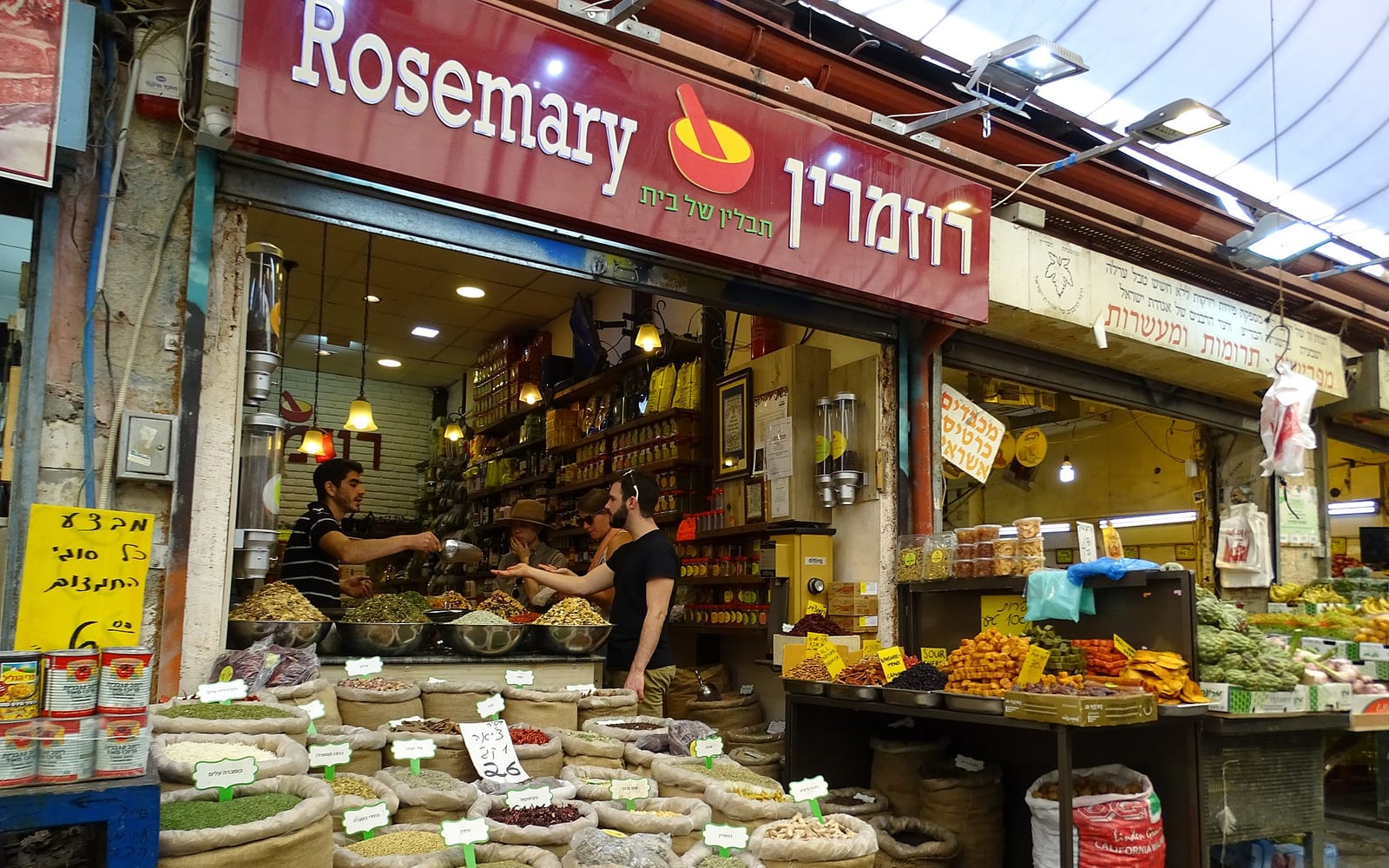
The Carmel Market (Shuk HaCarmel) — for gluten-free eating at the market: buy whole produce (fresh fruit, vegetables, olives in sealed containers, tahini jars, dried fruit, nut mixes, medjool dates). These are the safest market purchases. Avoid the cooked stalls where shared equipment is the norm. See the Carmel Market guide for the market layout and logistics.
Jerusalem
Jerusalem is more challenging than Tel Aviv for celiac travellers. The restaurant culture is more traditional and less health-focused, and gluten-free awareness is less widespread outside of the newer cafés in the German Colony and Nachlaot.
German Colony (Emek Refaim Street) — the neighbourhood with the most health-conscious restaurants in Jerusalem. Several cafés along the main boulevard have GF options on the menu, and staff here are more likely to be familiar with celiac requirements than in the Old City or more traditional parts of the city.
Arab restaurants in the Muslim Quarter, Old City — hummus shops such as Abu Shukri (near the 5th Station of the Via Dolorosa) serve hummus and whole-chickpea dishes in their original wheat-free form. Cross-contamination risk from the pita is manageable if you are explicit. The mezze meals at larger Arab restaurants in the Muslim Quarter, built around dips, grilled meats and salads, offer the most naturally gluten-free eating in the Old City.
Mahane Yehuda Market — similar advice to the Carmel Market in Tel Aviv. Whole produce, jarred and sealed goods, and the fresh juice stalls are your safest options. The bakeries and pastry stalls are best avoided for anything cooked.
Shabbat and holiday timing — in Jerusalem especially, Friday dinner and most of Saturday involve widespread closures. Plan your meals accordingly; see the Shabbat guide for the practical impact on dining.
Haifa and the north
Haifa’s Arab neighbourhood of Wadi Nisnas and the adjacent German Colony have the most reliable options in the north. Traditional Arab cooking — mezze plates, grilled meats, fresh salads, rice dishes — is largely gluten-free at the recipe level, with the usual caveats about shared kitchens. See the Haifa food guide for specific restaurant recommendations.
In Nazareth, the Arab-Christian restaurant scene serves generous Lebanese-style mezze meals. Request the meal without bread and without any breaded items; the remaining dishes are typically safe.
Eilat
Eilat’s tourist-facing restaurants are more likely than those in smaller cities to have experience with Western dietary requirements, including celiac disease. Hotel restaurants — where breakfast buffets include eggs, fresh produce, smoked fish and salads — are a reliable gluten-free starting point. The outdoor market and casual street food scene in Eilat carries the same shared-fryer risks as elsewhere.
Supermarkets and self-catering
Israel’s supermarket chains — Shufersal, Rami Levy, Victory, Yochananof — stock a growing range of gluten-free labelled products. Key points for navigating the aisles:
Hebrew label signals — look for ‘ללא גלוטן’ (lelo glooten) on products, now appearing on a wider range of cereals, pasta alternatives and snack foods. The kosher certification system uses ‘כשר לפסח’ (kasher lePesach — kosher for Passover) on products that contain no leavened grain: this is a useful additional filter, though note the limits described above in the FAQ section.
Naturally safe staples — tahini (sesame paste), hummus in sealed tubs, labneh, Israeli hard cheeses, canned legumes (chickpeas, lentils, fava beans), plain rice, rice cakes, fresh produce, eggs, fish and meat from the counter. These form the basis of a safe self-catering diet.
Passover sections — during the weeks around Passover (March/April, dates vary annually), Israeli supermarkets dedicate large floor space to Passover-certified products. The selection of wheat-free alternatives — matzah-based crackers, Passover cake mixes, GF pasta substitutes using potato or tapioca starch — is significantly broader during this period than year-round. If your travel dates overlap with Passover, the supermarket selection is at its most useful.
Practical tips for celiac travel
Carry a written card — a Hebrew explanation of celiac disease (not dietary preference, but medical intolerance with risk of serious reaction) prepared before departure. Several organisations publish printable celiac travel cards for Israel; the Celiac Disease Foundation and coeliac.org.au both offer Hebrew versions.
Research your hotel breakfast — Israeli hotel breakfasts are typically buffet-style and include hummus, salads, eggs, fish, yogurt and fresh fruit alongside bread and pastries. The GF items at the buffet are substantial; the cross-contamination risk is from shared serving utensils. Notifying the hotel in advance of a celiac requirement often results in a dedicated serving arrangement.
HappyCow and Google Maps — both have filtering options for gluten-free and celiac-friendly establishments. Coverage in Tel Aviv is reasonably good; outside Tel Aviv and Jerusalem it is sparser. Update yourself on restaurant status on arrival as information can be stale.
Dining at Arab-Israeli restaurants — the Arab food culture of northern Israel and East Jerusalem offers some of the most naturally gluten-free cooking in the country, provided you navigate the bread. Arab-owned restaurants outside kosher supervision are not bound by the kashrut system but tend to serve very traditional recipes with minimal processed ingredients. The mezze-based meal structure is particularly useful.
For the broader food and drink context, see the Israeli food and cuisine guide and the kosher food guide. For plant-based eating (which overlaps significantly with gluten-free at many health-conscious restaurants), see the vegan and vegetarian guide. For market visits, the Carmel Market guide and the Jerusalem food guide have practical logistics for navigating both markets with dietary restrictions.